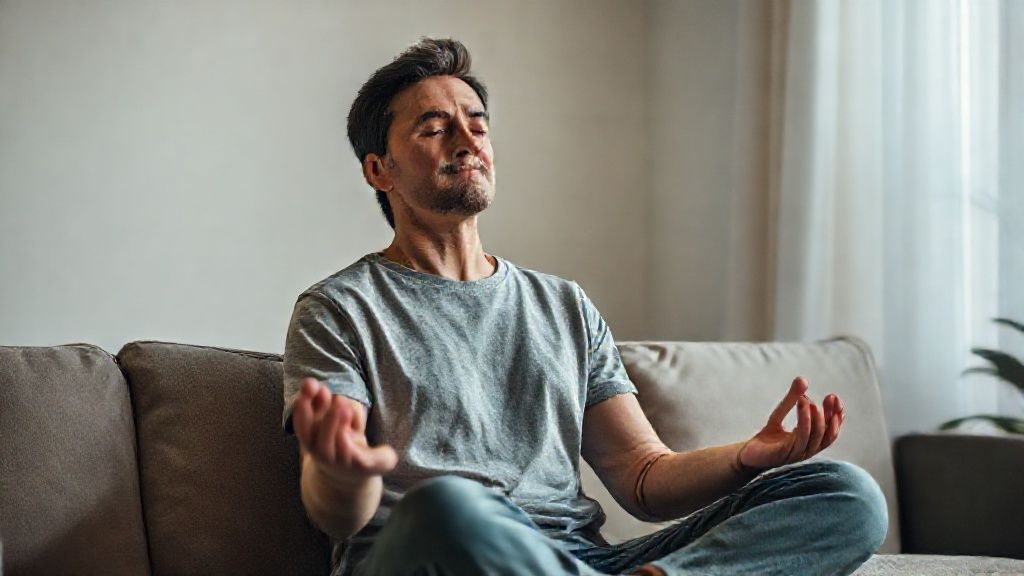
寻回平静:10分钟缓解焦虑引导冥想
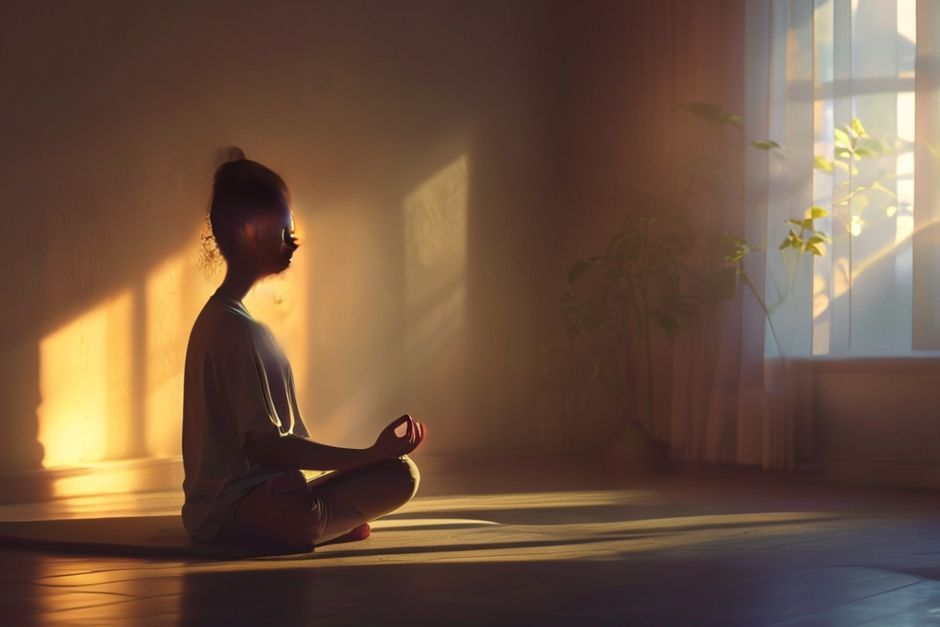
That familiar tightness in your chest. The racing thoughts that won’t quiet down. The feeling that everything is moving too fast and you can’t keep up. If you’re experiencing anxiety right now, you’re not alone—and more importantly, you have the power to find relief within yourself.
A short, focused 10-minute guided meditation can be a powerful tool to interrupt the anxiety cycle and regain a sense of calm. In this post, you’ll discover a step-by-step meditation script designed specifically for anxiety relief, learn why this practice works so effectively, and get practical tips for making it a sustainable part of your self-care routine.
Why a 10-Minute Meditation Is Perfect for Anxiety
When you’re feeling anxious, the thought of sitting still for a long meditation session can feel overwhelming. That’s where the 10-minute meditation shines—it hits the sweet spot between effectiveness and practicality.
The Goldilocks Zone of Meditation Time
Ten minutes is long enough to create meaningful shifts in your nervous system while being short enough to fit into even the busiest schedule. This duration allows you to move through the essential phases of meditation—settling in, body awareness, working with thoughts, and integration—without feeling like a chore.
Science Behind the Calm
Anxiety keeps your nervous system stuck in “fight or flight” mode, releasing stress hormones that create those familiar physical symptoms. Meditation directly counters this by activating the parasympathetic nervous system—your body’s “rest and digest” mode. Research shows that even brief, regular meditation practice can reduce anxiety symptoms by calming the amygdala, the brain’s fear center.
Accessible for Everyone
Whether you’re a complete beginner or an experienced practitioner, a 10-minute session is approachable. On difficult days when longer meditation feels impossible, committing to just 10 minutes ensures you still get the benefits without the mental resistance.
Want to understand more about how this works? Learn more about the science behind meditation for anxiety.
Preparing for Your 10-Minute Practice
Setting yourself up for success begins before you even start meditating. These simple preparations can make a significant difference in your experience.
找到你的空间
You don’t need a perfectly silent meditation room, but creating a supportive environment helps. Look for a relatively quiet spot where you won’t be interrupted for 10 minutes. This could be a corner of your bedroom, a quiet office, or even your parked car. Dim the lights or close your eyes to minimize visual distractions. If possible, let people around you know you need a few minutes undisturbed.
保持舒适
The ideal meditation posture balances alertness with relaxation. Sit in a chair with your feet flat on the floor, or cross-legged on a cushion. Keep your back straight but not rigid—imagine a string gently pulling the crown of your head upward. Rest your hands comfortably on your knees or in your lap. If sitting is uncomfortable, you can lie down, though you might want to set an alarm to avoid falling asleep.
设定你的意图
Approach your practice with an attitude of gentle curiosity rather than expectation. You’re not trying to “achieve” anything or become a “good meditator.” You’re simply giving yourself permission to pause and be present with whatever arises. Remember that there’s no “right” way to feel during meditation—whatever experience you have is exactly what’s meant to happen.
Your 10-Minute Guided Meditation Script for Anxiety
Use this script as your guide. You can read it through once to familiarize yourself, then set a timer for 10 minutes and guide yourself through it. Alternatively, you can record yourself reading it slowly and play it back, pausing between sections.
Find a comfortable position, either sitting or lying down. Gently close your eyes or maintain a soft downward gaze.
Minute 0-2: Arriving and Grounding
Begin by bringing awareness to your body making contact with the surface beneath you. Notice the points of contact—your feet on the floor, your body in the chair or on the cushion. Feel the weight of your body being fully supported.
Now, bring your attention to your breath. Don’t try to change it—just notice the natural rhythm. Feel the sensation of air entering through your nostrils, filling your lungs, and the gentle release as you exhale. Follow the complete cycle of each breath—in and out.
If your mind is busy, that’s completely normal. Each time you notice your attention has wandered, gently guide it back to the physical sensations of breathing. This act of returning is the practice itself.
If you’re particularly short on time, you can start with this 一分钟呼吸练习 快速找回内心平静。.
Minute 2-5: Body Scan for Tension Release
Now, we’ll move through the body with a gentle scan, releasing stored tension as we go.
Bring your awareness to the top of your head. Notice any sensations here without judgment. Then, slowly move down to your forehead, eyebrows, and the space around your eyes. Consciously soften this area.
Move to your jaw. If you notice clenching, allow your jaw to relax, letting your teeth part slightly. Feel the tension melting away.
Bring attention to your shoulders. Many of us carry anxiety here. On your next exhale, visualize releasing any weight you’re carrying on your shoulders. Let them drop away from your ears.
Move down through your arms and hands, noticing any tingling, warmth, or other sensations.
Bring awareness to your chest and stomach area. Notice the rise and fall with each breath. If you feel tightness or butterflies, simply acknowledge these sensations without trying to change them. Breathe into this space.
Continue down through your hips, thighs, knees, calves, and finally to your feet. Take a moment to feel your entire body as a complete field of sensations.
For a more comprehensive practice, you might explore this 5分钟身体扫描指导语PDF on another day.

Minute 5-8: Working with Anxious Thoughts
As we continue, you might notice thoughts arising—worries, plans, memories. This is completely normal. Rather than fighting these thoughts or getting caught in their stories, we’ll practice relating to them differently.
Imagine your mind as a vast sky, and your thoughts as clouds passing through. Some clouds might be dark and stormy (anxious thoughts), others light and fluffy. Instead of clinging to any particular cloud or trying to push it away, simply watch as each thought-cloud drifts through the spacious sky of your awareness.
When you find yourself carried away by a thought—when you’ve climbed onto the cloud and are riding it—gently notice this has happened and return to watching from the perspective of the sky. No need for judgment—this is the natural activity of the mind.
You might label thoughts gently as they arise: “planning,” “worrying,” “remembering.” Then return to your anchor—the sensation of your breath.
Minute 8-10: Cultivating a Calm Anchor and Closing
For these final moments, bring your attention back to your breath as a calm anchor in the present moment. With each inhalation, imagine breathing in peace and calm. With each exhalation, visualize releasing any remaining tension or anxiety.
You might introduce a simple calming phrase, synchronizing it with your breath. Silently repeat “I am” on the inhale, and “at peace” on the exhale. Or choose any words that feel soothing to you.
Now, gently expand your awareness from the breath to include your entire body once again. Notice the space around you—any sounds, the temperature of the air.
When you’re ready, slowly begin to reintroduce movement—wiggling your fingers and toes, gently rotating your ankles and wrists. If your eyes have been closed, blink them open slowly, allowing light and colors to enter gradually.
Take a moment to notice how you feel after this practice. There’s no “right” way to feel—simply acknowledge your experience as it is.
Enhancing Your Meditation Practice
Building a consistent meditation practice involves more than just the time you spend on the cushion. These supportive strategies can deepen your experience and help you maintain momentum.
Pair with Soothing Audio
While silent meditation has its benefits, guided practices with calming background music can be particularly helpful for anxiety. Music with a slow tempo (around 60-70 beats per minute) can synchronize with and slow down your heart rate, enhancing relaxation.
Consider exploring different types of meditation music to find what resonates with you—some people prefer nature sounds, others find instrumental music or chanting most soothing. Explore our library of 10-minute meditation music tracks to enhance your practice.
What to Do If You Get Distracted
It’s not a matter of if you’ll get distracted during meditation, but when. Distractions are an expected part of the practice, not a sign that you’re “doing it wrong.”
When you notice your mind has wandered, simply acknowledge where it went without judgment—”ah, planning” or “there’s remembering”—and gently return to your anchor. This simple act of noticing and returning is like a rep for your mindfulness muscle. Each time you do this, you’re strengthening your ability to recognize anxiety patterns in daily life and choose a different response.
Building a Consistent Habit
Consistency matters more than duration when it comes to meditation. A daily 10-minute practice will serve you better than an hour once a week.
Anchor your meditation to an existing habit—after brushing your teeth in the morning, before your afternoon coffee, or right after you get into bed at night.
从小处着手 if 10 minutes feels daunting. Even 3-5 minutes daily builds the habit. You can gradually increase the time as it feels comfortable.
记录练习情况 使用简单的日历勾选标记或冥想应用程序。可视化的一致性记录能激发动力。.
保持自我关怀 若某天未能练习,请以慈悲心对待自己。重新开始即可——无需愧疚或自我批评。.
探索其他冥想形式
虽然这10分钟冥想本身已是强大的练习,但不同情境需要不同方法。您可根据自身需求与可用时间考虑以下替代方案:.
快速重置
有时在高压力或焦虑突袭的时刻,您需要即时缓解。这些较短练习可助您快速恢复平衡:
当工作或社交场合中焦虑来袭时,, 尝试5分钟焦虑与睡眠冥想 以重置您的神经系统。.
当恐慌或情绪汹涌的时刻,, 以获得更深层的镇静效果。 运用感官将自我带回当下。.
深度练习时段
当您拥有更多时间,并希望探索焦虑根源或处理持续模式时,较长的练习时段为深度审视提供空间:
若有更充裕时间,可探索这段20分钟过度思考冥想 它温和地审视引发焦虑的思维模式。.
睡眠支持
焦虑与睡眠问题常相伴而生。纷乱的思绪会使人难以入眠,而睡眠不足又会加剧焦虑——形成恶性循环。.
夜间冥想专为舒缓神经系统、引导您进入安稳睡眠而设计。其方法通常更侧重于视觉化想象,而非保持警觉意识。.
若焦虑使您夜不能寐,请使用这段引导式睡眠冥想 以打破失眠与担忧的循环。.

常见问题
10分钟冥想真能缓解焦虑吗?
是的,完全可能。虽然长时间冥想有其益处,但研究表明即使简短而规律的冥想练习也能显著减轻焦虑症状。关键在于持续性而非时长。十分钟足以激活副交感神经系统,并在您与焦虑思绪之间创造缓冲空间。许多人发现每日10分钟练习比偶尔的长时练习能带来更显著的效果。.
冥想时无法停止思绪怎么办?
这是关于冥想最常见的疑虑之一,而答案或许会令您惊讶:冥想的目的并非停止思绪。正念冥想的目标不在于放空大脑,而在于改变您与思绪的关系。当您练习观察思绪而不陷入其叙事时(如引导词中“天空中的云朵”的比喻),您会开始认识到您并非您的思绪。这种认知对焦虑者而言具有深刻的解放意义。. 了解何为引导式冥想 有助于建立对练习过程的合理预期。.
这与呼吸练习有何不同?
虽然呼吸是本次冥想的核心组成部分,但本方法更为全面。呼吸练习通常仅专注于通过控制呼吸来影响神经系统。本引导式冥想则将呼吸觉察与身体扫描、思绪观察相结合,从多个层面——身体紧张、心理模式和情绪觉察——应对焦虑。这是一种培养更广泛正念技能的整体性方法。. 可将其与这段专注的10分钟呼吸冥想进行比较 以发现哪种方式更契合您的需求。.
缓解焦虑的最佳冥想时间是什么时候?
并无统一答案,但许多人发现以下时段特别有效:
晨间冥想 为一天奠定平静专注的基调,并能提升应对压力源的韧性。.
晚间冥想 有助于处理日间累积的压力,并过渡到安稳睡眠。.
焦虑突发的任何时刻——在急性焦虑时请毫不犹豫地进行练习,无论是在艰难对话前、工作休息间隙,或是当您注意到忧虑情绪蔓延时。.
可通过尝试找到最适合您作息规律与焦虑模式的时间。每日固定时间练习比寻找“完美”时段更为重要。.
通往持续平静之路始于当下
焦虑在当下或许令人难以承受,但您现在已拥有一个便捷而强大的工具来重拾内心安定。这段10分钟焦虑引导冥想不仅是暂时的分心之法——更是一种随时间重塑您与压力、忧虑关系的练习。.
您的身心值得享有这定期的休憩。我们邀请您立即使用上述引导词,亲身体验其镇静效果。无需特殊设备,无需先前经验——只需您本人、您的呼吸,以及十分钟的自我关怀。.
准备好建立支持心理健康的持久练习了吗? 在此探索我们为初学者精选的引导冥想 并通过多种方法找到最适合您的路径。.