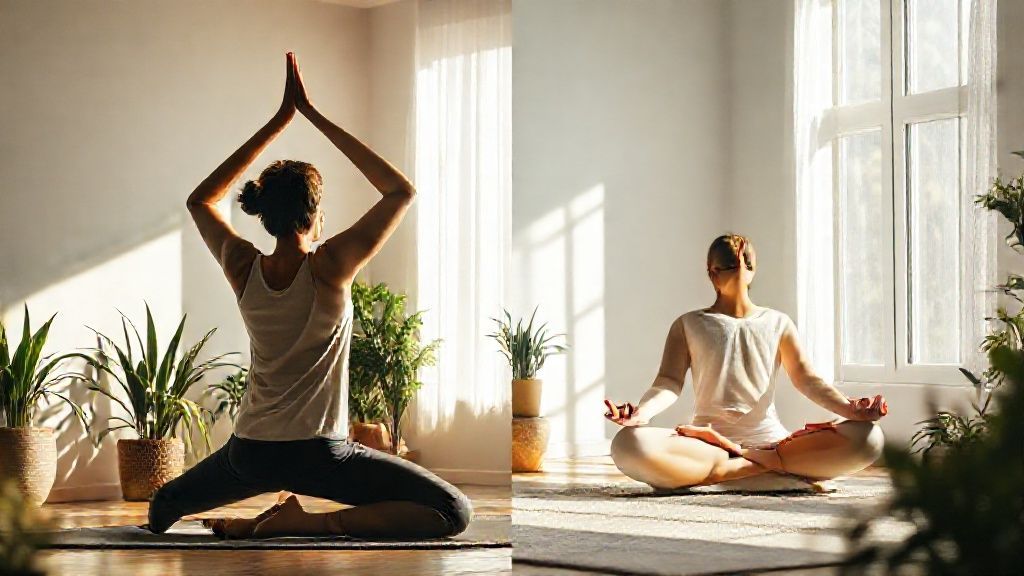
Yoga vs Meditation: Choosing Your Path to Mindfulness and Well-Being
Feeling overwhelmed by the constant buzz of modern life? You’re not alone. In our fast-paced world, finding moments of peace has become more crucial than ever. Many people seeking relief turn to ancient practices like yoga and meditation, but often wonder: what’s the real difference, and which one is right for me?
While yoga and meditation are both powerful mindfulness practices often mentioned together, they represent distinct approaches to well-being. Yoga is a movement-based discipline that unites body and mind through physical postures, breathwork, and meditation elements. Meditation, in contrast, is primarily a mind-focused practice of training attention and awareness, typically practiced in stillness. The best choice depends entirely on your personal goals, lifestyle, and preferences—and the good news is you don’t have to choose just one.
This comprehensive guide will break down the key differences, unique benefits, and practical considerations to help you decide which practice—or which combination—will best support your journey toward greater peace and well-being.

Defining the Practices: More Than Just Stretching and Sitting
What Is Yoga? The Union of Body and Mind
Yoga is an ancient practice originating in India that encompasses far more than physical postures. The word “yoga” itself means “union” or “to yoke,” representing the connection between body, mind, and spirit. A complete yoga practice integrates physical postures (asanas), breathing techniques (pranayama), meditation (dhyana), ethical principles, and more.
Unlike simple stretching or exercise, yoga is a holistic system designed to create harmony within yourself and with the world around you. The physical aspect—what most Westerners think of as yoga—prepares the body for longer periods of meditation while simultaneously building strength, flexibility, and body awareness. Whether you’re flowing through a vigorous vinyasa sequence or holding restorative poses, yoga teaches you to stay present with physical sensations while maintaining conscious breathing.
Many people find that beginning their day with movement helps ground them mentally—try pairing your morning practice with a morning guided meditation to set a positive tone for the hours ahead.
What Is Meditation? The Art of Focused Awareness
Meditation is the practice of training your attention and awareness to achieve a mentally clear and emotionally calm state. While meditation has roots in spiritual traditions, it’s fundamentally a practical mental exercise that anyone can benefit from regardless of their beliefs.
At its core, meditation is about observing your thoughts, feelings, and sensations without judgment. Rather than emptying the mind—a common misconception—meditation teaches you to relate differently to your mental content. You learn to notice thoughts as they arise without getting carried away by them, creating space between stimulus and response.
There are numerous meditation techniques, including focused attention (concentrating on breath, a mantra, or an object), mindfulness (observing whatever arises in consciousness), and loving-kindness (cultivating compassion). For those new to the practice, learning more about guided meditation can provide the structure and support needed to build a consistent practice.
Core Differences: A Side-by-Side Comparison
Physicality: Movement vs. Stillness
The most apparent difference between yoga and meditation lies in their relationship to physical movement. Yoga is inherently physical—it requires you to move your body through various postures, transitions, and sequences. Even in gentle or restorative styles, there’s still physical engagement, alignment awareness, and intentional positioning of the body.
Meditation, conversely, is practiced primarily in stillness. While some meditation practices incorporate walking or gentle movement, most traditional forms involve sitting, lying down, or standing with minimal physical motion. The challenge in meditation isn’t physical flexibility or strength but mental discipline—staying present with whatever arises without physically reacting.
Primary Focus: Body Awareness vs. Mental Awareness
In yoga, your primary focus is often on the body—alignment in poses, muscle engagement, balance, and the physical sensations that arise during practice. The mind follows the body, with attention directed to breath coordinating with movement and physical feedback guiding your practice.
In meditation, the primary focus is mental awareness—observing thoughts, emotions, and inner experiences. The body serves as an anchor (often through breath awareness or body scans), but the work happens in the realm of consciousness. Rather than manipulating the body into different shapes, you’re learning to relate differently to your mental landscape.
The Role of Breath
Both practices emphasize breath awareness but utilize it differently. In yoga, breath (pranayama) is often used actively to facilitate movement, build energy, or enhance stretches. The ujjayi breath common in vinyasa yoga, for instance, creates heat and rhythm that synchronizes with physical postures.
In meditation, breath typically serves as an anchor point for attention. Rather than manipulating the breath, you simply observe its natural rhythm, returning to it whenever the mind wanders. This foundational technique can be deepened through specific practices like diaphragmatic breathing techniques that activate the body’s relaxation response.

The Unique Benefits: What Each Practice Offers
The Holistic Benefits of a Yoga Practice
The physical benefits of yoga are well-documented and often what initially draws people to the practice:
- Improved flexibility, strength, and balance: Regular practice gradually increases range of motion while building functional strength that supports joint health and posture.
- Enhanced body awareness: Yoga teaches you to listen to your body’s signals, recognize tension patterns, and respond with appropriate movement.
- Pain relief: Many people experience reduced back pain, neck tension, and joint discomfort through targeted stretching and strengthening.
- Better sleep and energy levels: The combination of physical exertion and nervous system regulation can improve sleep quality and daytime vitality.
Beyond the physical, yoga offers profound mental and emotional benefits:
- Stress reduction: The mindful movement and breath focus activate the parasympathetic nervous system, counteracting the stress response.
- Mood regulation: Physical practice can help process stuck emotions held in the body while releasing endorphins that improve outlook.
- Mind-body connection: Yoga strengthens the relationship between physical sensations and emotional states, helping you recognize early signs of imbalance.
The Mental and Emotional Benefits of Meditation
While meditation may not provide the same physical benefits as yoga, its impact on mental and emotional well-being is exceptional:
- Reduced anxiety and depression: Regular meditation practice has been shown to decrease activity in the brain’s “default mode network” responsible for worry and rumination. For those struggling with persistent anxiety, a vodena meditacija za anksioznost can provide immediate relief while building long-term resilience.
- Enhanced focus and concentration: Meditation strengthens your “attention muscle,” helping you stay on task and resist distractions in daily life.
- Improved emotional regulation: By creating space between triggers and responses, meditation helps you respond to challenging situations with greater wisdom and less reactivity.
- Greater self-awareness: Regular practice illuminates habitual thought patterns and unconscious behaviors, creating opportunities for positive change.
- Better stress management: Meditation lowers cortisol levels and builds capacity to handle life’s inevitable pressures with more grace.
Even brief practices can yield significant benefits—a 5-minutna meditacija za anksioznost can quickly reset your nervous system during stressful moments.
Yoga vs Meditation for Specific Goals
For Stress and Anxiety Relief
Both practices effectively reduce stress and anxiety but through different mechanisms. Yoga addresses stress somatically—releasing physical tension stored in muscles, lowering blood pressure, and calming the nervous system through movement and breath. The physical exertion can also metabolize stress hormones like cortisol and adrenaline.
Meditation tackles anxiety at the source—the mind. By observing anxious thoughts without identification, you gradually reduce their power over you. Meditation also strengthens the prefrontal cortex, enhancing rational response over emotional reaction.
For comprehensive anxiety management, many people benefit from combining both: using yoga to release physical manifestations of stress while employing meditation to quiet mental chatter. When anxiety feels overwhelming, a targeted anti-anxiety meditation can provide immediate relief.
For Better Sleep
If you struggle with insomnia or restless nights, both practices can significantly improve sleep quality. Gentle, restorative yoga before bed releases physical tension that might prevent relaxation. Forward folds and supported poses activate the parasympathetic nervous system, signaling to your body that it’s safe to rest.
Meditation for sleep works by quieting the “monkey mind” that often races at bedtime. By focusing attention on breath or body sensations, you give your thinking mind a rest, making it easier to transition into sleep. For a deeply restorative practice, try a guided sleep meditation for healing that supports both physical and emotional recovery overnight.
For Beginners: Which Is Easier to Start?
This depends largely on your personality and preferences. Yoga might feel more accessible if:
- You’re a kinesthetic learner who prefers movement over stillness
- You have specific physical goals (flexibility, strength, pain relief)
- Sitting still with your thoughts feels intimidating or uncomfortable
Meditation might be easier to start if:
- You have limited mobility or physical restrictions
- Your primary challenges are mental (racing thoughts, worry, lack of focus)
- You prefer practices that require no special equipment or space
The truth is, neither requires perfection—both are practices, not performances. Starting with just 5-10 minutes daily of either can build a sustainable habit.

The Perfect Partnership: Combining Yoga and Meditation
Rather than viewing yoga and meditation as competing practices, consider them complementary tools in your well-being toolkit. In fact, they were designed to work together—traditional yoga systems include meditation as the culminating practice after preparing the body through asanas.
The synergy between movement and stillness creates a more complete mindfulness practice. Yoga prepares the body for meditation by releasing physical tension that might distract you during sitting practice. Meanwhile, meditation enhances yoga by bringing greater mental focus and awareness to your physical practice.
Try this simple combination: begin with 15-20 minutes of gentle yoga to settle your body, then transition to 10-15 minutes of seated meditation. The movement will have metabolized restless energy, making it easier to sit still and focus. A short 5-minutno jutranjo meditacijo, can be the perfect complement to your sunrise yoga routine.
How to Choose What’s Right for You
Still unsure where to begin? Ask yourself these questions:
- Do you need to release physical energy or tension? → Start with yoga
- Is your main challenge a racing mind or emotional turmoil? → Start with meditation
- Do you want to improve flexibility, strength, or address physical pain? → Prioritize yoga
- Are you seeking greater mental clarity, focus, or emotional balance? → Prioritize meditation
- Do you have physical limitations that make movement challenging? → Begin with meditation
- Does sitting still feel unbearably restless? → Begin with yoga
Remember that these aren’t permanent choices—you can always adjust your approach as your needs change. Many seasoned practitioners fluidly move between both practices depending on their daily needs.
Pogosto zastavljena vprašanja (FAQ)
Can I Meditate Without Doing Yoga?
Absolutely. Meditation is a complete standalone practice that requires no physical movement or yoga background. While yoga can enhance meditation by preparing the body, millions of people meditate successfully without ever stepping on a yoga mat.
Is Yoga a Form of Meditation?
While meditation is a component of yoga, the full yoga practice is more comprehensive. The physical postures can become a “meditation in motion” when practiced with mindful awareness, but traditional yoga encompasses ethical principles, breathing techniques, and meditation as distinct elements within a larger system.
Which Is Better for Losing Weight?
Yoga can contribute to weight management through physical activity, especially in more vigorous styles, while meditation can help address emotional eating patterns and stress-related cravings. For significant weight loss, a combination of either practice with dietary changes and other forms of exercise is most effective.
I Can’t Sit Still. Should I Even Try Meditation?
Yes! The inability to sit still is exactly why meditation could benefit you. Start with very short practices (even 1-2 minutes) or try moving meditations. Alternatives like mindful walking for mental wellness can be excellent entry points for those who find sitting challenging.
What If I Don’t Have Much Time?
Obe praksi se lahko prilagodita tudi zasedenemu urniku. Celo 5-10 minut dnevno lahko prinese koristi. Za tiste z omejenim časom lahko 3-minutna vodena meditacija ponudi hiter ponovni zagon v hektičnem dnevu, medtem ko lahko nekaj preprostih joga raztegov sprosti napetost v le nekaj minutah.

Zaključek in poziv k dejanju
Pot do notranjega miru je zelo osebna in ni enotnega pristopa k pozornosti. Tako joga kot meditacija sta dragocena orodja za krmarjenje po sodobnem življenju z večjo prisotnostjo in odpornostjo. “Proti” v izrazu “joga proti meditaciji” ne pomeni toliko tekmovanja, temveč razumevanje, katero orodje ustreza vašim trenutnim potrebam – bodisi potrebujete fizično sprostitev z gibanjem ali duševno jasnost miru.
Ne pozabite, da pri teh praksah ne gre za doseganje popolnosti, temveč za doslednost z radovednostjo in sočutjem do sebe. Ne glede na to, ali začnete z nekaj pozdravi sonca, da prebudite telo, ali s 5-minutno dihalno vajo za umirjenje uma, je najpomembnejši korak preprosto začeti.
Raziščite našo zbirko vodenih meditacij, da najdete pravo prakso za podporo na vaši poti k večjemu blagostanju.