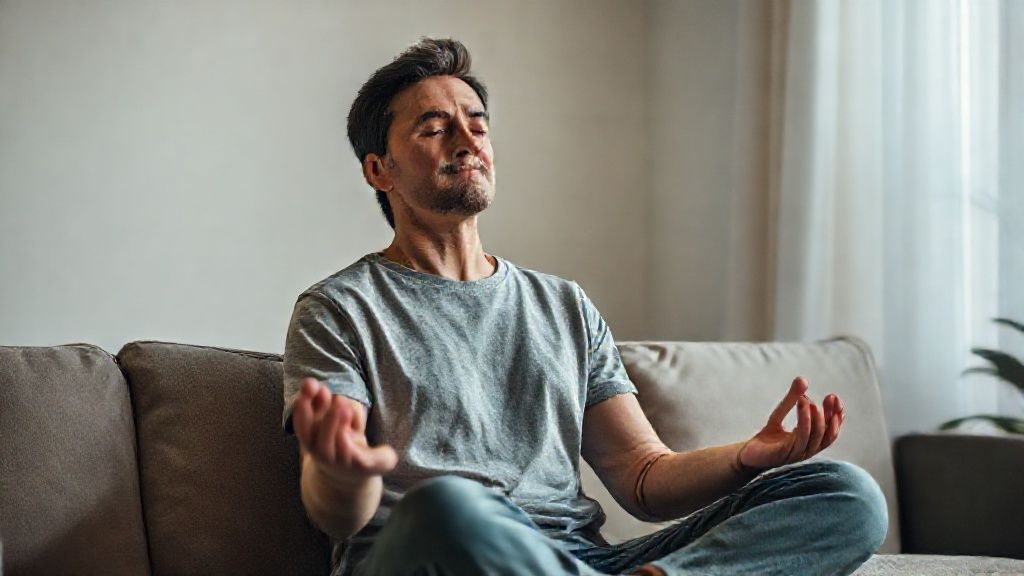
Find Your Calm: A 10 Minute Guided Meditation for Anxiety Relief
That familiar tightness in your chest. The racing thoughts that won’t quiet down. The feeling that everything is moving too fast and you can’t keep up. If you’re experiencing anxiety right now, you’re not alone—and more importantly, you have the power to find relief within yourself.
A short, focused 10-minute guided meditation can be a powerful tool to interrupt the anxiety cycle and regain a sense of calm. In this post, you’ll discover a step-by-step meditation script designed specifically for anxiety relief, learn why this practice works so effectively, and get practical tips for making it a sustainable part of your self-care routine.
Why a 10-Minute Meditation Is Perfect for Anxiety
When you’re feeling anxious, the thought of sitting still for a long meditation session can feel overwhelming. That’s where the 10-minute meditation shines—it hits the sweet spot between effectiveness and practicality.
The Goldilocks Zone of Meditation Time
Ten minutes is long enough to create meaningful shifts in your nervous system while being short enough to fit into even the busiest schedule. This duration allows you to move through the essential phases of meditation—settling in, body awareness, working with thoughts, and integration—without feeling like a chore.
Science Behind the Calm
Anxiety keeps your nervous system stuck in “fight or flight” mode, releasing stress hormones that create those familiar physical symptoms. Meditation directly counters this by activating the parasympathetic nervous system—your body’s “rest and digest” mode. Research shows that even brief, regular meditation practice can reduce anxiety symptoms by calming the amygdala, the brain’s fear center.
Accessible for Everyone
Whether you’re a complete beginner or an experienced practitioner, a 10-minute session is approachable. On difficult days when longer meditation feels impossible, committing to just 10 minutes ensures you still get the benefits without the mental resistance.
Want to understand more about how this works? Learn more about the science behind meditation for anxiety.
Preparing for Your 10-Minute Practice
Setting yourself up for success begins before you even start meditating. These simple preparations can make a significant difference in your experience.
Find Your Space
You don’t need a perfectly silent meditation room, but creating a supportive environment helps. Look for a relatively quiet spot where you won’t be interrupted for 10 minutes. This could be a corner of your bedroom, a quiet office, or even your parked car. Dim the lights or close your eyes to minimize visual distractions. If possible, let people around you know you need a few minutes undisturbed.
Get Comfortable
The ideal meditation posture balances alertness with relaxation. Sit in a chair with your feet flat on the floor, or cross-legged on a cushion. Keep your back straight but not rigid—imagine a string gently pulling the crown of your head upward. Rest your hands comfortably on your knees or in your lap. If sitting is uncomfortable, you can lie down, though you might want to set an alarm to avoid falling asleep.
Set Your Intention
Approach your practice with an attitude of gentle curiosity rather than expectation. You’re not trying to “achieve” anything or become a “good meditator.” You’re simply giving yourself permission to pause and be present with whatever arises. Remember that there’s no “right” way to feel during meditation—whatever experience you have is exactly what’s meant to happen.
Your 10-Minute Guided Meditation Script for Anxiety
Use this script as your guide. You can read it through once to familiarize yourself, then set a timer for 10 minutes and guide yourself through it. Alternatively, you can record yourself reading it slowly and play it back, pausing between sections.
Find a comfortable position, either sitting or lying down. Gently close your eyes or maintain a soft downward gaze.
Minute 0-2: Arriving and Grounding
Begin by bringing awareness to your body making contact with the surface beneath you. Notice the points of contact—your feet on the floor, your body in the chair or on the cushion. Feel the weight of your body being fully supported.
Now, bring your attention to your breath. Don’t try to change it—just notice the natural rhythm. Feel the sensation of air entering through your nostrils, filling your lungs, and the gentle release as you exhale. Follow the complete cycle of each breath—in and out.
If your mind is busy, that’s completely normal. Each time you notice your attention has wandered, gently guide it back to the physical sensations of breathing. This act of returning is the practice itself.
If you’re particularly short on time, you can start with this one-minute breathing exercise to center yourself quickly.
Minute 2-5: Body Scan for Tension Release
Now, we’ll move through the body with a gentle scan, releasing stored tension as we go.
Bring your awareness to the top of your head. Notice any sensations here without judgment. Then, slowly move down to your forehead, eyebrows, and the space around your eyes. Consciously soften this area.
Move to your jaw. If you notice clenching, allow your jaw to relax, letting your teeth part slightly. Feel the tension melting away.
Bring attention to your shoulders. Many of us carry anxiety here. On your next exhale, visualize releasing any weight you’re carrying on your shoulders. Let them drop away from your ears.
Move down through your arms and hands, noticing any tingling, warmth, or other sensations.
Bring awareness to your chest and stomach area. Notice the rise and fall with each breath. If you feel tightness or butterflies, simply acknowledge these sensations without trying to change them. Breathe into this space.
Continue down through your hips, thighs, knees, calves, and finally to your feet. Take a moment to feel your entire body as a complete field of sensations.
For a more comprehensive practice, you might explore this 5-minute body scan script PDF on another day.

Minute 5-8: Working with Anxious Thoughts
As we continue, you might notice thoughts arising—worries, plans, memories. This is completely normal. Rather than fighting these thoughts or getting caught in their stories, we’ll practice relating to them differently.
Imagine your mind as a vast sky, and your thoughts as clouds passing through. Some clouds might be dark and stormy (anxious thoughts), others light and fluffy. Instead of clinging to any particular cloud or trying to push it away, simply watch as each thought-cloud drifts through the spacious sky of your awareness.
When you find yourself carried away by a thought—when you’ve climbed onto the cloud and are riding it—gently notice this has happened and return to watching from the perspective of the sky. No need for judgment—this is the natural activity of the mind.
You might label thoughts gently as they arise: “planning,” “worrying,” “remembering.” Then return to your anchor—the sensation of your breath.
Minute 8-10: Cultivating a Calm Anchor and Closing
For these final moments, bring your attention back to your breath as a calm anchor in the present moment. With each inhalation, imagine breathing in peace and calm. With each exhalation, visualize releasing any remaining tension or anxiety.
You might introduce a simple calming phrase, synchronizing it with your breath. Silently repeat “I am” on the inhale, and “at peace” on the exhale. Or choose any words that feel soothing to you.
Now, gently expand your awareness from the breath to include your entire body once again. Notice the space around you—any sounds, the temperature of the air.
When you’re ready, slowly begin to reintroduce movement—wiggling your fingers and toes, gently rotating your ankles and wrists. If your eyes have been closed, blink them open slowly, allowing light and colors to enter gradually.
Take a moment to notice how you feel after this practice. There’s no “right” way to feel—simply acknowledge your experience as it is.
Enhancing Your Meditation Practice
Building a consistent meditation practice involves more than just the time you spend on the cushion. These supportive strategies can deepen your experience and help you maintain momentum.
Pair with Soothing Audio
While silent meditation has its benefits, guided practices with calming background music can be particularly helpful for anxiety. Music with a slow tempo (around 60-70 beats per minute) can synchronize with and slow down your heart rate, enhancing relaxation.
Consider exploring different types of meditation music to find what resonates with you—some people prefer nature sounds, others find instrumental music or chanting most soothing. Explore our library of 10-minute meditation music tracks to enhance your practice.
What to Do If You Get Distracted
It’s not a matter of if you’ll get distracted during meditation, but when. Distractions are an expected part of the practice, not a sign that you’re “doing it wrong.”
When you notice your mind has wandered, simply acknowledge where it went without judgment—”ah, planning” or “there’s remembering”—and gently return to your anchor. This simple act of noticing and returning is like a rep for your mindfulness muscle. Each time you do this, you’re strengthening your ability to recognize anxiety patterns in daily life and choose a different response.
Building a Consistent Habit
Consistency matters more than duration when it comes to meditation. A daily 10-minute practice will serve you better than an hour once a week.
Anchor your meditation to an existing habit—after brushing your teeth in the morning, before your afternoon coffee, or right after you get into bed at night.
Start small if 10 minutes feels daunting. Even 3-5 minutes daily builds the habit. You can gradually increase the time as it feels comfortable.
Track your practice with a simple calendar checkmark or meditation app. Visual evidence of your consistency can be motivating.
Be compassionate with yourself when you miss a day. Just begin again—no guilt or self-criticism needed.
Exploring Other Meditation Formats
While this 10-minute meditation is a powerful standalone practice, different situations call for different approaches. Consider these alternatives based on your needs and available time.
For a Quick Reset
Sometimes you need immediate relief in moments of high stress or anxiety spikes. These shorter practices can help you regain balance quickly:
When anxiety strikes at work or in social situations, try a 5-minute meditation for anxiety and sleep to reset your nervous system.
For those moments of panic or overwhelming emotion, this 2-minute grounding meditation script uses your senses to bring you back to the present moment.
For a Deeper Session
When you have more time and want to explore the roots of your anxiety or work with persistent patterns, longer sessions provide space for deeper investigation:
When you have more time, explore this 20-minute meditation for overthinking that gently examines the thought patterns fueling anxiety.
For Sleep Support
Anxiety and sleep problems often go hand in hand. Racing thoughts can make falling asleep difficult, while lack of sleep can increase anxiety—creating a challenging cycle.
Nighttime meditations are specifically designed to calm the nervous system and guide you into restful sleep. The approach is typically more visualization-based and less focused on maintaining alert awareness.
Use this guided sleep meditation if anxiety keeps you up at night to break the cycle of sleeplessness and worry.

Frequently Asked Questions
Can a 10-Minute Meditation Really Help With Anxiety?
Yes, absolutely. While longer sessions have their benefits, research shows that even brief, regular meditation practice can significantly reduce anxiety symptoms. The key is consistency rather than duration. Ten minutes is sufficient to activate the parasympathetic nervous system and create space between you and your anxious thoughts. Many people find that a daily 10-minute practice creates more noticeable benefits than sporadic longer sessions.
What if I Can’t Stop My Thoughts During Meditation?
This is one of the most common concerns about meditation, and the answer might surprise you: you’re not supposed to stop your thoughts. The goal of mindfulness meditation isn’t to empty your mind but to change your relationship with your thoughts. When you practice observing thoughts without getting caught in their stories (like the “clouds in the sky” analogy in our script), you begin to recognize that you are not your thoughts. This realization is profoundly freeing for anxiety sufferers. Understanding what guided meditation is can help manage expectations about the process.
How Is This Different From Breathing Exercises?
While breathing is a central component of this meditation, the approach is more comprehensive. Breathing exercises typically focus exclusively on breath control to influence the nervous system. This guided meditation incorporates breath awareness along with body scanning and thought observation to address anxiety on multiple levels—physical tension, mental patterns, and emotional awareness. It’s a holistic approach that builds broader mindfulness skills. Compare it with this focused 10-minute breathing meditation to see which approach resonates more with you.
What’s the Best Time of Day to Meditate for Anxiety?
There’s no one-size-fits-all answer, but many people find these times particularly helpful:
Morning meditation sets a calm, centered tone for your day and can make you more resilient to stressors that arise.
Evening meditation helps process the day’s accumulated stress and transition into restful sleep.
Anytime anxiety strikes—don’t hesitate to use this practice in moments of acute anxiety, whether that’s before a difficult conversation, during a work break, or when you notice worry spiraling.
Experiment to discover what works best for your schedule and anxiety patterns. Consistency at any time of day is more important than finding the “perfect” time.
Your Path to Consistent Calm Begins Now
Anxiety may feel overwhelming in the moment, but you now have a accessible, powerful tool to find your center again. This 10-minute guided meditation for anxiety is more than just a temporary distraction—it’s a practice that rewires your relationship with stress and worry over time.
Your mind and body deserve this regular break. We invite you to use the script above right now to experience the calming effects for yourself. No special equipment, no previous experience required—just you, your breath, and 10 minutes of self-care.
Ready to build a lasting practice that supports your mental wellbeing? Discover our best guided meditations for beginners here and explore a variety of approaches to find what works best for you.