Of course. As a Senior SEO Strategist, I will craft a comprehensive, user-focused blog post and all associated metadata based on the provided outline, adhering to the latest Google 2025 guidelines for E-E-A-T and user experience.
Медитация и эмоции: Полное руководство по обретению баланса
Have you ever felt a surge of anger that made you say something you instantly regretted? Or been caught in a spiral of anxiety that hijacked your entire day? You’re not alone. Our emotions are powerful forces, and in our fast-paced world, it’s easy to feel like they are in the driver’s seat. But what if you could learn to be the calm, observant navigator instead of a frantic passenger on this emotional rollercoaster?
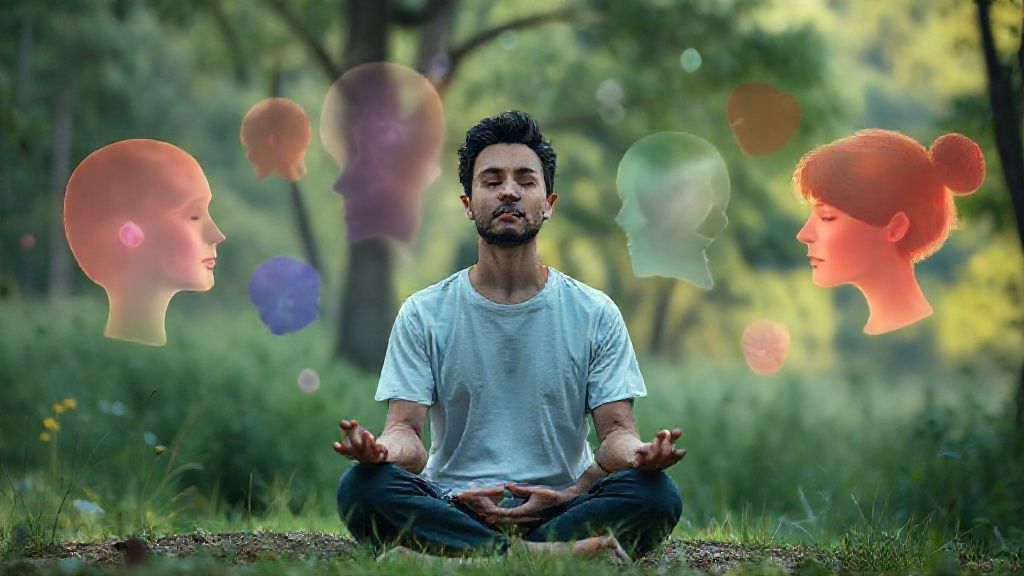
Meditation is the practice of training your awareness to better understand, manage, and respond to your emotions. It’s not about eliminating feelings or becoming a blank slate. True emotional health is about changing your relationship with your feelings, leading to greater emotional resilience, reduced reactivity, and a profound sense of inner peace. In this guide, we’ll explore the fascinating science behind this connection, provide you with practical techniques for navigating specific emotions, and show you how to build a sustainable practice for lifelong balance.

The Science of Meditation and Your Emotional Brain
You might wonder how simply sitting in silence can possibly tame a tidal wave of emotion. The answer lies within the very structure of your brain. Neuroscience has shown that meditation has a tangible, physical impact on the regions that govern our emotional lives.
Two key players are the amygdala and the prefrontal cortex. The amygdala is your brain’s alarm system, triggering the fight-or-flight response at the first sign of threat. The prefrontal cortex is the wise leader, responsible for rational decision-making, self-control, and emotional regulation. When you get cut off in traffic, it’s your amygdala that fires up the rage, while your prefrontal cortex is supposed to step in and remind you that honking your horn for a full minute might be an overreaction.
Regular meditation strengthens the prefrontal cortex and calms the reactivity of the amygdala. Think of it as building a bigger, stronger “pause button” between a triggering event and your reaction. This process is powered by neuroplasticity – your brain’s remarkable ability to rewire itself based on your experiences and repeated behaviors. By consistently practicing mindful awareness, you are literally carving new neural pathways that favor calm and clarity over chaos and reactivity. To begin this journey of reshaping your brain, understanding того, что такое управляемая медитация can be an excellent first step.
How Meditation Transforms Your Relationship with 5 Key Emotions
Meditation isn’t a one-size-fits-all solution, but a versatile toolkit. Let’s explore how it can help you navigate some of the most common and challenging emotional landscapes.
Taming Anxiety and Worry
Anxiety often feels like a future-oriented monster, feeding on “what if” scenarios. Mindfulness meditation pulls you out of that imagined future and into the safety of the present moment. By anchoring your attention on your breath or bodily sensations, you create a critical space between yourself and your anxious thoughts. You learn to see them as mental events—clouds passing in the sky—rather than absolute truths that demand your immediate attention. This shift doesn’t make the thoughts disappear, but it dramatically reduces their power over you. For immediate relief, try this 10-minute meditation for anxiety, or if you’re pressed for time, a quick 5-minute anxiety meditation can work wonders.
Cooling Down Anger and Frustration
Anger is a fiery, physical emotion. Meditation teaches you to turn your awareness inward to observe the raw data of anger—the clenched jaw, the hot face, the rapid heartbeat—without fueling the story that’s causing it. This act of non-judgmental observation allows the physiological wave of anger to rise, peak, and pass through you without compelling you to lash out. It gives you the precious seconds needed to choose a more skillful response. A powerful practice for this is using a сценарий медитации на отпускание to consciously release the tension.
Lifting the Fog of Sadness
Sadness and depression are often accompanied by rumination—a repetitive loop of negative thoughts. Meditation helps you break this cycle by allowing you to acknowledge the feeling of sadness with kindness, without getting lost in the narrative behind it. It fosters an attitude of self-compassion, reminding you that “this is a moment of suffering, and it’s okay.” This approach can prevent sadness from deepening into a prolonged state of despair. For those seeking targeted support, explore our guide on the best meditation practices for depression, or use a guided meditation for positive energy to gently cultivate a brighter mindset.
Cultivating Joy and Gratitude
Meditation isn’t only for difficult emotions; it’s also a powerful tool for amplifying positive ones. Practices like loving-kindness meditation actively train the mind to cultivate feelings of joy, compassion, and gratitude. By deliberately directing well-wishes towards yourself and others, you strengthen the brain circuits associated with happiness, making it easier to notice and savor life’s simple pleasures. You can start this practice with our сценарий медитации любящей доброты.
Finding Calm in the Chaos
For general stress management and emotional regulation, meditation is your anchor in the storm. It builds your baseline resilience, so you’re less easily thrown off balance by daily hassles. A consistent practice helps you maintain an inner steadiness, allowing you to respond to chaos with clarity rather than contributing to it. A great foundation is a 10-minute calming mindfulness meditation. When stress hits unexpectedly, you can reset your nervous system in moments with a 2-минутный сценарий медитации для заземления.

Your Toolkit: Meditation Practices for Emotional Mastery
Now that we understand the “why,” let’s dive into the “how.” Here are three foundational practices to build your emotional mastery.
Осознанность дыхания
This is the cornerstone of emotional awareness. The simple act of focusing on the natural rhythm of your inhalation and exhalation trains the mind to be present. When an emotion arises, you notice it, label it (“ah, this is anxiety”), and gently return your focus to the breath. This builds the “muscle” of awareness that is essential for all emotional regulation. To get started, follow along with our simple 10-minute breathing meditation script.
Body Scan for Somatic Awareness
Emotions don’t just live in the mind; they manifest as physical sensations in the body. Anxiety might be a knot in your stomach, while anger could be tension in your shoulders. The body scan practice involves systematically moving your attention through different parts of your body, observing any sensations without judgment. This helps you release stored emotional tension and connects you to the somatic wisdom of your emotions. You can practice this anytime with our handy 5-minute body scan meditation PDF.
Guided Meditation for Specific Needs
If sitting in silence feels daunting, guided meditations are an excellent resource. A skilled teacher’s voice can provide structure, encouragement, and specific imagery to help you navigate your inner world. They are particularly useful when you’re dealing with a strong, specific emotion and need directed support. To explore a variety of options, check out our curated list of the лучших медитаций с гидом для начинающих,.
Building a Sustainable Emotional Resilience Habit
The key to unlocking the long-term benefits of meditation for your emotions is consistency, not perfection. Here’s how to make it a sustainable part of your life:
- Начинайте с малого: Even three to five minutes a day is enough to build the habit and begin rewiring your brain.
- Attach it to a Habit: “I will meditate for 5 minutes after I brush my teeth in the morning.” This technique, known as habit stacking, makes it stick.
- Будьте добры к себе: Your mind will wander. That’s not a failure; it’s the practice. The magic is in gently bringing it back, again and again.
- Find Your Time: A easy 5-minute morning meditation can set a calm tone for your entire day. Conversely, an evening practice like a медитация перед сном для улучшения сна может помочь вам осмыслить эмоции прошедшего дня и обеспечить спокойный сон.

Часто задаваемые вопросы (ЧАВО)
В: Может ли медитация помочь при тревоге и депрессии?
О: Да, многочисленные исследования показывают, что медитация может быть мощным вспомогательным инструментом для управления симптомами тревоги и депрессии, снижая реактивность на негативные мысли и развивая самосострадание. Наибольшая эффективность достигается при её использовании вместе с рекомендациями профессионального врача.
В: Какой вид медитации наиболее эффективен для работы с эмоциями?
О: Медитация осознанности (Mindfulness) и медитация любящей доброты (Метта) широко считаются наиболее эффективными для эмоциональной регуляции. Медитация осознанности развивает внимание, в то время как Метта активно культивирует позитивные эмоциональные состояния, такие как сострадание и радость.
В: Сколько времени нужно медитировать, чтобы улучшить контроль над эмоциями?
О: Чувство спокойствия можно ощутить уже после одной сессии, однако большинство людей замечают ощутимые изменения в своей эмоциональной реактивности в течение 4–8 недель регулярной ежедневной практики. Ключ — в формировании нейронных путей для более спокойного состояния по умолчанию.
В: Во время медитации я становлюсь слишком эмоциональным, это нормально?
О: Безусловно. Медитация может создавать безопасное пространство для высвобождения подавленных эмоций. Это нормальная и здоровая часть процесса — признак того, что вы наконец позволяете себе почувствовать и отпустить то, что было скрыто. Относитесь к себе с добротой в такие моменты.
Заключение и призыв к действию (CTA)
Ваш внутренний эмоциональный мир — не ваш враг. Это богатая, сложная и жизненно важная часть вашего человеческого опыта. Медитация предоставляет карту и инструменты для умелого, сострадательного и сбалансированного путешествия по этому внутреннему ландшафту. Она даёт вам возможность перейти от состояния, когда эмоции контролируют вас, к пониманию и взаимодействию с ними как с ценными источниками информации.
Ваш путь к эмоциональному балансу начинается с одного вдоха. Изучите нашу библиотеку ресурсов, чтобы найти идеальную практику для себя. Готовы к более глубокому опыту и поддержке единомышленников? Присоединяйтесь к нашему бесплатному курсу медитации и сформируйте устойчивую привычку, которая навсегда изменит ваши отношения с эмоциями.