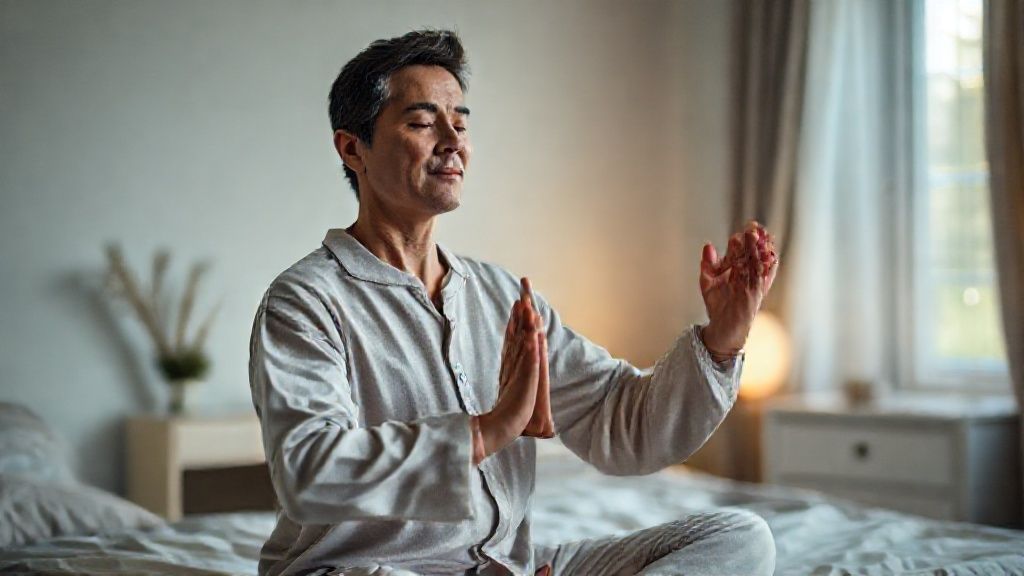
Guided Meditation for Sleep: Unlock Deep Rest With Mindful Movement
It’s 3 AM. The world is silent, but your mind is anything but quiet. As you toss and turn, replaying conversations from yesterday and worrying about tomorrow, sleep feels like a distant shore you can’t quite reach. You’ve tried counting sheep, drinking chamomile tea, and even forcing yourself to “just lie still,” but nothing seems to quiet the mental chatter.
What if the solution wasn’t less movement, but more intentional movement?
A guided meditation for sleep that incorporates mindful movement is a structured practice where gentle, intentional physical movements are used to anchor the mind in the present moment, release physical tension, and guide the body into a state of deep, natural sleep. This method is particularly effective for those who find purely mental meditation challenging or whose restless energy makes complete stillness feel impossible.
By combining the focused attention of meditation with the physical release of gentle movement, you create a powerful pathway to rest that calms the nervous system, quiets an overactive mind, and prepares your entire being for restorative sleep more effectively than stillness alone.
Why Your Body Needs to Move (a Little) Before Sleep
We’ve been conditioned to believe that preparing for sleep means becoming completely still—lying down and hoping sleep will magically descend. But for many people, especially those with active minds or sedentary lifestyles, this approach can backfire. The tension accumulated throughout the day—whether from sitting at a desk, emotional stress, or mental fatigue—remains trapped in the body, creating physical discomfort that keeps you awake.
Gentle movement before bed serves as a release valve for this accumulated tension. When you engage in mindful movement, you’re essentially helping your body process and discharge the day’s stresses stored in your muscles and connective tissues. This isn’t about exercise or burning energy—it’s about using intentional, slow movements to communicate safety to your nervous system.
The Science Behind Movement and Sleep
Your autonomic nervous system has two primary states: the sympathetic (“fight or flight”) and parasympathetic (“rest and digest”). When you’re stressed or anxious, your sympathetic nervous system is activated, releasing cortisol and adrenaline that keep you alert and awake. Mindful movement directly counters this state by:
- Lowering cortisol levels: Gentle movement has been shown to reduce stress hormones that interfere with sleep
- Increasing body awareness: By focusing on physical sensations, you draw attention away from anxious thoughts
- Releasing muscular tension: Slow stretches and movements release physical manifestations of stress
- Regulating breath: Movement naturally encourages deeper, more rhythmic breathing
This practice serves as a powerful bridge between the alertness of your day and the restfulness your body needs at night. If you’re looking to deepen your understanding of calming the mind beyond movement, our calming guided meditation practices at https://mindfulnesspractices.life/guided-meditation-for-calm-mind offer additional techniques to quiet mental chatter.
The Perfect Pre-Sleep Mindful Movement Routine
This simple routine takes just 10-15 minutes and can be done right in your bedroom. Remember, the goal isn’t perfection or flexibility—it’s presence and gentle release.
Step 1: Setting the Scene for Success
Before you begin moving, create an environment conducive to relaxation and sleep:
- Dim the lights: Use soft, warm lighting or candlelight to signal to your brain that it’s time to wind down
- Wear comfortable clothing: Choose loose, soft fabrics that don’t restrict movement
- Ensure a quiet space: Minimize external noises or use white noise if necessary
- Keep the temperature cool: A slightly cool room (around 65°F/18°C) supports better sleep
- Remove distractions: Put away electronic devices or set them to “do not disturb” mode
To enhance your practice atmosphere, consider playing our specially curated soothing 10-minute meditation music available at https://mindfulnesspractices.life/10-minute-meditation-music to create an auditory environment that supports relaxation.
Step 2: A 5-Minute Body Scan to Connect
Before introducing movement, begin with a body scan to assess your current state of tension and awareness:
- Lie comfortably on your back with knees bent or straight, whichever feels better for your lower back
- Close your eyes and take three deep breaths, noticing the sensation of air entering and leaving your body
- Gradually bring your attention to your feet, noticing any sensations—tingling, warmth, tension, or numbness
- Slowly move your awareness up through your body: ankles, calves, knees, thighs, hips, abdomen, chest, back, shoulders, arms, hands, neck, and finally your head
- Simply observe without judgment—you’re not trying to change anything yet, just gathering information about where tension resides
This body awareness practice helps you identify which areas need the most attention during your mindful movement. For a more detailed exploration of this technique, our dedicated медитации сканирования тела для сна at https://mindfulnesspractices.life/body-scan-meditation-for-sleep provides a comprehensive guided experience.
Step 3: Gentle Mindful Movements for Sleep
Now, transition into gentle movements, maintaining the awareness you cultivated during the body scan. Move slowly and deliberately, coordinating each movement with your breath:
Seated Neck Rolls
– Sit cross-legged on your bed or on a cushion on the floor
– As you inhale, slowly bring your right ear toward your right shoulder
– As you exhale, gently roll your chin toward your chest
– Inhale as you continue the roll to bring your left ear toward your left shoulder
– Exhale as you complete the circle
– Repeat 3-5 times in each direction, moving with the rhythm of your breath

Mindful Shoulder Shrugs
– Remain seated or lie on your back
– Inhale deeply as you slowly lift your shoulders toward your ears
– At the top of the movement, hold for a moment and notice the tension
– Exhale completely as you release your shoulders down, feeling the tension melt away
– Repeat 5-7 times, emphasizing the release on each exhale
Seated Spinal Twist
– Sit cross-legged with your spine tall
– Place your right hand on your left knee and your left hand behind you
– Inhale to lengthen your spine, exhale to gently twist to the left
– Hold for 3-5 breaths, noticing the stretch along your spine
– Exhale to release back to center and repeat on the other side
Gentle Forward Fold
– Sit on the edge of your bed with legs extended straight in front of you
– Inhale as you reach your arms overhead, lengthening your spine
– Exhale as you fold forward from your hips, reaching toward your feet
– Allow your head and neck to completely relax
– Hold for 5-8 breaths, deepening the stretch with each exhale

Step 4: Transitioning Into Stillness and Guided Sleep
After completing your gentle movements, it’s time to transition into stillness:
- Lie down on your back in your preferred sleep position
- Place one hand on your heart and the other on your abdomen
- Notice the difference in how your body feels compared to when you began
- Observe any areas where tension has released and areas that may still hold tightness
- Begin to follow the natural rhythm of your breath without trying to change it
- Allow the guided meditation to lead you the rest of the way into sleep
This transition period is crucial—it’s the bridge between active release and receptive rest, where your body integrates the benefits of the movement and becomes primed for sleep.
Beyond Sleep: Additional Benefits of Mindful Movement
While this practice is specifically designed to enhance sleep, its benefits extend far beyond the bedroom. Regular practice of mindful movement can transform your relationship with your body and mind throughout the day:
- Reduced daytime anxiety: The skills of noticing tension and consciously releasing it become tools you can use during stressful moments in your waking life
- Improved body awareness: You become more attuned to early signs of stress or discomfort in your body, allowing you to address them before they accumulate
- Enhanced mood regulation: The combination of movement and mindfulness has been shown to boost mood and emotional resilience
- Better stress management: By practicing the shift from sympathetic to parasympathetic nervous system activation, you strengthen your ability to navigate stress
For those dealing with daytime anxiety, our specialized управляемая медитация от стресса и тревоги at https://mindfulnesspractices.life/guided-meditation-for-stress-and-anxiety offers additional support for managing worry during waking hours.

Finding Your Guide: Top Resources for Sleep & Movement
Establishing a consistent practice is easier with the right guidance and resources. Here’s how to find support for your sleep and movement journey:
The Best Guided Sessions to Try Tonight
When searching for guided sleep meditations that incorporate movement, look for these specific keywords in meditation libraries:
- “Sleep yoga” or “Yoga for sleep”: These sessions typically include gentle, supported poses
- “Restorative yoga”: Focuses on completely supported, relaxing poses held for several minutes
- “Yoga nidra”: A powerful practice of conscious relaxation that often includes brief body awareness and subtle movements
- “Mindful movement for sleep”: Specifically combines meditation with gentle physical release
- “Somatic experiencing for sleep”: Uses body awareness and micro-movements to release tension
For an immediate start to your practice, our бесплатную управляемую медитацию для сна и тревоги at https://mindfulnesspractices.life/free-guided-meditation-for-sleep-and-anxiety offers a perfect introduction to combining movement with meditation for better rest.
Powerful Meditation Apps for Structured Practice
If you prefer a more structured approach, several excellent meditation apps offer specific programs for sleep with movement elements:
- Headspace: Features “sleep casts” that incorporate gentle movement visualization
- Calm: Includes “Daily Move” sessions that can be adapted for evening practice
- Insight Timer: Offers thousands of free movement-meditation hybrids from various teachers
- Breethe: Contains specific “Mindful Movement for Sleep” sessions
To explore alternative applications that might better suit your preferences, our comprehensive guide to приложений, похожих на Headspace at https://mindfulnesspractices.life/apps-similar-to-headspace compares features, pricing, and specialty sleep content across multiple platforms.

Часто задаваемые вопросы (ЧАВО)
Q: What is the best guided meditation for sleep with movement?
О: The “best” is personal and depends on your preferences, but look for sessions labeled “yoga nidra,” “sleep-based mindful movement,” or “restorative yoga for sleep” that focus on gentle, floor-based poses and breathwork. The most effective sessions will emphasize slow transitions and coordination with breath rather than challenging physical postures.
Q: Can mindful movement meditation help with anxiety?
О: Absolutely. The combination physically discharges anxious energy and mentally focuses your attention, breaking the cycle of anxious thoughts. It’s a powerful tool for both day and night. The physical component provides an outlet for the restless energy that often accompanies anxiety, while the mindfulness aspect trains your brain to stay present rather than spiraling into worry.
For those moments when anxiety strikes at bedtime, our specialized 5-минутную медитацию от тревоги и для сна at https://mindfulnesspractices.life/5-minute-meditation-for-anxiety-and-sleep Предлагает быстрый сброс, сочетающий дыхание и мягкое движение.
Вопрос: Какой продолжительности должна быть медитация для сна?
О: Хотя более длительные сеансы (20–30 минут) обеспечивают глубокое расслабление, даже короткая 10-минутная практика может быть чрезвычайно эффективной, особенно если она включает осознанное движение для быстрого снятия напряжения. Постоянство важнее продолжительности — ежедневная краткая практика принесёт больше пользы, чем часовой сеанс раз в неделю.
Если у вас мало времени, наша целенаправленная 10-минутная медитация для сна at https://mindfulnesspractices.life/10-minute-sleep-meditation-calm обеспечивает эффективную практику, сочетающую движение и направленную релаксацию.
Вопрос: Нормально ли засыпать во время направленной медитации?
О: Для медитаций, ориентированных на сон, это не просто нормально — это цель! Это означает, что практика работает, и ваше тело позволяет себе полностью отдаться отдыху. В отличие от практик осознанности, направленных на развитие концентрации и осведомлённости, медитации для сна специально разработаны, чтобы привести вас в бессознательное состояние, поэтому засыпание указывает на успех, а не на неудачу.
Ваш Путь к Спокойному Сну Начинается с Одного Движения
Сочетание направленной медитации и осознанного движения представляет собой глубокий сдвиг в нашем подходе ко сну. Вместо борьбы с беспокойным телом или попыток насильно успокоить ум мы учимся работать с нашей естественной физиологией, используя мягкое движение как средство перехода в глубокий отдых.
Эта практика не о добавлении ещё одного пункта в бесконечный список дел или достижении идеальной формы в каком-либо движении. Она о развитии более добрых отношений с вашим телом и умом — отношений, которые признают стрессы дня и предлагают сострадательный путь к их освобождению.
Истинная сила этой практики раскрывается не в каком-то отдельном сеансе, а в кумулятивном эффекте от обращения к себе ночь за ночью. Каждый плавный поворот плеч, каждый осознанный вдох, каждый момент безоценочного наблюдения за напряжением — эти небольшие действия накапливаются в глубокую трансформацию ваших отношений со сном, со стрессом и с самим собой.
Готовы ощутить разницу? Не просто читайте об этом — практикуйте. Найдите сегодня вечером тихое место и начните с нашей короткой направленной сессии, разработанной, чтобы плавно перевести вас от движения в глубокий сон. Ваше тело и ум ждут, чтобы открыть для себя этот естественный, доступный путь к заслуженному отдыху.