Тревога и дыхание: как разорвать цикл и обрести спокойствие
That tightness in your chest. The feeling that you can’t get a full breath. If you’ve ever felt this during a panic attack or a moment of high stress, you’ve experienced the powerful, and often frightening, link between anxiety and breathing.
The connection is a two-way street: anxiety disrupts your breathing patterns, and dysfunctional breathing can, in turn, fuel anxiety. The good news is that by consciously changing how you breathe, you can directly calm your nervous system and reduce anxiety symptoms.
In this guide, we will explore the science behind this link and provide practical, actionable breathing techniques and meditations you can use to reclaim a sense of calm and control.

The Science Behind Anxiety and Your Breath
To understand why breathing is so crucial for managing anxiety, we need to look at the body’s built-in alarm system: the autonomic nervous system. This system has two main branches: the sympathetic nervous system (SNS), which triggers the “fight or flight” response, and the parasympathetic nervous system (PNS), which promotes “rest and digest.”
When anxiety strikes, your SNS kicks into high gear. Your body prepares for perceived danger by releasing stress hormones like adrenaline and cortisol. One of the most immediate physical manifestations of this is a change in your breathing. It becomes rapid and shallow, moving from the diaphragm to the upper chest. This is known as thoracic or chest breathing.
This shift serves a biological purpose—to take in more oxygen quickly for a potential physical struggle. However, when the threat isn’t physical (like a work deadline or social situation), this type of breathing becomes problematic. It can lead to hyperventilation, where you exhale too much carbon dioxide too quickly. This upsets the delicate oxygen-CO2 balance in your blood, leading to physical symptoms like:
- Dizziness or lightheadedness
- Tingling in the hands and feet
- A racing heart
- Chest tightness or pain
Crucially, these physical sensations are frightening. Your brain interprets them as further evidence of danger, which fuels more anxiety, creating a vicious cycle: Anxiety → Rapid, Shallow Breathing → Physical Symptoms → More Anxiety.
Breaking this cycle requires consciously activating the parasympathetic nervous system. The most direct way to do this? Through deliberate, slow, diaphragmatic breathing. This is why learning guided meditations specifically designed for stress relief is so powerful.
How to Spot Anxiety-Driven Breathing Patterns
Becoming aware of your breathing patterns is the first step toward changing them. Many people with anxiety breathe dysfunctionally without even realizing it. Here are some common signs of anxiety-driven breathing:
- Chest Breathing: Your shoulders and chest move noticeably up and down with each breath, rather than your belly expanding.
- Holding Your Breath: You frequently catch yourself holding your breath or taking very shallow, tentative breaths, especially when focused or stressed.
- Frequent Sighing or Yawning: This can be your body’s attempt to compensate for not getting enough air through regular, shallow breaths.
- Breathlessness at Rest: Feeling like you can’t catch your breath even when you’re sitting still or not exerting yourself.
- Rapid, Irregular Rhythm: Your breath lacks a slow, steady, rhythmic pattern.
3 Breathing Techniques to Calm Anxiety Instantly
The following techniques are evidence-based tools to short-circuit the anxiety cycle. They work by slowing the breath, increasing carbon dioxide levels back to normal, and signaling the brain that it’s safe to relax.
1. Diaphragmatic Breathing (Belly Breathing)
This is the foundation of all calming breathwork. It retrains your body to breathe efficiently and activates the vagus nerve, a key component of the parasympathetic nervous system.
Step-by-Step Instructions:
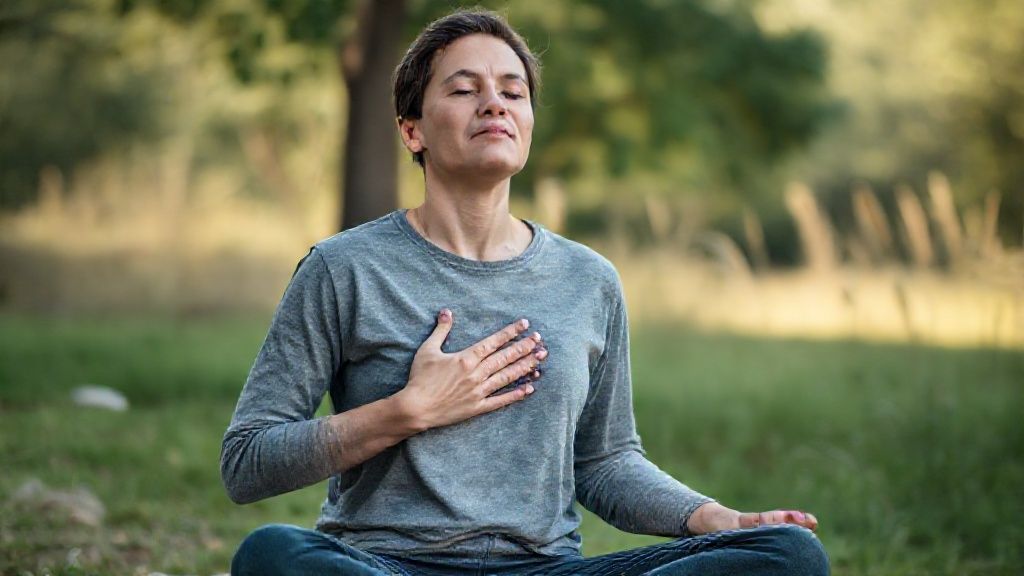
- Sit comfortably in a chair or lie on your back with your knees bent. Place one hand on your upper chest and the other on your belly, just below your rib cage.
- Breathe in slowly and deeply through your nose. As you inhale, focus on allowing your belly to expand and push your hand outward. The hand on your chest should remain as still as possible.
- Exhale slowly through your mouth (or nose, if preferred), feeling the hand on your belly fall inward. You can gently contract your abdominal muscles to help push all the air out.
- Continue for 5-10 cycles, focusing on the rise and fall of your belly.
For beginners, it can help to start with a simple one-minute breathing exercise to get started. If you want to learn more about the science of diaphragmatic breathing for anxiety, we have a dedicated resource for you.
2. The 4-7-8 Breathing Method (Relaxing Breath)
Developed by Dr. Andrew Weil, this technique is exceptionally effective for reducing anxiety and quieting a racing mind, especially before sleep.
Step-by-Step Instructions:
- Place the tip of your tongue against the ridge of tissue behind your upper front teeth and keep it there for the entire exercise.
- Exhale completely through your mouth, making a whoosh sound.
- Close your mouth and inhale quietly through your nose for a mental count of 4.
- Hold your breath for a count of 7.
- Exhale completely through your mouth, making a whoosh sound, for a count of 8.
- This completes one cycle. Repeat the cycle three to four times.
3. Box Breathing (Square Breathing)
This technique, used by Navy SEALs to stay calm under pressure, is excellent for managing panic and improving focus. Its equal parts make it easy to remember.
Step-by-Step Instructions:
- Sit upright and exhale all the air from your lungs.
- Inhale slowly and deeply through your nose for a count of 4.
- Hold your breath at the top of the inhalation for a count of 4.
- Exhale slowly and completely through your mouth for a count of 4.
- Hold your breath at the bottom of the exhalation for a count of 4.
- Repeat the pattern for 4-6 rounds or until you feel a sense of calm.

Integrating Breathing into a Mindful Meditation Practice
While discrete breathing exercises are powerful, integrating breath awareness into a formal meditation practice can build long-term resilience to anxiety. Meditation takes the principle of conscious breathing and expands it into a sustained practice of observing your present-moment experience without judgment.
When you meditate, the breath serves as an “anchor” to the present. Each time your mind wanders to an anxious thought about the future or a regret about the past, you gently guide your attention back to the physical sensation of your breath. This process strengthens your ability to disengage from anxious thought patterns. If you’re new to this, it’s helpful to understand what guided meditation is and how it works.
Управляемые медитации для снятия тревоги и дыхательные практики
Управляемые медитации предоставляют словесные инструкции и поддерживающую структуру, что делает их идеальными для начинающих и тех, кто борется с высокой тревожностью. Вот несколько рекомендаций в зависимости от имеющегося у вас времени.
Для немедленного облегчения (5-10 минут)
Когда тревога кажется непреодолимой, короткая, сфокусированная сессия может обеспечить быстрое облегчение.
- Попробуйте быстрая пятиминутная медитация от тревоги чтобы перезагрузить вашу нервную систему в течение напряженного дня.
- Если у вас есть немного больше времени, эта 10-минутная управляемая медитация от тревоги может провести вас в более глубокое состояние расслабления.
Для углубленной практики (15-20 минут)
Построение последовательной, более длительной практики со временем может перенастроить реакцию вашего мозга на стресс, снизив вашу восприимчивость к триггерам тревоги.
- Для тех, кого преследуют навязчивые, цикличные мысли, мы рекомендуем расширенную 20-минутную сессию от тревоги и чрезмерных размышлений.
Для спокойствия и сна
Тревога не всегда отключается перед сном. Использование медитаций, сфокусированных на дыхании, вечером может успокоить ум и подготовить тело к спокойному сну.
- Чтобы успокоить занятый ум после долгого дня, послушайте успокаивающую управляемую медитацию для умиротворения разума.
- Если тревога не дает вам уснуть ночью, завершите свой день бесплатной управляемой медитацией для сна от тревоги.

Создание долгосрочного набора инструментов для управления тревогой
Дыхание — невероятно мощный инструмент, но наиболее эффективно оно как часть целостного подхода к психическому благополучию. Рассматривайте его как базовый навык в вашем наборе инструментов для управления тревогой.
- Расширьте свою практику осознанности: Помимо дыхания, существует множество других быстрых упражнений на осознанность, которые вы можете попробовать чтобы сохранять присутствие в течение дня.
- Используйте технологии: Для поддержки в пути изучите лучшие приложения для глубокого дыхания, которые направят вашу практику прямо с вашего телефона.
- Углубите свое понимание: Если вы готовы вывести свою практику на новый уровень, вы можете изучить продвинутые техники терапии осознанности, используемые профессионалами.
Часто задаваемые вопросы: Тревога и дыхание (оптимизировано для голосового поиска)
В: Какое дыхательное упражнение лучше всего подходит от тревоги?
О: Хотя индивидуальные предпочтения различаются, диафрагмальное дыхание часто считается самым базовым и эффективным для немедленного успокоения нервной системы во время приступа тревоги.
В: Почему при тревоге трудно дышать?
О: Тревога активирует симпатическую нервную систему, вызывая быстрое, поверхностное грудное дыхание. Это может привести к гипервентиляции, создавая ощущение, что вам не хватает воздуха, хотя на самом деле вы дышите чрезмерно.
В: Как мне остановить тревожное дыхание?
О: Ключ в том, чтобы сознательно перейти от грудного дыхания к медленному, глубокому дыханию животом. Такие техники, как метод 4-7-8 или квадратное дыхание, могут помочь вам восстановить контроль и подать телу сигнал расслабиться.
В: Могут ли дыхательные упражнения вылечить тревогу?
О: Это мощный инструмент управления, а не лекарство. Они могут значительно уменьшить симптомы и повысить ваше чувство контроля. Для комплексного подхода их лучше всего использовать вместе с терапией, изменением образа жизни и другими стратегиями совладания. Если вы рассматриваете возможность профессиональной поддержки, вы можете изучить лучшие методы терапии от тревоги и депрессии.
Заключение + Призыв к действию
Связь между вашим разумом и дыханием — один из самых доступных и мощных инструментов, которыми вы обладаете для управления тревогой. Понимая эту связь и практикуя техники, изложенные здесь, вы получаете возможность напрямую влиять на свою нервную систему и разорвать цикл тревоги и дисфункционального дыхания.
Не просто читайте об этом — испытайте на себе. Закройте глаза и попробуйте технику дыхания 4-7-8 прямо сейчас в течение трех циклов. Для большего управляемого сопровождения на вашем пути к спокойствию, откройте для себя больше медитативных практик от тревоги в нашем специальном руководстве.