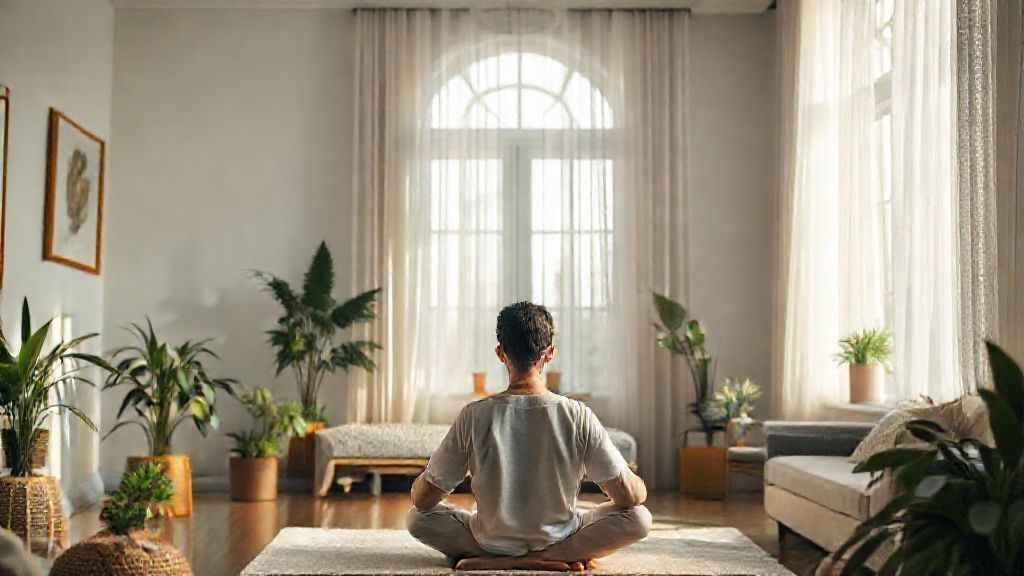
Find Your Calm: A Powerful 20 Minute Guided Meditation for Beginners
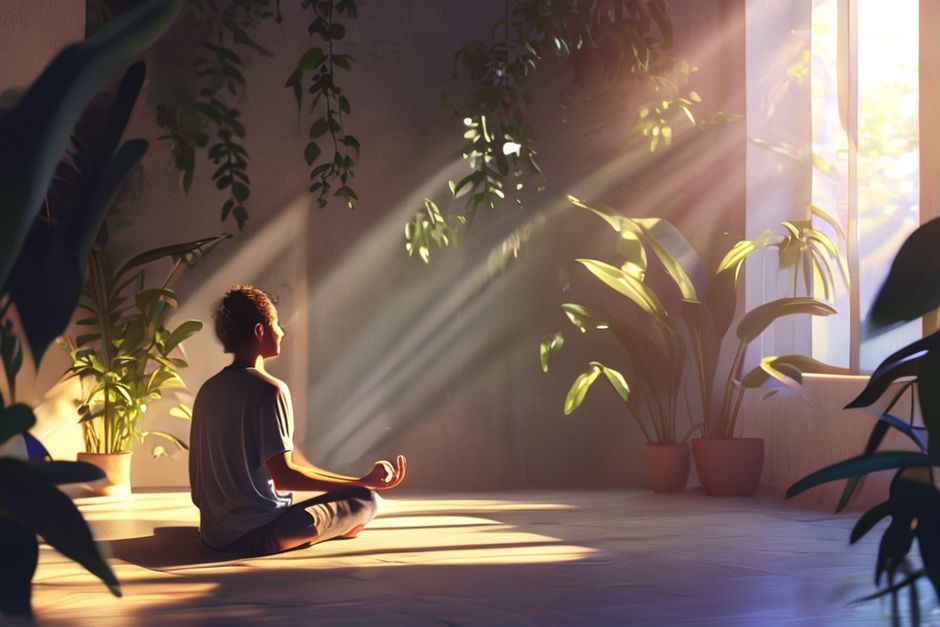
Do you ever feel like your mind is running a marathon while you’re just sitting still? That mental chatter, the endless to-do lists, the constant ping of notifications – it’s enough to make anyone crave a moment of peace. You know meditation could help, but who has an hour to sit cross-legged on a cushion?
Here’s the good news: you don’t need hours of silence to experience profound benefits. A 20-minute guided meditation is the perfect balance for the modern lifestyle—long enough to achieve deep relaxation and mental clarity, yet short enough to fit into a busy schedule. This comprehensive guide will walk you through a complete 20-minute mindfulness meditation session and explain its profound benefits for both mind and body.
Whether you’re completely new to meditation or looking to establish a consistent practice, you’re about to discover why this specific time frame might just become your most valuable daily ritual.
Why a 20 Minute Meditation Is Your New Secret Weapon
Twenty minutes sits perfectly in what meditation experts call the “Goldilocks Zone” – not too short to feel superficial, not too long to feel intimidating or unsustainable for daily practice.
Scientifically, this duration provides substantial benefits. Research shows that regular 20-minute meditation sessions can:
- Reduce cortisol levels by approximately 20%, significantly lowering stress
- Activate the parasympathetic nervous system, shifting your body from “fight or flight” to “rest and digest”
- Increase gray matter density in brain regions associated with learning, memory, and emotion regulation
- Improve focus and attention span by strengthening neural pathways in the prefrontal cortex
The magic of 20 minutes lies in its ability to give your mind enough time to settle beyond surface-level relaxation and access deeper states of awareness. The first few minutes allow for transition from busyness to stillness, while the remaining time provides ample opportunity for genuine mental reset.
For readers curious about the fundamentals, learn more about what guided meditation is.
Preparing for Your 20 Minute Mindfulness Session
Proper preparation transforms your meditation from another item on your to-do list into a sacred space for self-care. These simple steps create a container that supports deeper practice.
Finding Your Sanctuary
You don’t need a dedicated meditation room, but creating a consistent space signals to your brain that it’s time to shift gears.
- Choose a quiet corner where you’re unlikely to be interrupted
- Ensure comfortable seating – a chair with straight back, cushion on the floor, or even lying down if you won’t fall asleep
- Minimize distractions – silence your phone, close the door, and let household members know you need uninterrupted time
- Consider ambiance – soft lighting, a comfortable room temperature, and perhaps a blanket if you tend to get cold

Setting a Gentle Intention
Before beginning, take a moment to connect with your “why.” Your intention isn’t a goal to achieve but a quality you’d like to bring to your practice.
Some examples of gentle intentions:
– “I am doing this to offer myself kindness”
– “I am open to whatever arises during this practice”
– “I am creating space between my thoughts and reactions”
– “I am cultivating calm that will ripple through my day”
Remember, there’s no “right” way to feel during meditation. The practice is in showing up, whatever your experience.
If you’re short on time, a īsai vadītai meditācijai can be a great way to reset during a busy day.
Your Step-by-Step 20 Minute Guided Meditation Script
This script is designed to be read slowly, with pauses between sentences. You can read it once to familiarize yourself, then guide yourself through it, record yourself reading it aloud, or simply use it as a framework for your practice.
Minute 0-5: Arriving and Grounding (The Settling Phase)
Find your comfortable seated position, allowing your spine to be straight but not rigid, as if a string is gently lifting the crown of your head toward the ceiling. Rest your hands comfortably on your knees or in your lap.
Gently close your eyes, or maintain a soft, downward gaze if that feels more comfortable. Begin by bringing awareness to the physical sensations of your body making contact with the seat beneath you. Notice the weight of your body, the points of contact.
Take three conscious breaths – not trying to change anything, simply noticing the natural flow of inhalation and exhalation. With each exhale, imagine releasing any tension you’re holding, letting it drain down through your body and into the earth beneath you.
Scan your body from head to toe, noticing any areas of holding or tension without judgment. Simply acknowledge what’s here – tight shoulders, a busy mind, restlessness in the legs – and offer yourself permission to be exactly as you are in this moment.
If you find your mind is particularly busy, a quick short grounding meditation script can help you settle in faster.
Minute 5-15: The Core Practice – Mindfulness of Breath and Body
Now, gently bring your attention to your breath. Don’t try to control it – simply observe the natural rhythm. Notice the sensation of the air entering through your nostrils, filling your lungs, and the gentle release as you exhale.
You might find it helpful to focus on a specific anchor point – the rise and fall of your abdomen, the coolness of air at the tip of your nose, or the expansion and contraction of your chest.
Inevitably, your mind will wander. This isn’t a failure – it’s the practice. When you notice your attention has drifted to thoughts, plans, or memories, gently acknowledge “thinking” and return your attention to the breath. Do this with kindness, as you might guide a child back to the path.
After several minutes with the breath, expand your awareness to include your entire body. Sense the body as a whole, breathing. Notice any sensations – warmth, coolness, tingling, pressure – without labeling them as good or bad.
Slowly begin a body scan, moving your attention through different regions:
– Crown of the head and scalp
– Forehead, eyes, and jaw (noticing any tension and softening)
– Neck and shoulders (allowing them to relax downward)
– Arms and hands (noticing the energy in your fingertips)
– Chest and abdomen (feeling the gentle movement with each breath)
– Back, from upper to lower (supporting you with each breath)
– Hips, legs, and feet (feeling their connection to the earth)
Rest in this expanded awareness of the entire body breathing for a few moments.
The body scan is a powerful technique on its own. Explore a dedicated body scan meditation technique lai padziļinātu savu praksi.
Minute 15-20: Integration and Gentle Return
As we approach the end of our practice, begin to bring your awareness back to the physical space around you. Notice any sounds in the environment – near and far – without judgment.
Gently begin to reintroduce subtle movement – wiggling your fingers and toes, rotating your ankles and wrists. Notice how your body feels after this period of stillness.
When you feel ready, slowly open your eyes, allowing them to adjust to the light. Take a moment to observe your surroundings with fresh awareness.
Before jumping up, set an intention to carry this quality of mindful presence with you into the next moments of your day. Perhaps offer gratitude to yourself for taking this time for your wellbeing.
Overcoming Common Meditation Hurdles
Every meditator encounters challenges – they’re not signs you’re “doing it wrong” but opportunities to deepen your practice.
“My mind won’t stop thinking” – This is the most common concern. The goal isn’t to stop thoughts but to change your relationship with them. Imagine your thoughts as clouds passing in the sky – you notice them, but don’t need to hold onto them. Each time you gently return to your anchor, you’re strengthening your mindfulness muscle.
“I feel restless and can’t sit still” – Physical discomfort and restlessness are normal, especially when beginning. Make small adjustments if needed, but try to observe the sensation of restlessness with curiosity before immediately moving. Often, the impulse passes.
“I keep falling asleep” – If sleepiness is persistent, try meditating at a different time of day, sitting upright rather than lying down, or ensuring you’re well-rested. A small splash of cold water on your face before meditating can also help.

For many, a restless mind is linked to anxiety. Our dedicated meditation for anxiety and overthinking addresses this directly.
If you consistently struggle with sleepiness, a more energizing morning meditation for energy routine might help.
Expanding Your Meditation Practice
Consistency matters more than duration. A daily 20-minute practice will transform your relationship with your mind more than occasional hour-long sessions.
Building the habit:
– Anchor your practice to an existing routine (after brushing teeth, before lunch)
– Start with smaller commitments – perhaps 5 days a week rather than 7
– Use a meditation app with reminders to support consistency
– Be compassionate when you miss a day – just begin again
Exploring different styles:
Once you’ve established a consistent mindfulness practice, you might explore:
– Loving-kindness meditation to cultivate compassion
– Visualization practices for specific goals or healing
– Movement meditations like walking meditation or yoga
Ready to try a different duration? Explore our 15 minute guided meditation for a slightly shorter session.
If sleep is your primary goal, our vadītu miega meditāciju is specifically designed to help you drift off.
For those completely new to the practice, start with the labāko vadīto meditāciju iesācējiem.
Bieži Uzdotie Jautājumi (BUJ)
Is 20 minutes of meditation enough?
Yes, 20 minutes is a highly effective duration for building a sustainable habit and experiencing significant neurological and psychological benefits, including reduced stress and improved focus. Studies show that this duration allows the nervous system to shift into parasympathetic dominance, creating measurable changes in brain activity associated with calm and clarity.
What is the difference between mindfulness and guided meditation?
Mindfulness is the fundamental practice of being present with our experience without judgment. Guided meditation is a method where an instructor leads you through a mindfulness practice or visualization, making it easier for beginners by providing structure and direction. All guided meditations incorporate mindfulness, but not all mindfulness practice requires guidance.
I can’t sit still for 20 minutes. What should I do?
This is very common! Start with shorter sessions, like a 5 minute meditation, and gradually increase the time. The key is consistency, not duration. Also, experiment with different postures – meditation can be practiced walking, standing, or even lying down. Remember, some restlessness is normal and becomes less prominent with regular practice.
Can a 20 minute meditation help with anxiety?
Absolutely. Regular meditation trains the brain to detach from anxious thought patterns by strengthening the prefrontal cortex (responsible for rational thinking) while calming the amygdala (the brain’s fear center). For immediate relief, try our specific meditation for stress and anxiety.
Your Journey to Calm Begins Here
The beauty of a 20-minute meditation practice is its profound simplicity. In just the time it might take to scroll through social media or worry about tomorrow, you can fundamentally shift your relationship with your mind. You’ve taken the first step simply by reading this guide.
Remember that meditation is called a “practice” for a reason – it’s not about perfection but about showing up consistently, with kindness and curiosity toward whatever arises. Some days will feel deeply peaceful, others may feel frustrating – both are valuable parts of the journey.
Your journey to a calmer mind starts now. Bookmark this page for your daily practice, and when you’re ready to deepen your journey, explore our library of meditations for inner peace and other resources to support your well-being.
