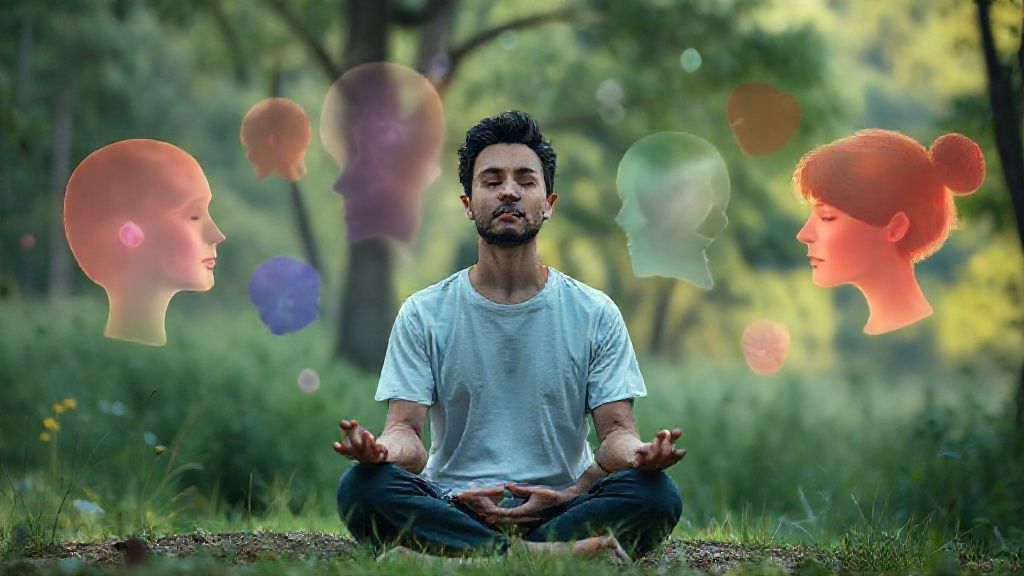
Žinoma. Kaip vyresnysis SEO strategas, parengsiu išsamų, naudotojų poreikius atitinkantį tinklaraščio įrašą ir visą susijusią metaduomenis pagal pateiktą struktūrą, laikydamasis naujausių „Google“ 2025 m. gairių, susijusių su E-E-A-T ir naudotojo patirtimi.
Meditacija ir emocijos: Galutinis gidas balanso paieškai
Ar jums kada nors kilo toks pyktis, dėl kurio pasakėte ką nors, ko akimirksniu pradėjote gailėtis? O gal esate patekę į nerimo spiralę, kuri užvaldė visą jūsų dieną? Jūs ne vienas. Mūsų emocijos yra galingos jėgos, ir mūsų sparčiai besikeičiančiame pasaulyje lengva jaustis, lyg jos vairuotų. O jei galėtumėte išmokti būti ramiu, stebinčiu navigatoriumi, o ne išsigandusiu keleiviu šioje emocinėse kalneliuose?
Meditacija yra sąmoningumo lavinimo praktika, skirta geriau suprasti, valdyti ir reaguoti į savo emocijas. Tai nėra jausmų panaikinimas ar tapimas tuščia lenta. Tikra emocinė sveikata yra jūsų santykio su savo jausmais keitimas, vedantis į didesnį emocinį atsparumą, sumažėjusį reaktyvumą ir gilią vidinę ramybę. Šiame gide mes išnagrinėsime mokslinius šio ryšio pagrindus, pateiksime praktinių technikų, kaip valdyti konkrečias emocijas, ir parodysime, kaip sukurti tvarią praktiką ilgalaikei pusiausvyrai.

Meditacijos mokslas ir jūsų emocinis smegenys
Galbūt svarstote, kaip paprastas sėdėjimas tyloje gali suraminti emocijų cunamį. Atsakymas slypi pačiose jūsų smegenų struktūrose. Neuromoksliniai tyrimai parodė, kad meditacija turi apčiuopiamą, fizinį poveikį regionams, kurie valdo mūsų emocinį gyvenimą.
Du pagrindiniai veikėjai yra amigdala ir prefrontalinė žievė. Amigdala yra jūsų smegenų pavojaus signalizacijos sistema, suaktyvinanti kovos arba bėgimo reakciją pirmuoju grėsmės ženklu. Prefrontalinė žievė yra išmintingas lyderis, atsakingas už racionalų sprendimų priėmimą, savikontrolę ir emocinį reguliavimą. Kai prieš jus įsirėžia į eismą, būtent amigdala suaktyvina pyktį, o jūsų prefrontalinei žievei tenka įsikišti ir priminti, kad minutę signalizuoti gali būti pernelyg stipri reakcija.
Reguliari meditacija stiprina prefrontalinę žievę ir ramina amigdalos reaktyvumą. Įsivaizduokite tai kaip didesnio ir stipresnio “pauzės mygtuko” sukūrimą tarp sukeliančio įvykio ir jūsų reakcijos. Šį procesą varo neuroplastiškumas – jūsų smegenų nuostabi gebėjimas perprogramuoti save pagal jūsų patirtį ir pasikartojančius elgesio modelius. Nuosekliai praktikuodami sąmoningą dėmesį, jūs tiesiogine prasme keliates naujus neuroninius kelius, kurie palankūs ramybei ir aiškumui, o ne cha what guided meditation is can be an excellent first step.
How Meditation Transforms Your Relationship with 5 Key Emotions
Meditation isn’t a one-size-fits-all solution, but a versatile toolkit. Let’s explore how it can help you navigate some of the most common and challenging emotional landscapes.
Taming Anxiety and Worry
Anxiety often feels like a future-oriented monster, feeding on “what if” scenarios. Mindfulness meditation pulls you out of that imagined future and into the safety of the present moment. By anchoring your attention on your breath or bodily sensations, you create a critical space between yourself and your anxious thoughts. You learn to see them as mental events—clouds passing in the sky—rather than absolute truths that demand your immediate attention. This shift doesn’t make the thoughts disappear, but it dramatically reduces their power over you. For immediate relief, try this 10-minute meditation for anxiety, or if you’re pressed for time, a quick 5-minute anxiety meditation can work wonders.
Cooling Down Anger and Frustration
Anger is a fiery, physical emotion. Meditation teaches you to turn your awareness inward to observe the raw data of anger—the clenched jaw, the hot face, the rapid heartbeat—without fueling the story that’s causing it. This act of non-judgmental observation allows the physiological wave of anger to rise, peak, and pass through you without compelling you to lash out. It gives you the precious seconds needed to choose a more skillful response. A powerful practice for this is using a letting go meditation script to consciously release the tension.
Lifting the Fog of Sadness
Sadness and depression are often accompanied by rumination—a repetitive loop of negative thoughts. Meditation helps you break this cycle by allowing you to acknowledge the feeling of sadness with kindness, without getting lost in the narrative behind it. It fosters an attitude of self-compassion, reminding you that “this is a moment of suffering, and it’s okay.” This approach can prevent sadness from deepening into a prolonged state of despair. For those seeking targeted support, explore our guide on the best meditation practices for depression, or use a guided meditation for positive energy to gently cultivate a brighter mindset.
Cultivating Joy and Gratitude
Meditation isn’t only for difficult emotions; it’s also a powerful tool for amplifying positive ones. Practices like loving-kindness meditation actively train the mind to cultivate feelings of joy, compassion, and gratitude. By deliberately directing well-wishes towards yourself and others, you strengthen the brain circuits associated with happiness, making it easier to notice and savor life’s simple pleasures. You can start this practice with our loving-kindness meditation script.
Finding Calm in the Chaos
For general stress management and emotional regulation, meditation is your anchor in the storm. It builds your baseline resilience, so you’re less easily thrown off balance by daily hassles. A consistent practice helps you maintain an inner steadiness, allowing you to respond to chaos with clarity rather than contributing to it. A great foundation is a 10-minute calming mindfulness meditation. When stress hits unexpectedly, you can reset your nervous system in moments with a 2-minute grounding meditation script.

Your Toolkit: Meditation Practices for Emotional Mastery
Now that we understand the “why,” let’s dive into the “how.” Here are three foundational practices to build your emotional mastery.
Mindfulness of Breath
This is the cornerstone of emotional awareness. The simple act of focusing on the natural rhythm of your inhalation and exhalation trains the mind to be present. When an emotion arises, you notice it, label it (“ah, this is anxiety”), and gently return your focus to the breath. This builds the “muscle” of awareness that is essential for all emotional regulation. To get started, follow along with our simple 10-minute breathing meditation script.
Body Scan for Somatic Awareness
Emotions don’t just live in the mind; they manifest as physical sensations in the body. Anxiety might be a knot in your stomach, while anger could be tension in your shoulders. The body scan practice involves systematically moving your attention through different parts of your body, observing any sensations without judgment. This helps you release stored emotional tension and connects you to the somatic wisdom of your emotions. You can practice this anytime with our handy 5-minute body scan meditation PDF.
Guided Meditation for Specific Needs
If sitting in silence feels daunting, guided meditations are an excellent resource. A skilled teacher’s voice can provide structure, encouragement, and specific imagery to help you navigate your inner world. They are particularly useful when you’re dealing with a strong, specific emotion and need directed support. To explore a variety of options, check out our curated list of the best guided meditations for beginners.
Building a Sustainable Emotional Resilience Habit
The key to unlocking the long-term benefits of meditation for your emotions is consistency, not perfection. Here’s how to make it a sustainable part of your life:
- Start Small: Even three to five minutes a day is enough to build the habit and begin rewiring your brain.
- Attach it to a Habit: “I will meditate for 5 minutes after I brush my teeth in the morning.” This technique, known as habit stacking, makes it stick.
- Be Kind to Yourself: Your mind will wander. That’s not a failure; it’s the practice. The magic is in gently bringing it back, again and again.
- Find Your Time: A easy 5-minute morning meditation can set a calm tone for your entire day. Conversely, an evening practice like a priešmiegio meditacija miegui can help you process the day’s emotions and ensure restful sleep.

Dažniausiai Užduodami Klausimai (DUK)
Q: Can meditation help with anxiety and depression?
A: Yes, numerous studies show that meditation can be a powerful complementary tool for managing symptoms of anxiety and depression by reducing reactivity to negative thoughts and fostering self-compassion. It is most effective when used alongside professional medical advice.
Q: What is the best type of meditation for emotions?
A: Mindfulness Meditation and Loving-Kindness (Metta) Meditation are widely regarded as the most effective for emotional regulation. Mindfulness builds awareness, while Metta actively cultivates positive emotional states like compassion and joy.
Q: How long does it take for meditation to improve emotional control?
A: While a sense of calm can be felt after a single session, most people notice tangible changes in their emotional reactivity within 4 to 8 weeks of consistent, daily practice. The key is building the neural pathways for a calmer default state.
Q: I get too emotional when I meditate, is that normal?
A: Absolutely. Meditation can create a safe space for suppressed emotions to surface. This is a normal and healthy part of the process—a sign that you are finally allowing yourself to feel and release what has been stored away. Be gentle with yourself during these moments.
Išvada ir Kvietimas Veikti (KVV)
Your emotional world is not your enemy. It is a rich, complex, and vital part of your human experience. Meditation provides the map and the tools to navigate this inner landscape with skill, compassion, and balance. It empowers you to move from being controlled by your emotions to understanding and working with them as valuable sources of information.
Your journey to emotional balance starts with a single breath. Explore our library of resources to find the perfect practice for you. Ready for a deeper experience and the support of a like-minded community? Join our free meditation course and build a lasting habit that will transform your relationship with your emotions for life.