Of course. Here is the complete blog post and all required SEO metadata, crafted by a Senior SEO Strategist & Content Writer.
Master a 10 Minute Breathing Meditation for Instant Calm & Focus
You’re in the middle of a hectic day. Your to-do list is a mile long, notifications are pinging, and you can feel your shoulders creeping up toward your ears. Your mind is racing a hundred miles an hour, and that feeling of being overwhelmed is starting to bubble up. What if you could hit the reset button on all of that in less time than it takes to scroll through your social media feed?
A 10 minute breathing meditation is a powerful, science-backed tool to do exactly that. It’s a dedicated pause to step out of the chaos, reset your nervous system, and return to your day with a renewed sense of calm and sharpened focus. Research shows that just a few minutes of focused breathing can lower cortisol levels, improve heart rate variability, and enhance mental clarity. This simple practice is your accessible, always-available anchor in the storm of modern life.
Why a 10-Minute Breathing Practice Is Your Secret Weapon
Why ten minutes? It’s the perfect sweet spot. For beginners, an hour-long session can feel daunting and unachievable, while two minutes, though beneficial, might not feel long enough to truly sink in. Ten minutes is a substantial, yet completely manageable, commitment. It’s long enough to allow your body and mind to transition from a state of “fight-or-flight” to “rest-and-digest,” but short enough to fit into even the busiest of schedules.
The benefits are both physiological and psychological. Physiologically, slow, deep breathing stimulates the vagus nerve, which is the command center of your parasympathetic nervous system. This is the part of your nervous system responsible for calming you down. It slows your heart rate, lowers your blood pressure, and encourages digestion. Psychologically, this practice creates a crucial pause between a external stimulus and your reaction to it. Instead of being swept away by a wave of stress or emotion, you learn to observe it, creating space for a more thoughtful and intentional response.
How to Practice Your 10 Minute Breathing Meditation: A Step-by-Step Guide
This is your foundational guide. Follow these steps to build a consistent and effective practice.
Step 1: Find Your Space and Posture
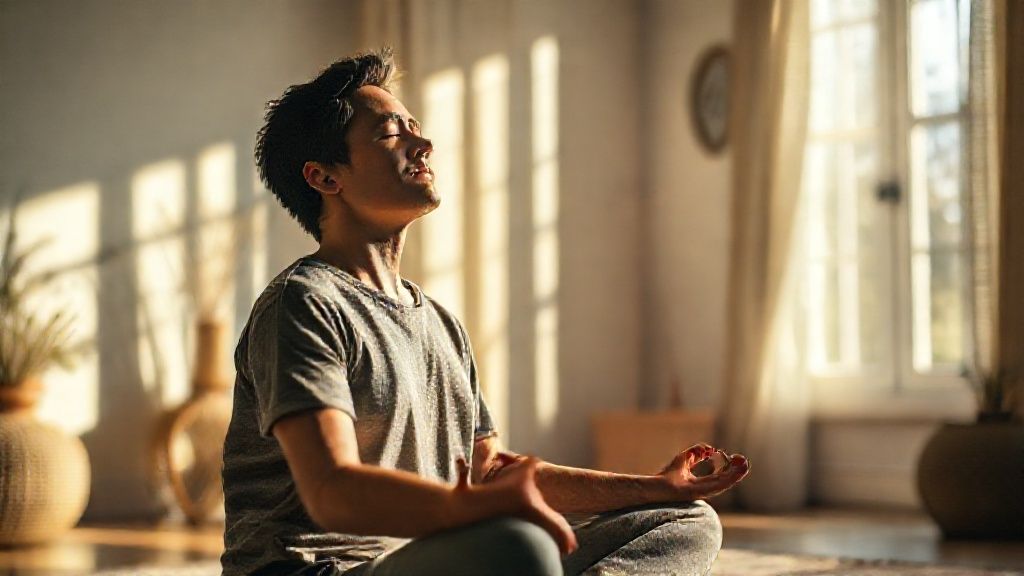
You don’t need a soundproof room or a special cushion. Find a relatively quiet place where you won’t be interrupted for ten minutes. Sit in a chair with your back straight but not rigid, or cross-legged on the floor. The key is to have a posture that is both alert and relaxed. Allow your hands to rest comfortably on your knees or in your lap. If sitting is uncomfortable, you can even lie down on your back.

Step 2: Set Your Intention and a Gentle Timer
Before you begin, take a moment to set a gentle intention. It could be as simple as, “My intention is to be present with my breath,” or “I am doing this for my peace of mind.” There is no goal of achieving a blank mind or a specific feeling; the goal is simply to practice.
Then, set a timer for ten minutes. Choose a timer with a soft, gentle sound so the ending isn’t jarring. If you don’t have a timer you like, explore our curated list of the best mindfulness apps to help you stay on track.
Step 3: The Basic Breath Awareness Technique
This is the core of the practice. Close your eyes or lower your gaze.
- Notice Your Breath: Bring your attention to the physical sensation of your breath. Don’t try to change it or force it. Simply notice where you feel it most distinctly—perhaps the cool air entering your nostrils, the warm air leaving, or the rise and fall of your chest or belly.
- Anchor Your Attention: Use the sensation of the breath as an anchor for your attention. Mentally note “in” as you inhale and “out” as you exhale. This gentle labeling can help tether a wandering mind.
- Embrace the Wander: Your mind will wander. This is not a sign of failure; it is the entire practice. When you notice that you’ve been carried away by a thought, planning, or worrying, simply acknowledge it without judgment. Gently say to yourself, “thinking,” and then guide your attention back to the sensation of the next breath.
This cycle of focusing, wandering, noticing, and gently returning is the meditation. For a more structured approach, especially if you’re new to meditation, you can use our ready-made 10 minute breathing meditation script.
Adapting Your 10-Minute Practice for Specific Needs
Once you’re comfortable with the basic technique, you can subtly adapt it to meet your needs in the moment.
For Immediate Anxiety Relief
When anxiety strikes, the breath often becomes shallow and rapid. You can consciously counteract this. Try the “4-7-8” technique: inhale quietly through your nose for a count of 4, hold your breath for a count of 7, and exhale completely through your mouth for a count of 8. This extended exhale is particularly powerful for activating the parasympathetic nervous system. If anxiety is a persistent challenge, our dedicated giduojamą meditaciją nerimui offers more targeted guidance.

As a Calming Ritual Before Sleep
Practicing this meditation in bed can signal to your body that it’s time to wind down. Lie on your back and place one hand on your chest and the other on your belly. Focus on deep, slow diaphragmatic breathing, feeling the hand on your belly rise and fall more than the hand on your chest. This engages the diaphragm fully, promoting deep relaxation. To transition more deeply into sleep, combine this with our specially designed Miego meditacijos.
For a Mindful Morning Energy Boost
Instead of reaching for your phone, start your day with this ten-minute practice. Sit upright and bring a sense of alertness to your breath. Visualize the inhale bringing in fresh energy and clarity for the day ahead, and the exhale releasing any residual sluggishness or tension. This sets a focused and intentional tone for your entire day. For a shorter, energizing start, you might also enjoy this 5 minute morning meditation.
Deepen Your Mindfulness Practice
Your 10 minute breathing meditation is a powerful foundation. From here, you can explore a vast and rewarding world of mindfulness.
Explore Different Meditation Styles
Breath awareness is just one door into mindfulness. Once you’re comfortable with it, you might like to try other styles to see what resonates.
- Body Scan: To connect more deeply with physical sensations, a kūno apžvalgos meditaciją is an excellent practice, often used to aid relaxation and sleep.
- Loving-Kindness: To cultivate compassion for yourself and others, explore a classic loving-kindness meditation script.
Extend Your Practice
As your comfort and concentration grow, you may find yourself naturally wanting to sit for longer. Extending your practice can lead to even deeper states of relaxation and insight. Ready to sit for longer? Explore our comprehensive 15 minute guided meditation for a deeper experience.

Dažniausiai Užduodami Klausimai (DUK)
What if I can’t focus for 10 minutes?
This is the most common experience, especially at the beginning! It is completely normal. The “muscle” of attention needs training. If ten minutes feels too long, be kind to yourself and start with a shorter practice, like a 1 minutės kvėpavimo pratimo, and gradually build up your time.
Is guided meditation better than silent meditation?
Neither is inherently better; they serve different purposes. Guided meditation is excellent for beginners as it provides structure and a voice to anchor your attention. Silent meditation, like the one outlined here, offers more autonomy and space for you to observe your own mind’s patterns. You can learn more about the differences in our resource on what guided meditation is.
Can breathing meditation help with panic attacks?
While it is not a substitute for professional medical treatment, focused breathing can be a powerful tool for managing acute anxiety and the early stages of a panic attack. It helps regulate the nervous system and can create a sense of grounding. For acute anxiety, techniques like diaphragmatic breathing for anxiety gali būti labai veiksmingos.
Išvada ir Kvietimas Veikti (KVV)
A daily 10 minute breathing meditation is one of the most accessible and transformative habits you can build. It requires no special equipment, fits into any schedule, and delivers profound benefits for your mental and physical well-being. Remember, consistency is far more important than perfection. Some days your mind will be calm, and other days it will be a whirlwind—the value is in showing up regardless.
Start your journey today. Bookmark this page for your daily practice, and when you’re ready to explore further, browse our complete library of giduojamų meditacijų atsipalaidavimui biblioteką, to find your perfect fit.