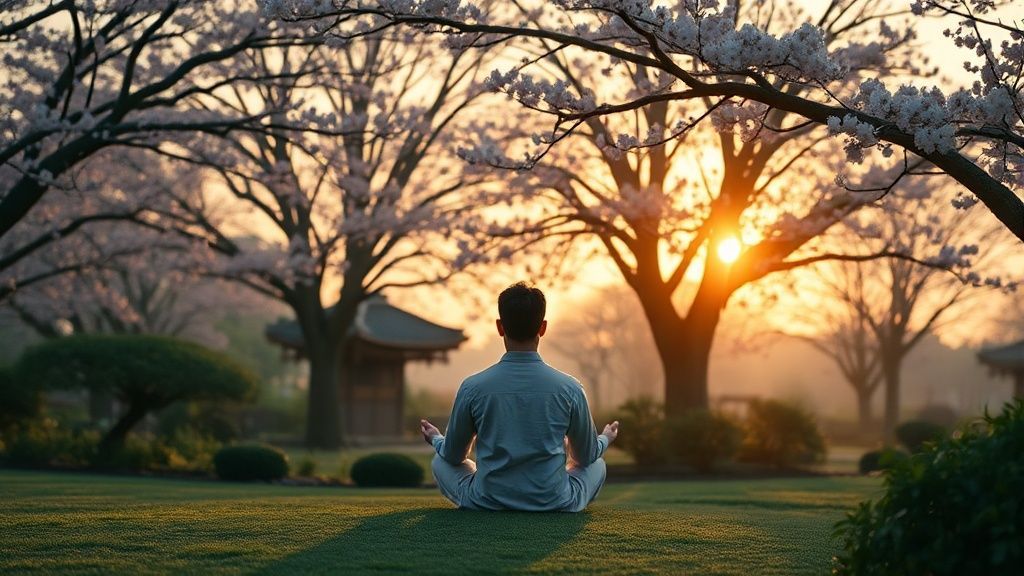
Zen and Mindfulness: A Practical Guide to Present-Moment Awareness
In a world of constant distraction, notifications, and endless to-do lists, the ancient practice of Zen offers a profound path to what so many of us seek: true mindfulness. The terms “Zen” and “mindfulness” are often used interchangeably, but what do they really mean, and how can their timeless wisdom be applied to your modern, hectic life? This comprehensive guide demystifies the deep connection between Zen Buddhism and mindfulness, moving beyond trendy buzzwords to provide you with actionable steps to cultivate a calmer, more focused, and deeply present mind. You’ll learn the core philosophical principles, discover simple yet transformative daily practices, and find valuable resources to guide your journey into authentic present-moment awareness.

What is Zen Buddhism? The Foundation of Mindfulness
To understand Zen mindfulness, we must first explore its roots. Zen is a school of Mahayana Buddhism that originated in China (as Chan) and later flourished in Japan, Korea, and Vietnam. It emphasizes the direct, experiential realization of one’s true nature, often through meditation and interaction with a teacher, rather than through scripture study alone.
Beyond Sitting: The Core Philosophy of Zen
At its heart, Zen is not merely a meditation technique; it is a way of life grounded in several key principles:
- Direct Experience: Zen values firsthand experience over intellectual knowledge. It’s about tasting the sugar yourself rather than reading a description of its sweetness. The goal is to see reality as it is, directly and immediately, without the filter of our conceptual thinking.
- Non-Attachment: This is a cornerstone of Zen practice. It doesn’t mean becoming cold or detached from life. Instead, it’s about learning to relate to thoughts, emotions, and sensations without clinging to them or pushing them away. You observe them as they arise and pass, like clouds moving across the sky.
- Impermanence (Mujo): Zen teaches that all things are in a constant state of flux. Understanding and accepting this fundamental truth helps reduce suffering, as we stop trying to hold onto what is inherently transient—be it a pleasant feeling, a possession, or even life itself.
The physical practice that embodies these principles is Zazen, or seated meditation. It is considered the heart of Zen, a practice where one simply sits, alert and upright, letting go of all gaining ideas and allowing the mind and body to settle into their natural state.
How Zen Differs from Modern Mindfulness
While deeply connected, it’s helpful to understand the distinction. Modern, secular mindfulness—often taught in corporate or therapeutic settings like Mindfulness-Based Stress Reduction (MBSR)—is frequently goal-oriented. The aim might be to reduce stress, improve focus, or enhance emotional regulation.
Zen, however, is a holistic spiritual path. Its ultimate aim is Satori, or enlightenment—a profound awakening to your true nature and the nature of reality. Mindfulness, in the Zen context, is not a tool for a better life, but a natural byproduct and essential component of walking the path toward this awakening. Zen mindfulness is the practice of bringing this awakened awareness to every single moment, whether you are on the meditation cushion or washing the dishes.
The Zen Path to Mindfulness: Core Practices for Daily Life
The beauty of Zen is its profound simplicity. The practices are straightforward, yet their depth is limitless. Here’s how you can begin to incorporate them into your own life.
Zazen: The Art of “Just Sitting”
Zazen is the foundational practice of Zen. The term literally means “sitting meditation,” but its essence is “just sitting” without any goal or agenda. Here is a basic step-by-step guide to get you started:
- 姿势: Find a quiet space. Sit on a cushion (zafu) on the floor, cross-legged, or in a chair with your feet flat on the floor. The key is to keep your spine erect and natural, not rigid. Tuck your chin in slightly. Your hands should rest in your lap in the “cosmic mudra”—left hand on top of the right, palms up, with thumbs lightly touching, forming a gentle oval.
- Gaze: Keep your eyes open but softly lowered, gazing at a point on the floor about two to three feet in front of you. This helps maintain alertness and prevents you from getting lost in daydreams.
- Breath Awareness: Bring your attention to your breath. Don’t try to control it. Simply notice the natural inflow and outflow. Many practitioners focus on the Hara (a point about two inches below the navel), feeling the breath originate from and return to this center of gravity.
- Dealing with Thoughts: Thoughts will arise. This is natural and not a sign of failure. The practice is to notice the thought without judgment, let it go, and gently return your attention to the breath. Imagine your thoughts as leaves floating down a stream; you see them, but you don’t jump in and grab them.
For a structured way to begin your sitting practice, try our 如果你时间紧迫,可以通过短时课程建立持续习惯。立即探索我们的.
将正念带入日常生活
True Zen practice isn’t confined to the meditation hall. The real test is whether you can carry that mindful awareness into your everyday activities. This is often called “mindfulness in action.”
- 正念饮食: For your next meal, eat without distractions. Put away your phone and turn off the TV. Notice the colors, textures, and smells of your food. Chew slowly, savoring each bite. Be grateful for the nourishment.
- Mindful Walking (Kinhin): Walk slowly and deliberately, coordinating your breath with your steps. Feel the sensation of your feet making contact with and leaving the ground. This can be done as a formal practice or simply while walking from your car to the office.
- 正念倾听: When in conversation, try to listen completely, without formulating your response while the other person is talking. Give them your full presence.
Incorporate brief moments of awareness with this 1分钟呼吸练习。.

Overcoming Common Challenges with Zen Mindfulness
It’s normal to encounter obstacles on this path. Recognizing them is the first step to working with them skillfully.
When Your Mind Won’t Be Still: Dealing with Anxiety and Overthinking
Many beginners believe the goal of meditation is to “empty the mind” or stop thinking. This is a misconception that leads to frustration. In Zen, thoughts are not the enemy. The practice is to change your 。冥想的目标不是停止你的思绪或清空大脑。那几乎是不可能的。真正的目标是改变你与 with your thoughts.
Instead of getting tangled in a thought or fighting against it, you learn to observe it with detachment. See anxiety as a passing weather pattern in the vast sky of your awareness. The sky is always present and untouched, regardless of whether there are stormy clouds (anxious thoughts) or clear blue skies (calm). By repeatedly returning to the anchor of your breath, you train the mind to not be swept away.
If anxiety is a significant barrier, this 针对焦虑和抑郁的引导冥想 can provide supportive, compassionate guidance.
Finding Time and Consistency
The biggest challenge for modern practitioners is often finding the time and motivation to practice regularly. Zen wisdom offers a solution: prioritize consistency over duration.
A daily practice of just 5 to 10 minutes is far more powerful than an hour of meditation once a month. The goal is to weave mindfulness into the fabric of your life. It’s better to sit for a short time every day than to have long, sporadic sessions that feel like a chore.
- Anchor your practice: Link your meditation to an existing habit, like right after you brush your teeth in the morning or right before you have your evening tea.
- 创建专属空间: Even a small corner with a cushion can serve as a powerful visual reminder to practice.
Build a sustainable habit with a 持之以恒是关键。每日5分钟练习比每周1小时更有效果。目标是建立可持续的习惯。可从 它适用于任何日程安排。.
可引导你进入安宁状态。
As your interest and commitment grow, you may wish to explore further. The journey of Zen is one of continual learning and deepening.
Guided Meditations in the Spirit of Zen
While traditional Zazen is often silent, guided meditations can be an excellent starting point. They provide structure and gentle reminders that can help anchor a wandering mind. Think of them as training wheels; they are a supportive tool to be used until you feel comfortable sitting in silence.
深入探索:导师、僧团与修行训练
禅宗历来注重师承(向禅师或老师学习)并在僧团中共修。优秀的导师能提供个性化指导、解答疑问,并帮助修行者领悟禅道精微之处。.
- 寻找当地禅修中心: 在您所在区域寻找禅修中心或佛教寺院。许多机构设有新人体验夜、工作坊及定期禅修课程。.
- 线上共修团体: 数字时代下,众多资深导师及修行团体提供在线课程、直播坐禅及线上禅修营。.
- 深化禅修学习: 阅读禅宗根本导师著作,如铃木俊隆(《禅者的初心》)、一行禅师及铃木大拙的经典作品。.
通过这份 一行禅师禅修指南.
深化对一行禅师教义的理解 考虑通过修习.

正念教练认证课程
使修行体系化
禅与正念常见问答(适配语音搜索及精选摘要).
禅与正念有何区别?
正念是一种对当下不加评判的觉知状态,既是禅佛教修行体系的核心组成部分,亦是其修行成果。禅是道途,正念是于此道途中培养的根本品质。.
如何修习禅式正念?
主要形式为坐禅,即通过静坐观察呼吸与思绪而不加评判。日常修行则可将正念觉知融入行走、饮食、聆听等生活活动。 缓解焦虑的冥想练习.
正念能缓解焦虑吗?
可以。禅宗所授正念训练能帮助您观察焦虑念头与身体感受,而不被其裹挟或助长,从而显著降低焦虑的强度与频率。具体练习方法请参阅我们的 五感正念法 初学者最佳正念练习有哪些?.
结论与行动号召
初学者可从简短呼吸冥想或基础感官练习入手,例如.
五感 grounding 练习 ,通过视觉、听觉、嗅觉、味觉与触觉的即时体验锚定当下。 禅与正念的修行并非为生活增添新事物,而是拨开思绪纷扰,显发本自具足的平静澄明觉性。这是一场持续而温和的实践——怀着耐心与自我慈悲,一次次回归当下。这条道路并非通向遥远彼岸,而是让您已然拥有的生命体验变得更加丰盈鲜活。.