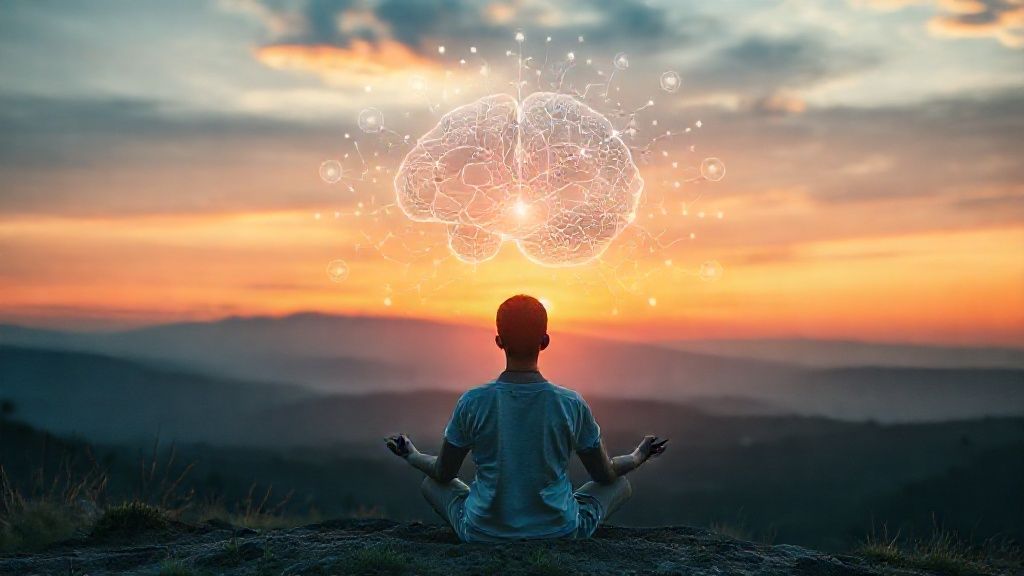
冥想与思维控制:如何掌控你的思想并重塑大脑——生活篇
When you hear the phrase “meditation and mind control,” you might picture a sci-fi scenario where someone manipulates others with psychic powers. The reality is both more practical and more profound. True mind control isn’t about dominating others—it’s about mastering your own internal world. Meditation offers the most powerful system ever developed for gaining conscious command over your thoughts, emotional responses, and habitual patterns. This definitive guide will show you exactly how to harness this ancient practice to transform your relationship with your mind.

What Is “Mind Control” in Meditation? (It’s Not What You Think)
The term “mind control” in meditation context refers to self-regulation, focused attention, and metacognition—the awareness of your own thinking processes. Rather than forcing thoughts to stop, which is impossible, you learn to observe them without being ruled by them. This shift from being a passenger to becoming the pilot of your mental landscape represents the ultimate form of personal empowerment.
From Autopilot to Awareness
Most of us operate on mental autopilot throughout our day. We react to triggers without conscious choice, replay old thought patterns, and get swept away by emotional currents. Research suggests we have approximately 60,000 thoughts daily, and a staggering 90% of them are repetitions from yesterday. This automatic thinking consumes mental energy and often leads to stress, anxiety, and dissatisfaction.
Meditation interrupts this cycle by bringing your thoughts into the light of conscious awareness. When you meditate, you create a space between a thought arising and your reaction to it. This gap—sometimes called the “sacred pause”—is where your freedom lies. It’s the moment where you can choose your response rather than being controlled by habitual patterns.
The Science of Neuroplasticity
The benefits of meditation aren’t just subjective experiences—they’re physically visible in the brain. Neuroplasticity, the brain’s remarkable ability to reorganize itself by forming new neural connections throughout life, means that your regular mental activities literally shape your brain’s structure.
Studies using fMRI scans show that consistent meditation practice:
- 增厚前额叶皮层, enhancing decision-making and emotional regulation
- Reduces amygdala size and activity, decreasing stress and fear responses
- Strengthens the anterior cingulate cortex, improving attention and self-regulation
- Increases gray matter density in areas associated with learning and memory
These physical changes explain why long-term meditators demonstrate better emotional control, increased focus, and greater resilience to stress. Your brain isn’t fixed—it’s moldable, and meditation is the tool that shapes it toward greater peace and mastery.
Core Meditation Techniques for Cultivating Mental Mastery
Understanding the theory is important, but practice is where transformation occurs. These foundational techniques each approach mental mastery from a different angle, giving you multiple tools for developing conscious control of your mind.
Anchoring Your Attention: The Power of Breath
Breath awareness meditation is the cornerstone of mental training. Your breath serves as a perfect anchor to the present moment because it’s always with you, rhythmic, and responsive to your mental state. When you focus on your breath, you’re training your mind to stay present rather than wandering into past regrets or future worries.
练习方法: Sit comfortably with your spine straight. Bring your attention to the physical sensations of breathing—the air moving through your nostrils, the rise and fall of your chest or abdomen. When your mind wanders (which it will), gently return your focus to your breath without judgment. This simple act of noticing distraction and returning to your anchor is the fundamental rep that builds mental muscle.
For a practical, time-efficient starting point, try our 十分钟呼吸冥想引导词.
Observing Without Judgment: Mindfulness Meditation
While breath meditation focuses on a single anchor, mindfulness meditation expands your awareness to include everything occurring in your present experience—thoughts, emotions, bodily sensations, and sounds—without judgment. This practice teaches you to relate to your mental content differently, seeing thoughts as passing mental events rather than absolute truths.
练习方法: Begin with breath awareness to settle your mind, then gradually expand your attention to include bodily sensations, sounds, and finally thoughts and emotions. Notice each experience as it arises, label it gently (“thinking,” “worrying,” “tingling”), and let it pass without engaging or resisting it. This develops what’s called “detached awareness”—the ability to witness your inner world without being swept away by it.
To help readers apply mindfulness to a common challenge, explore our – 培养接纳与平和.
Cultivating Specific States: Loving-Kindness & Body Scan
Some meditation practices actively direct your mind toward specific qualities like compassion or body awareness. These are particularly powerful for reshaping emotional patterns and deepening mind-body connection.
Loving-Kindness Meditation (Metta) systematically develops feelings of goodwill toward yourself and others. By repeating specific phrases (“May I be happy, may I be safe, may I be healthy, may I live with ease”), you’re consciously directing your mind toward compassion rather than leaving it to default patterns.
To provide a tool for developing compassion, practice with our 5分钟慈心禅修引导词.
身体扫描冥想 involves systematically moving your attention through different parts of your body. This practice enhances interoception (awareness of internal bodily sensations), reduces physical tension, and strengthens your ability to direct attention at will.
For a practice that enhances mind-body connection, especially for sleep, try our 睡眠身体扫描冥想.

Applying Your Mental Control: Real-World Benefits
The true value of mental mastery reveals itself not during meditation sessions, but in your daily life. These tangible benefits demonstrate why developing this control is worth the effort.
Quieting Anxiety and Overthinking
Anxiety often stems from uncontrolled mental patterns—catastrophizing about the future, ruminating about the past, or creating stories about what others think. Meditation directly counters this by teaching you to observe anxious thoughts without fueling them with attention and emotional energy.
With practice, you begin to recognize anxious thoughts as mere mental events rather than imminent realities. This creates psychological space that prevents the anxiety spiral. Additionally, meditation activates the parasympathetic nervous system, directly countering the physiological symptoms of anxiety.
For a longer session dedicated to this issue, experience our 20分钟焦虑与过度思考冥想.
Enhancing Focus and Productivity
In our distraction-filled world, the ability to control your attention has become a superpower. Meditation is essentially attention training—each time you notice your mind has wandered and gently bring it back to your anchor, you’re strengthening your focus muscle.
Regular practitioners find they can:
– Work for longer periods without distraction
– Switch between tasks more efficiently
– 专注于任务而不频繁分心
– Maintain concentration in noisy environments
This enhanced focus translates directly to improved productivity and performance in any field. The controlled mind accomplishes in one hour what the distracted mind struggles to complete in three.
For a quick exercise to regain focus, incorporate these simple attention focus exercises into your day.
Achieving Deep, Restorative Sleep
The relationship between a calm mind and quality sleep is direct and powerful. When your mind is buzzing with thoughts, worries, and mental chatter, falling asleep becomes difficult. Meditation helps in two key ways: it trains your mind to let go of thoughts (essential for sleep onset), and it activates the relaxation response that prepares your body for rest.
A brief meditation before bed can signal to your nervous system that it’s time to shift from doing mode to being mode, making the transition to sleep much smoother. Many insomniacs find that meditation provides more relief than sleep medications—without the side effects.
To offer a direct solution for sleep troubles, practice this 助眠睡前冥想.
Building Your Sustainable Meditation Habit
Understanding the benefits is motivating, but consistency is what delivers results. These strategies will help you build a meditation practice that lasts.
微量起步,保持持续
The most common mistake beginners make is being overly ambitious. Starting with 30-minute sessions when you’ve never meditated is like trying to run a marathon without training. You’re likely to become frustrated and quit.
Instead, begin with just 5-10 minutes daily. This might seem insufficient, but the cumulative effect of daily practice far outweighs occasional longer sessions. Consistency trains your brain that this is a new normal, not just an occasional experiment.
To demonstrate how easy it is to start, begin with this 5分钟引导冥想.
Using Tools and Resources
While meditation is ultimately about connecting with your own mind, various tools can support your journey, especially in the beginning:
- 引导式冥想 在自身专注力尚在发展时提供结构与指导
- 冥想应用程序 提供进度追踪、多样化内容及社群支持
- 带间隔提醒的计时器 有助于在自主练习中保持结构
- 冥想坐垫与长凳 为长时间静坐提供身体支撑以保持舒适
为帮助选择优质应用程序,可探索以下内容 类似Headspace的应用程序.
若倾向于跟随导师学习,可考虑以下途径 最佳在线冥想课程.

的评测文章
冥想真的能帮助我控制思绪吗?
是的,但其作用方式可能与最初设想不同。冥想并非阻止念头产生——这既不可能也无必要。相反,它会改变你与念头的关系,从被动反应转向静观觉察。通过练习,你将获得选择与哪些念头互动、让哪些念头流经的能力。这种选择性关注才是思维控制的真正本质。.
对初学者而言,哪种冥想类型最合适?
引导式冥想对初学者尤为适宜,因其提供的结构与指导能避免挫败感。跟随语音引导能为意识提供明确锚点,减少初学者常有的“我做得对吗?”的焦虑感。专注呼吸的冥想同样极具亲和力,因其无需特殊知识或信仰基础。.
欲深入了解此方法,, 请先理解何为引导式冥想.
冥想需要多久才能看到效果?
这因人而异且与练习持续性相关,但许多人在数次练习后即可觉察细微变化——主要表现为平静感增强与专注力轻度提升。我们称之为“思维控制”的持久改变——即稳定管理情绪反应与引导注意力的能力——通常需要持续每日练习4-8周方能显现。如同体育锻炼,其效益将随时间累积增长。.
我难以静坐,还能冥想吗?
当然可以。认为冥想需要完全静止的观念是阻碍许多人实践的最大误区。行走冥想、正念运动(如瑜伽或太极),乃至正念洗碗都可以成为有效的冥想形式。关键不在于身体静止,而在于意识临在。.
若倾向动态方式,可尝试 针对焦虑与抑郁的正念行走.
通往心智掌控之旅始于当下
通过冥想掌控心智并非僧侣专属的玄奥秘诀——这是任何愿意练习者皆可掌握的技能。此道需要耐心与坚持,但回报是无与伦比的自由:摆脱惯性反应模式的自由,远离无谓痛苦的自由,以及自主选择应对生活挑战方式的自由。.
现状与目标之间的鸿沟或许看似巨大,但每次冥想都在悄然搭建桥梁。你无需今日就完美掌控心智——只需迈出第一步。.
准备好迈出掌控心智的第一步了吗?即刻通过我们的引导课程库开启旅程。若需快速入门的宁静体验,请尝试我们的 十分钟镇静冥想 以感受即时益处。.