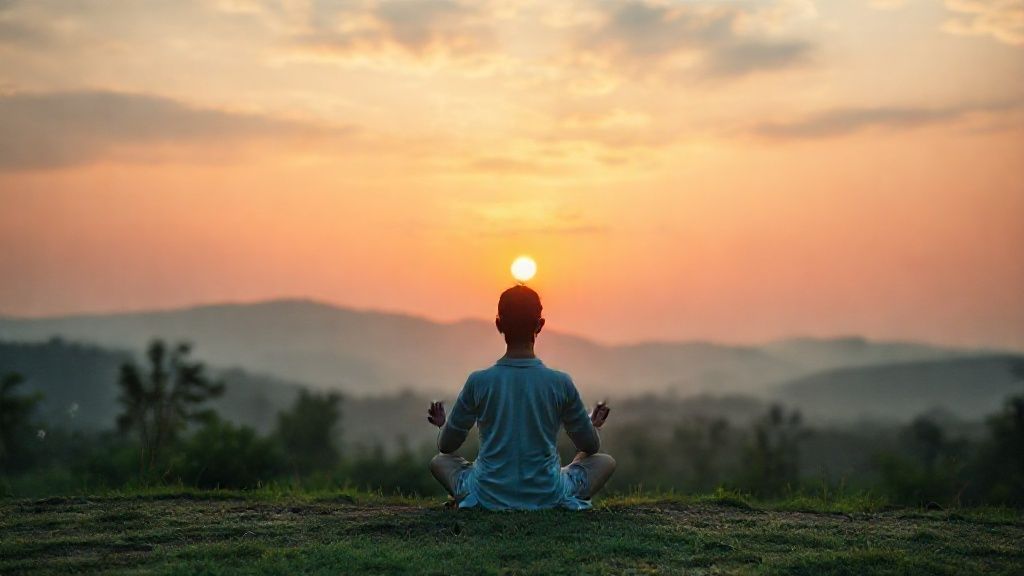
佛教与正念冥想:通往内心平静的初学者路径
In our fast-paced, constantly connected world, feelings of stress, anxiety, and overwhelm have become almost universal. As we scroll through endless notifications, juggle multiple responsibilities, and navigate complex relationships, many of us find ourselves searching for an anchor—a way to quiet the mental chatter and find a sense of calm amidst the chaos. This search often leads people to mindfulness meditation, a practice that has gained tremendous popularity in recent years. But what many don’t realize is that this powerful tool for mental well-being has deep roots in ancient Buddhist teachings that date back over 2,500 years.
Mindfulness meditation is a core practice derived from ancient Buddhist teachings, designed to cultivate present-moment awareness and reduce suffering. This guide will explore its origins, core principles, and how you can start practicing today.
Whether you’re completely new to meditation or have dabbled in mindfulness apps, understanding the Buddhist foundation of this practice can transform your approach and deepen your experience. In this comprehensive guide, we’ll journey from the ancient teachings of the Buddha to practical techniques you can incorporate into your modern life.
What Is the Buddhist Root of Modern Mindfulness?
The mindfulness revolution sweeping through corporations, schools, and healthcare settings didn’t emerge from a vacuum. Its origins can be traced directly to the Satipatthana Sutta, one of the most important discourses in the Pali Canon—the earliest collection of Buddhist teachings. In this foundational text, the Buddha laid out the “Four Foundations of Mindfulness,” a comprehensive system for developing awareness of body, feelings, mind, and mental objects.
The Pali word “Sati,” which we translate as “mindfulness,” carries a richer meaning than its English counterpart. Sati implies not just awareness but remembrance—remembering to pay attention to our present-moment experience with clarity and precision. This isn’t a passive state of zoning out but an active, engaged process of noticing what’s happening right here, right now.
There’s an important distinction between modern secular mindfulness and its traditional Buddhist context. Today, mindfulness is often presented as a tool for stress reduction, productivity enhancement, or emotional regulation. While these benefits are real and valuable, traditional Buddhist mindfulness serves a more profound purpose: it’s a path to enlightenment and the end of suffering (Dukkha). The ultimate goal isn’t just to feel better temporarily but to see reality clearly and free oneself from the root causes of mental distress.
For those completely new to meditation practices, understanding 何为引导式冥想 can provide an accessible entry point to these ancient techniques. Guided sessions offer structure and direction, making it easier to establish a consistent practice that honors both the traditional roots and modern applications of mindfulness.

Core Buddhist Principles That Power Mindfulness
To truly understand mindfulness meditation beyond a surface level, it helps to explore the key Buddhist principles that give the practice its depth and transformative power. These concepts aren’t just philosophical ideas—they’re insights into the nature of reality that we can directly experience through mindful awareness.
Understanding Impermanence (Anicca)
The Buddha identified impermanence as one of the three fundamental characteristics of existence. Everything—from our thoughts and emotions to our physical bodies and the world around us—is in a constant state of flux. Nothing remains the same from one moment to the next.
When we practice mindfulness meditation, we’re not just watching our breath; we’re observing the continuous flow of sensations, thoughts, and feelings. We notice how a sound arises and passes away, how an itch appears and disappears, how a thought emerges and vanishes. This direct experience of impermanence helps us develop a more flexible relationship with our experiences. Instead of clinging to pleasant moments or resisting unpleasant ones, we learn to meet each experience with openness, knowing it will inevitably change.
The Concept of “No-Self” (Anatta)
Perhaps the most challenging Buddhist concept for Western minds is Anatta, often translated as “no-self” or “non-self.” This doesn’t mean that we don’t exist at all, but that what we typically consider our “self”—a solid, permanent, independent entity—is actually a collection of ever-changing physical and mental processes.
Through mindfulness practice, we begin to de-identify from our thoughts and emotions. Instead of thinking “I am angry,” we learn to notice “there is anger present.” This subtle shift in perspective creates space between our awareness and our experiences, reducing ego-driven reactions and providing greater freedom in how we respond to life’s challenges.
The End of Suffering (Dukkha)
The Buddha’s primary teaching was about the nature of suffering and the path to its end. Dukkha is often translated as “suffering,” but it encompasses a broader range of experiences including stress, dissatisfaction, and the inherent unsatisfactoriness of conditioned existence.
Mindfulness addresses suffering not by trying to eliminate unpleasant experiences, but by changing our relationship to them. When we observe our cravings and aversions without judgment—simply noting “wanting” or “resistance” as they arise—we stop feeding the patterns that create mental suffering. This approach is beautifully supported by practices like “放下”主题冥想指引, which provides specific guidance for working skillfully with attachment and resistance.
The Profound Benefits of a Buddhist Mindfulness Practice
While the ultimate goal of traditional Buddhist practice extends beyond temporary relief, the benefits of mindfulness meditation are both immediate and cumulative. By committing to regular practice, you can experience positive changes in multiple dimensions of your life.
Reducing Anxiety and Quieting the Mind
Anxiety often thrives on our tendency to get caught in loops of negative thinking—rehashing past events or worrying about future possibilities. Mindfulness interrupts this pattern by anchoring our attention in the present moment, typically using the breath as a home base.
Research has shown that regular mindfulness practice can reduce activity in the amygdala (the brain’s fear center) while strengthening connections to the prefrontal cortex (responsible for rational thinking and emotional regulation). This neural rewiring translates to practical benefits: you may find yourself less reactive to stressors, better able to pause before responding, and more capable of navigating challenging situations with clarity.
For those moments when anxiety feels overwhelming, having specific tools can make all the difference. A 10-minute meditation for anxiety offers a manageable practice for stressful times, while a more comprehensive 压力焦虑引导冥想 can provide deeper support when you need extended relief.
Cultivating Compassion for Yourself and Others
As mindfulness deepens, it naturally gives rise to greater compassion. When we see our own struggles clearly—our patterns, vulnerabilities, and shared humanity—we develop more kindness toward ourselves. This self-compassion then extends outward to others, as we recognize that everyone is navigating their own challenges.
This natural progression is formally cultivated in Buddhist practice through Metta (Loving-Kindness) meditation, which involves systematically directing well-wishes toward ourselves and others. Rather than being a separate practice, Metta is understood as a natural expression of mindful awareness—when we see clearly, we respond with compassion.
If you’re interested in exploring this dimension of practice, a guided Metta (loving-kindness) meditation script can help you develop this quality of open-hearted awareness.

How to Start Your Buddhist-Inspired Mindfulness Practice Today
The beauty of mindfulness is that it doesn’t require special equipment, extensive training, or perfect conditions. You can begin right where you are, with the resources you already have. Here’s a practical framework for establishing your practice.
Posture and Environment: Setting the Foundation
While you can practice mindfulness anywhere, creating a supportive environment can help strengthen your commitment, especially when starting out.
- 姿势: The traditional meditation posture balances dignity and relaxation. If sitting on the floor, use a cushion to raise your hips slightly above your knees. If using a chair, sit forward rather than leaning back. Keep your spine upright but not rigid, shoulders relaxed, hands resting comfortably on your knees or lap. The goal isn’t to create tension but to cultivate alert relaxation.
- Environment: Choose a relatively quiet space where you’re unlikely to be interrupted. You might create a simple meditation corner with a cushion or chair. While complete silence isn’t necessary (and can be another form of attachment), minimizing major distractions supports early practice.
A Simple 5-Minute Breathing Mindfulness Meditation
This foundational practice follows the Buddha’s instructions for mindfulness of breathing. Start with just five minutes daily—consistency matters more than duration, especially when beginning.
- Set Your Intention: Begin by recognizing your motivation—perhaps to cultivate peace, clarity, or kindness.
- Establish Posture: Sit in your chosen posture, allowing your body to settle.
- Notice Natural Breath: Bring attention to the physical sensations of breathing—the movement of your abdomen, the air passing through your nostrils. There’s no need to control or change your breath.
- Anchor Attention: Use the breath as an anchor for your attention. When your mind wanders (which it will, repeatedly), gently note where it went and return to the breath without judgment.
- Expand Awareness: After focusing on the breath, briefly expand awareness to include sounds, bodily sensations, and thoughts—simply noticing whatever arises.
- Close with Kindness: Conclude by bringing a moment of appreciation for your effort, regardless of how “successful” the session felt.
For additional support, you might try a simple 5-minute guided meditation when starting out, or use a 10-minute breathing meditation script once you’re ready to extend your practice.
Integrating Mindfulness into Daily Life
正式冥想如同为心灵进行健身锻炼,但真正的益处在于将觉知意识融入日常活动之中。.
- 正念饮食: 每日选择一餐,专注进食不受干扰。留意食物的色泽、质地、香气与滋味。缓慢咀嚼,每吃一口后放下餐具。.
- 正念行走: 行走时,关注脚与腿的物理感知——每只脚抬起、移动、落地的细微感觉。.
- 正念倾听: 交谈时,练习全神贯注倾听对方,而非在对方说话时构思自己的回应。.
深化练习:修行之路的下一步
随着正念修习的深入,您可能会被吸引去探索不同技巧并寻求团体支持。这种自然发展反映了佛陀为灵性成长所阐述的完整修行道路。.
探索不同的冥想技巧
虽然呼吸正念提供了坚实基础,但佛教传统提供了丰富的冥想实践体系,旨在培养不同的心智品质。.
- 身体扫描冥想: 此项练习要求系统性地将注意力在身体各部位移动,培养对生理感受的精细觉察。它特别有助于提升专注力,并应对疼痛或不适。. 针对睡眠与放松的身体扫描冥想 对受失眠或身体紧张困扰者尤为有益。.
- 行禅: 行禅本身即是修行——将全然觉知带入空间移动的体验中,而非仅作为抵达某处的手段。.
- 慈心冥想: 如前所述,此项练习专门培养对己对人的无条件善意。.
寻找社群与深入学习
虽然个人实修至关重要,但佛教传统始终强调僧伽(修行团体)的重要性。与同道者建立联结能提供灵感、支持与珍贵指导。.
若有意探索线下机会,您可以 查找附近的冥想中心 寻找提供课程或集体静坐的场所。若当地资源有限或日程繁忙,, 通过正念课程深化认知 可考虑提供合格教师系统教学的在线课程。.

的评测文章
问:佛教与正念冥想是一种宗教吗?
问:这些正念活动适合初学者吗? 尽管其根源在于佛教,但正念实践本身是一种心智训练技术,任何宗教信仰者皆可运用。无论您是佛教徒、基督徒、犹太教徒、穆斯林、印度教徒、无神论者或不可知论者,都能从正念冥想中获益。.
问:正念与单纯放松有何区别?
问:这些正念活动适合初学者吗? 放松常是副产品,而正念关乎有目的的、不评判的觉知。它意味着全然接纳当下升起的任何体验,无论愉悦与否。若需纯粹专注于平静的练习,可尝试此项 平静心灵引导冥想.
问:正念冥想需多久才能显现益处?
问:这些正念活动适合初学者吗? 平静感可能即时获得,但大脑结构与反应模式的持久改变需依靠每日持续的练习。可从 持之以恒是关键。每日5分钟练习比每周1小时更有效果。目标是建立可持续的习惯。可从 短暂练习开始,重点在于培养习惯而非追求特定结果。.
总结与行动号召
从古老佛教教义到现代正念实践的历程,构建了智慧传统与当代科学间的非凡桥梁。这条始于古印度启蒙之道的修行路径,已演变为适合不同背景与信仰人群、具有科学依据的心理健康实践方法。.
此修行的本质始终简单(虽非易事):以开放、好奇与慈悲之心,全然投入当下本真的生活。无论您拥有五分钟或五十分钟,无论坐于蒲团或办公椅上,邀请始终如一——暂停、呼吸,并铭记生命实际发生的场所正是当下此刻。.
正念之路并非追求完美的平静状态或消除所有困难,而是改变你与体验的关系——在这纷乱而美好的人世生活中,寻得更广阔的空间、更多的选择与更深的自由。.
准备好从阅读转向体验了吗?立即通过我们最受初学者欢迎的课程开启您的旅程。. 由此处开始我们为初学者精心设计的引导冥想.
