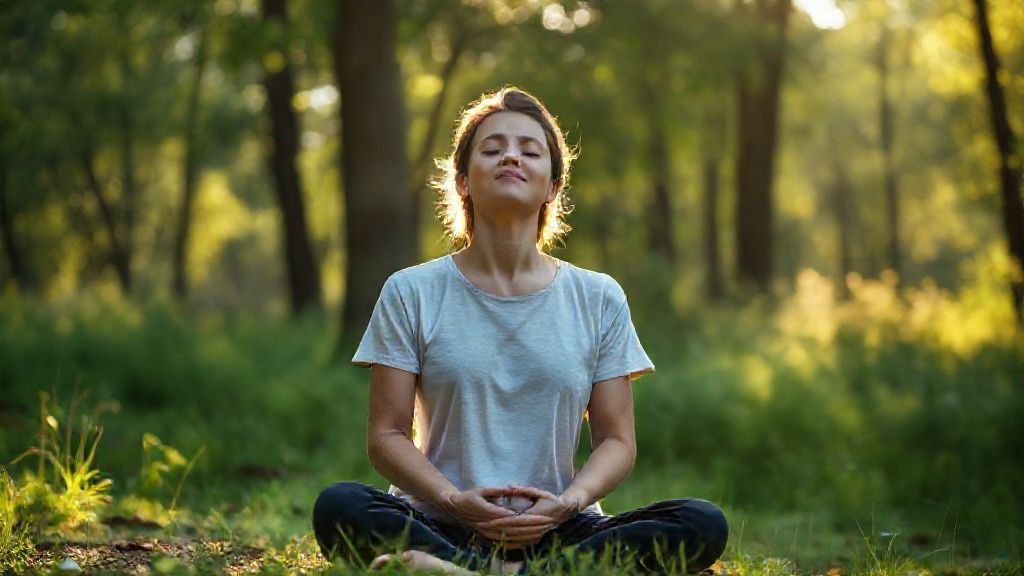
“
全然专注:是什么以及如何实现一种临在、投入的生活
Ever finished a task, a conversation, or even a meal and realized you were completely on autopilot? Your body was going through the motions while your mind was miles away—rehashing a past conversation, worrying about future deadlines, or lost in a stream of endless thoughts. That fragmented, distracted state is the exact opposite of full mindedness.
So, what is full mindedness? It’s the state of being fully present, aware, and engaged with the current moment, without judgment or distraction. It’s not about having a “full mind” of thoughts; it’s about bringing the full quality of your attention to whatever you’re doing, feeling, or experiencing right now. It’s the practical, accessible application of mindfulness in daily life. Cultivating this skill can dramatically reduce stress, sharpen your focus, and enhance your overall sense of well-being.

What Does “Full Mindedness” Actually Mean?
Many people hear “full mindedness” and mistakenly think it means having a head full of ideas or being stuck in overthinking. In reality, it’s the complete opposite. Full mindedness is a quality of attention and awareness. It’s the conscious choice to inhabit the present moment with your whole being.
Think of your attention as a spotlight. When you’re not fully minded, that spotlight is flickering wildly—jumping from a memory, to a worry, to a sound, to a task. Full mindedness is the practice of steadying that spotlight and intentionally directing it to one thing: the here and now. It means feeling the warmth of the sun on your skin as you walk, truly tasting the flavors of your food, or listening to a friend with your complete focus, without already formulating your response.
This foundational skill is often honed through practices like 引导式冥想, which provides a structured way to train your mind to return to the present.
The Surprising Benefits of Cultivating a Full Mind
Why make the effort to cultivate this skill? The benefits extend far beyond a few moments of peace; they can transform your relationship with your mind and your life.
Reduced Anxiety and Overthinking
Anxiety thrives in the past and future. It feeds on regrets about what has already happened and fears about what might happen. Full mindedness acts as a circuit breaker for this cycle. By anchoring your awareness in the present moment—a moment that is often perfectly manageable—you deprive anxiety of its fuel.
When you notice anxious thoughts arising, you learn to observe them without getting swept away by them. You recognize them as mere mental events, not absolute truths. This shift in perspective can be profoundly liberating. For immediate relief, a short, targeted practice like a – 培养接纳与平和 can be incredibly effective. Even a 缓解焦虑的简短冥想 can reset your nervous system and bring you back to center.
Improved Focus and Mental Clarity
In a world of constant notifications and multitasking, our attention is perpetually fragmented. This “monkey mind” leads to mental fatigue, decreased productivity, and more mistakes. Full mindedness is the antidote. It is the practice of single-tasking—of doing one thing at a time with your full attention.
By regularly practicing full mindedness, you strengthen your brain’s ability to focus, much like lifting weights strengthens a muscle. This leads to greater mental clarity, improved problem-solving, and the ability to engage in deep work. If you want to specifically train this muscle, incorporating dedicated 这项活动以宁静、游戏化的方式培养专注力与听觉觉察。 into your routine can accelerate your progress.
Deeper Sleep and Relaxation
Have you ever lain in bed, exhausted but wide awake, because your mind won’t shut off? A busy, distracted mind is the enemy of restful sleep. Full mindedness helps you quiet the internal chatter. By learning to disengage from racing thoughts and anchor yourself in bodily sensations or the rhythm of your breath, you activate the body’s relaxation response.
This makes it much easier to transition into a peaceful sleep. Creating a pre-bed ritual with a 就寝睡眠冥想 can signal to your mind and body that it’s time to wind down. For a more profound rest, you might explore a longer 引导式疗愈睡眠冥想 the body and mind.

How to Practice Full Mindedness in Daily Life
The beauty of full mindedness is that it doesn’t require you to overhaul your life. You can weave it into the fabric of your existing routine.
Start with Formal Meditation Practice
Think of meditation as the gym for your “full mindedness” muscle. A consistent formal practice gives you the strength and skill to be more mindful during the rest of your day. It’s a dedicated time to sit and practice anchoring your attention, often on your breath, and to gently guide it back when it wanders.
If you’re new to this, starting can be the biggest hurdle. The easiest way to begin is with a 完全适合。本PDF适用于所有水平,提供清晰易懂的步骤说明,无需任何经验。首次尝试音频引导冥想时,您或许会喜欢这段, where a teacher’s voice leads you through the process. For those with a busy schedule, even a brief 5分钟引导冥想 each morning can set a powerful tone of presence for the entire day.
Simple Mindfulness Exercises for Anywhere
You don’t need to be on a cushion to practice. These mini-practices can be done anywhere, anytime.
- 五感觉察练习: Take one minute to pause and notice:
- 5 things you can * 5样他们能.
- 4 things you can 的事物(例如:冰箱的嗡嗡声、窗外的鸟鸣)。 (your feet on the floor, the fabric of your shirt).
- 3 things you can **触摸**.
- 2 things you can * 3样他们能.
- 1 thing you can 的声音.
This practice violently pulls you out of your head and into your immediate sensory experience. You can learn more about this technique with a dedicated 5 senses mindfulness exercise.
- One-Minute Breathing: Simply focus your entire attention on the sensation of your breath for 60 seconds. Notice the cool air entering your nostrils and the warm air leaving. When your mind wanders, return to the breath. This is a perfect 一分钟呼吸练习 for a quick reset at your desk or in a stressful moment.
Bringing Full Mindedness to Routine Activities
Transform mundane tasks into opportunities for practice.
- 正念饮食: Eat one meal a day without screens. Notice the colors, smells, textures, and flavors of your food. Chew slowly.
- 正念行走: As you walk, feel the ground beneath your feet. Notice the movement of your muscles and the air on your skin. Instead of thinking about your destination, just walk.
- 正念倾听: When someone is speaking, make a conscious effort to listen to understand, not to reply. Notice their tone, their expressions, and the meaning behind their words.
应对练习过程中的常见挑战
It’s normal to encounter obstacles. Recognizing them is the first step to moving past them.
“I Can’t Stop My Thoughts!”
This is the most common complaint, and it’s based on a misunderstanding. The goal of full mindedness is 并非 to stop your thoughts. That would be like trying to stop the waves in the ocean. The goal is to learn to sit on the shore and watch them come and go without getting swept away.
Your job is not to clear your mind, but to observe your mind. When you notice you’ve been carried away by a thought, the simple act of noticing it and gently returning your attention to your anchor (like your breath) is the entire practice. That moment of awareness is a moment of full mindedness. Using a 放下的冥想引导词 can provide you with the exact words to guide yourself through this process.
“I Don’t Have Time to Meditate”
This belief is a major barrier, but it’s often an illusion. You don’t need 30 minutes of silent meditation to benefit. Consistency is far more important than duration.
Start with literally one minute. Anyone can find one minute. The practice of a 3-minute meditation is a powerful testament to how much calm and clarity you can generate in a very short time. It’s about building the habit. Once you experience the benefits of those few minutes, you’ll likely find yourself wanting to make more time.

深化练习的工具与资源
您无需独自完成这件事。许多优质资源可以为您的旅程提供支持。.
高评分冥想应用
应用程序提供了结构、多样性和指导,使您更容易养成持续的习惯。它们为各种可能的需求和时间安排提供了冥想练习。如果您对最知名应用之外的选择感到好奇,可以探索一份优秀应用列表。 诸如Headspace之类的应用程序. 对于那些难以获得休息的人, 最佳助眠应用 通常直接将正念原则融入其程序中。.
针对特定需求的免费引导式冥想
有时您需要一个针对特定时刻或挑战而定制的练习。.
- 为了设定积极的基调,可以尝试将 清晨引导式冥想 作为您晨起惯例的一部分。.
- 当压力大到难以承受时, 一段平静的引导式冥想 引导式放松冥想.
- 可以帮助舒缓您的神经系统。 身体扫描冥想 如果您感觉与身体失去了连接,.
身体扫描冥想
是一种将充满爱意的觉知带入身体感受并释放紧张感的深刻方式。
关于“全然觉知”的常见问题 “全然觉知”和“正念”有什么区别? 它们本质上是同义词。“正念”是更广为人知的、指代这种练习和觉知品质的术语。“全然觉知”则是一个更具描述性、更通俗的术语,用来描述.
需要多长时间才能看到益处?
状态.
——即正念旨在创造的一种完全临在、全然投入的心智状态。您可以将正念视为道路,而全然觉知则是您沿途体验到的目的地。
有些益处,例如通过一次呼吸练习就能感受到的平静感,可以立即体验到。然而,若要实现默认思维模式的持久、变革性改变,关键在于坚持。许多人报告称,在每日练习几周后,就能注意到显著的变化——例如反应性降低、耐心增加。这是一种累积效应。 正念疗法技巧 全然觉知对焦虑和抑郁有帮助吗?.
是的,绝对有帮助。全然觉知是基于证据的疗法(如正念减压疗法和正念认知疗法)的核心组成部分,这些疗法专门用于预防抑郁复发和管理焦虑。它通过将您锚定在可掌控的当下时刻并改变您与想法的关系来提供帮助。学习特定的
正念技巧
可以为心理健康提供强大的工具。.
我是个怀疑论者。这背后有科学依据吗?“
是的,而且相关研究日益增多。神经科学研究表明,持续的正念练习可以物理性地改变大脑。它可以:.
* 增加与学习、记忆和情绪调节相关脑区的灰质密度。.
结论与行动号召
* 减小杏仁核(大脑的“恐惧中心”)的体积。.
* 增强前额叶皮层,该区域负责注意力和决策等执行功能。.
研究一致表明,正念与压力荷尔蒙皮质醇水平降低以及免疫反应改善相关。. 全然觉知并非一种神秘、难以捉摸、专属于山顶僧侣的状态。它是一种简单、强大且极易获得的、用于改善心理健康的技能。这是一段从自动驾驶式生活转向有意识生活的旅程,从迷失于思绪转向全然投入生活的旅程。.