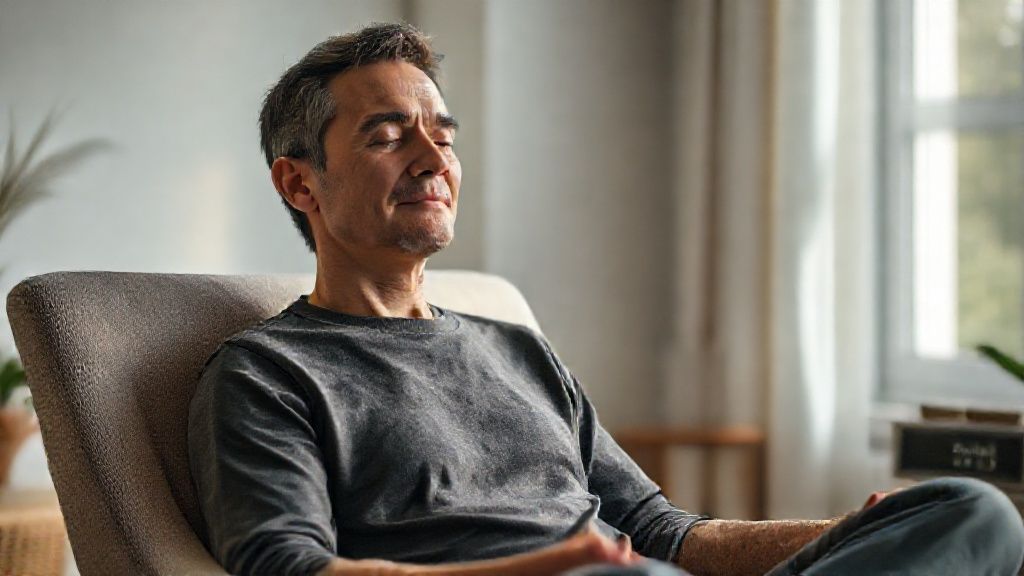
十分钟静心冥想指南:即刻获得内心安宁的步骤详解 - 生活
Feeling overwhelmed? That mental to-do list scrolling endlessly through your mind while your shoulders creep up toward your ears? In our constantly connected world, stress can feel like the default setting. You know you “should” meditate, but who has an hour to sit on a cushion? Here’s the secret: you don’t need one.
A 10 minute calming meditation is a powerful, scientifically-backed tool to reset your nervous system, reduce cortisol levels, and find mental clarity. It fits into the time it takes to drink a coffee, scroll through social media, or wait for a meeting to start. This isn’t about achieving enlightenment; it’s about giving your busy brain a much-needed break. This guide provides not just a simple, effective script, but also explains the “why” behind each step, transforming this from a one-off experiment into a sustainable practice that actually sticks.

Why Just 10 Minutes Can Change Your Day
You might wonder if ten minutes is enough to make a real difference. The resounding answer from neuroscience is yes. The benefits of meditation are closely tied to consistency, not just duration. A short, daily practice is far more effective at rewiring neural pathways than a long, sporadic one.
Think of it like physical exercise: doing ten minutes of exercise every day is better for your fitness than a two-hour session once a month. Your brain works the same way. A brief, daily 10 minute calming meditation strengthens the prefrontal cortex (associated with focus and decision-making) and dampens the amygdala (the brain’s fear center). This daily “mental hygiene” creates a baseline of calm that you can access throughout your day, making you more resilient to stressors as they arise. It’s a manageable commitment that builds a powerful, sustainable habit without feeling like a chore.
To understand the foundational principles that make this brief practice so effective, our guide on 什么是引导式冥想 is a great starting point.
Preparing for Your 10-Minute Practice
Setting yourself up for success takes just a moment. Proper preparation ensures your ten minutes are spent meditating, not fidgeting and getting frustrated.
Finding Your Space
You don’t need a dedicated meditation room. Simply find a relatively quiet spot where you’re unlikely to be interrupted for the next ten minutes. This could be a corner of your bedroom, your office chair before the workday begins, or even your parked car. The goal is to create a small, temporary sanctuary.
Settling Your Posture
Comfort is key. You can sit in a chair with your feet flat on the floor, ensuring your spine is relatively straight but not rigid. Your hands can rest comfortably on your knees or in your lap. If you’re on the floor, cross your legs comfortably. The intention is to be alert yet relaxed—you shouldn’t be fighting physical discomfort during your practice.
Setting a Timer (Or Not)
If you’re using the script below, you can simply read through it. Alternatively, set a gentle, non-jarring timer for ten minutes. Many meditation apps have timers with soft, fading bells. Or, for your first few times, you may prefer to use a guided audio version to lead you through the process without having to keep time.
Your 10-Minute Calming Meditation Script
This is your practical guide. Read through it once to familiarize yourself, then find your space and follow the steps. There is no “right” or “wrong” way to feel—your only job is to follow the instructions gently.
Minutes 1-2: Arriving and Anchoring (The Setup)
- Begin by closing your eyes, or softening your gaze downward.
- Take three deep, intentional breaths. Inhale fully through your nose, and exhale slowly through your mouth with a sigh. With each exhale, feel a release of the tension you’re carrying.
- Now, let your breath return to its natural rhythm. Bring your awareness to the physical sensations of your body. Notice the points of contact: your feet on the floor, your body supported by the chair or cushion. Feel the weight of your hands resting. You are arriving, right here, right now.
Minutes 3-7: The Body Scan for Deep Relaxation (The Core Practice)
- Bring your attention to the top of your head. Simply notice any sensations there—tingling, warmth, or perhaps nothing at all. There’s no need to change anything.
- Slowly, gently, guide your awareness down through your body. Move to your forehead, your eyes, your jaw. Consciously release any tension you find. Let your jaw hang slack.
- Continue scanning down through your neck and shoulders. These are common storage spots for stress. As you breathe in, imagine sending your breath to this area. As you breathe out, visualize the tension melting away.
- Move down through your arms, into your hands and fingers. Then, bring your awareness to your chest and stomach, noticing the gentle rise and fall with each breath.
- Finally, scan down through your lower back, hips, thighs, knees, calves, ankles, and all the way to the soles of your feet. Spend a full minute just resting your awareness in your feet, feeling their connection to the ground.
If you enjoy this body-focused approach to relaxation, you can explore a shorter version with our 5分钟身体扫描引导词. For a body scan designed specifically to prepare your body for deep rest, delve into our 睡眠身体扫描冥想.

Minutes 8-9: Focusing on the Breath (Calming the Mind)
- Now, let your awareness settle on your natural breath. You don’t need to force or control it. Simply notice the physical sensations of breathing.
- Choose an anchor point: the cool air entering your nostrils, the rise and fall of your chest, or the expansion and contraction of your belly.
- Keep your attention on this single point. This is your home base. Your mind 会 wander—this is completely normal and expected. When you notice it has drifted into thought, planning, or worrying, gently and kindly guide it back to the sensation of the breath. No scolding, no frustration. Each return is a repetition of your mental workout.
If you find your mind is particularly busy and you need a tool to use in the moment, this quick breathing exercise is a perfect anchor to use anytime, anywhere.
Minute 10: Expanding Awareness and Gently Closing (The Integration)
- Gently release your focused attention on the breath.
- Expand your awareness to include your entire body once again. Feel the whole body sitting here, breathing. Notice the space around you.
- Begin to bring back awareness of the physical room. Listen for the faintest sounds around you. Notice the temperature of the air on your skin.
- Slowly, when you feel ready, begin to deepen your breath. Gently wiggle your fingers and toes, bringing movement back into the body.
- Open your eyes when you are ready. Take a final, mindful moment to notice how you feel before you gently rise and continue with your day.
What to Do When Your Mind Wanders
This is perhaps the most important section. A wandering mind is not a sign of failure; it is the entire point of the practice. The magic isn’t in having an empty mind; it’s in the moment you realize your mind has wandered. That moment of awareness is the rep—the mental bicep curl.
When you notice you’re lost in thought, simply acknowledge it. You can even silently label it (“thinking,” “planning,” “worrying”) and then gently escort your attention back to your breath or body. Do this with kindness, as you would guide a child who has wandered off. Judging yourself for having thoughts only adds a second layer of suffering. The practice is the gentle return, again and again.
培养这种‘觉察’能力是正念练习的核心部分。通过以下内容,学习将这一技能融入日常生活的实用方法。 简短正念练习.
深化你的平静练习
一旦这种 10 minute calming meditation 练习成为熟悉的朋友,你或许会希望探索针对特定需求定制的其他练习。.
适用于高度焦虑时刻
当压力水平飙升时,有针对性的练习可以成为救命稻草。如果你正面临强烈的担忧或恐慌反应,我们专门的 10分钟焦虑冥想 练习可以通过专注于稳定感和安全感来提供即时缓解。若需进行更长时间、更深入的练习来处理深层压力,请尝试此 压力焦虑引导冥想.
For a Peaceful Night’s Sleep
你所培养的平静可以无缝地引导至休息。将你的晚间练习转化为深度休息的入口,使用我们的 10分钟睡眠冥想, ,它专为让身心为恢复性夜间睡眠做好准备而设计。.
探索多元冥想风格
正念的世界广阔而多样。如果你发现自己喜欢这种练习并有更多时间,一次 15分钟引导式冥想 更长时间的冥想允许进行更深入的探索和更长的安定时间。或者,通过此 一段平静的引导式冥想.

的评测文章
问:10分钟的冥想真的足够吗?
答:完全足够。神经科学证实,持续性胜过时长。每日十分钟的练习,比一次时间更长但不频繁的练习,更能为平静和专注建立更强的神经通路。关键在于养成可持续的习惯。.
问:我在冥想时无法停止思考。我做错了吗?
答:不,你做得对!目标不是停止思考,而是改变你与想法的关系。练习的精髓在于温和地 觉察到 自己正在思考,并无评判地将注意力带回。这正是正念的核心训练。.
问:一天中何时进行平静冥想效果最佳?
答:任何时间都是好时机。许多人发现晨间练习能为一天设定积极、专注的基调。另一些人则将其作为晚间“收尾”,以脱离工作模式。不妨尝试,找到适合你自身节奏的时间。.
问:我可以在冥想时使用音乐吗?
答:当然可以。虽然静默的力量强大,但舒缓的音乐或环境音有助于掩盖背景噪音并加深放松。你可以使用我们专门的 10分钟冥想音乐 音轨作为此冥想引导的完美背景。.
总结与行动号召
你现在掌握了一个简单而强大的工具,用于管理压力并培养内心平和。入门门槛很低——只需十分钟和善待自己心念的意愿。这个 10 minute calming meditation 练习是你触手可及、随时可用的重置按钮。.
请记住,完美并非目标,坚持练习才是。有些日子你的心绪会感觉平静,另一些日子则会如旋风般纷乱。两者都是有效且宝贵的体验。这种每日微小投入的累积效应是深远的:更强的情绪韧性、改善的专注力,以及一种深沉持久的平静感,你可以随身携带,无处不在。.
准备好让平静成为日常习惯了吗? 收藏此页面,立即尝试上面的冥想引导。. 不要过度思考——只需开始。未来那个更平静的你会感谢你。.