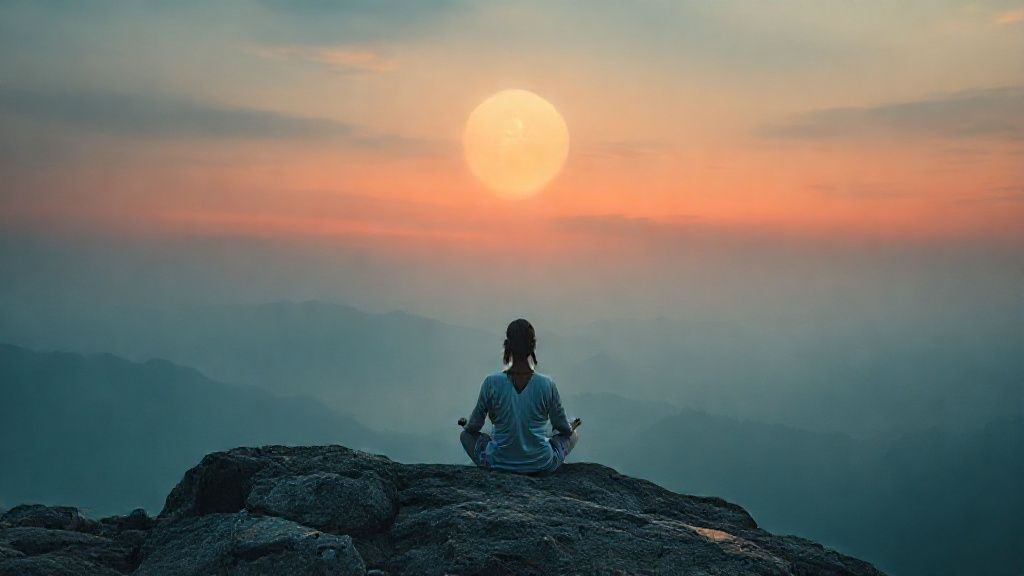
Where Can I Meditate? Your Ultimate Guide to Finding Peace Anywhere
You’ve decided to meditate, but the biggest question remains: where? The perfect location can be the difference between a distracted session and profound peace. Many beginners get stuck on this very question, delaying their practice before it even begins.
You can meditate virtually anywhere—from a dedicated corner in your home to public parks, meditation centers, or even your office desk. The “best” place is ultimately wherever you feel safe, comfortable, and free from interruptions. This comprehensive guide will walk you through finding your perfect meditation sanctuary, whether you’re at home, work, or out in the world.

The Foundation: What Makes a “Good” Meditation Spot?
Before we explore specific locations, let’s establish what qualities make a space conducive to meditation. The ideal meditation spot typically has three key characteristics:
Minimal Distractions: This is the most important factor. While you can’t eliminate all noise or activity, your meditation space should be relatively free from interruptions that might pull your attention away from your practice. This means turning off phone notifications, choosing a time when household activity is low, or finding a corner away from high-traffic areas.
A Sense of Safety: Your nervous system needs to feel secure to relax into meditation. This means both physical safety (you’re not in danger) and emotional safety (you won’t be suddenly interrupted or judged). This is why many people prefer private spaces, especially when beginning their practice.
Comfortable but Alert Posture: Your meditation spot should support a posture that is both relaxed and awake. This doesn’t require special equipment—a firm chair, cushion, or mat that allows your spine to be straight without straining is perfect. The goal is to be comfortable enough to stay still but alert enough not to fall asleep.
Consistency is Key: While you can meditate anywhere, having a dedicated space trains your mind to associate that location with meditation. Over time, simply sitting in your meditation spot will trigger a relaxation response, making it easier to settle into your practice.
Your Personal Sanctuaries: Meditating at Home
For most people, home is the most accessible and comfortable place to begin a meditation practice. You have control over your environment and can create a space that truly supports your practice.
Creating Your Dedicated Meditation Corner
You don’t need an entire room to create a meaningful meditation space. A small corner can become your personal sanctuary with a few simple considerations:
Choose Your Spot Wisely: Select a quiet area away from main household traffic. This might be a corner of your bedroom, a spare room, or even a large closet. The key is consistency—returning to the same spot reinforces the meditation habit.
Keep It Simple: Your setup doesn’t need to be elaborate. A meditation cushion (zafu), mat, or even a folded blanket can define your space. Some people like to add a small table with meaningful objects—a candle, a crystal, or a plant—to create a focal point.
Set the Ambiance: Consider lighting, temperature, and sound. Soft, natural light is ideal, but a dim lamp works well too. Ensure the temperature is comfortable—not too hot or cold. To set the mood, you might want to play some 10 minute meditation music.
Establish Boundaries: If you live with others, communicate about your meditation practice. A simple “I’ll be meditating for the next 20 minutes” helps establish boundaries. Some people use a sign on the door or wear headphones as visual cues that they shouldn’t be disturbed.
Quick Meditation Spots in a Busy Home
Not every meditation session needs to happen in your dedicated corner. Life gets busy, and sometimes you need to grab moments of mindfulness wherever you can:
The Kitchen Chair: Before the morning rush, your kitchen table can become a perfect meditation spot. The firm chair supports good posture, and the quiet of early morning provides a peaceful atmosphere.
The Edge of Your Bed: Your bedside is ideal for morning or evening practices. Before checking your phone or after turning off the light, take a few moments to sit and breathe.
The Bathroom (Really): When you need a moment alone, the bathroom can provide privacy and quiet. Even a few minutes of mindful breathing here can reset your nervous system.
If you only have a moment in the morning, a 5분 가이드 명상 아침 session can set a positive tone for your entire day.
Finding Peace in Public: Meditating Out and About
Once you’re comfortable meditating at home, you might want to expand your practice into the world around you. Public meditation can be deeply rewarding and helps integrate mindfulness into your daily life.
Nature’s Meditation Studios
Natural settings are inherently calming and can enhance your meditation practice significantly:
Parks and Gardens: Find a quiet bench away from playgrounds or sports fields. The gentle background sounds of nature—birds, rustling leaves—can actually enhance your meditation rather than distract from it.
Beaches and Shorelines: The rhythmic sound of waves provides a natural meditation focus. Early morning or weekdays are typically quieter times. Feel the sand beneath you and breathe with the ocean’s rhythm.
Forests and Quiet Trails: The Japanese practice of “forest bathing” (shinrin-yoku) highlights the therapeutic benefits of being among trees. Find a safe, off-the-beaten-path spot to sit and meditate.
Practicing mindfulness in nature is powerful. For a structured approach, try a 평온한 마음을 위한 가이드 명상으로 while sitting under a tree.
Urban Oases for Mindfulness
Even in bustling cities, you can find pockets of peace perfect for meditation:
Libraries: Public libraries often have quiet reading rooms or secluded corners where you can meditate undisturbed. The hushed atmosphere is naturally conducive to introspection.
Places of Worship: Many churches, temples, and mosques welcome visitors for quiet contemplation, even outside of service times. The sacred atmosphere can deepen your practice.
Museums and Art Galleries: After paying admission, find a quiet bench in front of a calming artwork or in a less-visited gallery. The contemplative environment supports mindfulness.
Your Car: When you need a moment of privacy during a busy day, your parked car can become an instant meditation sanctuary. Ensure you’re parked safely and legally.
If city noise is a challenge, a 불안을 위한 가이드 명상 can help you acknowledge sounds without letting them disrupt your peace.

Guided by Experts: Meditation Centers and Classes
For those seeking community and expert guidance, meditation centers and classes offer structured environments that can deepen your practice:
Benefits of Group Meditation: There’s a unique energy to meditating with others that many find supportive and deepening. The collective intention can help carry you through moments of restlessness or distraction.
Teacher Guidance: Experienced instructors can offer personalized advice on posture, technique, and working with challenges that arise in meditation. This guidance can accelerate your practice significantly.
Structured Learning: Many centers offer progressive courses that systematically build your meditation skills, much like taking music lessons or learning a sport.
To find a local community, search for meditation centers near me to explore options in your area. Many also offer free meditation classes near me as an introduction.
Digital Sanctuaries: Apps and Online Resources
In our digital age, your meditation space can be as portable as your smartphone. Meditation apps and online resources create virtual sanctuaries you can access anywhere:
Portable Meditation Spaces: With headphones, your meditation app can transform any location into a personal retreat—whether you’re on a noisy train, in a busy airport, or taking a break at work.
Variety and Guidance: Digital platforms offer guided meditations for every need—stress reduction, focus, sleep, or simply building a consistent habit.
Popular apps like 헤드스페이스 and Calm provide guided sessions for any location or situation. For a free, high-quality alternative, explore our curated list of the 최고의 길잡이 명상 resources available online.
Tailoring Your Location to Your Goal
Different meditation intentions might call for different environments. Consider matching your location to your purpose:
The Best Place for a Sleep Meditation
For meditation specifically designed to promote restful sleep, your environment should support deep relaxation:
Your Bedroom: Obviously, this is the ideal location. Ensure the room is dark, quiet, and at a comfortable temperature.
Comfort Over Posture: For sleep meditations, you’ll typically be lying down rather than sitting, so comfort is paramount.
Minimize Blue Light: Avoid screens for at least 30 minutes before your practice to support natural melatonin production.
For the ultimate wind-down, try a 20분 수면 명상 (여성 목소리)로 더 깊은 휴식을 위한 시간을 할애하세요 designed specifically for deep rest.
The Best Place for an Anxiety-Relief Meditation
When anxiety strikes, you need a space that feels safe and private:
A Secure, Private Spot: This might be your dedicated meditation corner at home, a closed office, or even your parked car. The key is knowing you won’t be interrupted or observed during this vulnerable practice.
Minimal Sensory Input: Sometimes reducing external stimulation helps—a dimly lit room, comfortable clothing, and perhaps a blanket for physical comfort and containment.
Consistent Location: Having a go-to spot for anxiety meditation can create a conditioned relaxation response over time.
A short, effective practice like this 불안과 수면을 위한 5분 명상 can be a powerful tool to use in your safe space.
The Best Place for a Focused Morning Meditation
Morning meditation sets the tone for your entire day, so your location should support clarity and intention:
Anywhere You Can Have Quiet Moments: This might be at your kitchen table before others wake, on your patio with your morning beverage, or even at your desk before checking emails.
Good Lighting: Natural morning light can be particularly energizing and uplifting for morning practice.
Connection to Your Day: Your morning meditation spot should be easily accessible as part of your morning routine—not so separate that it feels like a detour.
Start your day with intention using a guided meditation to start day, whether at your desk or on your patio.

FAQ: Your Questions on Meditation Locations Answered
Q: Can I meditate in a noisy place?
A: 네, 하지만 이는 고급 수련법입니다. 초보자들은 집중력을 유지하는 데 더 적은 노력이 필요하므로 조용한 환경을 권장합니다. 수준이 높아지면 소음을 차단하기보다 명상에 포함시키는 방식으로 수련할 수 있습니다. 소음이 많은 장소에서는 헤드폰으로 가이드 명상을 듣는 것도 환경 소음을 완화하는 데 도움이 됩니다.
Q: 명상할 때 바닥에 앉아야 하나요?
A: 전혀 그렇지 않습니다! 의자도 완벽히 괜찮습니다. 핵심은 편안하면서도 경계를 유지하는 자세로, 허리에 무리가 가지 않도록 척추를 비교적 곧게 펴는 것입니다. 많은 숙련된 명상가들이 오로지 의자만 사용합니다. 중요한 것은 수면을 유도하기보다 깨어있음을 지탱할 수 있는 자세입니다. 훌륭한 좌식 명상을 위해 10분 마음챙김 명상을 시도해 보세요.
Q: 명상하기에 가장 이상적인 장소는 어디인가요?
A: 가장 좋은 장소는 꾸준히 명상을 실제로 실천할 수 있는 곳입니다. 고급스러운 방석, 완벽한 정적, 이상적인 조건보다 꾸준히 실천하는 것이 더 중요합니다. 간단하게 시작하세요—침실에 있는 의자도 완벽한 출발점이 될 수 있습니다. 수련이 발전하면서 개인적으로 가장 잘 맞는 환경을 발견하게 될 것입니다.
Q: 초보자는 얼마나 오래 명상해야 하나요?
A: 시작할 때는 짧은 시간이 가장 좋습니다. 5-10분도 매우 효과적이며, 좌절이나 회피로 이어질 수 있는 긴 시간을 시도하는 것보다 지속적인 습관을 형성하는 데 더 유리합니다. 짧은 시간을 꾸준히 실천하는 것이 가끔 하는 장시간 명상보다 훨씬 가치 있습니다. 7분 명상 은 훌륭하고 관리하기 쉬운 시작점입니다.
결론: 당신의 여정, 당신의 공간
완벽한 명상 장소는 매우 개인적이며 훌륭하게 적응 가능합니다. 물리적 위치보다 그곳에 가져가는 의도가 더 중요합니다. 이상적인 명상 공간은 날마다 변할 수 있습니다—때로는 전용 코너의 구조가 필요하고, 다른 때는 공원 벤치의 영감이나 사무실 의자의 편의성이 필요할 수 있습니다.
완벽한 장소를 찾는 것이 수련의 장애물이 되지 않도록 하세요. 가장 평범한 장소에서 가장 심오한 명상이 일어날 수 있습니다. 중요한 것은 열린 마음과 호기심을 가지고, 당신이 있는 그 어디에서든 실천에 임하는 것입니다.
시작할 준비가 되셨나요? 장소에 대해 너무 깊이 생각하지 마세요. 조용한 코너를 선택하고, 짧은 가이드 명상, 을 재생한 후, 오늘 내면의 평화를 향한 첫 걸음을 내딛으세요.
METADATA_START—
카테고리: 초보자를 위한 마음챙김
DISPLAY_TITLE: 어디서 명상할 수 있나요? 당신만의 완벽한 성소 찾기
SEO_TITLE: 어디서 명상할 수 있나요? 평화를 위한 15개 이상의 완벽한 장소 | 2025 가이드
META_DESC: 어디서 명상할 수 있을지 궁금하신가요? 집, 자연, 공공장소에서의 이상적인 장소를 발견하세요. 당신만의 완벽한 명상 성소를 찾는 초보자 친화 가이드입니다.
IMG_PROMPT: 아늑한 집 구석, 고요한 공원 벤치, 조용한 사무실 공간을 포함한 다양한 환경에서 평화로운 명상 장소를 찾는 사람
IMG_ALT: 집, 자연, 공공장소에서 명상할 수 있는 다양한 평화로운 장소들을 보여주는 이미지
IMG_TITLE: 어디서 명상할 수 있나요 – 비주얼
IMG_CAPTION: 집이든, 자연이든, 그 사이 어딘가든, 당신의 완벽한 명상 장소가 기다리고 있습니다
IMG_DESC: 가정 명상 코너, 공원 환경, 도시 오아시스를 포함하여 명상을 실천할 수 있는 여러 평화로운 환경을 보여주는 합성 이미지
—METADATA_END—