Of course. As a Senior SEO Strategist, I will craft a comprehensive, user-focused blog post and all associated metadata based on the provided outline, adhering to the latest Google 2025 guidelines for E-E-A-T and user experience.
명상과 감정: 균형을 찾는 궁극적인 안내서
Have you ever felt a surge of anger that made you say something you instantly regretted? Or been caught in a spiral of anxiety that hijacked your entire day? You’re not alone. Our emotions are powerful forces, and in our fast-paced world, it’s easy to feel like they are in the driver’s seat. But what if you could learn to be the calm, observant navigator instead of a frantic passenger on this emotional rollercoaster?
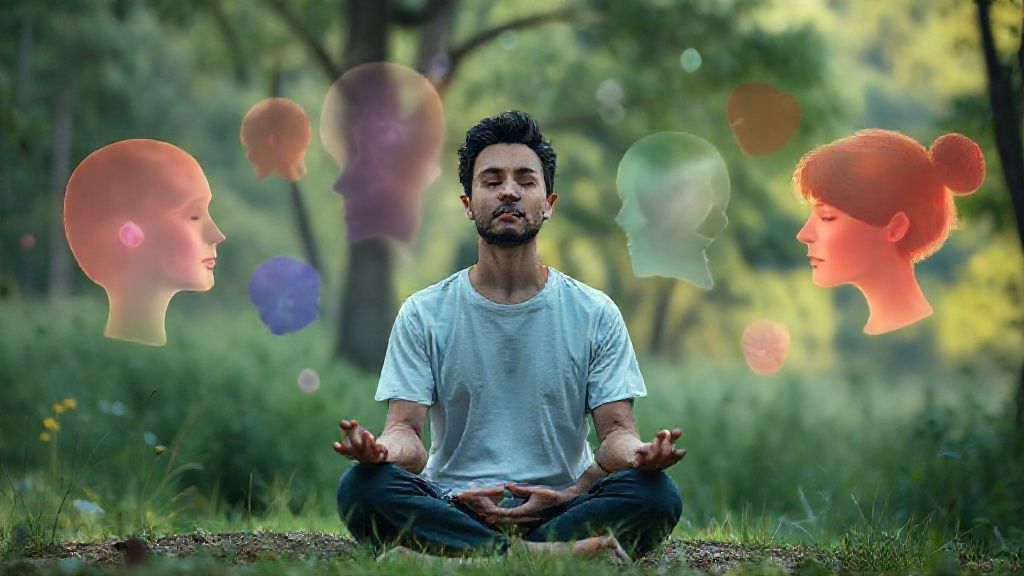
Meditation is the practice of training your awareness to better understand, manage, and respond to your emotions. It’s not about eliminating feelings or becoming a blank slate. True emotional health is about changing your relationship with your feelings, leading to greater emotional resilience, reduced reactivity, and a profound sense of inner peace. In this guide, we’ll explore the fascinating science behind this connection, provide you with practical techniques for navigating specific emotions, and show you how to build a sustainable practice for lifelong balance.

The Science of Meditation and Your Emotional Brain
You might wonder how simply sitting in silence can possibly tame a tidal wave of emotion. The answer lies within the very structure of your brain. Neuroscience has shown that meditation has a tangible, physical impact on the regions that govern our emotional lives.
Two key players are the amygdala and the prefrontal cortex. The amygdala is your brain’s alarm system, triggering the fight-or-flight response at the first sign of threat. The prefrontal cortex is the wise leader, responsible for rational decision-making, self-control, and emotional regulation. When you get cut off in traffic, it’s your amygdala that fires up the rage, while your prefrontal cortex is supposed to step in and remind you that honking your horn for a full minute might be an overreaction.
Regular meditation strengthens the prefrontal cortex and calms the reactivity of the amygdala. Think of it as building a bigger, stronger “pause button” between a triggering event and your reaction. This process is powered by neuroplasticity – your brain’s remarkable ability to rewire itself based on your experiences and repeated behaviors. By consistently practicing mindful awareness, you are literally carving new neural pathways that favor calm and clarity over chaos and reactivity. To begin this journey of reshaping your brain, understanding 안내 명상이란 무엇인가 can be an excellent first step.
How Meditation Transforms Your Relationship with 5 Key Emotions
Meditation isn’t a one-size-fits-all solution, but a versatile toolkit. Let’s explore how it can help you navigate some of the most common and challenging emotional landscapes.
Taming Anxiety and Worry
Anxiety often feels like a future-oriented monster, feeding on “what if” scenarios. Mindfulness meditation pulls you out of that imagined future and into the safety of the present moment. By anchoring your attention on your breath or bodily sensations, you create a critical space between yourself and your anxious thoughts. You learn to see them as mental events—clouds passing in the sky—rather than absolute truths that demand your immediate attention. This shift doesn’t make the thoughts disappear, but it dramatically reduces their power over you. For immediate relief, try this 10-minute meditation for anxiety, or if you’re pressed for time, a quick 5-minute anxiety meditation can work wonders.
Cooling Down Anger and Frustration
Anger is a fiery, physical emotion. Meditation teaches you to turn your awareness inward to observe the raw data of anger—the clenched jaw, the hot face, the rapid heartbeat—without fueling the story that’s causing it. This act of non-judgmental observation allows the physiological wave of anger to rise, peak, and pass through you without compelling you to lash out. It gives you the precious seconds needed to choose a more skillful response. A powerful practice for this is using a 놓아버림 명상 스크립트 to consciously release the tension.
Lifting the Fog of Sadness
Sadness and depression are often accompanied by rumination—a repetitive loop of negative thoughts. Meditation helps you break this cycle by allowing you to acknowledge the feeling of sadness with kindness, without getting lost in the narrative behind it. It fosters an attitude of self-compassion, reminding you that “this is a moment of suffering, and it’s okay.” This approach can prevent sadness from deepening into a prolonged state of despair. For those seeking targeted support, explore our guide on the best meditation practices for depression, or use a guided meditation for positive energy to gently cultivate a brighter mindset.
Cultivating Joy and Gratitude
Meditation isn’t only for difficult emotions; it’s also a powerful tool for amplifying positive ones. Practices like loving-kindness meditation actively train the mind to cultivate feelings of joy, compassion, and gratitude. By deliberately directing well-wishes towards yourself and others, you strengthen the brain circuits associated with happiness, making it easier to notice and savor life’s simple pleasures. You can start this practice with our 자비 명상 대본.
Finding Calm in the Chaos
For general stress management and emotional regulation, meditation is your anchor in the storm. It builds your baseline resilience, so you’re less easily thrown off balance by daily hassles. A consistent practice helps you maintain an inner steadiness, allowing you to respond to chaos with clarity rather than contributing to it. A great foundation is a 10-minute calming mindfulness meditation. When stress hits unexpectedly, you can reset your nervous system in moments with a 2분 접지 명상 대본.

Your Toolkit: Meditation Practices for Emotional Mastery
Now that we understand the “why,” let’s dive into the “how.” Here are three foundational practices to build your emotional mastery.
Mindfulness of Breath
This is the cornerstone of emotional awareness. The simple act of focusing on the natural rhythm of your inhalation and exhalation trains the mind to be present. When an emotion arises, you notice it, label it (“ah, this is anxiety”), and gently return your focus to the breath. This builds the “muscle” of awareness that is essential for all emotional regulation. To get started, follow along with our simple 10-minute breathing meditation script.
Body Scan for Somatic Awareness
Emotions don’t just live in the mind; they manifest as physical sensations in the body. Anxiety might be a knot in your stomach, while anger could be tension in your shoulders. The body scan practice involves systematically moving your attention through different parts of your body, observing any sensations without judgment. This helps you release stored emotional tension and connects you to the somatic wisdom of your emotions. You can practice this anytime with our handy 5-minute body scan meditation PDF.
Guided Meditation for Specific Needs
If sitting in silence feels daunting, guided meditations are an excellent resource. A skilled teacher’s voice can provide structure, encouragement, and specific imagery to help you navigate your inner world. They are particularly useful when you’re dealing with a strong, specific emotion and need directed support. To explore a variety of options, check out our curated list of the 초보자를 위한 최고의 길잡이 명상 라이브러리를 탐색해 보세요..
Building a Sustainable Emotional Resilience Habit
The key to unlocking the long-term benefits of meditation for your emotions is consistency, not perfection. Here’s how to make it a sustainable part of your life:
- Start Small: Even three to five minutes a day is enough to build the habit and begin rewiring your brain.
- Attach it to a Habit: “I will meditate for 5 minutes after I brush my teeth in the morning.” This technique, known as habit stacking, makes it stick.
- Be Kind to Yourself: Your mind will wander. That’s not a failure; it’s the practice. The magic is in gently bringing it back, again and again.
- Find Your Time: A 아침 5분 명상 하루 전체에 고요한 분위기를 조성할 수 있습니다. 반면, 저녁 시간에 하는 숙면을 위한 취침 명상 은 하루 동안의 감정을 정리하고 편안한 수면을 보장하는 데 도움이 될 수 있습니다.

1분 호흡 연습
Q: 명상이 불안과 우울증에 도움이 될까요?
A: 네, 수많은 연구에 따르면 명상은 부정적인 생각에 대한 반응성을 줄이고 자기-자비를 함양함으로써 불안과 우울증 증상 관리를 위한 강력한 보조 도구가 될 수 있습니다. 전문적인 의학적 조언과 함께 사용할 때 가장 효과적입니다.
Q: 감정에 가장 좋은 명상 유형은 무엇인가요?
A: 마음챙김 명상과 자비(메타) 명상이 감정 조절에 가장 효과적인 것으로 널리 인정받고 있습니다. 마음챙김은 알아차림을 키우는 반면, 메타 명상은 자비와 기쁨과 같은 긍정적인 감정 상태를 적극적으로 길러냅니다.
Q: 명상이 감정 조절력을 향상시키는 데 얼마나 걸리나요?
A: 단 한 번의 명상 후에도 평온함을 느낄 수 있지만, 대부분의 사람들은 꾸준한 매일 실천 후 4주에서 8주 이내에 감정 반응성에서 뚜렷한 변화를 알아차립니다. 핵심은 더 평온한 기본 상태를 위한 신경 경로를 구축하는 것입니다.
Q: 명상할 때 감정이 너무 많이 올라와요, 이게 정상인가요?
A: 물론입니다. 명상은 억눌렸던 감정이 표면으로 올라올 수 있는 안전한 공간을 만들 수 있습니다. 이는 과정의 정상적이고 건강한 부분으로, 마침내 스스로가 저장해 두었던 것을 느끼고 놓아주기 시작했다는 신호입니다. 이런 순간에는 자신에게 부드럽게 대해주세요.
결론 및 행동 촉구(CTA)
당신의 감정 세계는 적이 아닙니다. 그것은 당신의 인간 경험의 풍부하고 복잡하며 핵심적인 부분입니다. 명상은 이 내면의 풍경을 기술, 자비, 균형을 가지고 탐색할 지도와 도구를 제공합니다. 그것은 당신이 감정에 휘둘리는 상태에서, 감정을 가치 있는 정보의 원천으로 이해하고 함께 작업하는 상태로 나아갈 수 있도록 힘을 실어줍니다.
감정적 균형을 향한 당신의 여정은 한 번의 호흡으로 시작됩니다. 당신에게 딱 맞는 명상을 찾기 위해 우리의 자료 모음을 탐색해 보세요. 더 깊은 경험과 뜻이 맞는 공동체의 지지를 받고 싶으신가요? 무료 명상 코스에 참여하세요 그리고 평생 감정과의 관계를 변화시킬 지속적인 습관을 만들어 보세요.