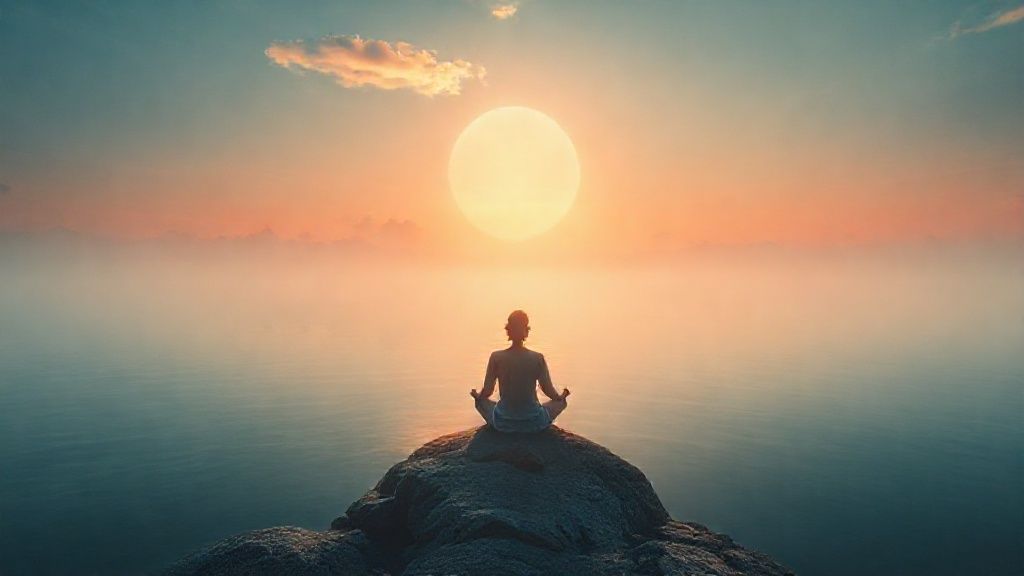
Find Your Calm: A Complete Guide to Guided Meditation for Inner Peace
In today’s fast-paced world, finding a moment of true peace can feel impossible. Between constant notifications, overflowing to-do lists, and the general noise of modern life, our minds are often anything but peaceful. But what if you could access a deep sense of calm anytime, anywhere, regardless of your circumstances?
Guided meditation for inner peace is a practice where a narrator leads you through a series of visualizations and instructions designed to quiet the mind, release stress, and cultivate a lasting sense of serenity from within. Unlike trying to meditate alone, you have an expert voice gently steering you away from distracting thoughts and toward a state of profound relaxation.
This comprehensive guide will walk you through exactly what guided meditation is, its profound benefits for inner peace, and how you can start your own simple, yet effective practice today. Whether you have five minutes or fifty, you’ll discover how to tap into the peace that already exists within you.

What Is Guided Meditation and How Does It Foster Peace?
At its core, guided meditation is the practice of being led into a meditative state by another person’s voice, either in person or through a recording. Think of it as having a personal guide for your mind—someone who knows the terrain of consciousness and can help you navigate toward tranquility when your own mental maps fail you.
How does this differ from silent meditation? While traditional silent meditation requires you to direct your own focus (often on the breath or a mantra), guided meditation provides a structured pathway. The narrator’s voice becomes your anchor, giving your busy mind something specific to focus on rather than wandering into anxiety or distraction. This makes it particularly ideal for beginners who often struggle with the question, “Am I doing this right?”
The science behind why this works is fascinating. When you engage in guided meditation, several things happen in your nervous system:
- Your brain waves shift from busy beta waves to calmer alpha and theta waves, associated with relaxation and creativity
- Your parasympathetic nervous system activates, slowing your heart rate, lowering blood pressure, and reducing cortisol (the stress hormone)
- The default mode network—the part of your brain responsible for mind-wandering and self-referential thoughts—becomes less active
This neurological shift creates the perfect conditions for inner peace to emerge naturally. The guided imagery and soothing narration provide just enough structure to keep your mind from spiraling into worry, while allowing enough space for deep relaxation to occur.
For a foundational understanding of the practice, learn more about 안내 명상이란 무엇인가.
The Life-Changing Benefits of a Peaceful Mind
Why invest time in cultivating inner peace? The benefits extend far beyond simply feeling calm in the moment. Regular practice of 내면의 평화를 위한 가이드 명상 can transform your relationship with yourself and the world around you.
Reduced Stress and Anxiety Levels
When you practice guided meditation consistently, you’re essentially training your nervous system to respond differently to stressors. Instead of automatically reacting with fight-or-flight, you develop what psychologists call “stress resilience”—the ability to encounter challenging situations without being overwhelmed by them. Studies have shown that regular meditation practice can reduce anxiety symptoms by up to 60%.
Improved Emotional Regulation and Resilience
Inner peace isn’t about never feeling difficult emotions—it’s about having the capacity to experience them without being controlled by them. Guided meditation helps you develop what’s known as “meta-awareness,” the ability to observe your thoughts and feelings from a slight distance. This creates space between stimulus and response, allowing you to choose how you want to react rather than being hijacked by emotional triggers.
Enhanced Focus and Mental Clarity
A peaceful mind is a clear mind. When mental chatter subsides, your cognitive resources are freed up for what truly matters. Many people report improved concentration, better problem-solving abilities, and enhanced creativity after establishing a regular meditation practice. This isn’t just subjective feeling—research shows meditation can physically thicken the prefrontal cortex, the area of the brain associated with executive function.
Better Sleep Quality
The relaxation response triggered by guided meditation is the perfect antidote to the hyper-arousal that often causes insomnia. By calming the nervous system before bed, you create ideal conditions for falling asleep faster and experiencing deeper, more restorative sleep. The practice of releasing thoughts and bodily tension makes it easier to transition into sleep naturally.
A Stronger Connection to Your Inner Self
Perhaps the most profound benefit of cultivating inner peace is the rediscovery of who you are beneath the roles, responsibilities, and reactions of daily life. When the mental noise quietens, you connect with a deeper part of yourself—a place of wisdom, intuition, and inherent worth that exists regardless of external circumstances.

How to Practice Guided Meditation for Inner Peace: A Step-by-Step Guide
Ready to begin your journey toward lasting peace? Follow this simple step-by-step approach to establish your practice.
Step 1: Find Your Quiet Space
You don’t need a perfectly silent meditation room, but choosing a relatively quiet space where you won’t be interrupted for the duration of your practice is important. This could be a corner of your bedroom, a comfortable chair in your living room, or even your parked car during a lunch break. The goal is to create an environment that signals to your brain, “It’s time to relax.”
Step 2: Get Comfortable (You Don’t Need to Sit Cross-Legged)
The stereotypical lotus position isn’t necessary for effective meditation. What matters is that you’re comfortable enough to remain still but alert enough not to fall asleep. You can:
– Sit in a chair with your feet flat on the floor
– Sit on a cushion with your back supported against a wall
– Lie down if sitting is uncomfortable (though be aware this might make you sleepy)
The key is maintaining a relatively straight spine to facilitate easy breathing.
Step 3: Choose Your Guided Session
This is where you select the 내면의 평화를 위한 가이드 명상 that matches your available time and current needs. If you’re pressed for time, try our 5분 길잡이 명상입니다.. For a more immersive experience, explore our 20-minute guided meditation.
Step 4: Focus on the Guide’s Voice and Your Breath
Once you begin the recording, allow the narrator’s voice to become your anchor. Don’t try to control your experience or make anything special happen. Simply follow the instructions as best you can. When your mind wanders (which it will), gently return your attention to the guide’s voice and the physical sensation of your breath.
Step 5: Gently Return Your Wandering Mind (It’s Normal!)
This might be the most important step: understanding that mind-wandering isn’t failure—it’s part of the process. Each time you notice your attention has drifted and gently bring it back to the meditation, you’re strengthening your “attention muscle.” This act of noticing and returning is where the real transformation happens.
당신에게 맞는 안내 명상 찾기
With countless meditation resources available, finding approaches that resonate with you personally is key to maintaining a consistent practice.
By Length: Fitting Peace into Your Schedule
Short Sessions (5-10 minutes): Perfect for busy schedules or when you need a quick reset. These brief practices can be surprisingly powerful for interrupting stress cycles and returning to center. For a quick reset during a busy day, use our 를 탐색해 보세요. 부드러운 시작을 위해, 과부하된 신경계를 달래기 위해 특별히 설계된 인기 있는. Ease into your morning with a short morning meditation.
Medium Sessions (15-20 minutes): Ideal for establishing a daily practice that creates lasting neurological changes. This length allows time to move through initial resistance and settle into deeper states of relaxation.
Long Sessions (30+ minutes): Wonderful for deeper exploration when you have the time. These extended practices can facilitate profound states of peace and insight.
By Specific Need: Targeted Peace Practices
For Managing Anxiety: If anxious thoughts are blocking your peace, our 불안을 위한 가이드 명상 can be a powerful tool. These sessions often include specific techniques for working with worried thoughts and bodily sensations of anxiety.
For Deep Relaxation: To release physical tension and mental fatigue, practice a 을 사용하세요. designed specifically to activate the relaxation response throughout your body.
For Sleep Preparation: Cultivate peace before bed with a 숙면을 위한 취침 명상 that helps transition your nervous system from wakefulness to rest.

Deepening Your Practice: Tools for Lasting Serenity
Once you’ve established a basic guided meditation practice, these tools can help you deepen your experience of inner peace.
Using Meditation Scripts for Self-Guided Practice
After becoming familiar with guided meditations, you might explore using meditation scripts. These written guides allow you to lead yourself through meditations without a recording, giving you more flexibility to customize the practice to your exact needs in the moment. Get started with our free guided meditation script for relaxation.
Incorporating Mindfulness Exercises Throughout Your Day
True inner peace isn’t just what you experience during meditation—it’s a quality you can bring into every moment. Mindfulness practices help you extend the benefits of meditation into your daily activities. Learn simple techniques from our 5분 마음챙김 활동 that you can practice anywhere.
Exploring Helpful Meditation Apps
While this guide provides everything you need to get started, meditation apps can offer additional structure, variety, and tracking features. Compare popular options in our review of 헤드스페이스와 캄과 같은 앱에 대한 가이드를 확인해 보세요. to find one that might support your practice.
Frequently Asked Questions About Guided Meditation for Peace
How long does it take for guided meditation to work for inner peace?
Some benefits—like immediate relaxation and stress reduction—can be felt after just one session. However, lasting changes to your baseline level of peace typically develop over several weeks of consistent practice. Think of it like physical exercise: while you might feel good after one workout, transformation happens through regular training.
명상 중 생각을 멈출 수 없습니다. 제가 잘못하고 있는 건가요?
This is perhaps the most common concern among beginners, and the answer is a resounding no! The goal of meditation isn’t to stop your thoughts—it’s to change your relationship with them. Each time you notice your mind has wandered and gently return to the meditation, you’re practicing the very skill of inner peace: the ability to acknowledge thoughts without being carried away by them.
What’s the best time of day to meditate for peace?
The best time is whatever time you can consistently practice. That said, many people find morning meditation helps set a calm, centered tone for the entire day, while evening practice can help release the accumulated stress of the day. For a practice to start your day, try our 10-minute morning meditation.
Can guided meditation help with anxiety and depression?
Yes, numerous studies have demonstrated that meditation can be a valuable complementary practice for both anxiety and depression. By training the mind to relate differently to thoughts and emotions, meditation can reduce the intensity and duration of anxious and depressive episodes. For specific techniques, explore this further in our guide to 우울증을 위한 명상.

결론 및 실천 요청
The search for inner peace isn’t about adding something new to your life—it’s about uncovering what’s already there beneath the layers of stress, thought, and busyness. Guided meditation for inner peace is simply the tool that helps you remember the calm, centered presence that is your true nature.
Your journey to a more peaceful life doesn’t require dramatic changes or perfect conditions. It begins with a single decision to push play on a guided meditation and give yourself permission to simply be.
시작할 준비가 되셨나요? Start your journey now with our most popular session: Begin this Calming Guided Meditation.
Explore our full library of resources to support your mindfulness practice and discover the profound peace that awaits within you.
METADATA_START—
카테고리: 초보자를 위한 마음챙김
DISPLAY_TITLE: Find Your Calm: A Complete Guide to Guided Meditation for Inner Peace
SEO_TITLE: Guided Meditation for Inner Peace | Complete Beginner’s Guide
META_DESC: Discover how guided meditation for inner peace can transform your life. Reduce stress, find calm & cultivate lasting serenity with our step-by-step beginner’s guide.
IMG_PROMPT: A serene person meditating peacefully at sunrise in a natural setting with eyes closed and a gentle, content expression on their face, soft morning light, tranquil atmosphere
IMG_ALT: Person practicing guided meditation for inner peace in nature at sunrise
IMG_TITLE: guided meditation for inner peace – Visual
IMG_CAPTION: Discover the transformative power of guided meditation for inner peace
IMG_DESC: A person finding deep peace and serenity through guided meditation practice in a beautiful natural setting at sunrise, embodying the calm and centered state that meditation cultivates
—METADATA_END—