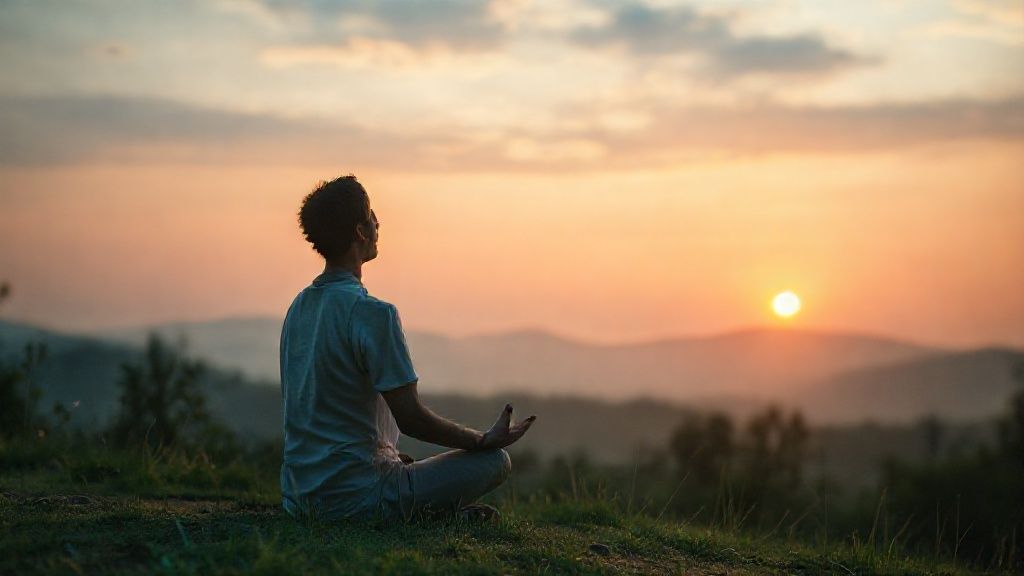
Unlocking Inner Peace: 10 Proven Advantages of Vipassana Meditation
In a world of constant noise and distraction, finding a meditation practice that offers profound, lasting change can feel elusive. While many mindfulness techniques provide temporary relief, few address the root causes of our suffering. Vipassana meditation, one of the oldest Buddhist mindfulness techniques, is a journey of self-observation that systematically cultivates mental clarity, emotional resilience, and a deep-seated sense of peace. This guide will walk you through the top 10 life-changing advantages of establishing a consistent Vipassana practice, transforming how you relate to your thoughts, feelings, and the world around you.

What Is Vipassana Meditation? A Brief Foundation
Vipassana, which means “to see things as they really are,” is an ancient Indian meditation technique rediscovered by Gautama Buddha over 2,500 years ago. Unlike many modern meditation practices that focus primarily on relaxation or stress reduction, Vipassana offers a comprehensive path to purification and self-transformation through objective self-observation.
The Core Principle: Observing Reality as It Is
At its essence, Vipassana meditation teaches practitioners to observe the constantly changing nature of bodily sensations and mental phenomena without reaction or judgment. This non-reactive awareness develops insight into the true nature of reality—impermanent, unsatisfactory, and impersonal. The practice differs significantly from concentration-based or guided styles by emphasizing bare awareness rather than focusing on a single object or following verbal guidance. While concentration practices (Samatha) calm the mind, Vipassana develops wisdom by examining the mind-body process directly. For readers new to the concept of non-guided practice, understanding how Vipassana differs from guided meditation can provide valuable context for your practice journey.
The Top 10 Advantages of a Vipassana Practice
The benefits of Vipassana extend far beyond the meditation cushion, influencing every aspect of daily life. Through systematic practice, these advantages compound over time, creating profound shifts in how we experience ourselves and our world.
1. Enhanced Self-Awareness and Mindfulness
Vipassana meditation serves as a mirror to the mind, revealing our deepest patterns, habits, and conditioning. By observing sensations without reaction, we develop profound self-knowledge that extends beyond intellectual understanding to direct experiential wisdom. This heightened awareness permeates daily activities, bringing mindfulness to ordinary moments like drinking tea, walking, or conversing with others. The practice reveals the subtle ways we create our own suffering through automatic reactions, giving us the opportunity to respond consciously instead. To provide a practical starting point for developing this awareness, try this simple 5-minute mindfulness exercise as an introduction to observational practice.
2. Reduced Stress and Anxiety by Breaking the Reaction Cycle
Modern neuroscience confirms what Vipassana practitioners have known for millennia: our stress and anxiety stem not from external events themselves, but from our conditioned reactions to them. Vipassana directly addresses this by breaking the chain between sensation and reaction. When an unpleasant sensation arises—whether physical pain or emotional discomfort—the untrained mind immediately reacts with aversion, tension, and resistance, creating a cycle of suffering. Vipassana teaches us to observe these sensations with equanimity, recognizing their impermanent nature. This interruption of the habitual reaction pattern significantly reduces the cumulative stress burden on our nervous system. For readers seeking immediate relief from anxiety symptoms, this guided meditation for anxiety can provide supportive practice alongside your Vipassana journey.
3. Improved Emotional Regulation and Resilience
Emotional turbulence often feels overwhelming because we identify with our feelings, believing “I am angry” or “I am sad.” Vipassana reframes this relationship by revealing emotions as passing phenomena—waves of sensation that arise and pass away according to natural laws. Through consistent practice, we develop the capacity to experience strong emotions without being overwhelmed or controlled by them. This emotional equanimity isn’t suppression or avoidance; rather, it’s the ability to stay present with intense feelings while maintaining balance and perspective. This resilience becomes a cornerstone of mental health, allowing us to navigate life’s challenges with greater stability and wisdom. To support emotional healing through complementary practices, explore this guided meditation for emotional healing.
4. Sharpened Focus and Concentration
While Vipassana isn’t primarily a concentration practice, the technique naturally develops powerful focus through its methodology. The continuous practice of returning attention to the object of meditation—whether the breath or bodily sensations—trains the mind much like weight training builds muscle. Studies have shown that Vipassana meditators demonstrate improved performance on attention-related tasks, with enhanced ability to sustain focus despite distractions. This mental clarity translates directly to professional and personal contexts, improving productivity, learning capacity, and the quality of our engagement with tasks and relationships. For additional techniques to strengthen this mental faculty, these complementary attention focus exercises can accelerate your progress.
5. Deeper Understanding of the Mind-Body Connection
Vipassana offers direct insight into one of the most profound mysteries of human experience: the relationship between mind and matter. The practice reveals how every mental state manifests as physical sensations, and how bodily sensations influence mental states. A thought of anxiety might appear as tension in the shoulders; a memory of embarrassment as heat in the face. By observing this mind-body interaction with detachment, we understand at an experiential level that we are not merely our thoughts or bodies, but the awareness that contains both. This insight liberates us from identification with temporary states and conditions. To explore this connection practically through a foundational Vipassana technique, this body scan meditation script provides an excellent starting point.

6. Cultivation of Compassion and Metta (Loving-Kindness)
As Vipassana practice deepens, understanding our own suffering naturally generates compassion for others who struggle similarly. This isn’t theoretical empathy but a genuine heartfelt response born from self-knowledge. Many Vipassana courses incorporate Metta Bhavana (loving-kindness meditation) toward the end of retreats, where practitioners systematically direct well-wishes toward themselves and all beings. This practice transforms insight into action, developing a compassionate heart that actively wishes for the happiness and freedom of others. The combination of clear seeing (Vipassana) and loving heart (Metta) creates a balanced spiritual development that benefits both practitioner and community. To dive deeper into this essential complementary practice, this 자비 명상 대본 offers structured guidance.
7. Better Sleep Through a Calmer Mind
Insomnia and restless sleep often stem from a mind that cannot disengage from the day’s events, worries about tomorrow, or persistent mental chatter. Vipassana addresses this at its root by training the mind to observe thoughts without entanglement. As we develop the ability to witness mental activity without getting caught in its stories, sleep naturally improves. The practice also heightens awareness of the bodily sensations associated with fatigue, allowing us to respond to our body’s needs more appropriately. Many practitioners report falling asleep more easily, experiencing deeper rest, and waking more refreshed—not from trying to sleep better, but as a natural byproduct of a calmer, more balanced mind. For those struggling specifically with sleep issues, this 가이드 수면 명상 추가적인 지원을 제공할 수 있습니다.
8. Relief from Depression by Observing Thought Patterns
Depression often involves identification with negative thought patterns and a diminished ability to disengage from rumination. Vipassana offers a powerful antidote by changing our relationship to thoughts altogether. Rather than believing “I am my thoughts,” we learn to see thoughts as mental events that arise and pass away according to conditions. This de-identification from negative thought loops creates space and perspective, reducing their emotional impact and duration. Research has shown that mindfulness-based interventions, including Vipassana, can be as effective as antidepressant medication for preventing relapse in recurrent depression. The practice doesn’t eliminate difficult thoughts or feelings but transforms our relationship to them. For additional support with depression, these 우울증을 위한 다른 명상 실천법 탐색하기 can complement your Vipassana practice.
9. Breaking Free from Addiction and Compulsive Behaviors
Addictions and compulsive behaviors are ultimately attempts to avoid unpleasant sensations—whether physical discomfort or emotional pain. Vipassana addresses this avoidance directly by teaching us to stay present with discomfort rather than automatically reacting to escape it. As awareness grows, we recognize the early physical sensations that typically trigger addictive behaviors and learn to observe them with equanimity. This breaks the automaticity of the habit loop, creating space for conscious choice. Numerous studies and rehabilitation programs have successfully incorporated Vipassana to help people recover from substance abuse, eating disorders, and other compulsive patterns by addressing the root cause rather than just managing symptoms. For a related practice focused on non-attachment, this 놓아버림 명상 스크립트 offers valuable support.
10. A Foundation for Lasting Personal and Spiritual Growth
Unlike approaches that offer temporary solutions to specific problems, Vipassana provides a framework for continuous growth and understanding throughout life. The practice isn’t a quick fix but a profound path of transformation that unfolds gradually, revealing deeper layers of insight over time. As we continue to observe the changing nature of mind and matter, we develop wisdom about the fundamental truths of existence. This understanding liberates us from conditioned patterns, fears, and limitations, allowing for genuine freedom and maturity. The advantages of Vipassana compound over a lifetime of practice, supporting evolution through different life stages and challenges.

How to Get Started with Vipassana Meditation
Beginning a Vipassana practice requires patience and proper guidance, but the fundamentals are accessible to anyone willing to approach them with sincerity and persistence.
Beginning Your Practice at Home
Starting a home practice begins with creating a consistent time and space for meditation. Begin with just 10-15 minutes daily, gradually increasing as your concentration develops. The basic approach involves:
- Finding a comfortable seated position with your spine relatively straight
- Bringing attention to the natural breath at the nostrils or abdomen
- 감각을 throughout the body without preference or judgment
- Returning gently to awareness when the mind wanders
The key is consistent practice with an attitude of patient, non-judgmental observation. For absolute beginners who find silent practice initially challenging, these 초보자를 위한 최고의 길잡이 명상 라이브러리를 탐색해 보세요. can serve as an accessible on-ramp before transitioning to pure Vipassana. For a more structured approach to learning this method, our Vipassana meditation online course provides step-by-step guidance.
Deepening Your Practice: The 10-Day Silent Retreat
While daily practice yields significant benefits, the traditional method for learning Vipassana involves attending a 10-day residential course where participants maintain noble silence and follow a rigorous schedule of meditation. These retreats, offered worldwide through centers in the tradition of S.N. Goenka, provide:
- Immersion in an environment free from distractions
- Systematic instruction in the technique through evening discourses
- 점진적 발전 호흡 의식에서 전신 스캔으로
- 지지적 공동체 동료 수행자들의
- 지도 경험 많은 교사들로부터의
이러한 집중 수행의 강도는 종종 깊은 통찰을 촉진하고 지속적인 수행을 위한 견고한 기초를 마련합니다. 수행을 심화시키는 다음 단계로서, 무료로 제공되는 침묵 위빠사나 수행 전 세계 기부 기반 센터에서 제공되는 프로그램을 포함한 수행 옵션을 탐색해 볼 수 있습니다.
위빠사나에 관한 자주 묻는 질문(FAQ)
위빠사나는 초보자에게 적합한가요?
네, 위빠사나는 초보자에게 적합하지만 인내와 현실적인 기대가 필요합니다. 기법 자체는 단순하지만 일관되게 적용하는 것은 우리의 조건화된 패턴에 도전합니다. 장시간의 신체 스캔을 시도하기 전에 짧은 호흡 의식 세션으로 시작하는 것이 권장됩니다. 많은 초보자들은 침묵 수행으로 전환하기 전에 입문 과정에 참석하거나 가이드 녹음을 처음 사용하는 것이 도움이 된다고 느낍니다.
위빠사나와 초월명상(TM)의 차이점은 무엇인가요?
둘 다 명상 기법이지만, 위빠사나와 초월명상은 방법론, 목표 및 철학적 기반이 다릅니다. 위빠사나는 변화하는 현상에 대한 정신적 관찰을 강조하여 무상함과 고통의 본성에 대한 통찰을 발전시킵니다. TM은 개인화된 만트라를 사용하여 마음을 더 고요한 상태로 가라앉히며, 주로 이완과 스트레스 감소를 목표로 합니다. 위빠사나는 일반적으로 기법과 그 맥락에 대한 상세한 설명과 함께 집중 과정에서 가르치는 반면, TM은 지적 분석 없이 노력 없는 수행을 강조합니다. TM에 관심 있는 독자들은 초월명상에 대해 더 알아보고 그 차이점을 이해할 수 있습니다.
위빠사나는 심각한 불안이나 PTSD에 도움이 될 수 있나요?
위빠사나는 불안과 PTSD에 유익할 수 있지만, 심각한 트라우마가 있는 사람들은 주의를 기울여 접근하고, 이상적으로는 전문가의 지도 아래에서 수행해야 합니다. 신체 감각에 대한 집중적인 관찰은 때때로 트라우마 기억이나 압도적인 정서적 반응을 유발할 수 있습니다. 이러한 경우에는 트라우마 작업에 경험이 있는 자격을 갖춘 교사의 지도 아래에서 수행하거나, 명상을 치료적 지원과 결합하는 것이 좋습니다. 주의 범위를 좁히거나 접지 기법을 포함하는 등 기법의 수정이 필요할 수 있습니다. 마음챙김을 치료 접근법과 통합하는 전문적 지원을 위해, 자격을 갖춘 마음챙김 치료사 찾기 적절한 지도를 제공할 수 있습니다.

통찰로의 여정이 지금 시작됩니다
위빠사나 명상은 스트레스 해소 도구를 넘어 자기 발견과 지속적인 자유로 이끄는 심오한 길입니다. 더 고요한 마음부터 더 자비로운 마음에 이르는 장점들은 꾸준하고 인내로운 수행을 통해 열립니다. 시작하기 위해 10일간의 집중 수행에 참여할 필요는 없습니다; 지금 있는 곳에서 바로 호흡과 감각을 관찰하기 시작할 수 있습니다.
마음과의 관계를 변화시킬 준비가 되셨나요? 무료 5분 신체 스캔 스크립트 PDF를 다운로드하여 오늘 위빠사나 여정의 첫 걸음을 내딛으세요.