당신을 위한 10분 평온 명상: 즉각적인 평화를 위한 단계별 가이드
Feeling overwhelmed? That mental to-do list scrolling endlessly through your mind while your shoulders creep up toward your ears? In our constantly connected world, stress can feel like the default setting. You know you “should” meditate, but who has an hour to sit on a cushion? Here’s the secret: you don’t need one.
A 10 minute calming meditation is a powerful, scientifically-backed tool to reset your nervous system, reduce cortisol levels, and find mental clarity. It fits into the time it takes to drink a coffee, scroll through social media, or wait for a meeting to start. This isn’t about achieving enlightenment; it’s about giving your busy brain a much-needed break. This guide provides not just a simple, effective script, but also explains the “why” behind each step, transforming this from a one-off experiment into a sustainable practice that actually sticks.

Why Just 10 Minutes Can Change Your Day
You might wonder if ten minutes is enough to make a real difference. The resounding answer from neuroscience is yes. The benefits of meditation are closely tied to consistency, not just duration. A short, daily practice is far more effective at rewiring neural pathways than a long, sporadic one.
Think of it like physical exercise: doing ten minutes of exercise every day is better for your fitness than a two-hour session once a month. Your brain works the same way. A brief, daily 10 minute calming meditation strengthens the prefrontal cortex (associated with focus and decision-making) and dampens the amygdala (the brain’s fear center). This daily “mental hygiene” creates a baseline of calm that you can access throughout your day, making you more resilient to stressors as they arise. It’s a manageable commitment that builds a powerful, sustainable habit without feeling like a chore.
To understand the foundational principles that make this brief practice so effective, our guide on 모든 가이드 명상은 스트레스 완화 동영상이 될 수 있지만, 모든 스트레스 완화 동영상이 가이드 명상은 아닙니다. 후자는 음악만으로 구성된 작품, 자연 경관, 또는 언어적 안내 없이 진행되는 부드러운 요가 플로우 등을 포함할 수 있는 더 넓은 범주입니다. 더 깊이 알아보려면 is a great starting point.
Preparing for Your 10-Minute Practice
Setting yourself up for success takes just a moment. Proper preparation ensures your ten minutes are spent meditating, not fidgeting and getting frustrated.
Finding Your Space
You don’t need a dedicated meditation room. Simply find a relatively quiet spot where you’re unlikely to be interrupted for the next ten minutes. This could be a corner of your bedroom, your office chair before the workday begins, or even your parked car. The goal is to create a small, temporary sanctuary.
Settling Your Posture
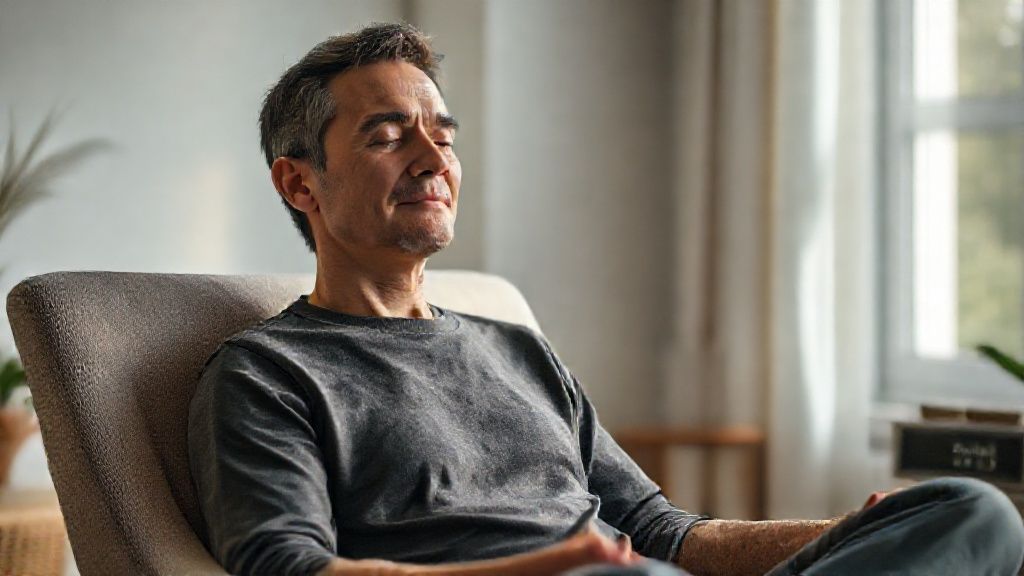
Comfort is key. You can sit in a chair with your feet flat on the floor, ensuring your spine is relatively straight but not rigid. Your hands can rest comfortably on your knees or in your lap. If you’re on the floor, cross your legs comfortably. The intention is to be alert yet relaxed—you shouldn’t be fighting physical discomfort during your practice.
Setting a Timer (Or Not)
If you’re using the script below, you can simply read through it. Alternatively, set a gentle, non-jarring timer for ten minutes. Many meditation apps have timers with soft, fading bells. Or, for your first few times, you may prefer to use a guided audio version to lead you through the process without having to keep time.
Your 10-Minute Calming Meditation Script
This is your practical guide. Read through it once to familiarize yourself, then find your space and follow the steps. There is no “right” or “wrong” way to feel—your only job is to follow the instructions gently.
Minutes 1-2: Arriving and Anchoring (The Setup)
- Begin by closing your eyes, or softening your gaze downward.
- Take three deep, intentional breaths. Inhale fully through your nose, and exhale slowly through your mouth with a sigh. With each exhale, feel a release of the tension you’re carrying.
- Now, let your breath return to its natural rhythm. Bring your awareness to the physical sensations of your body. Notice the points of contact: your feet on the floor, your body supported by the chair or cushion. Feel the weight of your hands resting. You are arriving, right here, right now.
Minutes 3-7: The Body Scan for Deep Relaxation (The Core Practice)
- Bring your attention to the top of your head. Simply notice any sensations there—tingling, warmth, or perhaps nothing at all. There’s no need to change anything.
- Slowly, gently, guide your awareness down through your body. Move to your forehead, your eyes, your jaw. Consciously release any tension you find. Let your jaw hang slack.
- Continue scanning down through your neck and shoulders. These are common storage spots for stress. As you breathe in, imagine sending your breath to this area. As you breathe out, visualize the tension melting away.
- Move down through your arms, into your hands and fingers. Then, bring your awareness to your chest and stomach, noticing the gentle rise and fall with each breath.
- Finally, scan down through your lower back, hips, thighs, knees, calves, ankles, and all the way to the soles of your feet. Spend a full minute just resting your awareness in your feet, feeling their connection to the ground.
If you enjoy this body-focused approach to relaxation, you can explore a shorter version with our 5 minute body scan script. For a body scan designed specifically to prepare your body for deep rest, delve into our 수면을 위한 바디 스캔 명상.

Minutes 8-9: Focusing on the Breath (Calming the Mind)
- Now, let your awareness settle on your natural breath. You don’t need to force or control it. Simply notice the physical sensations of breathing.
- Choose an anchor point: the cool air entering your nostrils, the rise and fall of your chest, or the expansion and contraction of your belly.
- Keep your attention on this single point. This is your home base. Your mind 당신의 마음은 wander—this is completely normal and expected. When you notice it has drifted into thought, planning, or worrying, gently and kindly guide it back to the sensation of the breath. No scolding, no frustration. Each return is a repetition of your mental workout.
If you find your mind is particularly busy and you need a tool to use in the moment, this quick breathing exercise is a perfect anchor to use anytime, anywhere.
Minute 10: Expanding Awareness and Gently Closing (The Integration)
- Gently release your focused attention on the breath.
- Expand your awareness to include your entire body once again. Feel the whole body sitting here, breathing. Notice the space around you.
- Begin to bring back awareness of the physical room. Listen for the faintest sounds around you. Notice the temperature of the air on your skin.
- Slowly, when you feel ready, begin to deepen your breath. Gently wiggle your fingers and toes, bringing movement back into the body.
- Open your eyes when you are ready. Take a final, mindful moment to notice how you feel before you gently rise and continue with your day.
What to Do When Your Mind Wanders
This is perhaps the most important section. A wandering mind is not a sign of failure; it is the entire point of the practice. The magic isn’t in having an empty mind; it’s in the moment you realize your mind has wandered. That moment of awareness is the rep—the mental bicep curl.
When you notice you’re lost in thought, simply acknowledge it. You can even silently label it (“thinking,” “planning,” “worrying”) and then gently escort your attention back to your breath or body. Do this with kindness, as you would guide a child who has wandered off. Judging yourself for having thoughts only adds a second layer of suffering. The practice is the gentle return, again and again.
Building this ‘noticing’ muscle is a core part of mindfulness. Learn more practical ways to integrate this skill into your daily life with these 간단한 연습으로 일상에 마음챙김을 녹여보세요. 우리의.
Taking Your Calm Practice Further
Once this 10 minute calming meditation becomes a familiar friend, you might wish to explore other practices tailored to specific needs.
For Moments of High Anxiety
When stress levels spike, having a targeted practice can be a lifeline. If you’re dealing with intense worry or a panic response, our dedicated 불안 완화를 위한 10분 명상 can provide immediate relief by focusing on grounding and safety. For a longer, more in-depth session to process deeper stress, try this 스트레스와 불안을 위한 가이드 명상.
For a Peaceful Night’s Sleep
The calm you cultivate can be seamlessly channeled into rest. Turn your evening practice into a gateway for deep rest with our 10 minute sleep meditation, designed specifically to prepare your body and mind for a restorative night’s sleep.
다양한 명상 스타일 탐구하기
The world of mindfulness is vast and varied. If you find you enjoy the practice and have a bit more time, a 15분 가이드 명상은 allows for a deeper exploration and longer settling period. Or, experience a different technique and vocal guidance with this 을 사용하세요..

1분 호흡 연습
Q: Is 10 minutes of meditation really enough?
A: Absolutely. Neuroscience confirms that consistency trumps duration. A daily ten-minute practice creates stronger neural pathways for calm and focus than a longer, infrequent one. It’s about building a sustainable habit.
Q: I can’t stop thinking during meditation. Am I doing it wrong?
A: No, you are doing it right! The goal is not to stop thoughts, but to change your relationship with them. The practice is in the gentle act of noticing you are thinking and returning your focus without judgment. This is the core workout of mindfulness.
Q: What’s the best time of day for a calming meditation?
A: Anytime is a good time. Many people find a morning practice sets a positive, centered tone for the day. Others use it as a “bookend” to transition out of work mode in the evening. Experiment to see what fits your rhythm.
Q: Can I use music with this meditation?
A: Certainly. While silence is powerful, calming music or ambient sounds can help mask background noise and deepen relaxation. You can use our dedicated 10 minute meditation music track as a perfect backdrop for this script.
결론 및 행동 촉구(CTA)
You now hold a simple, powerful tool for managing stress and cultivating inner peace. The barrier to entry is low—just ten minutes and a willingness to be kind to your own mind. This 10 minute calming meditation is your accessible, always-available reset button.
Remember, perfection is not the goal; showing up is. Some days your mind will feel calm, other days it will be a whirlwind. Both are valid and valuable experiences. The cumulative effect of this small daily investment is profound: greater emotional resilience, improved focus, and a deep, abiding sense of calm that you can carry with you everywhere.
Ready to make calm a daily habit? Bookmark this page and try the script above right now. Don’t overthink it—just start. Your future, calmer self will thank you.