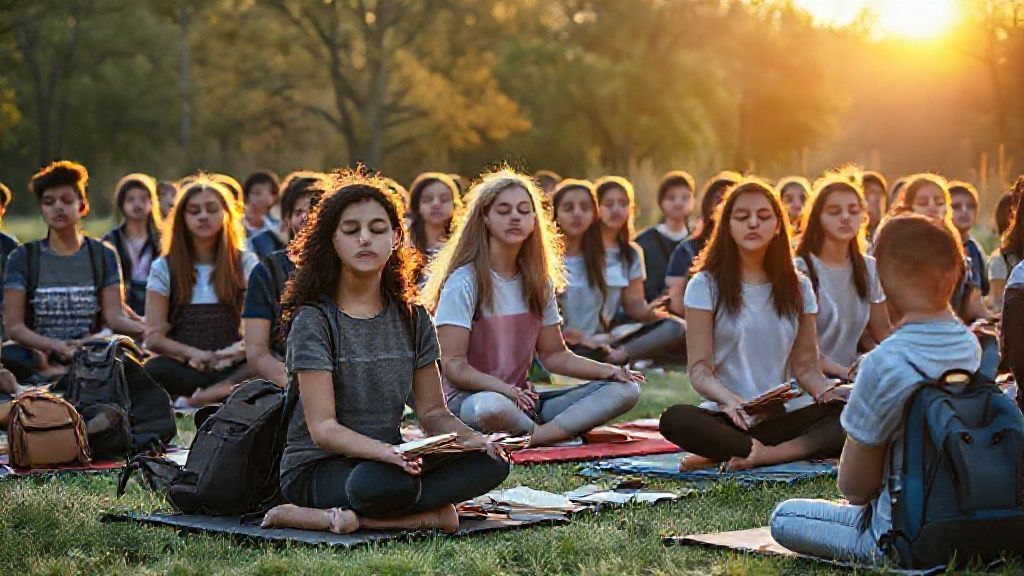
Guided Meditation for High School Students: A 5-Minute Path to Less Stress & Better Focus
Between exams, social pressures, college applications, and navigating complex relationships, high school can feel like a pressure cooker for today’s teenagers. The constant demands on their time and attention leave many students feeling overwhelmed, anxious, and disconnected. Guided meditation offers a simple, evidence-backed tool that can help students manage these intense pressures, improve concentration, and build the emotional resilience needed to not just survive but thrive during these formative years. This comprehensive guide is tailored specifically for the high school experience, offering quick, effective techniques that fit into even the busiest schedule, requiring just minutes per day to deliver transformative results.

Why High School Students Need Meditation Now More Than Ever
The adolescent brain is undergoing significant development, making it particularly vulnerable to stress while also being remarkably adaptable to positive practices like meditation. Understanding why meditation is especially crucial during these years can provide the motivation needed to begin and maintain a practice.
The Modern Student’s Brain: Overwhelmed and Overstimulated
Today’s high school students face a perfect storm of academic, social, and digital pressures that previous generations never encountered. The constant connectivity through smartphones means social life doesn’t end when the school bell rings—group chats, social media notifications, and the pressure to maintain an online presence create a 24/7 social environment. Academically, the competition for college admissions has intensified, with students feeling pressured to maintain perfect grades while accumulating impressive extracurriculars. This combination of digital overload, academic pressure, and the normal developmental challenges of adolescence creates unprecedented levels of stress and anxiety. The brain’s prefrontal cortex, responsible for decision-making and emotional regulation, is still developing throughout the teenage years, making it harder to manage these intense pressures without effective tools.
5 Proven Benefits of a Meditation Practice
The research on meditation for adolescents reveals significant benefits that directly address the challenges high school students face:
-
Improved focus and memory for studying: Regular meditation strengthens the brain’s ability to sustain attention and filter out distractions, leading to more efficient studying and better information retention during classes and exams.
-
Reduced test anxiety and performance pressure: By activating the parasympathetic nervous system (the body’s “rest and digest” response), meditation counteracts the physical symptoms of anxiety—racing heart, shallow breathing, and tense muscles—that interfere with test performance.
-
Better sleep and more consistent energy levels: Many high school students struggle with insufficient or poor-quality sleep. Meditation helps quiet the “monkey mind” that often keeps teenagers awake at night, leading to more restorative sleep and increased daytime energy.
-
Enhanced emotional regulation and self-awareness: The adolescent years are marked by intense emotions. Meditation creates space between stimulus and response, allowing students to recognize their emotions without being controlled by them, leading to better decision-making in emotionally charged situations.
-
Stronger resilience to social and academic setbacks: By developing a more observational relationship with their thoughts, students learn that negative thoughts and feelings are temporary, reducing the impact of social rejection, disappointing grades, or other common high school challenges.
Your First 5-Minute Guided Meditation (A Simple Script to Start)
Beginning a meditation practice doesn’t require special equipment, extensive training, or even much time. This simple 5-minute guided meditation can be done anywhere—in your bedroom before school, in a quiet corner of the library, or even sitting in your car before heading into school.
Find a comfortable seated position, either in a chair with your feet flat on the floor or cross-legged on the floor or bed. Gently close your eyes or maintain a soft gaze downward.
Minute 1: Arriving
Bring your awareness to your body. Notice the points of contact—your feet on the floor, your seat on the chair or floor. Take three deep breaths, inhaling through your nose and exhaling through your mouth. With each exhale, release any tension you’re holding.
Minute 2: Body Scan
Slowly bring your attention to the top of your head. Notice any sensations there—tingling, warmth, or perhaps nothing at all. Gradually move your awareness down through your body—your forehead, eyes, jaw, neck, shoulders, arms, hands, chest, abdomen, back, hips, legs, and feet. Don’t try to change anything; just observe.
Minute 3: Breath Awareness
Now bring your attention to your natural breath. Don’t force it to be deeper or slower—just notice the sensation of air entering and leaving your body. Feel your chest and abdomen expand and contract. When your mind wanders (which it will), gently guide it back to your breath without judgment.
Minute 4: Expanding Awareness
Widen your awareness to include sounds around you—both inside and outside the room. Notice these sounds without labeling them good or bad. Then expand to include your entire body breathing—the full experience of being present in this moment.
Minute 5: Returning
Gently bring your awareness back to your breath. Take three deeper breaths. Notice how your body feels now compared to when you began. Slowly begin to wiggle your fingers and toes. When you’re ready, gently open your eyes.
Take a moment to notice how you feel before moving on with your day. Remember, you can download a printable 5-minute meditation script PDF to keep with you for easy reference.

Finding the Right Meditation Style for Your Needs
Not all meditation serves the same purpose, and different techniques can address specific challenges high school students face. Experimenting with various styles can help you discover what works best for your unique needs and schedule.
For Instant Calm During the School Day
The school environment itself can be a significant source of stress, with crowded hallways, academic pressure, and social dynamics creating tension throughout the day. These short, grounding exercises can be done between classes, before challenging subjects, or during lunch breaks to reset your nervous system.
Breathing Space Technique: When you feel overwhelmed during the school day, find a relatively quiet space (a bathroom stall, an empty corner of the library, or even just sitting at your desk before class begins). Close your eyes and take three conscious breaths. On the first breath, simply acknowledge how you’re feeling without judgment. On the second breath, gather your attention fully on the physical sensation of breathing. On the third breath, expand your awareness to include your entire body and the space around you. This 30-second practice can create a noticeable shift in your mental state.
For an even quicker reset, you can try this quick 2-minute grounding meditation script that fits perfectly into passing periods.
For Pre-Test or Performance Anxiety
Performance situations like tests, presentations, athletic competitions, or auditions trigger the body’s fight-or-flight response, which can interfere with accessing the knowledge and skills you’ve worked hard to develop. Meditation techniques that focus on calming the nervous system are particularly effective in these situations.
Calming Breath Practice: Several minutes before a test or performance, find a quiet space. Place one hand on your chest and the other on your abdomen. Breathe in slowly through your nose for a count of four, feeling your abdomen expand. Hold your breath for a count of four, then exhale slowly through your mouth for a count of six. Repeat this pattern 5-10 times. This breathing pattern activates the parasympathetic nervous system, directly counteracting the physiological symptoms of anxiety.
For more comprehensive techniques specifically designed for anxiety-provoking situations, explore our guided meditation for anxiety .
For Winding Down and Improving Sleep
Many high school students struggle with falling asleep due to racing thoughts about the day’s events or tomorrow’s responsibilities. The adolescent sleep cycle naturally shifts later, conflicting with early school start times and creating chronic sleep deprivation. Meditation can help bridge this gap by quieting mental chatter and signaling to the body that it’s time to rest.
睡眠身体扫描: As you lie in bed, bring your attention to the tips of your toes. Notice any sensations there, then consciously release any tension. Imagine breathing into that area. Slowly move your attention up through your body—feet, ankles, calves, knees, thighs, hips, abdomen, chest, back, fingers, hands, arms, shoulders, neck, and face—releasing tension in each area before moving to the next. By the time you reach your head, your body and mind will be significantly more relaxed and prepared for sleep.
For a more structured approach to improving sleep through meditation, discover our bedtime sleep meditation resources designed specifically for teenagers.
Building a Sustainable Habit: Tips for Busy Students
The greatest challenge for high school students isn’t understanding meditation’s benefits but consistently practicing amid their packed schedules. Building a sustainable habit requires strategy and self-compassion rather than sheer willpower.
Anchor meditation to existing habits: The most effective way to build a new habit is to “stack” it onto an existing one. Consider meditating for just five minutes after brushing your teeth in the morning, before starting homework sessions, or immediately after getting into bed at night. The existing habit serves as a reliable trigger for the new one.
Start embarrassingly small: The biggest mistake beginners make is setting unrealistic goals. If five minutes feels daunting, start with one minute. The priority is consistency, not duration. Even 60 seconds of conscious breathing creates neurological benefits and strengthens the habit loop. Success with a tiny habit builds confidence to gradually increase duration.
创建专属空间: While meditation can be done anywhere, having a specific corner of your room with a comfortable cushion or chair creates environmental cues that support your practice. This doesn’t need to be elaborate—just a designated spot that your brain associates with meditation.
Use technology wisely: While smartphones are often distractions, they can also support your practice through meditation apps, timers, and reminders. Set a daily notification for your chosen meditation time, but remember to enable “do not disturb” mode during the practice itself.
践行自我关怀: Some days your mind will be especially busy, and your meditation might feel “unsuccessful.” This is completely normal. The practice isn’t about achieving a perfectly clear mind but about consistently returning your attention. Every time you notice your mind has wandered and gently guide it back, you’re strengthening your “attention muscle.”
For additional strategies tailored to the teenage experience, find more tailored mindfulness activities for teens here.

Helpful Tools and Resources to Get Started
Having the right resources can make the difference between a meditation practice that fizzles out and one that becomes a lifelong tool for wellbeing. These tools are particularly well-suited for high school students’ needs, preferences, and budgets.
The Best Meditation Apps for Students
Meditation apps provide structure, guidance, and variety that can be especially helpful for beginners. Many offer student discounts or free content specifically designed for younger users.
Headspace: Known for its friendly, approachable animations and structured courses, Headspace offers a robust “Student” section with meditations for focus, test anxiety, and sleep. Their content is evidence-based and particularly good for complete beginners.
Calm: Featuring a wide variety of meditation styles, sleep stories, and music, Calm appeals to students who prefer options to match their changing needs. Their “Daily Calm” provides a consistent 10-minute practice that builds habit formation.
Insight Timer: This free app offers thousands of guided meditations from teachers worldwide, plus a simple timer for unguided practice. The diversity of content means students can explore different styles and teachers without financial commitment.
For those comparing options, you can compare other apps similar to Headspace to find the perfect fit for your preferences and budget.
Quick & Effective Mindfulness Exercises
Formal meditation isn’t the only way to cultivate mindfulness. These simple practices can be integrated throughout your day to bring present-moment awareness to ordinary activities.
STOP练习: Whenever you feel overwhelmed during the day, pause and:
S – Stop what you’re doing
T – Take a breath
O – Observe your thoughts, feelings, and bodily sensations
P – Proceed with more awareness
正念饮食: During one meal or snack each day, put away distractions and focus completely on the experience of eating. Notice the colors, textures, smells, and flavors of your food. This practice not only cultivates mindfulness but can improve digestion and satisfaction with meals.
正念行走: As you move between classes, bring your attention to the physical sensations of walking—the feeling of your feet connecting with the ground, the movement of your legs, the air on your skin. When your mind wanders to worries about the past or future, gently return to the sensations of walking.
For immediate relief during stressful moments, use the 5 senses mindfulness exercise for instant grounding.
常见问题解答
一些益处——如即时的放松和压力减轻——在一次练习后就能感受到。然而,对您基础平静水平的持久改变,通常需要数周持续练习才能形成。可以将其比作体育锻炼:虽然一次锻炼后您可能感觉良好,但真正的转变来自于规律训练。
This is perhaps the most common concern among beginners, and the answer is a resounding no. Meditation isn’t about stopping thoughts or achieving a perfectly blank mind—that would be impossible since the nature of the mind is to think. The practice is about changing your relationship with your thoughts. Each time you notice your mind has wandered and gently return your attention to your anchor (usually the breath), you’re actually strengthening your “attention muscle.” The noticing and returning is the practice itself, not a deviation from it.
How long until I see results from meditation?
The timeline for experiencing benefits varies, but many people notice subtle shifts after just one session—perhaps feeling slightly calmer or more centered. For more lasting changes in focus, emotional regulation, and resilience, research suggests that consistent practice for at least 4-8 weeks creates measurable neurological changes. Like physical exercise, the benefits accumulate over time with regular practice. The most significant changes often come when meditation becomes a consistent part of your lifestyle rather than something you do only when you’re already stressed.
What if I don’t have time to meditate?
This concern is understandable given the demanding schedules of high school students. The beautiful truth about meditation is that even very short practices deliver benefits. Neuroscientific research has shown that just a few minutes of meditation can create positive changes in brain activity. If finding 10-20 minutes seems impossible, commit to just one minute. The consistency of practicing daily for one minute will likely naturally expand as you begin to experience the benefits. Remember that start with this effective 1-minute breathing exercise can be done anywhere, anytime.
正念与冥想有什么区别?
While these terms are often used interchangeably, there is an important distinction. Meditation refers to the formal practice of setting aside dedicated time to train attention and awareness. Mindfulness, on the other hand, is the quality of awareness that you can bring to any moment—the ability to be fully present with whatever you’re doing, whether that’s eating, walking, studying, or talking with friends. Meditation is the exercise that strengthens your “mindfulness muscle,” which you then bring to all aspects of your life. To 进一步了解什么是引导式冥想 and how it differs from other forms, explore our detailed guide.
总结与行动号召
Incorporating guided meditation into your high school experience isn’t about adding another task to your overflowing to-do list; it’s about creating mental space and developing tools to handle everything else more effectively. The few minutes you invest in meditation each day can yield exponential returns in reduced stress, improved focus, better sleep, and enhanced emotional resilience. These benefits extend beyond academic performance to enrich your relationships, extracurricular activities, and overall quality of life during these transformative years.
Remember that meditation is a practice, not a perfection. Some days will feel easier than others, and that’s completely normal. What matters most is showing up consistently with an attitude of curiosity and self-compassion. You have the power to transform your high school experience from one of overwhelm to one of presence and purpose, starting with just a few minutes a day.
准备好寻找内心的宁静了吗? Try our popular 10-minute calming meditation now to experience a full session designed to ease stress and clear your mind, giving you the mental clarity needed to navigate the challenges and opportunities of high school with greater ease and confidence.