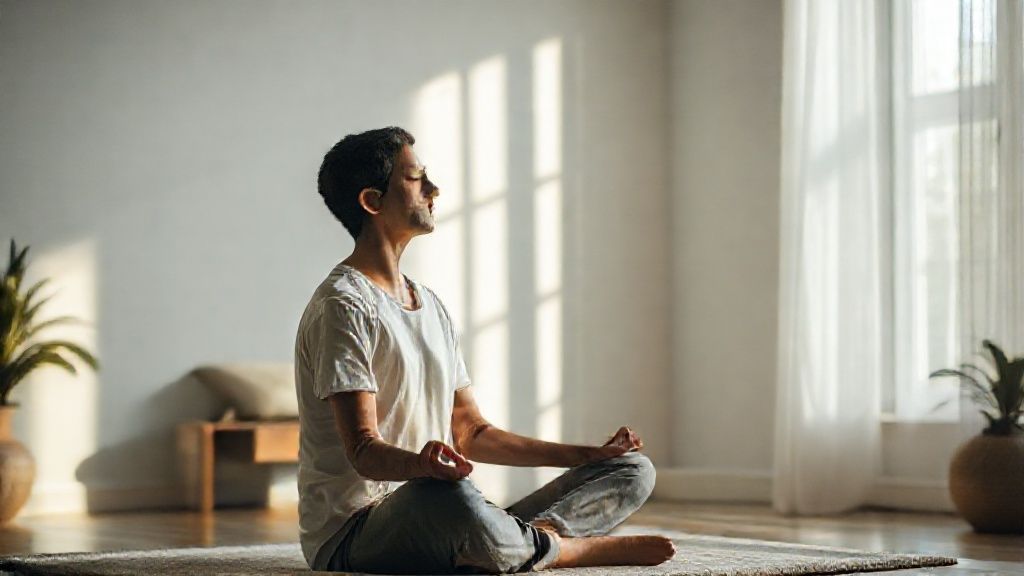
您的15分钟引导冥想:逐步指南,助您寻得平静与清明 - 生活
In our fast-paced world, finding moments of peace can feel like a luxury we can’t afford. Yet what if you could reset your entire nervous system, reduce stress, and improve your focus in just 15 minutes? That’s precisely the power of a 15-minute guided meditation—the perfect balance between accessibility and effectiveness. This sweet-spot duration gives your mind enough time to transition from frantic “doing” mode to peaceful “being” mode, creating tangible benefits that ripple throughout your day. Whether you’re a seasoned practitioner or completely new to meditation, this comprehensive guide will show you exactly how to make those 15 minutes count, complete with a practical script and tailored approaches for your specific needs.

Why a 15 Minute Meditation is Your Sweet Spot
When it comes to meditation, many people assume that longer is always better. While extended sessions have their place, research and practical experience show that 15 minutes hits the perfect balance for most people’s lives and needs.
The Science of Settling In
Your brain doesn’t instantly switch from busy thinking to quiet awareness—it needs a transition period. Neuroscientific studies using fMRI scans show that it typically takes 5-8 minutes for the brain to move from beta waves (associated with active thinking) to alpha waves (linked to relaxed awareness). A 15-minute session gives you this crucial settling-in period plus several minutes of sustained alpha and even theta wave activity, which is associated with deep meditation, creativity, and insight.
The physiological benefits are equally impressive. Just 15 minutes of meditation can:
– Lower cortisol levels (the stress hormone)
– Reduce blood pressure
– Decrease heart rate
– Improve heart rate variability (a marker of resilience)
Achievable for Busy Schedules
The biggest obstacle to maintaining a meditation practice isn’t willingness—it’s consistency. While aspiring to hour-long sessions might sound impressive, it’s often unsustainable for people with jobs, families, and responsibilities. A 15-minute commitment is far more manageable, making it easier to build into your daily routine.
Think about it: 15 minutes is less time than you might spend scrolling through social media, waiting in line for coffee, or watching half an episode of a TV show. By framing it as an achievable daily habit rather than a monumental time commitment, you’re far more likely to stick with it long enough to experience the cumulative benefits.
For those just starting out, a shorter practice can be a great foundation. Try our 5 minute guided meditation for beginners to build your confidence before moving to longer sessions.
What to Expect in Your First 15 Minute Session
If you’re new to meditation, knowing what to expect can ease anxiety and help you approach your practice with greater comfort and confidence.
Finding a Comfortable Posture
Contrary to popular imagery, you don’t need to sit in a perfect lotus position to meditate effectively. The key is finding a posture that allows you to be both alert and relaxed. You can:
– Sit in a chair with your feet flat on the floor
– Use a meditation cushion or bench
– Kneel with support
– Even lie down if sitting is uncomfortable (though you might be more prone to falling asleep)
The important elements are keeping your spine relatively straight (imagine a string gently pulling the crown of your head upward) and positioning yourself so you can breathe freely without slouching.
The Role of the Guide’s Voice
In guided meditation, the instructor’s voice serves as an anchor for your attention. Rather than fighting to maintain focus on your own, you can gently return your attention to the guide’s instructions whenever your mind wanders. Don’t worry if you find some voices more soothing or effective than others—this is completely normal. The right guide voice is subjective, so feel free to explore different instructors until you find one that resonates with you.
Dealing with a Wandering Mind (This is normal!)
Perhaps the most important expectation to set is that your mind will wander—frequently. This isn’t a sign that you’re “bad at meditation” but rather evidence that you have a normally functioning brain. The practice isn’t about stopping thoughts entirely but about noticing when you’ve become distracted and gently returning your attention without self-judgment.
Each time you notice your mind has wandered and bring it back to the meditation, you’re actually strengthening your “attention muscle”—this is the core of the practice. Be patient with yourself, especially in the beginning.
A Sample 15 Minute Guided Meditation Script
Here’s a complete script you can use right now for your meditation practice. You can read it through first, record yourself reading it, or simply have it nearby as a reference during your session.
Introduction & Settling (2 minutes)
“Find a comfortable seated position, either in a chair or on a cushion on the floor. Allow your hands to rest comfortably on your lap or knees. Gently close your eyes or lower your gaze. Begin by bringing awareness to your body in space. Notice the points of contact—your feet on the floor, your sitting bones on the chair or cushion, your hands resting. Take three deep breaths, inhaling fully and exhaling completely. With each exhale, consciously release any obvious tension you’re holding. There’s nowhere else you need to be, nothing else you need to be doing in this moment. Give yourself permission to be fully present here and now.”
Body Scan for Awareness (5 minutes)
“Bring your attention to the top of your head. Simply notice any sensations here—tingling, warmth, coolness, or perhaps no distinct sensation at all. That’s perfectly fine. Slowly move your awareness down through your forehead… around your eyes… your cheeks and jaw. Consciously relax your jaw, allowing your teeth to separate slightly. Continue down to your neck and shoulders… noticing and releasing any tension held here. Move your awareness down through your arms to your hands and fingertips. Then to your chest and upper back… your abdomen and lower back… down through your hips… thighs… knees… calves… ankles… feet… and all the way to your toes. Spend a few moments feeling your body as a complete whole, alive and breathing.”
Focus on the Breath (5 minutes)
“Now gently bring your attention to your natural breath. Don’t try to change it or control it—simply observe it as it is. Notice where you feel the breath most distinctly—perhaps at the nostrils, the chest, or the rising and falling of your abdomen. Choose one of these places and rest your awareness there. When your mind wanders—which it will, countless times—gently note where it went, then without judgment, return your attention to the breath. Each return is a moment of mindfulness, a small victory in your practice. If it helps, you can mentally note ‘in’ on the inhalation and ‘out’ on the exhalation. Continue following the natural rhythm of your breath.”
Gentle Return & Closing (3 minutes)
“Slowly expand your awareness from the breath to include your entire body once again. Notice any sounds in the environment, the temperature of the air on your skin. Gently begin to reintroduce small movements—wiggling your fingers and toes, rotating your ankles and wrists. When you feel ready, slowly open your eyes if they’ve been closed. Take a moment to notice how you feel—perhaps more relaxed, more present, more grounded. Carry this quality of awareness with you as you transition back into your day. Know that you can return to this place of calm whenever you need throughout your day.”
If you’d like to explore different script styles, we have a library of resources. Check out our 放松引导冥想脚本 for variations on this practice.

Tailoring Your 15 Minute Practice to Your Needs
While the basic structure of meditation remains consistent, you can subtly shift the focus of your practice to address specific needs and challenges.
For Deep Relaxation and Stress Relief
When stress relief is your primary goal, emphasize elements that activate the parasympathetic nervous system (your “rest and digest” mode). In your practice:
– Spend extra time on the body scan, consciously relaxing each muscle group
– Use longer exhalations (which naturally calm the nervous system)
– Incorporate visualization—imagining yourself in a peaceful, safe place
– Use calming mantras like “I am calm” or “I release tension” synchronized with your breath
To extend your relaxation practice, you might enjoy our 10 minute calming meditation for days when you need a quick reset.
For Overcoming Anxiety and Overthinking
Anxiety often involves being trapped in future-oriented thinking. Meditation for anxiety should gently anchor you in the present moment and your body. Try:
– Focusing strongly on physical sensations (the weight of your body, the feeling of air on skin)
– Noting practices where you mentally label thoughts as “thinking” before returning to the breath
– Counting breaths (1-10 then starting over) to give your thinking mind a simple task
– Incorporating grounding phrases like “In this moment, I am safe” or “This too shall pass”
If anxiety is particularly high, a shorter, more focused session can help. Try this **10分钟焦虑引导冥想**. For a deeper dive, explore our 缓解焦虑的20分钟冥想练习 适用于有更长时间处理强烈情绪时.
助您安享整夜好眠
睡眠冥想的方式略有不同——其目标是促进入睡而非保持清醒觉知。睡前冥想建议:
– 直接躺在床上进行练习
– 延长呼气时间以激活放松反应
– 结合渐进式肌肉放松法(收紧并释放肌群)
– 想象宁静促眠的景象(云端漂浮、沉入舒适床榻)
– 练习中若入睡无需担心——这恰是目标!
要直接过渡到睡眠状态,专门的睡前冥想最为理想。. 探索我们专为睡前时段设计的 助眠睡前冥想 高效助眠冥想方案.
深化您的冥想之旅
坚实的冥想实践需要知识、社群支持,有时还需辅助工具。以下方法可帮助您提升体验深度:.
优质冥想应用推荐
本指南虽提供入门所需全部内容,但冥想应用能带来多样性、系统性与便利性。优秀应用应具备:
– 多元引导语音与风格
– 适应不同需求的时长安
– 保持动力的进度追踪功能
– 针对减压、专注或睡眠等目标的专项课程
精选数字工具清单请查阅我们的 最佳冥想应用(如Headspace) 专业评测,为您的练习寻找最佳数字伙伴.
理解引导式冥想
初学者或许疑惑:聆听引导语何以产生深刻改变?其原理在于:
– 提供外部聚焦点,降低思维消耗
– 通过专业指导定向引导注意力
– 运用具有镇静神经系统的语言与节奏
– 实时协助应对常见挑战(如思绪游离)
全新接触此概念?深入了解 何为引导式冥想 引导式冥想及其重塑思维模式的原理.

常见问题解答
问:15分钟冥想是否足够?
答: 足够。持续性比时长更重要。每日15分钟对培养心理韧性与专注力极为有效。研究表明规律冥想能引发大脑结构与情绪调节、注意力相关的积极改变,每日仅需15分钟即可获得这些益处。关键在于每日坚持,而非偶尔进行长时间练习。.
问:10分钟与15分钟冥想有何区别?
答: 15分钟冥想提供更长时间超越初始调整阶段,进入更深层的平静状态;10分钟冥想则适合快速状态重置。额外的5分钟通常能带来更持久的专注训练,从而在减压与思维清晰度方面产生更显著效益。. 探索我们的 10分钟正念练习 助您对比体验,找到适合不同情境的最佳方案.
问:能否用冥想音乐替代引导语?
答: 完全可以。引导语用于聚焦注意力,音乐则营造氛围。学习阶段或思绪纷杂时,引导式冥想尤为有效,因其提供明确指引;冥想音乐则能创造宁静氛围,助力自主练习。许多人根据需求交替使用两种方式。. 追求纯粹听觉体验?尝试我们 10分钟冥想音乐 专为强化练习设计的音轨系列.
结论
通往平静心灵的旅程其实仅需15分钟。这个易于实践又效果显著的时长,既适合繁忙日程,又能为身心健康带来实质性改变。请记住:冥想是通过练习不断提升的技能——每次练习都在为下一次奠基,无需纠结单次练习的“成败”。.
无论使用上文提供的脚本,还是探索我们的引导冥想库,最重要的一步就是立即开始。无需等待完美时机、完美坐垫或绝对安静——就地取材,即刻启程。规律练习将累积带来专注力提升、情绪韧性增强与内心平和,每日的小小投入绝对物超所值。.
准备尝试其他时长?探索我们完整的 简短引导冥想库 冥想方案系列,满足不同需求与场景。从5分钟快速调整到20分钟深度探索,总有一种练习能支持您的健康之旅。.