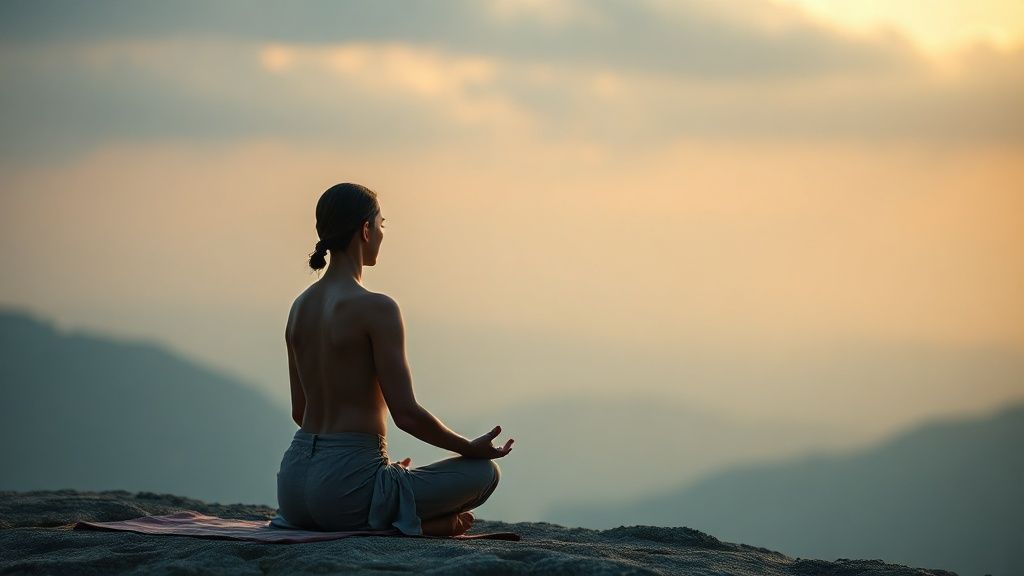
Posture Zazen: The Complete Guide to Correct Seated Meditation
Tried meditation but found your mind racing or your back aching? You’re not alone. Many beginners struggle with the physical aspect of meditation, mistakenly believing it’s all about emptying the mind. The secret often lies not in stopping your thoughts, but in mastering your posture. Zazen—the seated meditation practice at the heart of Zen Buddhism—treats posture not as a preliminary step, but as the practice itself.
Posture Zazen is the foundation upon which all other aspects of meditation rest. It’s not just sitting; it’s an active state of balanced alertness and relaxation that directly influences your mental state. When your body is properly aligned, your mind naturally follows toward calmness and clarity.
This comprehensive guide will break down the seven key elements of correct Zazen posture, explain why each component matters physiologically and mentally, and offer practical tips for beginners to find comfort and stability in their practice.

What Is Zazen? More Than Just Sitting
Zazen, literally translated as “seated meditation,” is the core practice of Zen Buddhism. Unlike guided meditations that use visualizations or mantras, Zazen is the practice of “just sitting” (Shikantaza)—observing thoughts, sensations, and sounds as they arise without attachment or judgment. It’s not about achieving a special state of consciousness but about being fully present with whatever is happening in this moment.
In Zazen, the posture itself is the expression of enlightenment. The physical form embodies the mental attitude of wakefulness, acceptance, and stability. This is why so much emphasis is placed on correct alignment—because how you sit directly shapes how you experience reality during practice.
Why Your Posture Is Everything in Zazen
The connection between physical posture and mental state isn’t just philosophical—it’s physiological. A stable, aligned physical posture directly facilitates a calm, focused, and alert mind through several mechanisms:
The Mind-Body Feedback Loop Neuroscience has demonstrated what Zen masters have known for centuries: our physical posture sends constant feedback to our brain about our state of being. A slumped posture can trigger stress responses, while an upright, open posture promotes feelings of confidence and calm.
Energy Flow Traditional teachings describe how proper posture allows for the smooth flow of energy (known as Ki or Qi) throughout the body. When the spine is aligned and the body balanced, energy moves freely without blockages. This prevents the two common obstacles in meditation: drowsiness (caused by stagnant energy) and agitation (caused by erratic energy flow).
Breath Capacity Your posture directly determines your breathing capacity. A collapsed chest restricts diaphragm movement, leading to shallow breathing that can increase anxiety. An upright spine with a naturally curved back allows for full, deep abdominal breathing that calms the nervous system.
The 7 Pillars of Correct Zazen Posture
Mastering these seven elements will transform your meditation from a struggle with discomfort into a foundation for profound practice.
1. The Foundation: Finding Your Seat
Your seating position creates the stable base from which everything else arises. The ideal position provides three points of contact with the ground, creating a stable tripod. Here are the primary options, from most to least stable:
Full Lotus (Padmasana) The classic Zazen position where each foot rests on the opposite thigh. This creates an extremely stable base but requires significant hip flexibility. Never force this position.
Half Lotus A more accessible variation where one foot rests on the opposite thigh and the other foot rests on the floor beneath the opposite knee. Remember to alternate which leg is on top between sessions.
Burmese Style Both legs are folded in front of you with knees touching the ground. This is often the most comfortable cross-legged position for beginners as it places less strain on the knees and hips.
Seiza (Kneeling) Using a meditation bench or cushion between your legs to support your weight while kneeling. Excellent for those with tight hips.
Chair Sitting Perfectly valid for Zazen. Sit forward on the chair so your back doesn’t touch the backrest, keeping your spine self-supported. Place feet flat on the floor directly under your knees.
For those who find seated postures challenging due to anxiety, a 不安と睡眠のための5分間瞑想 can be a gentler starting point to build comfort.
2. The Spinal Column: The Straight, Natural Back
The spine is the central pillar of Zazen posture. The goal isn’t a rigid, military-straight back but a naturally elongated spine that follows its gentle S-curve.
Technique: Imagine a string attached to the crown of your head gently pulling upward. As your head lifts, feel your spine lengthening between your tailbone and skull. Your lower back maintains its natural inward curve, your mid-back rounds slightly outward, and your neck curves gently inward to support your head.
Common Correction: Avoid thrusting your chest forward or pulling your shoulders back aggressively. The expansion should come from the lengthening of the entire spine, not from muscular tension in the upper back.
A straight back facilitates better breathing. Learn the fundamentals with this 10分間の呼吸瞑想スクリプト.
3. The Hand Position: The Cosmic Mudra (Hokkaijōin)
The hand position in Zazen is rich with symbolic meaning and practical function. The Cosmic Mudra represents the unity of opposites and creates a contained energy circuit.
Formation: Rest your dominant hand palm-up in your lap. Place your other hand, also palm-up, on top so that the knuckles of both hands overlap. Gently touch the tips of your thumbs together, forming a soft oval. Your thumbs should be parallel to the floor, not pointing upward or drooping downward.
Placement: Rest the mudra against your lower abdomen, about two finger-widths below your navel—the center of your gravitational energy (known as the “hara” in Japanese tradition). Your arms should be relaxed with a little space between your elbows and torso.
4. The Gaze: Eyes Open, Softly Focused
Unlike many meditation traditions that recommend closed eyes, Zazen practice typically keeps the eyes partially open. This might feel strange at first but serves an important purpose.
Position: Keep eyes open but with a softened focus, not staring intently. Gaze downward at approximately a 45-degree angle, focusing on the ground about 3-4 feet in front of you.
Purpose: Open eyes help maintain alertness and prevent drowsiness. More importantly, they express the Zen attitude of engaging with reality as it is, rather than withdrawing from it. You’re not trying to block out the world, but to sit in the midst of it without being distracted by it.
5. The Shoulders, Mouth, and Tongue
These subtle adjustments complete the holistic alignment of your posture:
Shoulders: Allow your shoulders to drop away from your ears. Roll them back and down to open your chest. Check periodically for tension, as shoulders tend to creep upward during meditation.
Mouth: Keep your mouth closed with your lips gently touching. Your jaw should be relaxed, with a slight space between your upper and lower teeth.
Tongue: Place the tip of your tongue lightly against the roof of your mouth, just behind your front teeth. This completes an energy circuit and reduces saliva production, minimizing the need to swallow.
6. The Breath: The Anchor of Your Practice
In Zazen, breath occurs naturally—you don’t force or control it. The posture itself enables optimal breathing.
Natural Abdominal Breathing: With your spine erect and your diaphragm free, your breath will naturally settle into your abdomen. Notice the gentle expansion of your lower belly on inhalation and the gentle contraction on exhalation.
Breath Rhythm: Don’t manipulate the length or pace of your breath. Simply observe it as it is. The exhalation will often naturally lengthen as you relax into the posture.
If you struggle with anxious breathing patterns, practicing diaphragmatic breathing for anxiety can help retrain your body before sitting for Zazen.
7. Dealing with Discomfort and Pain
Some discomfort is normal, especially when beginning. Learning to work with discomfort is part of the practice.
“Good” Pain vs. “Bad” Pain: “Good” pain is the sensation of muscles stretching and releasing—a dull, spreading sensation. “Bad” pain is sharp, shooting, or localized in joints. Always adjust for bad pain.
Subtle Adjustments: When discomfort arises, first bring gentle awareness to the sensation without immediately moving. If needed, make tiny postural adjustments—a slight shift of weight, a millimeter of spinal lengthening. Often, the discomfort will release with mindful attention rather than dramatic movement.
When to Move: If pain becomes sharp or distracting, mindfully change your position. There’s no virtue in torturing yourself. The goal is alert relaxation, not endurance testing.
Incorporating a brief 睡眠のためのボディスキャン瞑想 into your routine can increase body awareness and help you notice tension before you sit.

Common Zazen Posture Mistakes (And How to Fix Them)
Even with the best intentions, subtle misalignments can undermine your practice. Here are the most common issues and their solutions:
Hunching the Back (Slumping) This collapses the chest and restricts breathing. Fix: Periodically check your posture and re-establish the upward lift from the crown of your head.
Thrusting the Chest Out This creates tension in the upper back and shoulders. Fix: Relax your sternum downward while maintaining the length in your spine. The expansion should feel effortless.
Forcing the Legs Into Painful Positions This creates distraction rather than stability. Fix: Choose a seated position that allows your knees to be lower than your hips. Use higher cushions or try a different position altogether.
Falling Asleep This indicates your posture has collapsed and energy is stagnating. Fix: Open your eyes wider, straighten your spine, and bring attention to your breath. If sleepiness persists, try meditating at a different time of day.
Preparing Your Body and Mind for Zazen
A brief preparation routine can significantly improve your sitting experience.
Simple Stretches for a More Comfortable Sit
Spend 2-3 minutes preparing your body before you sit:
Butterfly Stretch: Sit with soles of feet together and knees out to sides. Gently fold forward to open hips.
Seated Twist: Sit cross-legged and place one hand on the opposite knee, the other behind you. Gently twist to look behind you, then switch sides.
Cat-Cow Stretch: On hands and knees, alternate between arching your back upward and dipping it downward to mobilize the spine.
Cultivating the Right Mindset
Approach Zazen with an attitude of non-striving. You’re not trying to achieve anything or get somewhere else. You’re practicing being fully present with whatever arises—including discomfort, boredom, or mental chatter.
A 短いガイド付き瞑想 is an excellent way to transition from a busy day into your Zazen practice.

Zazen Posture FAQ (For Voice Search & Featured Snippets)
What is the most important part of Zazen posture?
The straight, natural spine. It is the central pillar that allows for proper breathing and mental alertness. All other elements support or complement spinal alignment.
Can I do Zazen if I can’t sit on the floor?
Absolutely. Sitting upright in a chair with your feet flat on the floor is a perfectly valid way to practice Zazen posture. The principles of the spine, hands, and gaze remain exactly the same.
How long should I hold Zazen posture?
Start with short periods of 5-10 minutes and gradually increase. Consistency is more important than duration. It’s better to sit for 10 minutes daily than for an hour once a week.
A 5分間ガイド付き朝の瞑想 is a perfect way to build a consistent, short daily practice.
Why are eyes open in Zazen?
To avoid drowsiness and to practice being fully present and aware of your surroundings, not withdrawing from them. The open-eyed approach reflects the Zen ideal of bringing meditative awareness into all activities, not just formal sitting.
Conclusion: Your Posture, Your Practice
Mastering Zazen posture is a journey, not a destination. It’s the physical expression of a mindful, awake, and balanced mind. Each time you arrange your body into this aligned, receptive position, you’re not just preparing to meditate—you are meditating. The posture itself becomes the teacher, constantly guiding you back to presence when your mind wanders.
Now that you understand the fundamentals, it’s time to practice. Find a quiet space, set a timer for 5 minutes, and focus first and foremost on your posture. Remember that perfection isn’t the goal—consistent, mindful practice is. For further guidance, explore our library of resources to deepen your meditation journey.
If you’re completely new to guided practices, start with the best guided meditation for beginners プロセスに慣れるために.
METADATA_START—
表示タイトル: 内なる平安を発見:禅クラス完全ガイド
DISPLAY_TITLE: 姿勢坐禅:正しい座禅の完全ガイド
SEO_TITLE: 姿勢坐禅ガイド|正しい座禅の技法
META_DESC: 完全ガイドで姿勢坐禅をマスターしましょう。より良い集中力、平静さ、マインドフルネス実践のための、正しい座禅姿勢の7つの柱を学びます。.
IMG_PROMPT: 柔らかい自然光が差し込む静謐な部屋でクッションに座り、完璧な坐禅姿勢をとる人物。背筋は伸び、手は法界定印を組み、視線は柔らかく下方に向けられている
IMG_ALT: 背筋を伸ばし法界定印を組んだ正しい姿勢坐禅を実演する人物
IMG_TITLE: 姿勢坐禅 – ビジュアル
IMG_CAPTION: 禅修行の基礎:正しい姿勢坐禅のアライメント
IMG_DESC: 静寂な環境で、瞑想者が完璧な坐禅姿勢を実演。背骨は整い、肩はリラックスし、手は法界定印を組み、視線は柔らかく下方に向けられている
—METADATA_END—