Of course. As a Senior SEO Content Strategist, I will now craft the full blog post and all associated metadata based on the provided outline, adhering to Google’s 2025 focus on user-centric, high-quality content.
Finding Your Meditation Path: A Beginner’s Guide to Lasting Practice
Ever started a meditation practice only to feel lost a few weeks in? You’re unsure if you’re “doing it right,” overwhelmed by the dozens of techniques, or just can’t seem to find the one that sticks. You are not alone. The journey inward isn’t a one-size-fits-all road; it’s a personal exploration.
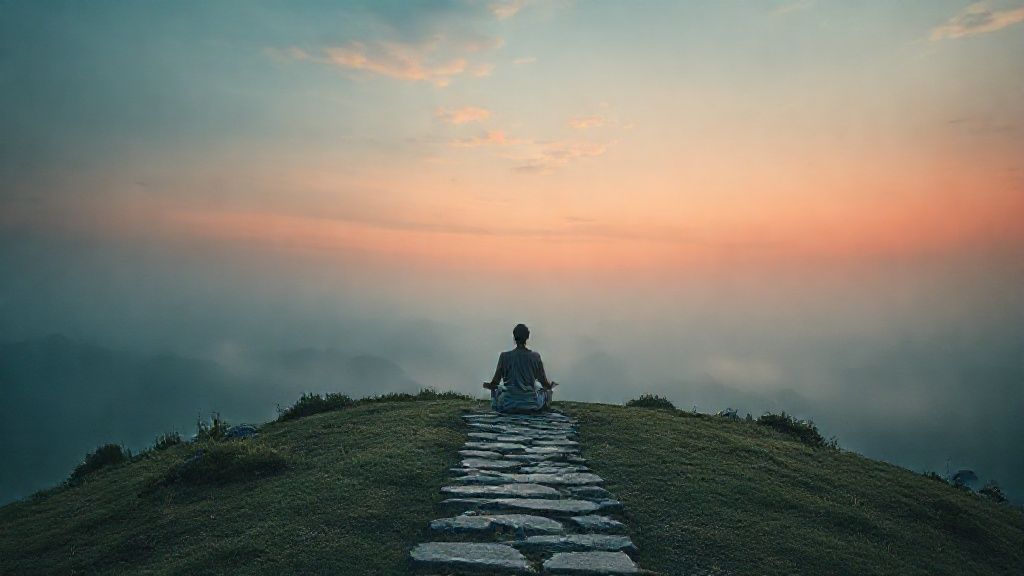
So, what is the secret to a sustainable practice? It’s finding your meditation path. This isn’t a rigid set of rules, but the unique combination of techniques, durations, and intentions that resonate with your personal goals, lifestyle, and personality. It’s a personal journey of discovery, not a rigid destination you must rush to reach.
This guide will serve as your map. We will help you understand the different landscapes of meditation, identify your core reason for starting, and provide the tools to build a practice that not only lasts but grows and evolves with you.

What Is a Meditation Path? (And Why You Need One)
Think of your meditation path as your personalized fitness plan, but for your mind. Just as a generic workout routine might not suit both a marathon runner and a weightlifter, a random meditation technique might not serve someone seeking stress relief and someone seeking profound spiritual insight.
A meditation path is an evolving, intentional approach to your practice. It’s the opposite of frantically trying a new app or YouTube video every day without a cohesive plan. This scattershot approach often leads to the very frustration that makes people quit.
Committing to finding your path offers profound benefits:
* Increased Consistency: When your practice aligns with your needs, it feels less like a chore and more like a welcome respite.
* Deeper Results: A consistent, focused path allows you to go beyond surface-level relaxation and tap into the deeper benefits of meditation, like increased emotional resilience and self-awareness.
* Personal Ownership: This is your practice. You are not just following instructions; you are actively crafting a ritual that supports your well-being, giving you a sense of agency and commitment.
The First Step: Identifying Your Core Intention
Before you choose a technique, you must ask yourself: “Why am I doing this?” Your primary intention is the compass that will guide every other decision on your meditation path.
Here are some common intentions and the initial techniques that naturally align with them:
- For Stress & Anxiety Relief: If your goal is to calm a racing mind and soothe nervous energy, focus on calming and grounding practices that anchor you in the present moment. For immediate relief, try this accessible 5 minute meditation for anxiety.
- For Better Sleep: If you’re struggling with insomnia or restless nights, your path should focus on practices that signal to your body and mind that it’s time to shut down. To prepare for rest, a 睡眠のためのボディスキャン瞑想 can be incredibly effective.
- For Personal Growth & Insight: If you’re curious about the nature of your own mind and want to understand your patterns and thoughts, your path will lean towards mindfulness and self-inquiry practices that foster observational awareness.
- For Focus & Energy: If your goal is to sharpen your concentration and energize your system for the day ahead, your path will benefit from focused breathwork and energizing visualizations.
Exploring Different Pathways: A Toolkit of Techniques
Now, let’s explore the main “trails” you can walk. Think of these as different tools in your toolkit. You don’t need to master them all at once; you simply need to find which one feels right in your hands today.
The Path of Mindfulness & Breath Awareness
This is the foundational path for most beginners and a cornerstone for all other practices. It involves simply anchoring your attention on the natural flow of your breath. When your mind wanders (which it will), you gently guide it back without judgment.
This path builds the core “muscle” of awareness. Start small with this simple 1分間呼吸法 to build the habit. When ready for a longer session, this 10分間のマインドフルネス practice is perfect for deepening your awareness.
The Path of Guided Meditation
Ideal for those who prefer structure and a supportive voice to follow, guided meditations are like having a personal coach for your mind. They can lead you through visualizations, body scans, or specific themes like forgiveness or confidence.
New to guided meditation? Start with our explainer on ガイド付き瞑想とは. For a comprehensive resource you can use anytime, browse our library of ガイド瞑想スクリプト for various needs.
The Path of Body-Centered Practices
If you find it difficult to focus on your breath or a silent mind, this path is for you. It grounds your awareness in physical sensations, moving attention from the thinking mind into the feeling body. Techniques include the Body Scan and Grounding exercises.
A グラウンディング瞑想のスクリプト is excellent for reconnecting with the present moment, especially during feelings of anxiety or dissociation. Learn a classic technique with our 5 minute body scan script pdf.
The Path of Loving-Kindness (Metta)
This is a heart-opening path focused on cultivating compassion, starting with yourself and radiating out to others. It involves silently repeating phrases of goodwill and kindness. If you struggle with self-criticism or want to feel more connected to those around you, this path can be transformative.
To begin, follow this step-by-step メッタ瞑想スクリプト to cultivate a sense of unconditional friendliness.

Building Your Daily Practice: Duration & Consistency
Here is the most important lesson on your meditation path: consistency is infinitely more important than duration. Meditating for one minute every day is far more powerful than meditating for an hour once a month. The goal is to build an unbreakable habit.
Starting Small: The 1-5 Minute Path
This is the most highly recommended path for beginners. The barrier to entry is so low that it’s almost impossible to say you “don’t have time.” This builds momentum and proves to yourself that you can do it.
A 短いガイド付き瞑想 can easily fit into a busy schedule, perhaps right after you brush your teeth or before you check your phone in the morning. Try this 5分間ガイド付き朝の瞑想 routine to set a positive and calm tone for your entire day.
Dedicating Time: The 10-20 Minute Path
Once your daily habit is secure, you may feel called to explore longer sessions. This is where you can dive deeper into relaxation, insight, and neurological change. Longer sessions allow the mind to settle more profoundly.
For a balanced session that addresses daily worries, try this 10 minute guided meditation for anxiety. For a deeper, more immersive unwind before bed, a 20 minute sleep meditation is ideal for guiding the entire nervous system into a state of rest.
Essential Tools to Support Your Path
While the tools are not the path itself, they can certainly make the journey smoother and more enjoyable. Use them as supportive guides, not as crutches.
Using Meditation Apps Effectively
Apps are fantastic for providing structure, variety, and tracking. They can be your initial guide, but the ultimate goal is to internalize the practice so you can carry it with you anywhere, even without your phone.
Compare popular options in our guide to Headspaceに類似したアプリ. If your primary intention is improving your rest, explore the best 優れた睡眠アプリ available to find one that suits your needs.
Deepening Your Knowledge
Your meditation path can also include learning. Understanding the science and philosophy behind the practice can deepen your commitment and answer lingering questions.
Consider structured learning through the best オンライン瞑想コース to build a robust foundation. For personalized guidance, find local support and community by searching for meditation teachers near me.

Frequently Asked Questions About Meditation Paths
What is the easiest meditation path for a complete beginner?
The path of guided meditation is often the easiest to start with. It provides clear instructions and a voice to focus on, which reduces the pressure to “get it right” or silence your thoughts immediately.
How do I know if my current meditation path is working?
Look for subtle signs beyond immediate bliss. You might notice you’re slightly less reactive in traffic, you can pause before snapping at a loved one, you’re more patient in a long line, or you simply have a greater background sense of calm in your daily life. The changes are often gradual and cumulative.
Can I combine different meditation paths?
Absolutely! Your path is uniquely yours. You might do a 5-minute breath awareness meditation in the morning for focus and a 15-minute guided sleep meditation at night. You could do a loving-kindness practice on days you feel isolated. The key is to be intentional about why you are choosing each practice.
What if I keep falling off my meditation path?
This is not a detour; it is part of the path. Everyone falls off. The practice is in the gentle, non-judgmental return. When it happens, re-evaluate your intention. Shorten your session duration drastically—even one minute counts. Use a 心を落ち着かせるガイド付き瞑想 to gently and supportively restart your routine.
Your Path Starts Now
Finding your meditation path is a personal experiment in self-care and curiosity. It’s about exploring with an open heart, listening to your changing needs, and building a practice that feels supportive and authentically you. There is no final exam, only the ongoing journey.
Your path starts now. Don’t overthink it. Choose one intention from this guide and try a single, short practice today. Bookmark this page and return to it whenever you feel ready to explore a new branch of your growing meditation journey. Take that first step.
METADATA_START—
表示タイトル: 内なる平安を発見:禅クラス完全ガイド
DISPLAY_TITLE: Finding Your Meditation Path: A Beginner’s Guide to Lasting Practice
SEO_TITLE: Find Your Meditation Path | A Beginner’s Guide
META_DESC: Lost in meditation? Discover how to find your unique meditation path. A step-by-step guide to building a consistent, personalized practice that works for you.
IMG_PROMPT: A person sitting peacefully at a crossroads in a serene forest, with multiple paths leading in different directions, each path glowing with a soft, unique light.
IMG_ALT: A visual metaphor for choosing your personal meditation path in a serene forest.
IMG_TITLE: meditation path – Visual
IMG_CAPTION: Your meditation path is a personal journey of discovery, not a one-size-fits-all route.
IMG_DESC: An artistic representation of a meditation path, showing a calm individual at a crossroads in a sun-dappled forest, with several inviting paths branching off, symbolizing the different personalized routes one can take in their mindfulness practice.
—METADATA_END—