3 Ways to Teach Your Body How to Relax (And Why It’s Easier Than You Think)
You’ve felt it—that tense feeling in your shoulders at the end of a long day, the racing heartbeat when you’re overwhelmed, the inability to truly unwind even when you finally have a moment to yourself. In our constantly connected world, many of us have become so accustomed to being “wired but tired” that we’ve forgotten what genuine relaxation feels like.
Here’s the good news: True relaxation isn’t a passive state that only happens on vacation or during rare moments of peace. It’s an active skill that your body can learn, much like building muscle or learning a new language. The techniques to calm your nervous system are accessible, science-backed, and surprisingly simple once you understand how they work.
In this guide, we’ll explore three powerful, body-based methods that directly signal your nervous system to shift from stress to calm: Breathwork, Body Scan Meditation, and Guided Visualization. These aren’t abstract concepts—they’re practical techniques you can start using today, regardless of how busy your schedule might be.

Why Your Body Forgets How to Relax: The Science of Stress
To understand how to relax, we first need to understand why we get stuck in states of tension. Your nervous system operates through two primary modes: the sympathetic nervous system (your “fight-or-flight” response) and the parasympathetic nervous system (your “rest-and-digest” response).
When faced with perceived threats—whether it’s an approaching deadline, a difficult conversation, or financial worries—your body activates the sympathetic nervous system. This evolutionary survival mechanism floods your system with stress hormones like cortisol and adrenaline, increasing your heart rate, tensing your muscles, and sharpening your focus. This response is incredibly useful when you need to react quickly to genuine danger.
The problem occurs when modern life keeps this system constantly activated. Unlike our ancestors who faced acute threats followed by recovery periods, we now face chronic, low-grade stressors that keep our bodies in a perpetual state of high alert. Over time, your body essentially “forgets” how to switch off the stress response and activate the relaxation response.
This chronic stress state manifests physically as muscle tension, digestive issues, sleep problems, and that general feeling of being unable to unwind. The good news is that you can actively retrain your body’s relaxation response using specific techniques that directly influence your nervous system. Understanding how stress affects your breathing patterns is the first step toward reversing this cycle.
Method 1: Master Your Breath with Diaphragmatic Breathing
Of all the relaxation techniques available, breathwork is arguably the most immediate and accessible. Why? Because your breath serves as a direct communication channel between your conscious mind and your autonomic nervous system—the part that controls involuntary functions like heart rate, digestion, and stress response.
When you’re stressed or anxious, your breathing typically becomes shallow and rapid, originating from your chest rather than your diaphragm. This type of breathing actually reinforces the stress response by signaling danger to your brain. Conversely, slow, deep diaphragmatic breathing—sometimes called “belly breathing”—activates the vagus nerve, which is the primary component of your parasympathetic nervous system, effectively telling your body, “You’re safe now. You can relax.”
How to Practice Diaphragmatic Breathing
-
Find Your Position: Sit comfortably in a chair with your back straight or lie down on your back. Place one hand on your chest and the other on your abdomen.
-
Inhale Slowly Through Your Nose: Breathe in slowly and deeply through your nose, directing the air downward so your abdomen expands. The hand on your abdomen should rise, while the hand on your chest remains relatively still.
-
Exhale Completely: Exhale slowly through your mouth or nose, feeling your abdomen fall. Try to make your exhalation longer than your inhalation—a common ratio is inhaling for 4 counts and exhaling for 6 counts.
-
Repeat: Continue this pattern for 1-5 minutes, focusing on the sensation of your breath moving in and out of your body.
Make It a Daily Habit
The power of diaphragmatic breathing comes from regular practice, not perfection. You don’t need to set aside special time—incorporate it into moments already built into your day:
- Practice while waiting for your morning coffee to brew
- Use stoplights during your commute as breathing reminders
- Take 3-5 deep belly breaths before checking your email
- Practice while waiting in line at the grocery store
For those moments when you need immediate relief but only have a minute to spare, try this 1分間呼吸エクササイズ. If you prefer guided support, explore our review of the best deep breathing apps to find one that fits your lifestyle.

Method 2: Reconnect With Your Body Through a Body Scan
While breathwork focuses on one specific bodily function, the body scan meditation expands your awareness to include your entire physical being. This practice involves systematically bringing attention to different parts of your body, noticing sensations without judgment, and consciously releasing tension.
The body scan is particularly effective because it counteracts a common stress response: dissociation from bodily sensations. When we’re stressed, we often disconnect from our bodies, living “in our heads” as we worry about the future or ruminate about the past. The body scan gently guides us back into our physical experience, helping us identify and release stored tension we might not have even noticed.
How to Practice a 3-Minute Body Scan
You can practice this technique anywhere, but it’s especially effective when lying down:
-
快適な姿勢をとる: Lie on your back with your arms at your sides, palms facing up. Close your eyes if it feels comfortable.
-
Bring Awareness to Your Feet: Notice any sensations in your feet—temperature, tingling, the feeling of your socks or the air against your skin. Don’t try to change anything, just observe.
-
Gradually Move Upward: Slowly move your attention up through your body:
- Ankles and lower legs
- Knees and thighs
- Hips and pelvis
- Abdomen and lower back
- Chest and upper back
- Shoulders (an area where many people hold tension)
- Arms and hands
- Neck and throat
-
Face and head
-
Notice and Release: At each area, simply notice what’s there. If you encounter tension, imagine your breath flowing to that area, and as you exhale, visualize the tension releasing.
-
Complete the Scan: Once you’ve reached the top of your head, take a moment to feel your body as a complete whole. Notice how you feel compared to when you began.
Deepen Your Body Scan Practice
While a brief body scan can be remarkably effective for immediate relaxation, longer sessions allow for deeper exploration and release of chronic tension patterns. Many people find extended body scans particularly helpful before sleep, as they promote both physical relaxation and mental quieting.
For a more structured approach, download our comprehensive 5-minute body scan meditation script that you can print and reference. If you struggle with nighttime restlessness, consider trying a specialized 睡眠のためのボディスキャン瞑想 designed to guide you into deeper relaxation as you prepare for rest.
Method 3: Calm Your Mind With Guided Visualization
While the first two methods focus primarily on physical sensations, guided visualization (also known as guided imagery) uses the power of your imagination to create a relaxation response in your body. This technique leverages the brain’s remarkable ability to respond almost identically to vividly imagined experiences and actual events.
When you visualize a peaceful scene in detail, your brain sends relaxation signals to your body similar to those it would send if you were actually in that environment. Your heart rate may slow, your breathing may deepen, and muscle tension may decrease—all from the power of mental imagery.
How to Practice Basic “Safe Place” Visualization
-
Find a Quiet Space: Sit or lie down in a comfortable position where you won’t be interrupted.
-
Choose Your Scene: Imagine a place where you feel completely safe, peaceful, and relaxed. This could be a real place you’ve visited or an entirely imaginary one. Common examples include:
- A quiet beach with gentle waves
- A peaceful forest with sunlight filtering through trees
- A cozy cabin with a warm fireplace
-
A serene mountain meadow
-
Engage All Your Senses: Bring your scene to life by engaging as many senses as possible:
- Sight: Notice colors, light, shadows, and movement
- Sound: What do you hear? Waves, birds, wind, or silence?
- Touch: What do you feel? Warm sun, cool breeze, soft sand?
- Smell: What scents are present? Salt air, pine, rain?
-
Taste: Is there any taste? Perhaps fresh air or sea spray?
-
Deepen the Experience: Spend 3-5 minutes exploring your safe place. The more detailed your visualization, the more powerful the relaxation response.
-
Return Gradually: When you’re ready to conclude, slowly bring your awareness back to your actual surroundings. Notice how your body feels after this mental journey.
Let Someone Guide You
While you can certainly practice visualization on your own, many people find it easier to relax deeply when someone else guides the experience. This allows you to fully surrender into the practice without needing to remember what comes next.
If you’re new to visualization or want to explore different approaches, we offer free guided visualization scripts that you can use yourself or with a partner. For an immediate audio-guided experience, try our specially designed calming guided meditation session that incorporates visualization along with other relaxation techniques.

Building Your Personal Relaxation Toolkit
Now that you’ve been introduced to these three powerful relaxation methods, the most important step is to begin experimenting with them. Each person responds differently to various techniques, so give yourself permission to explore and discover what works best for your unique nervous system.
You might find that:
– Diaphragmatic breathing is your go-to for quick stress relief during busy days
– Body scans work wonders for releasing physical tension in the evening
– Guided visualization helps calm racing thoughts before important events
Remember that consistency matters far more than duration when building your relaxation skills. Practicing for just 2-3 minutes daily is more effective than doing a 30-minute session once a month. The goal is to train your nervous system to recognize and return to relaxation more readily over time.
Explore More Calming Resources
As you develop your relaxation practice, you might discover specific challenges or interests that warrant deeper exploration:
- If you’re dealing with significant anxiety, our specialized ストレスと不安のためのガイド付き瞑想 might provide additional support.
- For those with limited time, we’ve designed effective 10分間鎮静瞑想 sessions that deliver maximum benefit in minimal time.
- If you’re completely new to these practices, our resource on ガイド付き瞑想とは何か offers a helpful foundation for understanding the process.
から始めてみてください。
Q: How long does it take for these methods to work?
A: You can feel a shift in your nervous system in a single session—many people notice immediate effects after just a few minutes of practice. However, building a reliable relaxation response (where your body more easily accesses calm states) develops over weeks of consistent practice. Remember, even one minute of conscious relaxation practice counts toward retraining your nervous system.
Q: I find it hard to quiet my mind during meditation. Is that normal?
A: Absolutely normal. The goal of these practices isn’t to stop thoughts entirely, but to notice them without judgment and gently return your focus to your chosen anchor (breath, body sensations, or visualization). If you struggle with a busy mind, you might find this three-minute guided meditation particularly helpful as it provides constant guidance to bring you back.
Q: What’s the best time of day to practice relaxation techniques?
A: Anytime is beneficial! Many people find morning practice helps set a calm tone for the day, while others use these techniques to unwind before bed. Some even use brief practices at transition points throughout their day (before meetings, during commutes, etc.). For a morning-specific option, try this 5分間の朝の瞑想 designed to start your day with intention.
Q: Are there apps that can help me with this?
A: はい、多くの優れたアプリがリラクゼーション実践のための構造・ガイダンス・トラッキングを提供しています。私たちはストレスと不安に対応する無料アプリの包括的なレビューをまとめました。 ご自身のニーズと好みに合ったアプリを見つけるお手伝いができます。 現在、科学的根拠に基づく3つの効果的な方法で、ご自身の体に積極的にリラックス法を教えることが可能です:自律神経系に直接作用する横隔膜呼吸法、蓄積された緊張を解放するボディスキャン瞑想、イメージを通じて心を鎮めるガイド付き視覚化法です。.
結論 & 行動喚起(CTA)
リラクゼーションは贅沢品や偶発的な出来事ではなく、実践によって習得可能なスキルであることをご記憶ください。これらの技法は、ご自身の自律神経系の主導権を再びあなたに取り戻させ、ストレス状態から意図的に平静へ移行するための手段を提供します。.
より平静な心身への旅は、たった一つの実践から始まります。本記事から一つの方法を選び、今日から実践してください。最初から最後まで完全にガイド付きの体験をご希望の場合は、当ライブラリのセッションをご覧いただき、最適なプログラムをお探しください。.
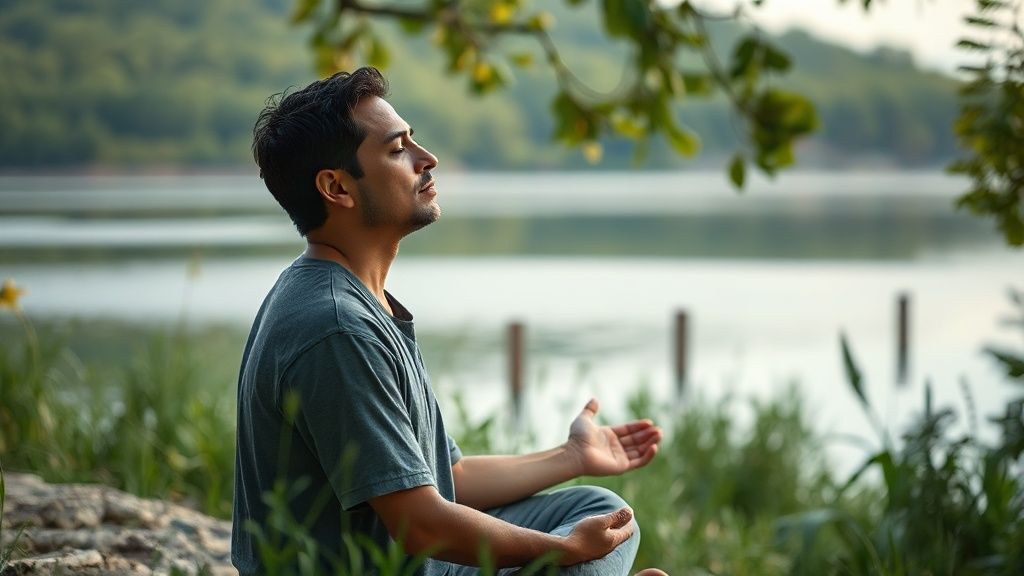
姿勢坐禅 最高のガイド付き瞑想 マインドフルネス技法を通じて体にリラックス法を教える3つの方法を実践する人物.