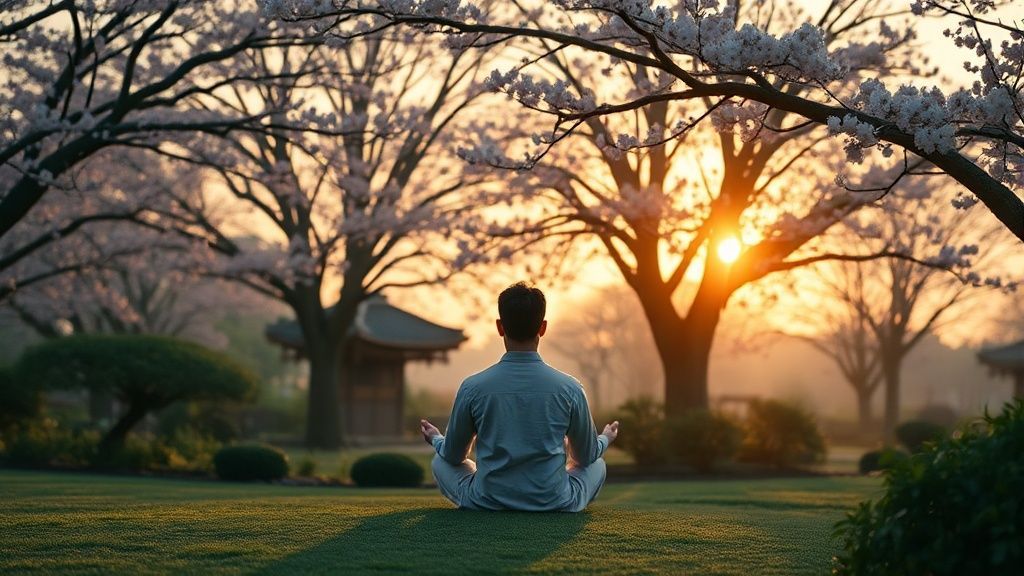
Zen and Mindfulness: A Practical Guide to Present-Moment Awareness
In a world of constant distraction, notifications, and endless to-do lists, the ancient practice of Zen offers a profound path to what so many of us seek: true mindfulness. The terms “Zen” and “mindfulness” are often used interchangeably, but what do they really mean, and how can their timeless wisdom be applied to your modern, hectic life? This comprehensive guide demystifies the deep connection between Zen Buddhism and mindfulness, moving beyond trendy buzzwords to provide you with actionable steps to cultivate a calmer, more focused, and deeply present mind. You’ll learn the core philosophical principles, discover simple yet transformative daily practices, and find valuable resources to guide your journey into authentic present-moment awareness.

What is Zen Buddhism? The Foundation of Mindfulness
To understand Zen mindfulness, we must first explore its roots. Zen is a school of Mahayana Buddhism that originated in China (as Chan) and later flourished in Japan, Korea, and Vietnam. It emphasizes the direct, experiential realization of one’s true nature, often through meditation and interaction with a teacher, rather than through scripture study alone.
Beyond Sitting: The Core Philosophy of Zen
At its heart, Zen is not merely a meditation technique; it is a way of life grounded in several key principles:
- Direct Experience: Zen values firsthand experience over intellectual knowledge. It’s about tasting the sugar yourself rather than reading a description of its sweetness. The goal is to see reality as it is, directly and immediately, without the filter of our conceptual thinking.
- Non-Attachment: This is a cornerstone of Zen practice. It doesn’t mean becoming cold or detached from life. Instead, it’s about learning to relate to thoughts, emotions, and sensations without clinging to them or pushing them away. You observe them as they arise and pass, like clouds moving across the sky.
- Impermanence (Mujo): Zen teaches that all things are in a constant state of flux. Understanding and accepting this fundamental truth helps reduce suffering, as we stop trying to hold onto what is inherently transient—be it a pleasant feeling, a possession, or even life itself.
The physical practice that embodies these principles is Zazen, or seated meditation. It is considered the heart of Zen, a practice where one simply sits, alert and upright, letting go of all gaining ideas and allowing the mind and body to settle into their natural state.
How Zen Differs from Modern Mindfulness
While deeply connected, it’s helpful to understand the distinction. Modern, secular mindfulness—often taught in corporate or therapeutic settings like Mindfulness-Based Stress Reduction (MBSR)—is frequently goal-oriented. The aim might be to reduce stress, improve focus, or enhance emotional regulation.
Zen, however, is a holistic spiritual path. Its ultimate aim is Satori, or enlightenment—a profound awakening to your true nature and the nature of reality. Mindfulness, in the Zen context, is not a tool for a better life, but a natural byproduct and essential component of walking the path toward this awakening. Zen mindfulness is the practice of bringing this awakened awareness to every single moment, whether you are on the meditation cushion or washing the dishes.
The Zen Path to Mindfulness: Core Practices for Daily Life
The beauty of Zen is its profound simplicity. The practices are straightforward, yet their depth is limitless. Here’s how you can begin to incorporate them into your own life.
Zazen: The Art of “Just Sitting”
Zazen is the foundational practice of Zen. The term literally means “sitting meditation,” but its essence is “just sitting” without any goal or agenda. Here is a basic step-by-step guide to get you started:
- Posture: Find a quiet space. Sit on a cushion (zafu) on the floor, cross-legged, or in a chair with your feet flat on the floor. The key is to keep your spine erect and natural, not rigid. Tuck your chin in slightly. Your hands should rest in your lap in the “cosmic mudra”—left hand on top of the right, palms up, with thumbs lightly touching, forming a gentle oval.
- Gaze: Keep your eyes open but softly lowered, gazing at a point on the floor about two to three feet in front of you. This helps maintain alertness and prevents you from getting lost in daydreams.
- Breath Awareness: Bring your attention to your breath. Don’t try to control it. Simply notice the natural inflow and outflow. Many practitioners focus on the Hara (a point about two inches below the navel), feeling the breath originate from and return to this center of gravity.
- Dealing with Thoughts: Thoughts will arise. This is natural and not a sign of failure. The practice is to notice the thought without judgment, let it go, and gently return your attention to the breath. Imagine your thoughts as leaves floating down a stream; you see them, but you don’t jump in and grab them.
For a structured way to begin your sitting practice, try our meditazione guidata di 5 minuti.
Bringing Mindfulness Off the Cushion
True Zen practice isn’t confined to the meditation hall. The real test is whether you can carry that mindful awareness into your everyday activities. This is often called “mindfulness in action.”
- Mindful Eating: For your next meal, eat without distractions. Put away your phone and turn off the TV. Notice the colors, textures, and smells of your food. Chew slowly, savoring each bite. Be grateful for the nourishment.
- Mindful Walking (Kinhin): Walk slowly and deliberately, coordinating your breath with your steps. Feel the sensation of your feet making contact with and leaving the ground. This can be done as a formal practice or simply while walking from your car to the office.
- Ascolto Consapevole: When in conversation, try to listen completely, without formulating your response while the other person is talking. Give them your full presence.
Incorporate brief moments of awareness with this esercizio di respirazione di 1 minuto.

Overcoming Common Challenges with Zen Mindfulness
It’s normal to encounter obstacles on this path. Recognizing them is the first step to working with them skillfully.
When Your Mind Won’t Be Still: Dealing with Anxiety and Overthinking
Many beginners believe the goal of meditation is to “empty the mind” or stop thinking. This is a misconception that leads to frustration. In Zen, thoughts are not the enemy. The practice is to change your relazione with your thoughts.
Instead of getting tangled in a thought or fighting against it, you learn to observe it with detachment. See anxiety as a passing weather pattern in the vast sky of your awareness. The sky is always present and untouched, regardless of whether there are stormy clouds (anxious thoughts) or clear blue skies (calm). By repeatedly returning to the anchor of your breath, you train the mind to not be swept away.
If anxiety is a significant barrier, this meditazione guidata per ansia e depressione can provide supportive, compassionate guidance.
Finding Time and Consistency
The biggest challenge for modern practitioners is often finding the time and motivation to practice regularly. Zen wisdom offers a solution: prioritize consistency over duration.
A daily practice of just 5 to 10 minutes is far more powerful than an hour of meditation once a month. The goal is to weave mindfulness into the fabric of your life. It’s better to sit for a short time every day than to have long, sporadic sessions that feel like a chore.
- Anchor your practice: Link your meditation to an existing habit, like right after you brush your teeth in the morning or right before you have your evening tea.
- Create a dedicated space: Even a small corner with a cushion can serve as a powerful visual reminder to practice.
Build a sustainable habit with a breve meditazione guidata che si adatta a qualsiasi programma.
Approfondire la Pratica: Risorse e Prossimi Passi
Man mano che il tuo interesse e impegno crescono, potresti desiderare di esplorare ulteriormente. Il viaggio dello Zen è un percorso di apprendimento e approfondimento continui.
Meditazioni Guidate nello Spirito dello Zen
Sebbene lo Zazen tradizionale sia spesso silenzioso, le meditazioni guidate possono essere un ottimo punto di partenza. Forniscono struttura e delicati promemoria che possono aiutare ad ancorare una mente vagante. Considerale come le rotelle di sostegno; sono uno strumento di supporto da utilizzare finché non ti senti a tuo agio nel sedere in silenzio.
- Per una sessione più lunga e immersiva, questa meditazione guidata di 20 minuti è eccellente per coltivare una profonda concentrazione.
- Concludi la tua giornata con consapevolezza grazie a una meditazione guidata per il sonno e il benessere.
Esplorare Oltre: Maestri, Comunità e Formazione
Lo Zen ha una lunga tradizione di apprendimento da un maestro (Roshi o Sensei) e di pratica all'interno di una comunità (Sangha). Un buon maestro può offrire una guida personalizzata, rispondere alle tue domande e aiutarti a navigare le sottigliezze del percorso.
- Trova un Centro nella Tua Zona: Cerca un centro Zen o un tempio buddhista nella tua area. Molti offrono serate per principianti, workshop e sessioni di meditazione regolari.
- Comunità Online: Nell'era digitale, molti maestri e comunità rinomati offrono corsi online, sedute in diretta streaming e ritiri virtuali.
- Approfondisci il Tuo Studio: Leggi le opere di maestri fondamentali dello Zen come Shunryu Suzuki (Mente Zen, Mente di Principiante), Thich Nhat Hanh e D.T. Suzuki.
Approfondisci la tua comprensione con gli insegnamenti di Thich Nhat Hanh attraverso questa guida alla meditazione di Thich Nhat Hanh.
Considera di formalizzare la tua pratica esplorando i percorsi per diventare un coach di mindfulness certificato.

Zen e Mindfulness FAQ (Per Ricerca Vocale e Snippet in Evidenza)
Qual è la differenza tra Zen e mindfulness?
La mindfulness è uno stato di consapevolezza non giudicante del momento presente, che è una componente chiave e un risultato della pratica del più ampio percorso spirituale del Buddhismo Zen. Lo Zen è il percorso; la mindfulness è una qualità fondamentale coltivata su quel percorso.
Come si pratica la mindfulness Zen?
La pratica formale primaria è lo Zazen, o meditazione seduta, in cui si osserva il respiro e i pensieri senza giudizio. Informalmente, si pratica portando la consapevolezza mindful alle attività quotidiane come camminare, mangiare e ascoltare.
La mindfulness può aiutare con l'ansia?
Sì, allenandoti a osservare pensieri ansiosi e sensazioni fisiche senza esserne catturato o senza alimentarli, la mindfulness, come insegnata nello Zen, può ridurre significativamente l'impatto e la frequenza dell'ansia. Per pratiche specifiche, consulta la nostra guida su pratiche di meditazione per l'ansia.
Quali sono i migliori esercizi di mindfulness per principianti?
I principianti possono iniziare con brevi meditazioni sul respiro o semplici esercizi sensoriali, come la pratica della mindfulness dei 5 sensi che ti radica nell'esperienza immediata della vista, del suono, dell'olfatto, del gusto e del tatto.
Conclusione & Invito all'Azione
Il viaggio dello Zen e della mindfulness non consiste nell'aggiungere qualcosa di nuovo alla tua vita, ma nel riscoprire la calma, la chiara consapevolezza che è sempre stata lì, sotto il rumore dei tuoi pensieri. È una pratica continua e gentile di ritorno al momento presente, ancora e ancora, con pazienza e compassione verso te stesso. È un percorso che non conduce a una destinazione lontana, ma a un'esperienza più ricca e vivida della vita che stai già vivendo.
Il tuo viaggio nella mindfulness Zen inizia con un singolo respiro. Non aspettare il momento perfetto; crealo. Inizia oggi con la nostra sessione di mindfulness di 10 minuti più popolare per una mente calma.