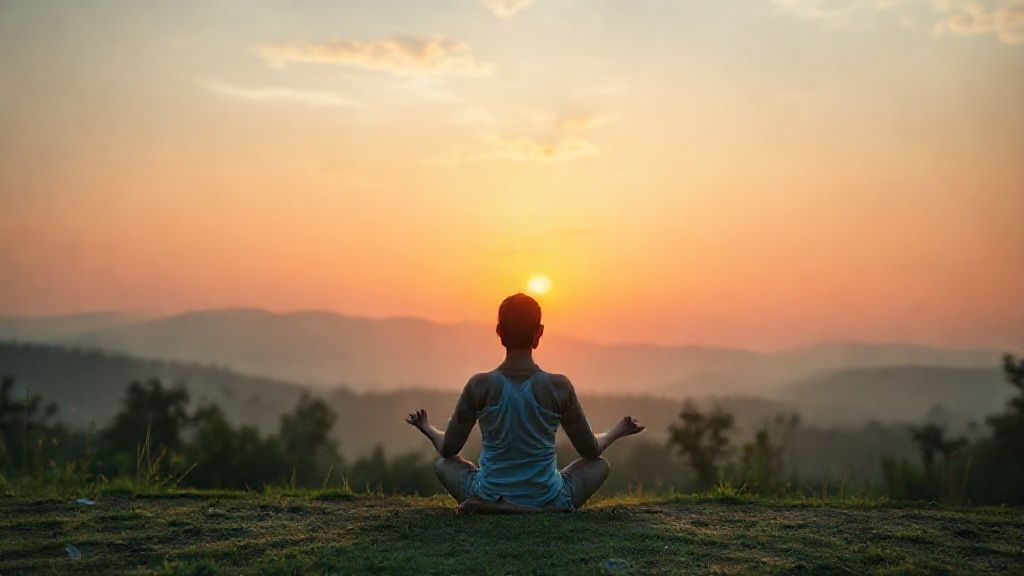
How to Do Insight Meditation: A Beginner’s Guide to Vipassana
Do you ever feel like your mind is a browser with too many tabs open? Thoughts about yesterday’s conversation, worries about tomorrow’s deadline, and random mental chatter all competing for your attention? While many meditation practices help calm this mental noise, insight meditation offers something more profound: a way to understand the very nature of your mind and experience.
Insight Meditation, or Vipassana, is the practice of observing the reality of your present-moment experience—your thoughts, feelings, and bodily sensations—without judgment to cultivate profound wisdom and inner peace. This ancient technique doesn’t just temporarily quiet your mind; it helps you develop a new relationship with your thoughts and emotions that can transform how you experience life.
This comprehensive guide will walk you through exactly how to do insight meditation, from its core principles to a practical step-by-step practice you can start today.

What is Insight Meditation (Vipassana)?
Vipassana is a Pali word meaning “clear seeing” or “insight.” It’s one of the oldest Buddhist meditation practices, designed to help practitioners see things as they truly are, beyond our conceptual filters and habitual reactions. Unlike approaches that focus solely on relaxation or stress reduction, insight meditation aims for fundamental understanding and liberation.
Many beginners confuse insight meditation with concentration meditation (Samatha). While both are valuable, they serve different purposes. Concentration meditation develops focused attention on a single object, like the breath or a mantra. Insight meditation uses this concentration as a foundation but then expands awareness to investigate the nature of all experience—sensations, thoughts, and emotions—as they arise and pass away.
The ultimate goal of Vipassana isn’t to achieve special states of consciousness but to develop wisdom through direct experience. By observing the constantly changing flow of phenomena without getting caught in them, we begin to understand the nature of reality itself, which naturally leads to greater freedom from suffering.
The Core Principles of Insight Practice
Before diving into the practical steps, it’s helpful to understand the foundational principles that guide insight meditation. These aren’t just philosophical concepts but practical lenses through which you’ll learn to view your experience.
Mindfulness (Sati)
Mindfulness is the cornerstone of insight meditation. It’s the quality of non-judgmental, present-moment awareness that allows you to observe your experience without getting lost in it. Think of mindfulness as a mirror that reflects whatever appears before it—thoughts, sensations, sounds—without adding commentary or interpretation.
In practice, this means noticing when your mind has wandered without criticizing yourself, observing physical discomfort without immediately reacting to change position, and watching emotional states arise without either suppressing them or being carried away by them.
Impermanence (Anicca)
The principle of impermanence is perhaps the most direct insight you’ll gain from consistent practice. As you observe your experience closely, you’ll notice that everything is in constant flux—sensations change, thoughts come and go, emotions transform. Nothing remains static.
This observation might sound simple, but its implications are profound. When we truly understand that all experiences are temporary, we naturally develop less clinging to pleasant experiences and less resistance to unpleasant ones. We begin to relate to our lives with more ease and flexibility.
Non-Attachment
Non-attachment is often misunderstood as detachment or indifference. In insight meditation, it means relating to experiences without clinging to them or pushing them away. It’s the middle way between indulgence and suppression.
When you practice non-attachment, you allow experiences to be exactly as they are. A pleasant sensation arises—you notice it without trying to make it stay longer. An unpleasant thought appears—you acknowledge it without fighting to make it disappear. This balanced relationship with your inner world creates tremendous psychological freedom.
How to Practice Insight Meditation: A Step-by-Step Guide
Now that you understand the core principles, let’s explore the actual practice. The following step-by-step guide will help you establish a solid insight meditation practice. Remember, consistency is more important than duration—even 10 minutes daily can yield significant benefits over time.
Step 1: Find Your Posture and Prepare
The foundation of a good meditation session begins with your posture and environment. Find a quiet space where you won’t be interrupted for the duration of your practice. You can sit on a cushion on the floor or in a chair—the important thing is to maintain a posture that is both alert and relaxed.
If sitting on a cushion, cross your legs comfortably in front of you. If using a chair, sit forward slightly so your back is self-supporting. Keep your spine erect but not rigid, as if you’re being gently lifted by a string from the crown of your head. Rest your hands on your thighs, and gently close your eyes or lower your gaze.
Set a timer for your desired duration. For beginners, 5-10 minutes is perfect. As you become more comfortable with the practice, you can gradually extend your sessions to 20, 30, or 45 minutes.
Step 2: Establish Anchored Awareness
Begin by bringing your attention to your breath. Don’t try to control or change your breathing—simply notice the natural rhythm of inhalation and exhalation. You might focus on the sensation of air moving through your nostrils, the rising and falling of your chest, or the expansion and contraction of your abdomen.
When your mind wanders (which it will, repeatedly), gently return your attention to the breath without judgment. This process of noticing distraction and returning to your anchor is the fundamental exercise that builds your “attention muscle.”
If you need help settling in, our meditazione guidata di 5 minuti è un punto di partenza perfetto.
Step 3: Expand to Body Sensations
Once your mind has settled somewhat (typically after 5-10 minutes of breath awareness), gradually expand your attention to include physical sensations throughout your body. Start from the top of your head and slowly move your awareness downward, or simply open your awareness to include the entire body at once.
Notice whatever sensations are present—tingling, warmth, pressure, vibration, or even areas with no distinct sensation. The key is to observe these sensations without labeling them as “good” or “bad.” Simply note their qualities and how they change from moment to moment.
A body scan is an excellent technique for this. Follow our detailed pdf dello script per la scansione corporea di 5 minuti.
Step 4: Observe Thoughts and Emotions
As you continue observing bodily sensations, you’ll notice thoughts and emotions arising. Instead of getting caught in their content, practice relating to them as you would to physical sensations—as passing phenomena in your field of awareness.
When you notice a thought, you might silently label it “thinking” and return to your primary object of meditation (the breath or body sensations). Alternatively, you might observe the thought itself—noticing its beginning, middle, and end, much like you would observe a cloud passing in the sky.
The same approach applies to emotions. When an emotion arises, notice where you feel it in your body (tightness in the chest, warmth in the face, etc.) and observe these physical manifestations without getting drawn into the story behind the emotion.
Step 5: Cultivate Loving-Kindness (Metta)
Conclude your meditation session by cultivating loving-kindness (metta). This practice helps balance the investigative quality of insight with an open, compassionate heart. Begin by directing kind wishes toward yourself, using traditional phrases or your own words:
“May I be happy. May I be healthy. May I be safe. May I live with ease.”
After a few minutes, extend these wishes to others—first to someone you care about, then to a neutral person, then to someone with whom you have difficulty, and finally to all beings everywhere.
For a dedicated practice, use our script di meditazione di mettā.

Common Challenges & How to Overcome Them
Every meditator encounters obstacles in their practice. Recognizing these common challenges and having strategies to work with them will help you maintain consistency and prevent discouragement.
“I Can’t Stop My Thoughts”
This is perhaps the most universal concern among meditation beginners. The important thing to understand is that the goal of insight meditation is not to stop your thoughts but to change your relationship with them.
When you find yourself thinking during meditation, you haven’t failed—you’ve been given an opportunity to practice. Each time you notice you’ve been lost in thought and gently return to your anchor, you’re strengthening your mindfulness muscle. Over time, you’ll find that thoughts naturally settle, and even when they don’t, you’re less identified with them.
Dealing with Physical Discomfort
Physical discomfort is inevitable in longer sitting periods. When discomfort arises, first check if your posture needs a minor adjustment. If the discomfort is due to tension or poor alignment, feel free to move mindfully.
If the discomfort persists despite good posture, you can make it the object of your meditation. Investigate the sensation with curiosity: Where is it located? What are its qualities? Does it change over time? This approach transforms discomfort from a distraction into valuable practice material.
Restlessness and Impatience
Restlessness often manifests as a strong urge to move, fidget, or end the meditation session early. When this arises, acknowledge it with a gentle mental note like “restlessness” or “impatience.” Notice how it feels in your body—perhaps as energy, vibration, or tension.
Bring your attention to the physical sensations of restlessness without trying to make them go away. Often, simply acknowledging and allowing these sensations causes them to gradually settle or transform.
For moments of high anxiety, a shorter, focused practice can help. Try this esercizio di respirazione di 1 minuto to reset.
Deepening Your Insight Meditation Practice
Once you’ve established a consistent daily practice, you might wonder how to take it to the next level. Here are several ways to deepen your understanding and integration of insight meditation.
Incorporate Mindfulness into Daily Life
Formal meditation is like going to the gym for your mind, but the real benefits emerge when you bring mindfulness into your daily activities. Try practicing mindfulness during routine activities like brushing your teeth, washing dishes, or walking.
Il mangiare consapevole è un'altra pratica potente. Prima di mangiare, prenditi un momento per apprezzare il tuo cibo. Notane i colori, le consistenze e gli aromi. Mangia lentamente, assaporando ogni boccone e prestando attenzione alle sensazioni della masticazione e della deglutizione.
Unisciti a una Comunità o Partecipa a un Ritiro
Praticare con altri può offrire ispirazione, supporto e una guida preziosa. Molte comunità propongono sessioni di meditazione di gruppo, sia di persona che online. L'energia collettiva di un gruppo può spesso sostenerti nei periodi di resistenza che potrebbero far deragliare la tua pratica individuale.
I ritiri offrono un'opportunità per una pratica intensiva, tipicamente della durata da un fine settimana a diversi mesi. L'ambiente di supporto, il silenzio e la pratica continua possono portare a significative svolte nella tua comprensione.
Per immergerti completamente, considera di partecipare a un opportunità di ritiri silenziosi gratuiti.
Puoi anche trovare supporto locale cercando centri di meditazione vicini a me.
Esplora Meditazioni Guidate e Risorse
Sebbene la pratica in silenzio costituisca il nucleo della meditazione di visione profonda, le meditazioni guidate possono essere preziose, specialmente quando sei bloccato o vuoi esplorare aspetti specifici della pratica.
Per una guida strutturata, esplora la nostra libreria di testi di meditazione guidata.
Se preferisci l'audio, la nostra collezione di video di meditazione può sostenere il tuo percorso.

FAQ sulla Meditazione di Visione Profonda (Per Ricerca Vocale)
Qual è la differenza tra mindfulness e meditazione di visione profonda?
La mindfulness è la qualità della consapevolezza del momento presente che funge da fondamento per la meditazione di visione profonda. Mentre la mindfulness può essere praticata in molti contesti, la meditazione di visione profonda (Vipassana) è un quadro specifico che utilizza la mindfulness per investigare la natura della realtà e ottenere intuizioni liberatorie.
Quanto tempo ci vuole per vedere i benefici della meditazione di visione profonda?
Alcuni benefici, come una maggiore calma e concentrazione, possono manifestarsi entro poche settimane di pratica costante. Intuizioni più profonde e cambiamenti trasformativi si sviluppano tipicamente nel corso di mesi o anni di pratica dedicata. Ricorda che la meditazione di visione profonda è un percorso graduale di comprensione, non una soluzione rapida.
Posso praticare la Vipassana se soffro di ansia?
Sì, e può essere molto benefico. Per un supporto mirato, consulta la nostra guida su pratiche di meditazione per l'ansia. Molte persone scoprono che la meditazione di visione profonda le aiuta a sviluppare una relazione diversa con pensieri e sensazioni ansiose, riducendone l'impatto nel tempo. Tuttavia, se soffri di ansia grave o traumi, è saggio lavorare con un insegnante qualificato o un terapeuta.
Ho bisogno di un insegnante per la meditazione di visione profonda?
Sebbene non strettamente necessario, un insegnante è altamente raccomandato. Impara come condurre una meditazione guidata per gli altri o trova un coach di mindfulness certificato per te stesso. Un buon insegnante può fornire una guida personalizzata, aiutarti a navigare le sfide e prevenire incomprensioni sulla pratica.
Conclusione & Invito all'Azione
La meditazione di visione profonda è un viaggio profondo di auto-scoperta che va oltre il rilassamento temporaneo per offrire una trasformazione duratura. Imparando a osservare la tua esperienza con chiarezza ed equanimità, ti districhi gradualmente dai modelli abituali di pensiero e reazione. La pratica richiede pazienza e costanza, ma le ricompense—maggiore saggezza, libertà e pace—sono incommensurabili.
Ricorda che la meditazione di visione profonda non riguarda il raggiungimento di uno stato mentale perfetto, ma lo sviluppo di una relazione onesta e compassionevole con qualsiasi cosa sorga nella tua esperienza. Ogni momento di consapevolezza, piacevole o impegnativo, è un'opportunità per crescere e comprendere.
Pronto a iniziare? Inizia il tuo viaggio oggi con la nostra sessione sessione di mindfulness di 10 minuti fondamentale per costruire la tua consapevolezza focalizzata.