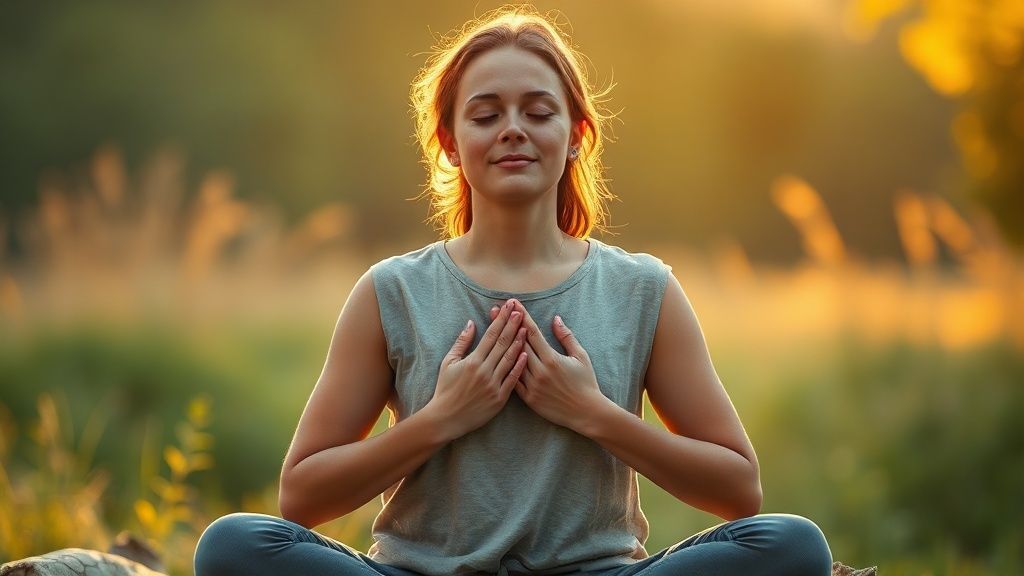
Meditazione Guidata per l'Amore di Sé: Coltiva una Fiducia Incrollabile e Pace Interiore - Vita
Do you find it easier to offer kindness to others than to yourself? When a friend makes a mistake, you’re quick with reassurance, but when you stumble, your inner critic launches into a relentless monologue. You’re not alone in this struggle. Many people navigate this same imbalance, but a powerful, accessible tool can help you rewrite that narrative and transform your relationship with yourself.
A guided meditation for self-love is a practice where a narrator leads you through a series of visualizations and affirmations designed to foster compassion, acceptance, and a positive relationship with yourself. It’s a proven method to reduce self-criticism, build emotional resilience, and create a foundation of inner peace that radiates into every aspect of your life.
This comprehensive guide will not only explain the profound benefits of this practice but will also provide you with a step-by-step framework to begin your own journey. We’ll explore the science behind self-compassion, offer practical techniques, and provide resources to help you deepen your practice and cultivate the unshakeable self-love you deserve.

Why Self-Love Meditation is a Non-Negotiable for Your Wellbeing
We often treat self-love as a luxury or an abstract concept, but neuroscience and psychology reveal it’s a fundamental pillar of mental and emotional health. Self-love meditation isn’t about becoming self-absorbed or narcissistic. Rather, it’s about developing a healthy, supportive relationship with yourself—the same kind of nurturing connection you’d offer to someone you deeply care about.
Research from institutions like Stanford University’s Center for Compassion and Altruism Research and Education shows that regular self-compassion practice can significantly decrease anxiety and depression while increasing life satisfaction. When you consciously direct kindness toward yourself, you’re not just feeling better in the moment—you’re actively rewiring your brain to default to self-support rather than self-criticism.
Silencing Your Inner Critic
That voice in your head that tells you you’re not good enough, smart enough, or capable enough—the inner critic—can be relentless. For many, this critical inner dialogue operates like background noise, subtly undermining confidence and decision-making throughout the day.
Guided meditation for self-love creates a crucial pause between you and these automatic negative thoughts. Instead of getting swept away by the critic’s narrative, you learn to observe these thoughts with detachment, recognizing them as mental events rather than absolute truths. With consistent practice, the volume of the inner critic gradually decreases, making space for a more balanced, compassionate inner voice to emerge.
Building Emotional Resilience
Self-love is the bedrock of emotional resilience—your ability to navigate life’s inevitable challenges, setbacks, and stresses without being completely derailed by them. When you have a foundation of self-compassion, you’re better equipped to handle difficult emotions, recover from failures, and adapt to change.
Think of self-love as your emotional immune system. Just as a strong physical immune system helps your body fight off illness, a strong emotional immune system helps you bounce back from emotional wounds. This resilience isn’t about avoiding pain but about having the inner resources to move through it with grace. For techniques specifically designed to manage anxious thoughts, explore our meditazione guidata per l'ansia.
Your First Self-Love Meditation: A Step-by-Step Guide
Ready to begin your practice? This step-by-step guide will walk you through creating your first self-love meditation session. Remember, there’s no “perfect” way to do this—the goal is simply to show up with an open heart and a willingness to be kind to yourself.
Step 1: Find Your Sanctuary
Creating a supportive environment can significantly enhance your meditation experience. Find a quiet space where you’re unlikely to be interrupted for the duration of your practice. This could be a corner of your bedroom, a comfortable chair in your living room, or even a peaceful spot in your garden.
You might want to dim the lights, perhaps light a candle, or arrange a few comforting items around you—a soft blanket, a meaningful crystal, or a photograph that evokes feelings of peace. The goal is to create a space that feels safe and nurturing. Setting the right atmosphere is key. Using musica per meditazione di 10 minuti can instantly signal to your brain that it’s time to unwind.
Step 2: Anchor with Your Breath
Once you’re comfortable in your chosen space, begin by bringing your attention to your breath. Don’t try to change your breathing—simply notice the natural rhythm of your inhalation and exhalation.
Feel the sensation of air entering through your nostrils, filling your lungs, and then leaving your body. When your mind wanders (as it inevitably will), gently guide your attention back to your breath without judgment. This simple act of returning to the breath is the foundation of mindfulness—and a powerful expression of self-care in itself. If you’re new to breathwork, our esercizio di respirazione di 1 minuto is a perfect primer.
Step 3: The Body Scan for Acceptance
Now, slowly bring your awareness to different parts of your body, starting with your toes and gradually moving up to the crown of your head. As you focus on each area, simply notice any sensations without trying to change them—tingling, warmth, tension, or nothing at all.
The purpose of the body scan isn’t to relax your body (though that may happen naturally) but to practice being present with your physical self exactly as it is in this moment. This cultivates bodily awareness and acceptance, countering the tendency to criticize or disconnect from our physical form. To explore this technique in more depth, we have a dedicated pdf dello script per la scansione corporea di 5 minuti you can download and use.

Step 4: The Heart of the Practice – Loving-Kindness (Metta)
This is the core of self-love meditation. Begin by placing a hand over your heart, feeling its steady rhythm. Then, slowly and silently repeat these traditional Metta phrases, directing them toward yourself:
- May I be happy
- May I be healthy
- May I be safe
- May I live with ease
As you repeat each phrase, notice what arises. You might feel warmth, resistance, or nothing at all—all responses are valid. If the traditional phrases don’t resonate, feel free to modify them to what feels authentic to you, such as:
- I am worthy of love and happiness
- I accept myself exactly as I am
- I am enough
The key is to infuse each phrase with genuine intention, even if the feelings don’t immediately follow. The principles of Metta can be expanded further with this detailed script di meditazione di mettā.
Deepening Your Self-Compassion Practice
Once you’ve established a basic self-love meditation routine, you might want to explore ways to deepen your practice and integrate self-compassion more fully into your daily life.
Weaving Self-Love into a Busy Day
Formal meditation sessions are powerful, but the true transformation happens when we bring self-compassion off the cushion and into our everyday moments. Try these micro-practices:
- The self-compassion break: When you notice you’re stressed or critical toward yourself, place a hand on your heart and say, “This is a moment of suffering. May I be kind to myself in this moment.”
- Self-appreciation moments: Throughout your day, intentionally notice things you appreciate about yourself—not just achievements, but qualities like your sense of humor, your curiosity, or your persistence.
- Compassionate touch: Simple gestures like gently massaging your own hand or giving yourself a hug can activate the body’s care system and release oxytocin. Even on your most hectic days, a meditazione guidata di tre minuti can help you reconnect with self-compassion.
Combining Self-Love with Other Meditation Goals
Self-love meditation complements and enhances other meditation practices beautifully. Consider integrating it with:
- Sleep meditation: Ending your day with self-love phrases can improve sleep quality and help you wake up feeling more positive about yourself.
- Movement practices: Incorporating loving-kindness into yoga or walking meditation can deepen the mind-body connection.
- Creative activities: Bringing a self-compassionate attitude to writing, drawing, or playing music can transform your relationship with creative expression. Pairing your self-love practice with a meditazione guidata per il sonno per la guarigione del corpo can be incredibly restorative for your mind and body overnight.
Strumenti e Risorse per Supportare il Tuo Percorso
Building a sustainable self-love practice is easier with the right support. Here are some resources that can help you maintain momentum and deepen your understanding.
The Best Apps for Guided Self-Love Meditation
While developing your own personal practice is valuable, guided meditations can provide structure, inspiration, and variety. Several excellent meditation apps offer specific tracks for self-love and self-compassion, often led by experienced teachers who can guide you through common challenges and resistance.
These apps typically offer a range of meditation lengths, making it easy to practice even on your busiest days. Many include features like progress tracking and reminders to help you build consistency. Many popular apps like Headspace and Calm offer excellent self-love tracks. If you’re comparing options, see our list of app simili a Headspace.
Powerful Worksheets for Self-Reflection
Meditation creates the inner space for self-awareness, while journaling and reflective exercises help you process and integrate those insights. Worksheets designed specifically for self-compassion can guide you in:
- Identifying your critical inner voice and developing a more compassionate alternative
- Exploring specific areas where you struggle with self-acceptance
- Acknowledging your strengths and qualities with appreciation
- Setting intentions for how you want to relate to yourself moving forward
Combining meditation with these reflective practices creates a powerful synergy that accelerates your growth in self-love. To complement your meditation, journaling with our self compassion worksheets can help solidify these new neural pathways.

Frequently Asked Questions (FAQ) About Self-Love Meditation
What is the difference between self-love meditation and a normal guided meditation?
While all guided meditations provide direction, self-love meditation specifically uses language, visualizations, and affirmations aimed at cultivating compassion and forgiveness for oneself, directly countering the inner critic. Where a general mindfulness meditation might focus on breath awareness or body scanning without judgment, self-love meditation actively cultivates positive feelings and attitudes toward the self through specific techniques like loving-kindness (Metta) practice.
I find it hard to feel anything during self-love meditation. Is that normal?
Absolutely. It’s a common experience, especially at the start. The goal isn’t to force a feeling but to create the intention of kindness. Think of it as planting seeds—you may not see immediate growth, but with consistent watering (practice), they will eventually sprout. The benefits are cumulative, and often we’re making progress even when we don’t feel dramatic shifts in the moment. For beginners, a shorter, more general raccolta di meditazioni guidate calmanti can be a gentler starting point.
How long does it take to see results from a self-love meditation practice?
Consistency is more important than duration. Many people report feeling a greater sense of calm and self-acceptance after just a few sessions. For sustained change in thought patterns, a daily practice of even 5 minutes is highly effective. Research suggests that noticeable changes in brain patterns associated with compassion can occur within 8 weeks of regular practice, but your personal timeline will depend on factors like your starting point, consistency, and the specific challenges you’re working with.
Conclusione e Invito all'Azione (CTA)
Your journey toward self-love is exactly that—a journey, not a destination. There will be days when compassion flows easily and others when it feels nearly impossible. What matters is your commitment to returning to the practice, again and again, with the same gentle persistence you’d offer a dear friend.
Self-love meditation isn’t a quick fix but a profound reorientation of your relationship with yourself. By investing in this practice daily, you’re not just creating moments of peace—you’re building a foundation of unshakeable confidence and inner resilience that will support you through all of life’s challenges and joys.
Your relationship with yourself is the foundation for all others. By investing in it daily, you open the door to a more peaceful, authentic, and resilient life.
Ready to begin? Bookmark this page and start with our step-by-step guide above. When you’re ready to explore other aspects of mindfulness, our comprehensive resource on cos'è la meditazione guidata is the perfect next step.