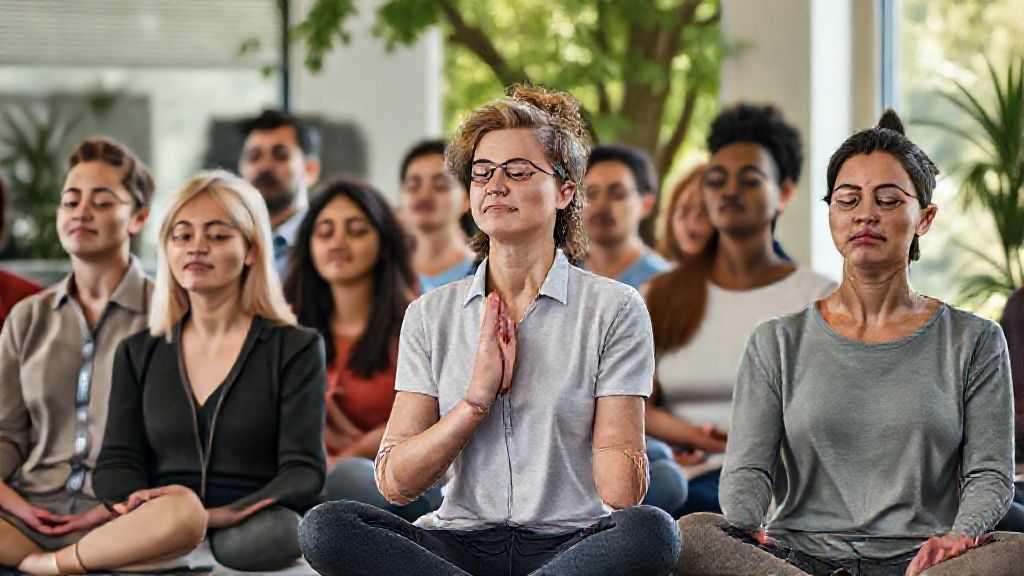
Attività di Consapevolezza da 5 Minuti: Trova la Tua Calma in un Mondo Frenetico
In our fast-paced, always-connected world, finding time for self-care can feel like an impossible task. You know you should meditate, but who has 30 minutes to sit in silence? You feel the tension building throughout your day, but between meetings, deadlines, and responsibilities, there never seems to be a good time to pause.
What if you could reset your nervous system, reduce stress, and regain focus in just five minutes? What if you could weave moments of calm into the busiest of days without special equipment or extensive training?
This comprehensive guide provides over a dozen effective 5-minute mindfulness activities you can do anywhere, anytime to reduce stress and increase focus. We’ll cover breathing techniques, sensory exercises, and quick meditations that seamlessly integrate mindfulness into your existing routine—because your wellbeing shouldn’t require rearranging your entire schedule.

Why 5 Minutes Is All You Need for Mindfulness
Many people dismiss short mindfulness practices, assuming they’re too brief to make a meaningful difference. This couldn’t be further from the truth. Research shows that even brief, consistent mindfulness practice can produce significant benefits for mental wellbeing.
The power lies in micro-habits—small actions performed consistently that compound over time. While a 30-minute meditation session might be ideal, a five-minute practice you actually do every day is far more valuable than an hour-long session you never get around to. These short bursts of mindfulness act as reset buttons for your nervous system, interrupting stress cycles and bringing your awareness back to the present moment.
Neuroscience reveals that even brief mindfulness practices can:
– Reduce cortisol (the stress hormone) levels
– Activate the parasympathetic nervous system (responsible for rest and digestion)
– Strengthen neural pathways associated with focus and emotional regulation
– Create space between stimuli and your response, enhancing emotional intelligence
The accessibility of five-minute practices removes the perfectionism and all-or-nothing thinking that often prevents people from starting a mindfulness practice. When the barrier to entry is this low, consistency becomes achievable.
Quick Breathing Exercises to Center Yourself
Breathing exercises represent the most portable form of mindfulness—you carry this tool with you everywhere. These techniques harness the direct connection between breath and nervous system, allowing you to consciously shift from stress to calm in minutes.
The 4-7-8 Breathing Technique
Developed by Dr. Andrew Weil, the 4-7-8 technique is renowned for its calming effect on the nervous system, making it particularly useful during moments of anxiety or before stressful events.
How to practice:
1. Sit comfortably with your back straight or lie down
2. Place the tip of your tongue against the ridge behind your upper front teeth
3. Exhale completely through your mouth, making a whoosh sound
4. Close your mouth and inhale quietly through your nose for 4 counts
5. Hold your breath for 7 counts
6. Exhale completely through your mouth for 8 counts, making the whoosh sound
7. Repeat this cycle three more times (four breaths total)
This pattern creates a natural calming effect by increasing the amount of oxygen in your bloodstream and slowing your heart rate. The extended exhalation activates the parasympathetic nervous system, signaling your body to relax.
For readers struggling with anxiety who need a more guided approach, try our specialized meditazione guidata per stress e ansia.
Box Breathing (Square Breathing)
Used by Navy SEALs to maintain calm and focus in high-pressure situations, box breathing is remarkably effective for enhancing performance during stressful moments.
How to practice:
1. Sit upright in a comfortable position
2. Slowly exhale all the air from your lungs
3. Inhale through your nose for 4 counts
4. Hold your breath for 4 counts
5. Exhale through your mouth for 4 counts
6. Hold the exhale for 4 counts
7. Repeat this pattern for 3-5 minutes
The equal timing of each phase creates a “square” or “box” pattern that regulates breathing and focuses the mind. This technique is particularly useful before presentations, difficult conversations, or any situation requiring clear thinking under pressure.
If you need a longer, scripted session to master your breath, explore our script di meditazione sul respiro di 10 minuti.

Sensory & Grounding Activities for the Present Moment
When anxious thoughts about the future or regrets about the past dominate your mind, sensory grounding exercises can immediately return your awareness to the safety of the present moment.
The 5-4-3-2-1 Grounding Technique
This popular anxiety-reducing exercise engages all five senses to anchor you firmly in the here and now.
How to practice:
1. Acknowledge 5 things you can see: Look around and notice five things you hadn’t previously observed—a crack in the ceiling, the way light reflects off a surface, specific colors and textures
2. Acknowledge 4 things you can feel: Notice four physical sensations—the fabric of your clothes, the air on your skin, the surface beneath you, your feet in your shoes
3. Acknowledge 3 things you can hear: Listen carefully to three sounds—distant traffic, the hum of electronics, your own breathing
4. Acknowledge 2 things you can smell: Notice two scents—if you can’t immediately detect smells, recall your favorite scents or smell your sleeve or a nearby object
5. Acknowledge 1 thing you can taste: Notice the current taste in your mouth—or taste a small piece of food, a drink, or simply notice the neutral taste in your mouth
This technique works by forcing your brain to redirect resources from anxious thinking to sensory processing, effectively interrupting the anxiety cycle.
For a scripted version of a similar exercise, use our breve script di meditazione di radicamento.
Mindful Observation
This simple practice transforms ordinary objects into anchors for present-moment awareness.
How to practice:
1. Choose any ordinary object from your environment—a pen, a coffee cup, a plant, your hands
2. Set a timer for 2-3 minutes
3. Observe the object as if you’re seeing it for the first time
4. Notice its color variations, textures, shapes, shadows, and highlights
5. If your mind wanders, gently return your attention to the object
6. Explore it with curious, non-judgmental attention
This practice cultivates what psychologists call “beginner’s mind”—seeing things fresh rather than through the filter of preconceptions. It demonstrates how mindfulness can transform even the most mundane moments into opportunities for presence.
Short & Guided Meditations for Focus and Relaxation
For those who prefer more structured guidance, these brief meditation practices offer focused approaches to common challenges like stress, distraction, and self-criticism.
A Simple Body Scan
The body scan is a foundational mindfulness practice that develops awareness of physical sensations and releases stored tension.
How to practice:
1. Sit or lie down in a comfortable position
2. Bring your attention to the sensations in your feet—temperature, contact with surfaces, any tingling or numbness
3. Slowly move your attention up through your body—ankles, calves, knees, thighs
4. Notice each area without trying to change anything—simply observe
5. Continue upward through torso, hands, arms, shoulders, neck, and head
6. If you notice tension, breathe into that area on your inhale and imagine releasing tension on your exhale
7. Finally, expand your awareness to include your entire body
This practice not only promotes relaxation but also strengthens the mind-body connection, helping you recognize early signs of stress stored in the body.
For a downloadable PDF version of this practice, use our 5-minute body scan script PDF.
Loving-Kindness (Metta) Meditation
This beautiful practice cultivates feelings of goodwill toward yourself and others, counteracting negative self-talk and interpersonal friction.
How to practice:
1. Sit comfortably with your eyes closed
2. Bring to mind someone you easily feel care toward
3. Silently repeat these phrases, directing them toward this person:
– May you be happy
– May you be healthy
– May you be safe
– May you live with ease
4. Now direct these same phrases toward yourself
5. Finally, expand this wish to include all beings everywhere
Even a brief loving-kindness practice can shift your emotional state from irritation or isolation to connection and care. Research shows it increases positive emotions and social connectedness.
To explore a longer script for this practice, try our script di meditazione di gentilezza amorevole.
Finding the Right Guided Meditation for You
While the practices above can be done independently, guided meditations provide additional support through verbal instruction. The key is matching the practice to your current needs and schedule:
- If you have 5 minutes right now, begin with our meditazione guidata di 5 minuti
- For a morning routine, try our specially designed meditazione mattutina di 5 minuti
- To combat anxiety before sleep, use our targeted meditazione di 5 minuti per l'ansia

Integrating 5-Minute Mindfulness Into Your Daily Routine
The ultimate value of these brief practices lies in their integration into your existing routine. By anchoring mindfulness to established daily activities, you transform empty moments into opportunities for presence.
Strategic integration points:
– While waiting: Transform frustrating waits (in line, in traffic, for downloads) into mindfulness opportunities
– Transition moments: Practice for five minutes before meetings, after logging off work, or between tasks
– Habit pairing: Attach mindfulness to existing habits—after brushing your teeth, before your first sip of coffee, or after sitting down at your desk
– Device-based reminders: Use your phone’s mindfulness or reminder app to prompt brief practices at strategic times
The goal isn’t to add more to your to-do list, but to transform how you engage with what’s already there. A mindful minute between tasks can prevent the accumulation of stress throughout your day.
For those who want to build a consistent daily habit, explore our free daily meditation resources.
Tools to Support Your Practice
While mindfulness ultimately requires nothing but your own awareness, these tools can support and enhance your practice, especially when starting.
Top-Rated Mindfulness Apps
Mobile apps provide structure, variety, and guidance that can be particularly helpful for beginners:
- Headspace: Offers specific “mini-meditations” perfectly suited for 5-minute practices
- Calm: Features “Daily Calm” sessions and breathing exercises tailored for brief practice
- Insight Timer: Provides thousands of free guided meditations filterable by length, including many 5-minute options
These apps make mindfulness accessible by removing barriers like “not knowing what to do” or “not having guidance.”
For a comparison of popular apps, see our guide to app simili a Headspace. To explore a specific app’s cost, check our breakdown of Calm app subscription cost.
Further Learning and Resources
Deepening your understanding of mindfulness can enhance your practice and motivation:
- Per un'analisi approfondita di cosa sia la meditazione guidata, Scopri di più sulla meditazione guidata
- Per schede di lavoro strutturate gratuite, scarica le nostre schede di mindfulness stampabili gratuite
Domande Frequenti (FAQ)
Qual è l'esercizio di mindfulness più efficace di 5 minuti?
Sebbene l'efficacia vari da individuo a individuo, la tecnica di respirazione 4-7-8 e il metodo di grounding 5-4-3-2-1 sono costantemente valutati come altamente efficaci per ottenere calma immediata. Il miglior esercizio è quello che praticherai effettivamente con costanza, quindi sperimenta per scoprire cosa risuona con te.
Possono davvero 5 minuti di mindfulness ridurre l'ansia?
Sì. Brevi pratiche di mindfulness possono interrompere il ciclo dei pensieri ansiosi e attivare la risposta di rilassamento del corpo. La ricerca mostra che anche brevi interventi di mindfulness riducono i marcatori fisiologici dello stress e le valutazioni soggettive dell'ansia. Per pratiche più dedicate, consulta la nostra guida su pratiche di meditazione per l'ansia.
Come posso rendere la mindfulness di 5 minuti un'abitudine?
Associala a un'abitudine esistente, come dopo aver lavato i denti o prima di controllare le email al mattino. La costanza è più importante della durata: una pratica quotidiana di cinque minuti apporta più benefici di sessioni più lunghe fatte sporadicamente. Impostare un promemoria regolare alla stessa ora ogni giorno può anche favorire la formazione dell'abitudine.
Esistono attività di mindfulness di 5 minuti per bambini?
Assolutamente! Semplici esercizi di respirazione (come la “respirazione del coniglietto” o la “respirazione del palloncino”) o giochi di ascolto consapevole sono ottimi punti di partenza. Esplora la nostra raccolta di attività di mindfulness per studenti delle scuole superiori e per i bambini più piccoli per pratiche adatte all'età.
Conclusione e Invito all'Azione
Il tuo viaggio verso una mente più calma e concentrata non richiede di riorganizzare la tua agenda o apportare cambiamenti drastici allo stile di vita. Come hai scoperto in questa guida, cambiamenti profondi possono iniziare con soli cinque minuti: il tempo necessario per preparare una tazza di tè o attendere il download di un file.
Il potere di queste brevi pratiche non risiede nella loro durata, ma nella loro costanza e intenzionalità. Ogni sessione di mindfulness di cinque minuti è una scelta consapevole per dare priorità al tuo benessere tra le richieste della vita. È una gentile ribellione contro la costante fretta e distrazione della vita moderna.
La tua chiamata all'azione è semplice: Scegli un'attività da questo elenco e provala oggi. Nota come ti senti prima e dopo. Domani, provane un'altra. Scopri quali pratiche risuonano con te e inizia a intrecciarle nelle pause naturali della tua giornata.
Pronto per una sessione più lunga? Esplora la nostra libreria di meditazioni guidate per il rilassamento per approfondire la tua pratica quando hai più tempo.
Ricorda, l'obiettivo non è la perfezione, ma la presenza. E la presenza è sempre disponibile, esattamente dove sei, in soli cinque minuti.