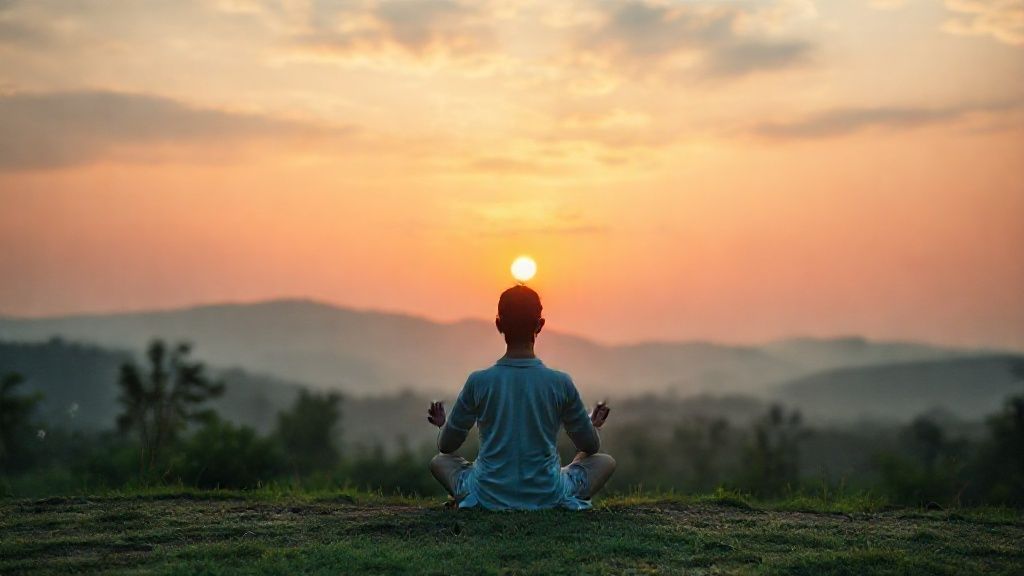
Buddhisme dan Meditasi Mindfulness: Jalan Pemula Menuju Kedamaian Batin
In our fast-paced, constantly connected world, feelings of stress, anxiety, and overwhelm have become almost universal. As we scroll through endless notifications, juggle multiple responsibilities, and navigate complex relationships, many of us find ourselves searching for an anchor—a way to quiet the mental chatter and find a sense of calm amidst the chaos. This search often leads people to mindfulness meditation, a practice that has gained tremendous popularity in recent years. But what many don’t realize is that this powerful tool for mental well-being has deep roots in ancient Buddhist teachings that date back over 2,500 years.
Mindfulness meditation is a core practice derived from ancient Buddhist teachings, designed to cultivate present-moment awareness and reduce suffering. This guide will explore its origins, core principles, and how you can start practicing today.
Whether you’re completely new to meditation or have dabbled in mindfulness apps, understanding the Buddhist foundation of this practice can transform your approach and deepen your experience. In this comprehensive guide, we’ll journey from the ancient teachings of the Buddha to practical techniques you can incorporate into your modern life.
What Is the Buddhist Root of Modern Mindfulness?
The mindfulness revolution sweeping through corporations, schools, and healthcare settings didn’t emerge from a vacuum. Its origins can be traced directly to the Satipatthana Sutta, one of the most important discourses in the Pali Canon—the earliest collection of Buddhist teachings. In this foundational text, the Buddha laid out the “Four Foundations of Mindfulness,” a comprehensive system for developing awareness of body, feelings, mind, and mental objects.
The Pali word “Sati,” which we translate as “mindfulness,” carries a richer meaning than its English counterpart. Sati implies not just awareness but remembrance—remembering to pay attention to our present-moment experience with clarity and precision. This isn’t a passive state of zoning out but an active, engaged process of noticing what’s happening right here, right now.
There’s an important distinction between modern secular mindfulness and its traditional Buddhist context. Today, mindfulness is often presented as a tool for stress reduction, productivity enhancement, or emotional regulation. While these benefits are real and valuable, traditional Buddhist mindfulness serves a more profound purpose: it’s a path to enlightenment and the end of suffering (Dukkha). The ultimate goal isn’t just to feel better temporarily but to see reality clearly and free oneself from the root causes of mental distress.
For those completely new to meditation practices, understanding apa itu meditasi terpandu can provide an accessible entry point to these ancient techniques. Guided sessions offer structure and direction, making it easier to establish a consistent practice that honors both the traditional roots and modern applications of mindfulness.

Core Buddhist Principles That Power Mindfulness
To truly understand mindfulness meditation beyond a surface level, it helps to explore the key Buddhist principles that give the practice its depth and transformative power. These concepts aren’t just philosophical ideas—they’re insights into the nature of reality that we can directly experience through mindful awareness.
Understanding Impermanence (Anicca)
The Buddha identified impermanence as one of the three fundamental characteristics of existence. Everything—from our thoughts and emotions to our physical bodies and the world around us—is in a constant state of flux. Nothing remains the same from one moment to the next.
When we practice mindfulness meditation, we’re not just watching our breath; we’re observing the continuous flow of sensations, thoughts, and feelings. We notice how a sound arises and passes away, how an itch appears and disappears, how a thought emerges and vanishes. This direct experience of impermanence helps us develop a more flexible relationship with our experiences. Instead of clinging to pleasant moments or resisting unpleasant ones, we learn to meet each experience with openness, knowing it will inevitably change.
The Concept of “No-Self” (Anatta)
Perhaps the most challenging Buddhist concept for Western minds is Anatta, often translated as “no-self” or “non-self.” This doesn’t mean that we don’t exist at all, but that what we typically consider our “self”—a solid, permanent, independent entity—is actually a collection of ever-changing physical and mental processes.
Through mindfulness practice, we begin to de-identify from our thoughts and emotions. Instead of thinking “I am angry,” we learn to notice “there is anger present.” This subtle shift in perspective creates space between our awareness and our experiences, reducing ego-driven reactions and providing greater freedom in how we respond to life’s challenges.
The End of Suffering (Dukkha)
The Buddha’s primary teaching was about the nature of suffering and the path to its end. Dukkha is often translated as “suffering,” but it encompasses a broader range of experiences including stress, dissatisfaction, and the inherent unsatisfactoriness of conditioned existence.
Mindfulness addresses suffering not by trying to eliminate unpleasant experiences, but by changing our relationship to them. When we observe our cravings and aversions without judgment—simply noting “wanting” or “resistance” as they arise—we stop feeding the patterns that create mental suffering. This approach is beautifully supported by practices like a letting go meditation script, which provides specific guidance for working skillfully with attachment and resistance.
The Profound Benefits of a Buddhist Mindfulness Practice
While the ultimate goal of traditional Buddhist practice extends beyond temporary relief, the benefits of mindfulness meditation are both immediate and cumulative. By committing to regular practice, you can experience positive changes in multiple dimensions of your life.
Reducing Anxiety and Quieting the Mind
Anxiety often thrives on our tendency to get caught in loops of negative thinking—rehashing past events or worrying about future possibilities. Mindfulness interrupts this pattern by anchoring our attention in the present moment, typically using the breath as a home base.
Research has shown that regular mindfulness practice can reduce activity in the amygdala (the brain’s fear center) while strengthening connections to the prefrontal cortex (responsible for rational thinking and emotional regulation). This neural rewiring translates to practical benefits: you may find yourself less reactive to stressors, better able to pause before responding, and more capable of navigating challenging situations with clarity.
For those moments when anxiety feels overwhelming, having specific tools can make all the difference. A 10-minute meditation for anxiety offers a manageable practice for stressful times, while a more comprehensive Meditasi terpandu untuk stres dan kecemasan can provide deeper support when you need extended relief.
Cultivating Compassion for Yourself and Others
As mindfulness deepens, it naturally gives rise to greater compassion. When we see our own struggles clearly—our patterns, vulnerabilities, and shared humanity—we develop more kindness toward ourselves. This self-compassion then extends outward to others, as we recognize that everyone is navigating their own challenges.
This natural progression is formally cultivated in Buddhist practice through Metta (Loving-Kindness) meditation, which involves systematically directing well-wishes toward ourselves and others. Rather than being a separate practice, Metta is understood as a natural expression of mindful awareness—when we see clearly, we respond with compassion.
If you’re interested in exploring this dimension of practice, a guided Metta (loving-kindness) meditation script can help you develop this quality of open-hearted awareness.

How to Start Your Buddhist-Inspired Mindfulness Practice Today
The beauty of mindfulness is that it doesn’t require special equipment, extensive training, or perfect conditions. You can begin right where you are, with the resources you already have. Here’s a practical framework for establishing your practice.
Posture and Environment: Setting the Foundation
While you can practice mindfulness anywhere, creating a supportive environment can help strengthen your commitment, especially when starting out.
- Posture: The traditional meditation posture balances dignity and relaxation. If sitting on the floor, use a cushion to raise your hips slightly above your knees. If using a chair, sit forward rather than leaning back. Keep your spine upright but not rigid, shoulders relaxed, hands resting comfortably on your knees or lap. The goal isn’t to create tension but to cultivate alert relaxation.
- Environment: Choose a relatively quiet space where you’re unlikely to be interrupted. You might create a simple meditation corner with a cushion or chair. While complete silence isn’t necessary (and can be another form of attachment), minimizing major distractions supports early practice.
A Simple 5-Minute Breathing Mindfulness Meditation
This foundational practice follows the Buddha’s instructions for mindfulness of breathing. Start with just five minutes daily—consistency matters more than duration, especially when beginning.
- Set Your Intention: Begin by recognizing your motivation—perhaps to cultivate peace, clarity, or kindness.
- Establish Posture: Sit in your chosen posture, allowing your body to settle.
- Notice Natural Breath: Bring attention to the physical sensations of breathing—the movement of your abdomen, the air passing through your nostrils. There’s no need to control or change your breath.
- Anchor Attention: Use the breath as an anchor for your attention. When your mind wanders (which it will, repeatedly), gently note where it went and return to the breath without judgment.
- Expand Awareness: After focusing on the breath, briefly expand awareness to include sounds, bodily sensations, and thoughts—simply noticing whatever arises.
- Close with Kindness: Conclude by bringing a moment of appreciation for your effort, regardless of how “successful” the session felt.
For additional support, you might try a simple 5-minute guided meditation when starting out, or use a 10-minute breathing meditation script once you’re ready to extend your practice.
Mengintegrasikan Kesadaran Penuh ke dalam Kehidupan Sehari-hari
Meditasi formal ibarat pergi ke gym untuk pikiran Anda, tetapi manfaat sesungguhnya muncul ketika Anda membawa kesadaran penuh ke dalam aktivitas sehari-hari.
- Makan dengan Sadar: Untuk satu kali makan setiap hari, makanlah tanpa gangguan. Perhatikan warna, tekstur, aroma, dan rasa makanan Anda. Kunyah perlahan, letakkan alat makan di antara suapan.
- Berjalan dengan Sadar: Saat berjalan, perhatikan sensasi fisik di kaki dan tungkai Anda—mengangkat, menggerakkan, dan menempatkan setiap kaki.
- Mendengarkan dengan Sadar Penuh: Saat dalam percakapan, latihlah untuk memberikan perhatian penuh kepada lawan bicara tanpa merencanakan tanggapan Anda saat mereka berbicara.
Memperdalam Praktik Anda: Langkah Selanjutnya di Jalan Ini
Seiring berkembangnya praktik kesadaran penuh Anda, Anda mungkin merasa tertarik untuk menjelajahi berbagai teknik dan menemukan dukungan komunitas. Evolusi alami ini mencerminkan jalan komprehensif yang digariskan Buddha untuk pengembangan spiritual.
Menjelajahi Berbagai Teknik Meditasi
Sementara kesadaran pada napas memberikan fondasi yang kuat, tradisi Buddha menawarkan beragam praktik meditasi yang dirancang untuk mengembangkan kualitas pikiran yang berbeda.
- Meditasi Body Scan: Praktik ini melibatkan pemindahan perhatian secara sistematis melalui berbagai bagian tubuh, mengembangkan kesadaran mendetail terhadap sensasi fisik. Ini sangat membantu untuk mengembangkan konsentrasi dan menghadapi rasa sakit atau ketidaknyamanan. Meditasi pemindaian tubuh untuk tidur dan relaksasi dapat sangat bermanfaat bagi mereka yang bergumul dengan insomnia atau ketegangan fisik.
- Meditasi Berjalan: Alih-alih menjadi sarana untuk mencapai suatu tempat, meditasi berjalan menjadi praktik itu sendiri—membawa kesadaran penuh pada pengalaman bergerak melalui ruang.
- Meditasi Cinta Kasih: Seperti disebutkan sebelumnya, praktik ini secara khusus mengembangkan keramahan tanpa syarat terhadap diri sendiri dan orang lain.
Menemukan Komunitas dan Pembelajaran Lebih Lanjut
Meskipun praktik pribadi sangat penting, tradisi Buddha selalu menekankan pentingnya komunitas spiritual (Sangha). Terhubung dengan orang lain di jalan yang sama dapat memberikan inspirasi, dukungan, dan bimbingan berharga.
Jika Anda tertarik untuk menjelajahi peluang tatap muka, Anda mungkin menemukan pusat meditasi di dekat Anda yang menawarkan kelas atau duduk bersama kelompok. Bagi mereka dengan pilihan lokal terbatas atau jadwal sibuk, jelajahi kursus meditasi online yang menyediakan pembelajaran terstruktur dari guru yang berkualifikasi.

Pertanyaan yang Sering Diajukan (FAQ)
T: Apakah Buddhisme dan meditasi kesadaran penuh adalah agama?
J: Meskipun akarnya berada dalam Buddhisme, praktik kesadaran penuh itu sendiri adalah teknik pelatihan mental yang dapat digunakan oleh siapa saja, terlepas dari keyakinan agama. Anda dapat memperoleh manfaat dari meditasi kesadaran penuh apakah Anda seorang Buddha, Kristen, Yahudi, Muslim, Hindu, ateis, atau agnostik.
T: Apa perbedaan antara kesadaran penuh dan sekadar bersantai?
J: Relaksasi seringkali merupakan produk sampingan, tetapi kesadaran penuh adalah tentang kesadaran yang disengaja dan tanpa penilaian. Ini tentang hadir dengan apa pun yang muncul, menyenangkan atau tidak menyenangkan. Untuk praktik yang berfokus murni pada ketenangan, cobalah ini meditasi terpandu untuk ketenangan pikiran.
T: Berapa lama waktu yang dibutuhkan untuk melihat manfaat dari meditasi kesadaran penuh?
J: Manfaat dapat dirasakan segera dalam hal ketenangan, tetapi perubahan permanen dalam struktur otak dan pola respons didukung oleh praktik harian yang konsisten. Mulailah dengan langkah kecil dengan meditasi terpandu singkat dan fokuslah pada membangun kebiasaan daripada mencapai hasil tertentu.
Kesimpulan & Ajakan Bertindak (CTA)
Perjalanan dari ajaran Buddha kuno ke praktik kesadaran penuh modern merupakan jembatan yang luar biasa antara tradisi kebijaksanaan dan sains kontemporer. Apa yang dimulai sebagai jalan menuju pencerahan di India kuno telah berevolusi menjadi pendekatan berbasis bukti untuk kesejahteraan mental yang dapat diakses oleh orang-orang dari semua latar belakang dan keyakinan.
Inti dari praktik ini tetap sederhana meskipun tidak selalu mudah: untuk hadir sepenuhnya dalam kehidupan kita apa adanya, dengan keterbukaan, rasa ingin tahu, dan kasih sayang. Baik Anda memiliki lima menit atau lima puluh menit, baik Anda duduk di atas bantal atau di kursi kantor Anda, undangannya sama—untuk berhenti sejenak, bernapas, dan mengingat bahwa momen saat inilah tempat kehidupan sesungguhnya terjadi.
Jalan kesadaran penuh bukanlah tentang mencapai keadaan tenang yang sempurna atau menghilangkan semua kesulitan. Ini tentang mengubah hubungan Anda dengan pengalaman Anda—menemukan lebih banyak ruang, lebih banyak pilihan, dan lebih banyak kebebasan tepat di tengah-tengah kehidupan manusia yang berantakan namun indah ini.
Siap untuk beralih dari membaca ke mengalami? Mulailah perjalanan Anda sekarang juga dengan sesi paling populer kami untuk pemula. Mulailah dengan panduan meditasi terbaik kami untuk pemula di sini.
