Of course. As a Senior SEO Strategist, I will craft a comprehensive, user-focused blog post and all associated metadata based on the provided outline, adhering to the latest Google 2025 guidelines for E-E-A-T and user experience.
冥想与情绪:寻找平衡的终极指南
Have you ever felt a surge of anger that made you say something you instantly regretted? Or been caught in a spiral of anxiety that hijacked your entire day? You’re not alone. Our emotions are powerful forces, and in our fast-paced world, it’s easy to feel like they are in the driver’s seat. But what if you could learn to be the calm, observant navigator instead of a frantic passenger on this emotional rollercoaster?
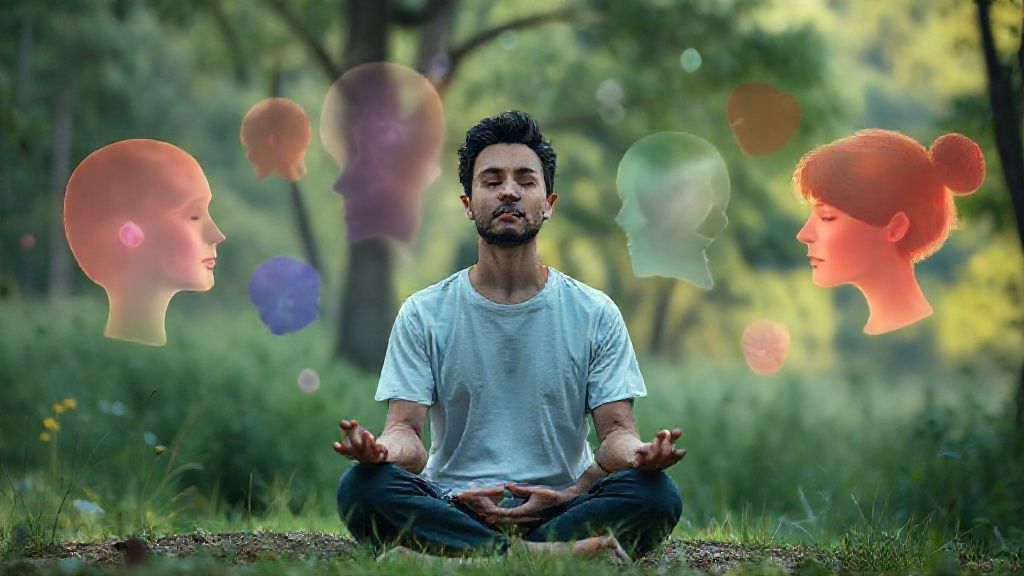
Meditation is the practice of training your awareness to better understand, manage, and respond to your emotions. It’s not about eliminating feelings or becoming a blank slate. True emotional health is about changing your relationship with your feelings, leading to greater emotional resilience, reduced reactivity, and a profound sense of inner peace. In this guide, we’ll explore the fascinating science behind this connection, provide you with practical techniques for navigating specific emotions, and show you how to build a sustainable practice for lifelong balance.

The Science of Meditation and Your Emotional Brain
You might wonder how simply sitting in silence can possibly tame a tidal wave of emotion. The answer lies within the very structure of your brain. Neuroscience has shown that meditation has a tangible, physical impact on the regions that govern our emotional lives.
Two key players are the amygdala 最佳心理健康应用程序 prefrontal cortex. The amygdala is your brain’s alarm system, triggering the fight-or-flight response at the first sign of threat. The prefrontal cortex is the wise leader, responsible for rational decision-making, self-control, and emotional regulation. When you get cut off in traffic, it’s your amygdala that fires up the rage, while your prefrontal cortex is supposed to step in and remind you that honking your horn for a full minute might be an overreaction.
Regular meditation strengthens the prefrontal cortex and calms the reactivity of the amygdala. Think of it as building a bigger, stronger “pause button” between a triggering event and your reaction. This process is powered by neuroplasticity – your brain’s remarkable ability to rewire itself based on your experiences and repeated behaviors. By consistently practicing mindful awareness, you are literally carving new neural pathways that favor calm and clarity over chaos and reactivity. To begin this journey of reshaping your brain, understanding 何为引导式冥想 can be an excellent first step.
How Meditation Transforms Your Relationship with 5 Key Emotions
Meditation isn’t a one-size-fits-all solution, but a versatile toolkit. Let’s explore how it can help you navigate some of the most common and challenging emotional landscapes.
Taming Anxiety and Worry
Anxiety often feels like a future-oriented monster, feeding on “what if” scenarios. Mindfulness meditation pulls you out of that imagined future and into the safety of the present moment. By anchoring your attention on your breath or bodily sensations, you create a critical space between yourself and your anxious thoughts. You learn to see them as mental events—clouds passing in the sky—rather than absolute truths that demand your immediate attention. This shift doesn’t make the thoughts disappear, but it dramatically reduces their power over you. For immediate relief, try ,你可以尝试, or if you’re pressed for time, a quick 5-minute anxiety meditation can work wonders.
Cooling Down Anger and Frustration
Anger is a fiery, physical emotion. Meditation teaches you to turn your awareness inward to observe the raw data of anger—the clenched jaw, the hot face, the rapid heartbeat—without fueling the story that’s causing it. This act of non-judgmental observation allows the physiological wave of anger to rise, peak, and pass through you without compelling you to lash out. It gives you the precious seconds needed to choose a more skillful response. A powerful practice for this is using a 放下的冥想脚本 to consciously release the tension.
Lifting the Fog of Sadness
Sadness and depression are often accompanied by rumination—a repetitive loop of negative thoughts. Meditation helps you break this cycle by allowing you to acknowledge the feeling of sadness with kindness, without getting lost in the narrative behind it. It fosters an attitude of self-compassion, reminding you that “this is a moment of suffering, and it’s okay.” This approach can prevent sadness from deepening into a prolonged state of despair. For those seeking targeted support, explore our guide on the best meditation practices for depression, or use a 获取正向能量的引导式冥想 to gently cultivate a brighter mindset.
Cultivating Joy and Gratitude
Meditation isn’t only for difficult emotions; it’s also a powerful tool for amplifying positive ones. Practices like loving-kindness meditation actively train the mind to cultivate feelings of joy, compassion, and gratitude. By deliberately directing well-wishes towards yourself and others, you strengthen the brain circuits associated with happiness, making it easier to notice and savor life’s simple pleasures. You can start this practice with our 慈心冥想引导词.
Finding Calm in the Chaos
For general stress management and emotional regulation, meditation is your anchor in the storm. It builds your baseline resilience, so you’re less easily thrown off balance by daily hassles. A consistent practice helps you maintain an inner steadiness, allowing you to respond to chaos with clarity rather than contributing to it. A great foundation is a 10分钟镇静正念冥想. When stress hits unexpectedly, you can reset your nervous system in moments with a 。如需稍长的接地练习,我们提供.

Your Toolkit: Meditation Practices for Emotional Mastery
Now that we understand the “why,” let’s dive into the “how.” Here are three foundational practices to build your emotional mastery.
慈心冥想专注于培养对自己和他人的善意、仁慈与温暖。这种练习可以增强共情能力、减少负面情绪并改善人际关系。如果您有兴趣了解此练习的结构,探索
This is the cornerstone of emotional awareness. The simple act of focusing on the natural rhythm of your inhalation and exhalation trains the mind to be present. When an emotion arises, you notice it, label it (“ah, this is anxiety”), and gently return your focus to the breath. This builds the “muscle” of awareness that is essential for all emotional regulation. To get started, follow along with our simple 10-minute breathing meditation script.
Body Scan for Somatic Awareness
Emotions don’t just live in the mind; they manifest as physical sensations in the body. Anxiety might be a knot in your stomach, while anger could be tension in your shoulders. The body scan practice involves systematically moving your attention through different parts of your body, observing any sensations without judgment. This helps you release stored emotional tension and connects you to the somatic wisdom of your emotions. You can practice this anytime with our handy 5-minute body scan meditation PDF.
Guided Meditation for Specific Needs
If sitting in silence feels daunting, guided meditations are an excellent resource. A skilled teacher’s voice can provide structure, encouragement, and specific imagery to help you navigate your inner world. They are particularly useful when you’re dealing with a strong, specific emotion and need directed support. To explore a variety of options, check out our curated list of the 最适合初学者的引导式冥想.
Building a Sustainable Emotional Resilience Habit
The key to unlocking the long-term benefits of meditation for your emotions is consistency, not perfection. Here’s how to make it a sustainable part of your life:
- **从小处着手:** Even three to five minutes a day is enough to build the habit and begin rewiring your brain.
- Attach it to a Habit: “I will meditate for 5 minutes after I brush my teeth in the morning.” This technique, known as habit stacking, makes it stick.
- **善待自己:** Your mind will wander. That’s not a failure; it’s the practice. The magic is in gently bringing it back, again and again.
- Find Your Time: A easy 5-minute morning meditation can set a calm tone for your entire day. Conversely, an evening practice like a 助眠睡前冥想 can help you process the day’s emotions and ensure restful sleep.

常见问题解答
主要目标是通过专注呼吸或身体感受等方式,将觉察锚定于当下,培养平静、不反应的心智状态。这种练习帮助你在面对生活挑战时,以更大的智慧回应,而非依从惯性模式冲动反应。
答: Yes, numerous studies show that meditation can be a powerful complementary tool for managing symptoms of anxiety and depression by reducing reactivity to negative thoughts and fostering self-compassion. It is most effective when used alongside professional medical advice.
Q: What is the best type of meditation for emotions?
答: Mindfulness Meditation and Loving-Kindness (Metta) Meditation are widely regarded as the most effective for emotional regulation. Mindfulness builds awareness, while Metta actively cultivates positive emotional states like compassion and joy.
Q: How long does it take for meditation to improve emotional control?
答: While a sense of calm can be felt after a single session, most people notice tangible changes in their emotional reactivity within 4 to 8 weeks of consistent, daily practice. The key is building the neural pathways for a calmer default state.
Q: I get too emotional when I meditate, is that normal?
答: Absolutely. Meditation can create a safe space for suppressed emotions to surface. This is a normal and healthy part of the process—a sign that you are finally allowing yourself to feel and release what has been stored away. Be gentle with yourself during these moments.
总结与行动呼吁
Your emotional world is not your enemy. It is a rich, complex, and vital part of your human experience. Meditation provides the map and the tools to navigate this inner landscape with skill, compassion, and balance. It empowers you to move from being controlled by your emotions to understanding and working with them as valuable sources of information.
通往情绪平衡之旅始于一次呼吸。探索我们的资源库,找到最适合您的练习方式。准备好深入体验并获得志同道合社群的支持了吗? 加入我们的免费冥想课程 培养受益终身的持久习惯,彻底改变您与情绪的关系。.