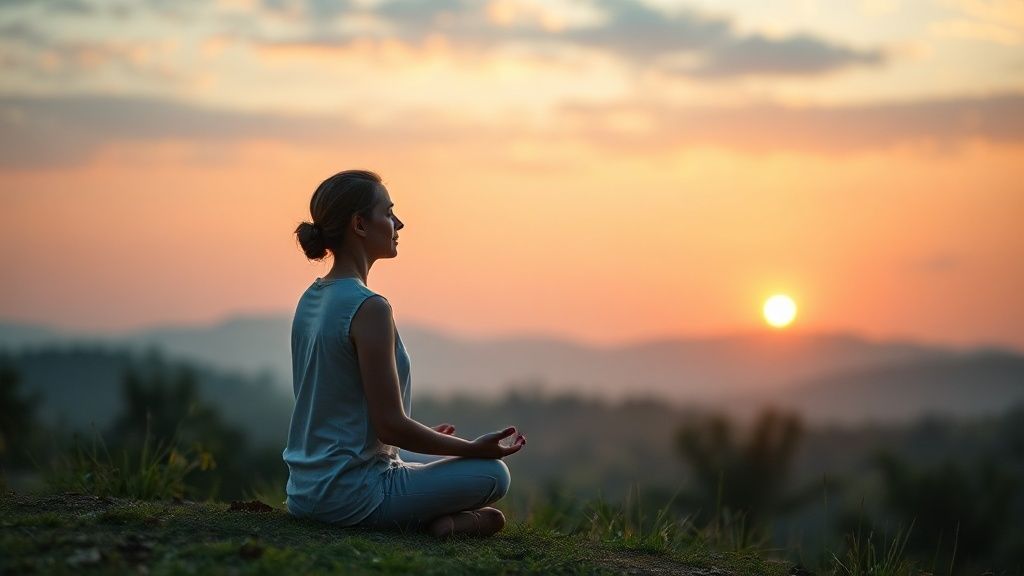
我每天应该冥想多久?找到您的完美练习
You’ve heard meditation is life-changing, but when you finally sit down, cross your legs, and close your eyes, one thought dominates: “Is this almost over?” If you’ve ever wondered whether you’re meditating “correctly” or for the “right” amount of time, you’re not alone. This question stops many potential practitioners before they even establish a consistent routine.
The best daily meditation time is the one you can consistently maintain. For beginners, this is typically 5-10 minutes. For established practitioners, 20-30 minutes is common. The key is consistency over duration—a regular 5-minute practice delivers more benefits than an occasional hour-long session.
This comprehensive guide will help you find your ideal meditation time based on your experience level, goals, and lifestyle. We’ll explore practical routines, scientific insights, and actionable strategies to transform your practice from a chore into a cherished daily habit.

Why Consistency Trumps Marathon Sessions
Many new meditators approach the practice with an all-or-nothing mindset, believing that longer sessions automatically mean better results. Neuroscience tells a different story. The brain learns through repetition, not duration. A short, daily practice creates stronger neural pathways than sporadic marathon sessions.
When you meditate consistently—even for just a few minutes—you’re training your brain’s neuroplasticity. Regular practice strengthens the prefrontal cortex (responsible for focus and decision-making) and shrinks the amygdala (the brain’s fear center). This rewiring happens gradually through repetition, much like building muscle.
Consider “meditation momentum”—the psychological benefit of maintaining an unbroken chain of practice. When you commit to a realistic duration that fits your schedule, you’re more likely to stick with it. This consistency builds confidence and makes meditation an integrated part of your identity, rather than another item on your to-do list.
Burnout is the silent killer of meditation practices. Ambitious beginners often start with 30-minute sessions, struggle through them, and eventually abandon the practice entirely. By starting with an achievable time commitment, you avoid associating meditation with frustration and instead build positive reinforcement with each successful session.
A Beginner’s Blueprint: Starting Small & Building Up
If you’re new to meditation, the most important principle is gentleness. Your practice should feel sustainable, not strenuous. The goal isn’t to empty your mind or achieve enlightenment in your first week—it’s simply to show up consistently.
The 5-Minute Foundation
Five minutes might seem insignificant, but it’s the perfect foundation for a lasting meditation habit. This duration is long enough to settle your nervous system but short enough to eliminate excuses. Nearly everyone can find five minutes in their day.
Scientifically, five minutes of meditation can significantly lower cortisol levels (the stress hormone) and reduce blood pressure. It gives your mind enough space to notice its patterns without becoming overwhelmed. This brief daily pause creates a “reset button” for your nervous system.
The psychological benefit of completing a five-minute session cannot be overstated. Each successful practice builds self-trust and reinforces your identity as “someone who meditates.” This positive reinforcement is more valuable than forcing longer sessions that leave you feeling inadequate.
For an excellent starting point, try this 如果你时间紧迫,可以通过短时课程建立稳定习惯。立即探索我们的 to ease into the practice with gentle guidance.
Graduating to 10 Minutes
Once you’ve comfortably maintained a 5-minute practice for 2-3 weeks, consider expanding to 10 minutes. This transition typically happens naturally—you might find yourself wanting to linger in the peaceful space you’ve created.
The extra five minutes allows for deeper exploration of your inner landscape. Where 5 minutes might only allow you to notice your breath, 10 minutes provides space to observe thought patterns, bodily sensations, and emotional states with more clarity. This extended awareness builds your “mindfulness muscle” more substantially.
Many practitioners find that 10 minutes represents the sweet spot where meditation transitions from a stress-management tool to a consciousness-expanding practice. The additional time often reveals subtle layers of experience that shorter sessions miss.
If you’re ready for a 10-minute session focused on calm, follow our 10 minute calming meditation.

Tailoring Your Time: Meditation for Specific Goals
Different meditation durations serve different purposes. Think of your practice time as tools in a toolkit—you select the right one for the job at hand. Here’s how to match your session length to your specific intentions.
For Instant Calm & Grounding (1-5 Minutes)
When stress strikes at work or in daily life, you don’t need an extended session to find center. Brief “meditation snacks” throughout your day can prevent stress accumulation and maintain emotional equilibrium.
One to three minutes of focused breathing activates the parasympathetic nervous system, shifting your body from “fight or flight” to “rest and digest.” This brief pause can interrupt anxiety cycles before they gain momentum. The key is catching the stress response early.
These mini-sessions work because they’re accessible. You can practice them before meetings, in line at the grocery store, or during any brief transition throughout your day. This approach integrates mindfulness into your life rather than compartmentalizing it as a separate activity.
Need to reset in a moment of overwhelm? This 一分钟接地冥想引导词 is your go-to tool.
For Anxiety & Overthinking (10-20 Minutes)
Anxious minds require more time to settle. While brief sessions can provide immediate relief, longer practices create lasting changes in how your brain responds to triggers.
Ten to twenty minutes allows the nervous system to fully downregulate. The first few minutes are often spent “arriving”—noticing the busy mind without judgment. The subsequent time allows for deeper settling, where genuine neurological repatterning occurs.
This duration provides space to practice “sitting with” difficult emotions rather than reacting to them. By observing anxiety without engagement, you gradually rewire the brain’s threat detection system. The message becomes: “This discomfort is temporary and manageable.”
To directly address anxious thoughts, explore our 最佳焦虑缓解引导冥想 or the deeper 20分钟焦虑与思虑过多引导冥想.
For Deep Sleep & Relaxation (10-20 Minutes)
Sleep meditation requires sufficient time for the body to transition from wakefulness to drowsiness. The 10-20 minute range aligns with the natural time it takes the nervous system to wind down before sleep.
Unlike daytime meditation, sleep practices often involve more guidance and visualization. The extended duration allows for progressive body scans, detailed imagery, and gradual relaxation of each muscle group. This systematic approach signals safety to the primal brain, enabling sleep.
Consistency is particularly important with sleep meditation. Practicing around the same time each night creates powerful circadian cues. Your body learns to associate the practice with sleep onset, making the process more efficient over time.
A pre-bedtime ritual is key. Unwind with our 10分钟睡眠冥想 or the longer, deeply soothing 引导式疗愈睡眠冥想.
Sample Meditation Schedules for Your Week
Theory is helpful, but implementation is everything. These sample schedules transform abstract recommendations into practical routines you can start today.
Example 1: The Beginner’s Week (5-10 mins daily)
Monday: 5-minute morning breathing meditation
Tuesday: 5-minute evening body scan
Wednesday: 7-minute guided morning meditation
Thursday: 7-minute mindful walking break during lunch
Friday: 10-minute guided meditation after work
Saturday: 10-minute silent sitting practice
Sunday: 5-minute gratitude meditation
此计划在保持易行性的同时逐步建立信心。多样化的安排避免了枯燥感,同时培养了每日练习的核心习惯。.
示例二:减压周(结合5分钟接地练习与15分钟焦虑缓解课程)
Monday: 下班后进行15分钟专注焦虑缓解的冥想
Tuesday: 全天分散安排三次3分钟的呼吸休息
Wednesday: 15分钟身体扫描以释放紧张
Thursday: 五次1分钟正念提醒(手机通知响起时暂停片刻)
Friday: 15分钟慈心冥想
Saturday: 20分钟自然声音冥想
Sunday: 10分钟反思与意图设定
此方法结合了简短的“压力急救”课程与针对焦虑根源的较长练习。多样化的安排确保您同时掌握预防与干预的工具。.
对于您的较长时间练习,这段 15分钟引导式冥想 在深度与易行性之间提供了完美的平衡。.

支持您练习的必备工具
合适的资源能将您的冥想从一项挣扎转变为一片静修之地。这些工具消除了障碍并提升了持续性。.
引导式冥想与脚本
尤其对于初学者,引导式冥想提供了必要的结构。当您走神时,一位熟练导师的声音能锚定您的注意力,提供新的视角,并介绍多样化的技巧。.
外部指导减轻了“必须做对”的压力,让您能单纯地接受练习。这种被动的方式反而能带来更深层次的投入,因为您评判性的思维可以休息。.
许多练习者发现,在不同导师和风格之间轮换可以防止停滞不前。每位引导者都带来独特的语言和侧重点,照亮冥想体验的不同方面。.
如果您更倾向于主导自己的练习,请使用我们的 放松引导冥想脚本.
使用应用程序追踪时间
冥想应用程序提供了结构、社群和进度追踪功能。仅计时器功能就消除了您不断看钟的困扰,而统计数据则可通过可见的连续记录和里程碑来激励您。.
优秀的应用程序提供精心设计的课程,系统地培养您的技能。这种渐进式方法避免了随意选择冥想而缺乏连贯发展的常见陷阱。.
许多应用程序还包含提醒系统,有助于将您的练习固化到日常作息中。这些温和的提示利用了习惯养成科学,使冥想变得自动化而非可有可无。.
应用程序可以提供结构。在我们的列表中探索优质选择: 类Headspace应用评测.
常见问题解答
问:每天冥想5分钟足够吗?
答: 是的,每天5分钟是建立可持续习惯并体验减轻压力、提升专注力等益处的绝佳且有效的起点。坚持短暂的练习比不规律地进行长时间课程更有价值。.
问:一天中冥想的最佳时间是什么时候?
答: 最佳时间是您最能保持规律的时间。许多人偏爱早晨,为一天定下平静的基调;而另一些人则发现晚间练习有助于睡眠。尝试探索最适合您自身节奏的时间。对于晨间例行程序,可以尝试这段 5分钟晨间冥想.
问:冥想需要多长时间才能见效?
答: 您可能在一次练习后立即感到更平静,但大脑结构和反应能力的持久改变通常需要4-8周的持续练习。其益处如同健身一样是逐渐累积的。.
问:冥想时我感到焦虑。我该怎么办?
答: 这很常见,特别是如果您试图用冥想来压制情绪而非观察它们。请缩短练习时间,并使用专门为缓解焦虑设计的引导式冥想。我们建议从这段温和的 5分钟焦虑缓解冥想.
总结与行动呼吁
开始。.
对“完美”冥想时长的追求常常会变成另一种形式的努力——而这正是冥想试图缓解的心态。真正的答案并非一个普适的数字,而是一种个人的承诺:无论今天对你而言情况如何,都要定期练习。.
您理想的练习时长将随着您的生活状况、压力水平和经验而演变。为提升专注力而冥想的学生,与为管理团队压力而冥想的高管,或寻求晚间平静的父母,所需的时间安排各不相同。请尊重您当前的阶段,而非与理想化的标准比较。. 停止担忧时间,开始体验益处。您的旅程始于当下。. 从以上链接中选择一段引导式冥想,承诺您的练习时间,并从今天开始。.