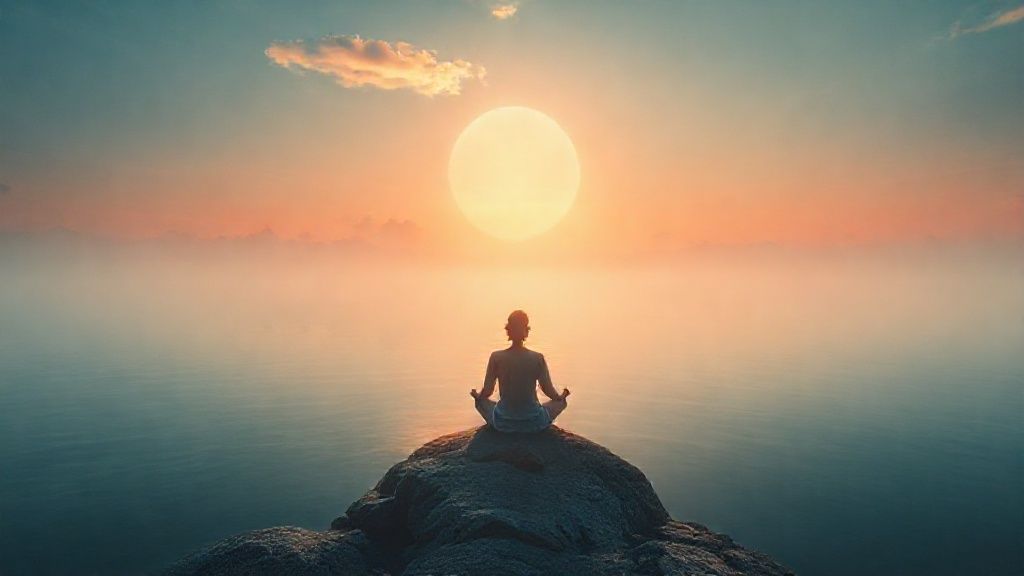
Find Your Calm: A Complete Guide to Guided Meditation for Inner Peace
In today’s fast-paced world, finding a moment of true peace can feel impossible. Between constant notifications, overflowing to-do lists, and the general noise of modern life, our minds are often anything but peaceful. But what if you could access a deep sense of calm anytime, anywhere, regardless of your circumstances?
Guided meditation for inner peace is a practice where a narrator leads you through a series of visualizations and instructions designed to quiet the mind, release stress, and cultivate a lasting sense of serenity from within. Unlike trying to meditate alone, you have an expert voice gently steering you away from distracting thoughts and toward a state of profound relaxation.
This comprehensive guide will walk you through exactly what guided meditation is, its profound benefits for inner peace, and how you can start your own simple, yet effective practice today. Whether you have five minutes or fifty, you’ll discover how to tap into the peace that already exists within you.

What Is Guided Meditation and How Does It Foster Peace?
At its core, guided meditation is the practice of being led into a meditative state by another person’s voice, either in person or through a recording. Think of it as having a personal guide for your mind—someone who knows the terrain of consciousness and can help you navigate toward tranquility when your own mental maps fail you.
How does this differ from silent meditation? While traditional silent meditation requires you to direct your own focus (often on the breath or a mantra), guided meditation provides a structured pathway. The narrator’s voice becomes your anchor, giving your busy mind something specific to focus on rather than wandering into anxiety or distraction. This makes it particularly ideal for beginners who often struggle with the question, “Am I doing this right?”
The science behind why this works is fascinating. When you engage in guided meditation, several things happen in your nervous system:
- Your brain waves shift from busy beta waves to calmer alpha and theta waves, associated with relaxation and creativity
- Your parasympathetic nervous system activates, slowing your heart rate, lowering blood pressure, and reducing cortisol (the stress hormone)
- The default mode network—the part of your brain responsible for mind-wandering and self-referential thoughts—becomes less active
This neurological shift creates the perfect conditions for inner peace to emerge naturally. The guided imagery and soothing narration provide just enough structure to keep your mind from spiraling into worry, while allowing enough space for deep relaxation to occur.
For a foundational understanding of the practice, learn more about 何为引导式冥想.
The Life-Changing Benefits of a Peaceful Mind
Why invest time in cultivating inner peace? The benefits extend far beyond simply feeling calm in the moment. Regular practice of **引导冥想以寻求内心平静** can transform your relationship with yourself and the world around you.
Reduced Stress and Anxiety Levels
When you practice guided meditation consistently, you’re essentially training your nervous system to respond differently to stressors. Instead of automatically reacting with fight-or-flight, you develop what psychologists call “stress resilience”—the ability to encounter challenging situations without being overwhelmed by them. Studies have shown that regular meditation practice can reduce anxiety symptoms by up to 60%.
Improved Emotional Regulation and Resilience
Inner peace isn’t about never feeling difficult emotions—it’s about having the capacity to experience them without being controlled by them. Guided meditation helps you develop what’s known as “meta-awareness,” the ability to observe your thoughts and feelings from a slight distance. This creates space between stimulus and response, allowing you to choose how you want to react rather than being hijacked by emotional triggers.
Enhanced Focus and Mental Clarity
A peaceful mind is a clear mind. When mental chatter subsides, your cognitive resources are freed up for what truly matters. Many people report improved concentration, better problem-solving abilities, and enhanced creativity after establishing a regular meditation practice. This isn’t just subjective feeling—research shows meditation can physically thicken the prefrontal cortex, the area of the brain associated with executive function.
Better Sleep Quality
The relaxation response triggered by guided meditation is the perfect antidote to the hyper-arousal that often causes insomnia. By calming the nervous system before bed, you create ideal conditions for falling asleep faster and experiencing deeper, more restorative sleep. The practice of releasing thoughts and bodily tension makes it easier to transition into sleep naturally.
A Stronger Connection to Your Inner Self
Perhaps the most profound benefit of cultivating inner peace is the rediscovery of who you are beneath the roles, responsibilities, and reactions of daily life. When the mental noise quietens, you connect with a deeper part of yourself—a place of wisdom, intuition, and inherent worth that exists regardless of external circumstances.

How to Practice Guided Meditation for Inner Peace: A Step-by-Step Guide
Ready to begin your journey toward lasting peace? Follow this simple step-by-step approach to establish your practice.
Step 1: Find Your Quiet Space
You don’t need a perfectly silent meditation room, but choosing a relatively quiet space where you won’t be interrupted for the duration of your practice is important. This could be a corner of your bedroom, a comfortable chair in your living room, or even your parked car during a lunch break. The goal is to create an environment that signals to your brain, “It’s time to relax.”
Step 2: Get Comfortable (You Don’t Need to Sit Cross-Legged)
The stereotypical lotus position isn’t necessary for effective meditation. What matters is that you’re comfortable enough to remain still but alert enough not to fall asleep. You can:
– Sit in a chair with your feet flat on the floor
– Sit on a cushion with your back supported against a wall
– Lie down if sitting is uncomfortable (though be aware this might make you sleepy)
The key is maintaining a relatively straight spine to facilitate easy breathing.
Step 3: Choose Your Guided Session
This is where you select the **引导冥想以寻求内心平静** that matches your available time and current needs. If you’re pressed for time, try our 5分钟引导冥想. For a more immersive experience, explore our 20分钟引导冥想.
Step 4: Focus on the Guide’s Voice and Your Breath
Once you begin the recording, allow the narrator’s voice to become your anchor. Don’t try to control your experience or make anything special happen. Simply follow the instructions as best you can. When your mind wanders (which it will), gently return your attention to the guide’s voice and the physical sensation of your breath.
Step 5: Gently Return Your Wandering Mind (It’s Normal!)
This might be the most important step: understanding that mind-wandering isn’t failure—it’s part of the process. Each time you notice your attention has drifted and gently bring it back to the meditation, you’re strengthening your “attention muscle.” This act of noticing and returning is where the real transformation happens.
为您寻找合适的引导式冥想
With countless meditation resources available, finding approaches that resonate with you personally is key to maintaining a consistent practice.
By Length: Fitting Peace into Your Schedule
Short Sessions (5-10 minutes): Perfect for busy schedules or when you need a quick reset. These brief practices can be surprisingly powerful for interrupting stress cycles and returning to center. For a quick reset during a busy day, use our 十分钟镇静冥想. Ease into your morning with a short morning meditation.
Medium Sessions (15-20 minutes): Ideal for establishing a daily practice that creates lasting neurological changes. This length allows time to move through initial resistance and settle into deeper states of relaxation.
Long Sessions (30+ minutes): 当您有时间进行深入探索时,这些延展练习非常有益。这些深度练习有助于进入深层的平静与洞察状态。.
按特定需求:针对性平静练习
用于管理焦虑: 如果焦虑思绪阻碍了您的平静,我们的 针对焦虑的引导冥想 可以成为强有力的工具。这些课程通常包含处理担忧思绪和焦虑身体感受的特定技巧。.
用于深度放松: 为释放身体紧张和精神疲劳,请练习专门 镇静引导冥想 旨在激活全身放松反应。.
用于睡眠准备: 通过一项 助眠睡前冥想 帮助您的神经系统从清醒状态过渡到休息状态,从而在睡前培养平静。.

深化练习:实现持久宁静的工具
一旦您建立了基础的引导冥想练习,这些工具可以帮助您深化内在平静的体验。.
使用冥想脚本进行自主练习
熟悉引导冥想后,您可以尝试使用冥想脚本。这些书面指南让您无需录音即可带领自己完成冥想,从而更灵活地根据当下确切需求定制练习。从我们的免费 放松引导冥想脚本.
开始。
将正念练习融入日常生活 真正的内在平静不仅限于冥想时的体验——它是一种可以融入每一刻的品质。正念练习帮助您将冥想益处延伸到日常活动中。从我们的 5分钟正念活动.
中学习简单技巧,随时随地均可练习。
探索实用的冥想应用程序 尽管本指南提供了入门所需的一切,但冥想应用程序可提供额外的结构、多样性和追踪功能。在我们的 如Headspace和Calm等应用程序评测.
中比较热门选项,找到可能支持您练习的应用。
关于平静引导冥想的常见问题
引导冥想需要多长时间才能对内在平静产生效果?.
一些益处——如即时放松和压力减轻——在一次课程后即可感受到。然而,持久改变您的基础平静水平通常需要数周持续练习才能形成。可以将其比作体育锻炼:虽然一次锻炼后您可能感觉良好,但真正的转变来自于定期训练。
我在冥想时无法停止思绪。我做错了吗?.
这或许是初学者最常见的担忧,而答案绝对是:没有!冥想的目的不是停止思绪——而是改变您与思绪的关系。每当您注意到思绪游离并温和地回到冥想时,您正是在练习内在平静的核心技能:即承认思绪而不被其带走的能力。
一天中何时进行平静冥想最佳? 最佳时间就是您能持续练习的任何时间。话虽如此,许多人发现晨间冥想有助于为全天设定平静、专注的基调,而晚间练习则有助于释放一天累积的压力。若想以练习开启一天,请尝试我们的.
10分钟晨间冥想
引导冥想有助于缓解焦虑和抑郁吗? 正念是一种强大的辅助练习,有益于整体心理健康,并常用于治疗环境。它可以帮助个体以不同的方式看待自己的思想和情绪。如需特定技巧,您可以探索.

结论与行动号召
是的,大量研究表明,冥想可以成为应对焦虑和抑郁的宝贵辅助练习。通过训练大脑以不同方式对待思绪和情绪,冥想可以降低焦虑和抑郁发作的强度与持续时间。关于具体技巧,请在我们的指南中进一步探索. Guided meditation for inner peace 寻找内在平静并非要为生活增添新事物——而是去发现已然存在于压力、思绪和忙碌层层覆盖之下的本质。.
仅仅是帮助您忆起那份平静、专注的临在状态——那正是您的真实本性——的工具。.
准备好开始了吗? 通往更平静生活的旅程无需剧烈改变或完美条件。它始于一个简单的决定:按下引导冥想的播放键,并允许自己全然存在。 立即通过我们最受欢迎的课程开启您的旅程:.
开始这段 calming guided meditation.
元数据开始—
类别:初学者正念
探索我们完整的资源库,以支持您的正念练习,并发现静候您内心的深层平静。
DISPLAY_TITLE: 寻获平静:内在平静引导冥想完全指南
SEO_TITLE: 内在平静引导冥想 | 初学者完全指南.
META_DESC: 探索内在平静引导冥想如何改变您的生活。通过我们的分步初学者指南减轻压力、寻获平静并培养持久宁静。
IMG_PROMPT: 宁静之人在日出时分的自然环境中平和冥想,双眼轻闭,面容安详满足,晨光柔和,氛围静谧
IMG_ALT: 日出时分在自然环境中练习内在平静引导冥想的人
IMG_TITLE: 内在平静引导冥想 – 视觉图
IMG_CAPTION: 探索内在平静引导冥想的变革力量
—元数据结束—