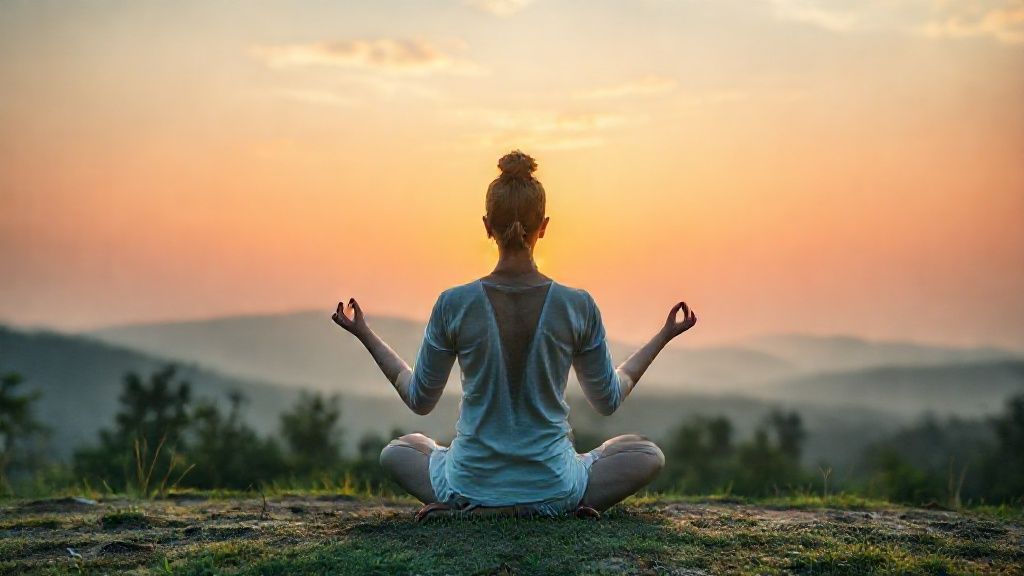
Finding Your Foundation: The Ultimate Guide to Buddhist Meditation Posture
Have you ever tried to meditate but found your mind racing, your back aching, or your legs falling asleep? You’re not alone. Many practitioners struggle with physical discomfort that distracts from their mental practice. The secret to a deeper, more comfortable meditation might not be in your mind, but in your posture.
A Buddhist meditation posture is a specific alignment of the body designed to promote alertness, stability, and mental clarity. The most recognized postures include the full lotus, half-lotus, Burmese, and Seiza, all of which prioritize a straight, relaxed spine to facilitate the free flow of energy and awareness.

Why Posture Is the Cornerstone of Buddhist Meditation
In Buddhist tradition, the body and mind are not separate entities but interconnected aspects of our experience. The physical container we create through posture directly influences the quality of our mental state. Think of your posture as the foundation of a house—without a stable base, the entire structure becomes shaky and unstable.
The Link Between Spine and Mind
Your spinal alignment serves as the central channel connecting physical stability to mental clarity. When you sit with a slumped back, your breathing becomes constricted and your mind tends toward drowsiness or distraction. An upright spine supports an alert, attentive mind by allowing your diaphragm to move freely and your nervous system to remain balanced between relaxation and vigilance.
Stability for Inner Exploration
Physical stability creates a container for emotional and mental stability. When your body feels grounded and secure, your mind can more easily settle into the present moment. This external steadiness provides the confidence to explore internal landscapes—thoughts, emotions, and sensations—without being swept away by them.
Facilitating the Flow of Energy (Prana)
In many Eastern traditions, the body contains subtle energy channels through which life force (known as prana or chi) flows. A proper meditation posture helps keep these channels open and aligned, allowing energy to circulate freely rather than becoming blocked or stagnant. This energetic balance supports deeper states of concentration and insight.
The 7 Essential Points of Posture: A Traditional Framework
The Buddha himself provided guidance on meditation posture, and these seven points have been refined over centuries by meditation masters across Buddhist traditions. Together, they create an integrated system that supports both physical comfort and mental awakening.
1. The Foundation: Seat & Legs (The Asana)
Your sitting base determines everything that follows. The ideal position provides three points of contact with the ground, creating a stable triangular foundation. Here are the primary positions, from most to least traditional:
- Full Lotus (Padmasana): Each foot rests on the opposite thigh, soles facing upward. This creates an extremely stable base but requires significant hip flexibility.
- Half-Lotus (Ardha Padmasana): One foot rests on the opposite thigh, while the other foot rests beneath the opposite knee. This offers similar stability with less flexibility required.
- Burmese Position: Both legs are folded in front of you with feet resting on the floor. This is often the most accessible cross-legged position for Western practitioners.
- Seiza (Kneeling): Kneeling with a meditation bench or cushion between your legs. Excellent for those with hip issues.
- Using a Chair: Sitting forward on a chair with feet flat on the floor and spine unsupported. Perfect for those with physical limitations.
Remember: comfort and a stable base are more important than achieving a “perfect” pose.
2. The Pillar: A Straight, Relaxed Spine
This is arguably the most crucial element. Your spine should be upright but not rigid, maintaining its natural S-curves. Imagine your vertebrae stacking gently one upon another, with the crown of your head reaching toward the sky. To find this alignment, gently rock forward and backward until you find the point where your body naturally balances with minimal muscular effort.
If you’re struggling with physical tension, our guided meditation for releasing physical tension can help you develop greater body awareness.
3. The Gateway: Hand Position (Mudra)
The classic Cosmic Mudra involves resting your hands in your lap, right palm cradled in left palm, with thumbs lightly touching to form an oval. This position symbolizes the integration of wisdom (right hand) and method (left hand), with the thumb connection maintaining just enough tension to keep you alert. Your hands should rest comfortably against your lower abdomen, about two finger-widths below your navel.
4. The Window: Softly Gazing Eyes
In most Buddhist traditions, eyes remain partially open, gazing softly downward at a 45-degree angle about three to four feet in front of you. This prevents drowsiness and maintains connection with your environment while minimizing visual distraction. If keeping eyes open feels too stimulating, you can begin with closed eyes and gradually work toward this practice.
5. The Alignment: Chin Slightly Tucked
Gently tucking your chin aligns your cervical spine and supports alertness. Imagine you’re holding a peach between your chin and your throat—enough space to breathe, but not so much that your head juts forward. This subtle adjustment prevents neck strain and supports the natural curvature of your spine.
6. The Anchor: Relaxed Shoulders
Many of us carry tension in our shoulders. Roll your shoulders up toward your ears, then back and down, settling into a natural, relaxed position. Your shoulder blades should gently draw toward each other, opening your chest slightly. This position allows for full, unrestricted breathing.
7. The Lock: Tongue on the Roof of the Mouth
Place the tip of your tongue lightly against the roof of your mouth, just behind your front teeth. This subtle energetic seal helps prevent excessive salivation and connects the central energy channels in your body. In some traditions, this is believed to prevent the dissipation of subtle energies during meditation.

Choosing Your Perfect Posture: A Practical Guide
With so many options, how do you choose what’s right for your body? Let’s explore which positions work best for different needs and body types.
For the Flexible Practitioner: Lotus & Half-Lotus
If you have open hips and flexible joints, the lotus positions offer exceptional stability. The locked leg position creates an immovable base that can support long meditation sessions. However, never force these positions—the goal is comfort, not achievement. If you feel any sharp pain in your knees or hips, immediately switch to a gentler position.
For Most Meditators: The Burmese Position
The Burmese position offers the stability of cross-legged sitting without requiring extreme flexibility. Both knees can comfortably reach the ground, creating a solid triangular base. This is often the ideal starting point for those new to floor sitting and remains the preferred position for many experienced practitioners.
For Those with Knee or Hip Issues: Seiza (Kneeling)
The Seiza position removes pressure from the hips and knees by directing your weight downward through your shins. Using a meditation bench elevates your seat, preventing compression in your ankles and feet. This position naturally encourages an upright spine and is excellent for those with physical limitations.
To complement your posture practice, try our 5-minute body scan meditation to develop greater awareness of physical sensations.
Accessible to All: Meditation on a Chair
Chair meditation is a completely valid approach that anyone can practice. Choose a straight-backed chair and sit forward so your spine supports itself. Keep your feet flat on the floor, hip-width apart, with knees directly above ankles. You may place a cushion behind your lower back for support, but avoid leaning heavily against the chair back.
Common Posture Mistakes and How to Fix Them
Even with the best intentions, it’s easy to develop habits that undermine your meditation practice. Here are the most common posture mistakes and how to correct them.
Slouching vs. a Relaxed Spine
The Problem: Collapsing forward, rounding the shoulders, and tucking the pelvis under. This compresses the diaphragm and encourages mental dullness.
The Fix: Imagine a string attached to the crown of your head, gently pulling upward. Rock your pelvis slightly forward until you find the natural balance point where your spine supports itself with minimal effort.
强迫盘莲花(及受伤风险)
The Problem:为达成看似“标准”的冥想姿势而强忍疼痛,可能导致膝盖或髋部损伤。.
The Fix:尊重身体的局限。选择一个能让你在计划冥想时间内舒适安坐的姿势。请记住,稳定与舒适永远比外观更重要。.
紧绷下颌与肩膀
The Problem:无意识地咬紧牙关或将肩膀耸向耳朵,产生不必要的紧张,从而分散冥想注意力。.
The Fix:在冥想期间,定期扫描身体是否有紧张感。有意识地放松下颌,让上下牙齿间留出微小空隙。让双肩从耳侧自然下沉。.
如果身体的紧张源于内心的焦虑,我们的 针对焦虑的引导冥想 可以同时帮助应对两者。.
支持你的练习:辅具与准备
合适的支撑物能将你的冥想体验从挣扎转变为享受。以下是有助于保持正确身体顺位的必备辅具。.
冥想坐垫(蒲团):这些坚实、圆形的坐垫能将臀部垫高至膝盖以上,使骨盆自然前倾。这有助于在无需肌肉用力的情况下,保持脊柱的自然曲线。.
冥想长凳:对于跪姿,冥想长凳能提供极佳的支撑,同时促进脊柱的正确顺位。其倾斜的座位能自动引导骨盆前倾。.
毯子与垫子:在脚踝和膝盖下方铺一张瑜伽垫或地毯可起到缓冲作用,而折叠的毯子可用于调整高度或提供额外支撑。.
如需关于姿势与技巧的个性化指导,可考虑拜访我们推荐的 附近冥想中心.

坐垫之外:融入姿势觉知
正确冥想姿势的益处远不止于正式练习。你在坐垫上培养的觉知,能改变你一整天的体态。.
注意你在电脑前工作、排队或走在街上时的姿势。同样的原则适用:脊柱挺直而放松,双肩从耳侧下沉,下巴微收。这种持续的姿势正念,将你的一整天都转化为练习的机会。.
要了解更多如何将正念融入生活各个方面,请探索我们关于 什么是引导式冥想 的指南,以及它如何支持你的练习。.
常见问题解答
问:佛教冥想姿势中最重要的部分是什么?
答: 挺直而放松的脊柱至关重要,因为它平衡了警觉与放松,使人能更深入地专注。所有其他要素都服务于这一核心顺位。.
问:我无法盘腿坐。坐在椅子上冥想可以吗?
答: 完全可以。姿势的精髓在于脊柱的顺位,而非腿的位置。使用椅子是完全有效且高效的练习方式。许多知名的冥想教师也经常教授椅子冥想。.
问:我应该尝试保持冥想姿势多久?
答: 从小处开始。保持正确的姿势5分钟,胜过痛苦地坚持20分钟。随着身体的适应,逐渐延长静坐时间。你可以 从简短的5分钟引导冥想开始 ,以舒适地建立你的姿势耐力。.
问:姿势真的会影响我的冥想质量吗?
答: 是的,影响显著。一个稳定、舒适的姿势能减少身体上的干扰,让你能将觉知向内聚焦,从而获得更平静、更专注的心境。身体的“容器”直接影响你的心理和情绪体验。要亲身体验这种关联,可以尝试一次 平和冥想 ,其中融入了这些姿势原则。.
结论与行动号召
你的冥想姿势远不止是你如何坐着——它是你整个练习赖以建立的基石。姿势的七个要点构成了一个完整的系统,支持着警觉、稳定和心念的清明。请记住,找到一个可持续且舒适的姿势是一个个人探索的过程,而非达成某种理想化的形式。.
你的姿势是你练习的基石。不要只是阅读——去体验。我们鼓励你今天就开始布置你的座位。要进行融合了这些姿势原则的结构化练习,, 请从这里开始你的引导冥想之旅 ,使用我们为初学者特别设计的课程。.