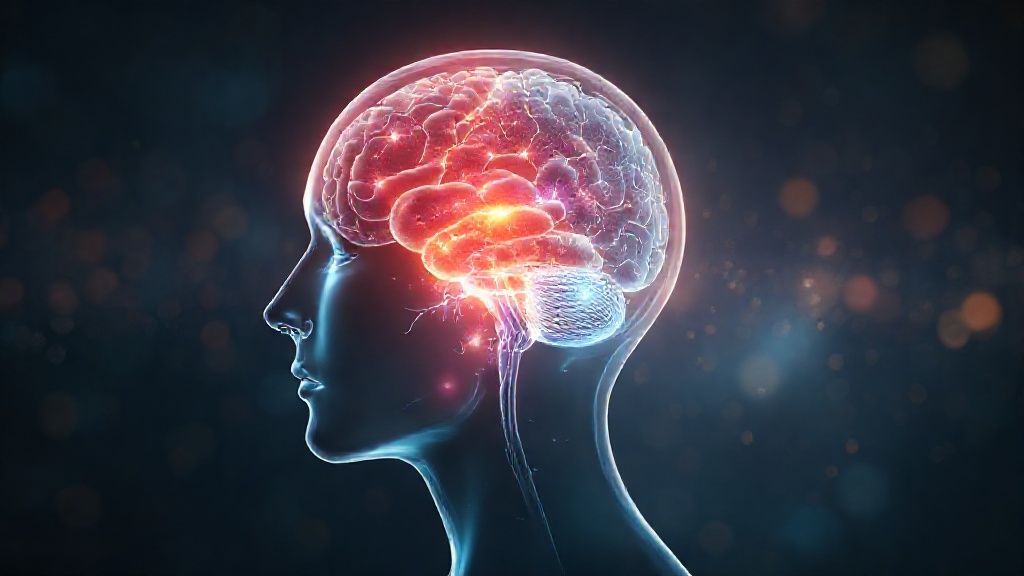
Meditation & Neuroscience: How Rewiring Your Brain Reduces Stress & Boosts Focus
You’re sitting at your desk, trying to focus on an important task, but your mind keeps racing. Thoughts about deadlines, unanswered emails, and that awkward conversation from yesterday swirl in your head. Your shoulders are tense, your breathing shallow. You feel overwhelmed, stressed, and distracted—wishing you could just press a mental “reset” button.
What if you could? Scientific research in neuroscience now reveals that meditation isn’t just a spiritual practice; it’s a powerful tool for physically reshaping your brain. This article will break down the proven neurological changes that occur during meditation, explaining exactly how it reduces stress, enhances focus, and improves emotional regulation. We’ll explore key brain regions affected, the science behind “neuroplasticity,” and provide practical, science-backed ways to start.
The Brain on Meditation: A Neuroscientist’s View
For decades, scientists believed the brain’s structure was largely fixed by adulthood. Today, we know this isn’t true. The brain possesses a remarkable quality called neuroplasticity—the ability to form new neural connections and reorganize itself throughout our lives in response to experience.
Think of your brain as a network of trails in a forest. The paths you walk most frequently become well-worn, clear, and easy to travel. The ones you neglect become overgrown. Your thoughts, habits, and experiences are like walking these trails. Meditation is the deliberate practice of creating new, healthier pathways while allowing the stressful, reactive ones to gradually grow over.

When researchers began studying meditators using fMRI and EEG scans, they discovered consistent, physical changes in several key brain regions. These aren’t subtle shifts in feeling; they are measurable alterations in brain structure and function that correlate directly with the benefits meditators report.
The Prefrontal Cortex: Your Brain’s CEO
Located right behind your forehead, the prefrontal cortex (PFC) acts as your brain’s executive center. It’s responsible for higher-order functions like focused attention, planning, decision-making, and most importantly, emotional regulation. It’s what allows you to think before you act, resist impulsive reactions, and stay focused on your goals despite distractions.
How meditation changes it: Regular meditation practice has been shown to increase the thickness and density of gray matter in the prefrontal cortex. A landmark 2011 study from Harvard University found that just 8 weeks of Mindfulness-Based Stress Reduction (MBSR) led to measurable increases in cortical thickness in the PFC.
The result: A stronger, more active PFC gives you better cognitive control. You become less reactive and more responsive. Instead of being hijacked by emotional storms, you can observe your feelings from a slight distance and choose how to act. This is the neural basis for the increased focus and emotional balance that meditators experience.
To practice strengthening your focus directly, try this scientifically-backed attention exercises.
The Amygdala: Taming the Fear Center
Deep within your brain’s temporal lobes sits a small, almond-shaped structure called the amygdala. This is your brain’s alarm system. It scans incoming stimuli for threats and triggers the fight-or-flight response—releasing stress hormones like cortisol and adrenaline. While essential for survival, an overactive amygdala is linked to anxiety, fear, and chronic stress.
How meditation changes it: Here’s where it gets fascinating. While meditation bulks up the PFC, it has the opposite effect on the amygdala. Studies show that regular meditation reduces gray matter density in the amygdala. Essentially, you’re shrinking your brain’s fear center. Research from Yale University found that mindfulness meditation decreases activity in the default mode network (DMN), the brain network responsible for mind-wandering and self-referential thoughts—which often lean toward the anxious and negative.
The result: A less reactive amygdala means you don’t hit the panic button as easily. The same stressors may occur, but your physiological and emotional response is dampened. You experience lower baseline levels of anxiety and stress.
If you’re feeling high anxiety right now, a short, guided session can help calm the amygdala. We recommend this 10分钟焦虑引导冥想.
The Anterior Cingulate Cortex (ACC) and Insula: Enhancing Self-Awareness
Two other critical players in the meditation story are the Anterior Cingulate Cortex (ACC) 最佳心理健康应用程序 Insula.
该 ACC plays a key role in monitoring attention and detecting conflicts. It helps you notice when your mind has wandered and brings it back to the present moment. The Insula is your interoception center—it allows you to perceive physical sensations from within your body, such as your heartbeat, breath, and butterflies in your stomach.
How meditation changes them: Meditation is like a workout for these regions. Practicing mindfulness—paying attention to the breath and bodily sensations—directly strengthens the neural pathways associated with the ACC and insula. A study published in Psychiatry Research found that after an 8-week mindfulness course, participants showed increased gray matter concentration in the left insula.
The result: You become more adept at noticing when your attention has drifted, making it easier to refocus. You also develop a finer-tuned awareness of your body’s signals, allowing you to catch the physical early signs of stress (like a clenched jaw or tight chest) before they escalate into full-blown anxiety.
A body scan meditation is a perfect way to cultivate the body awareness governed by the insula. Follow along with our free 5-minute body scan meditation script.
Proven Benefits: What the Brain Scans Show
Understanding the neurological shifts is fascinating, but what do they actually feel like in your daily life? The structural changes in these brain regions translate into tangible, life-improving benefits.
Stress Reduction and Emotional Resilience
This is the most well-documented benefit of meditation, and we now understand the precise brain mechanics behind it. The combination of a strengthened prefrontal cortex (for better emotional control) and a calmer amygdala (less stress reactivity) is a powerful recipe for resilience.
- Lower Cortisol: Studies consistently show that meditation practitioners have lower levels of cortisol, the primary stress hormone.
- Reduced Inflammation: Chronic stress causes inflammation, which is linked to numerous diseases. Meditation can reduce the activity of genes associated with inflammation.
- Faster Recovery: You bounce back more quickly from stressful events. The emotional charge of a negative experience dissipates faster, preventing you from ruminating for hours or days.
For a longer session dedicated to building deep emotional resilience, explore this 运动即良药:舒缓神经的温和锻炼.
Sharpened Focus and Concentration
In our distraction-filled world, the ability to sustain attention is a superpower. Meditation is essentially a rep-based workout for your “attention muscle.”
- Reduced Mind-Wandering: By strengthening the ACC, you get better at noticing when your mind has drifted off-task and gently guiding it back. This breaks the cycle of involuntary mind-wandering that plagues so many of us.
- Improved Attention Span: A thicker prefrontal cortex translates directly to an enhanced ability to maintain focus on a single object, be it your breath, a work project, or a conversation.
- Enhanced Working Memory: Some research suggests that mindfulness meditation can improve working memory capacity, which is essential for holding and manipulating information in your mind.

Even a single minute of practice can reset your focus. Learn how with this 1-minute breathing exercise for focus.
Improved Sleep Quality
Struggling with insomnia or restless nights? The “monkey mind” that won’t quiet down is often a hyperactive DMN and an overactive PFC that’s still trying to solve problems at 2 AM.
- Calming the Nervous System: Meditation activates the parasympathetic nervous system—the “rest and digest” counterpart to the “fight or flight” system. This lowers heart rate and blood pressure, preparing the body for sleep.
- Quieting the Chatter: By reducing activity in the DMN, meditation helps quiet the internal narrative that keeps you awake. You learn to observe thoughts about the past or future without getting entangled in them, allowing the mind to settle.
To apply this science for a better night’s rest, a guided sleep meditation can be incredibly effective. Try this popular 完全可以,但需注意相关事项。传统观点认为躺姿会增加入睡概率,若进行睡眠冥想则无妨,但若追求清醒觉知则可能适得其反。选择躺姿时,可尝试瑜伽“摊尸式”:仰卧平躺,双臂微离身体,掌心向上。若想专门探索助眠冥想,.
How to Start Meditating: A Science-Backed Guide for Beginners
Convinced by the science but unsure how to begin? The most important thing is to start simple and be consistent. The brain changes we’ve discussed are built through repetition, not marathon sessions.
Choosing Your First Meditation Practice
There are many forms of meditation, but for beginners, it’s best to start with a simple, accessible technique.
- Focused Attention (Breath Awareness): This is the perfect starting point. You simply focus your attention on the physical sensation of your breath. When your mind wanders (which it will), you gently return your focus to the breath. This directly trains the prefrontal cortex and ACC.
- Mindfulness (Open Monitoring): This involves paying open, non-judgmental attention to whatever arises in your present-moment experience—sounds, bodily sensations, thoughts, and emotions. This strengthens the insula.
- Loving-Kindness (Metta): This practice involves directing feelings of goodwill and kindness toward yourself and others. It has been shown to increase positive emotions and social connectedness.
If you’re completely new to meditation, a guided approach is often easiest. Start with one of the 最适合初学者的引导式冥想.
Consistency Over Duration: The 5-Minute Habit
Many people make the mistake of thinking they need to meditate for 30-60 minutes to see benefits. This is a myth that leads to frustration and quitting. Neuroscience shows that regular, daily practice is far more important for building new neural pathways than the length of any single session.
- **从小处着手:** Begin with just 5 minutes per day. This feels manageable and reduces the barrier to entry.
- 行程规划: Tie your meditation to an existing habit, like right after brushing your teeth in the morning or right before bed.
- **善待自己:** Your mind will wander. This is not failure; it is the practice. The magic is in the gentle act of noticing and returning. Each return is like a bicep curl for your brain.
Build a consistent daily habit with this easy-to-follow 5分钟引导冥想.
Integrating Mindfulness Into Your Day
Formal meditation on a cushion is powerful, but you can extend the benefits throughout your day with informal practices. This reinforces the neural pathways you’re building.
- 正念饮食: For one meal a day, put away distractions. Pay attention to the colors, smells, textures, and tastes of your food.
- 正念行走: As you walk, feel the sensations of your feet touching the ground. Notice the movement of your body and the air on your skin.
- 正念倾听: When in conversation, try to listen fully without planning what you’re going to say next.

Discover more ways to bring mindful awareness into everyday life with these 简短正念练习.
Meditation Neuroscience FAQ (For Voice Search & Snippets)
Q: How does meditation change the brain?
A: Meditation induces neuroplasticity, strengthening areas for focus (prefrontal cortex) and self-awareness (insula), while calming the stress center (amygdala).
冥想需要多久才能改变大脑?
A: Studies, like those from Harvard, have shown measurable changes in the brain after just 8 weeks of consistent daily practice (e.g., 27 minutes per day in the famous 2011 study).
问:哪种冥想类型对焦虑最有效?
A: Mindfulness and focused breathing meditations are particularly effective as they directly calm the amygdala. For a dedicated practice, try this 针对焦虑和抑郁的引导冥想.
Q: Can meditation help with depression?
A: Yes. Meditation can help break the cycle of rumination associated with depression by strengthening the PFC’s control over emotional responses. It’s often used alongside other therapies. Learn about specific 针对抑郁的冥想练习.
结论
The science is clear and compelling: meditation is a proven, accessible method for taking control of your brain’s health and your overall well-being. It’s not a mystical escape from reality, but a practical training regimen for the most important tool you possess—your mind. The documented changes in the prefrontal cortex, amygdala, and insula provide a concrete explanation for why millions of people report less stress, sharper focus, and greater emotional balance from their practice.
You are not stuck with the brain you have today. Through the power of neuroplasticity, you have the capacity to consciously reshape your own mind, building resilience from the inside out.
Ready to experience these brain-changing benefits for yourself? Begin your journey today. Explore our extensive library of guided meditations for every need, from stress and sleep to focus and personal growth.