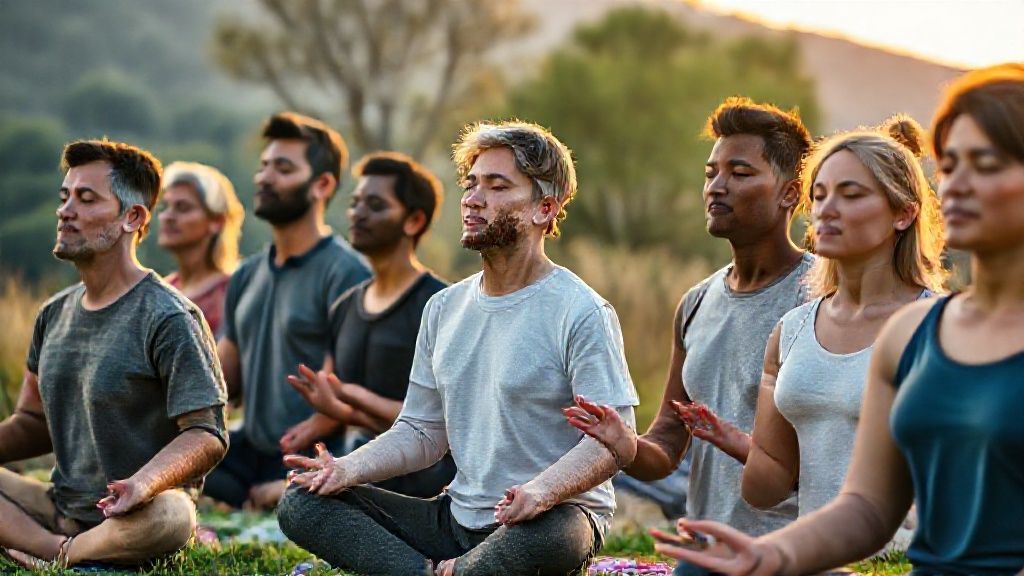
Breathing Meditation for Beginners: Your Simple Guide to Finding Calm
Feeling stressed, distracted, or just can’t seem to quiet your mind? The most powerful tool for calm is already with you—your breath. In our fast-paced world, finding moments of peace can feel like a luxury, but what if you could access tranquility anytime, anywhere, without any special equipment? The answer lies in one of the most fundamental yet overlooked aspects of our existence: breathing.
Breathing meditation, or mindful breathing, is the practice of focusing your attention on the natural rhythm of your breath to anchor yourself in the present moment, reduce stress, and cultivate a sense of inner peace. This guide will walk you through simple, effective breathing meditation techniques designed specifically for beginners, helping you build a sustainable practice from the ground up.

Why Your Breath Is the Ultimate Meditation Anchor
Your breath serves as the perfect focal point for meditation for several compelling reasons. First, it’s always with you—a constant companion throughout your life. Unlike other meditation tools that might require specific conditions or equipment, your breath is accessible 24/7, whether you’re at home, work, or anywhere in between.
Scientifically, focusing on your breath has profound effects on your nervous system. When you consciously slow and deepen your breathing, you activate the parasympathetic nervous system—often called the “rest-and-digest” response. This directly counters the stress-induced “fight-or-flight” mode that so many of us operate in throughout the day. Research shows that consistent breath-focused meditation can lower cortisol levels, reduce blood pressure, and improve heart rate variability.
Philosophically, the breath represents a bridge between our conscious and unconscious processes. While we can control our breathing when we pay attention to it, it continues automatically when we’re distracted or asleep. This unique quality makes it an ideal object of meditation—it connects the voluntary and involuntary aspects of our being.
If you’re completely new to meditation concepts, you might find it helpful to understand 何为引导式冥想 as complementary knowledge to breathing techniques.
Foundational Breathing Meditation Techniques to Start With
1. Natural Breath Awareness
Natural breath awareness is the cornerstone of all breathing meditation practices. It requires no manipulation or control of your breath—simply observing it exactly as it is.
练习方法:
– Find a comfortable seated position, either on a cushion with crossed legs or in a chair with your feet flat on the floor
– Close your eyes or maintain a soft gaze downward
– Bring your attention to your breath without trying to change it
– Notice the physical sensations: the cool air entering your nostrils, the slight pause between inhalation and exhalation, the warmer air leaving your body
– You might place one hand on your abdomen to feel its gentle rise and fall
– When your mind wanders (which it will), gently return your attention to your breath without judgment
Start with just 3-5 minutes of this practice. The goal isn’t to stop thoughts entirely but to notice when you’ve become distracted and patiently return to your anchor—the breath.
For those with limited time, try incorporating 一分钟呼吸练习 into your daily routine.
2. Counting the Breaths
Counting breaths adds a light cognitive element that can help maintain focus, especially for beginners whose minds tend to wander frequently.
练习方法:
– Settle into your meditation posture
– After an exhalation, silently count “one” in your mind
– On the next exhalation, count “two”
– Continue this pattern up to the count of ten
– Once you reach ten, return to one and begin again
– If you lose track of the count, simply return to one without frustration
This technique provides just enough mental engagement to keep your mind from drifting into extensive thought streams while remaining simple enough to maintain awareness of your breath.
If you prefer structured guidance, you can follow along with this 10-minute breathing meditation script that incorporates breath counting.
3. Diaphragmatic (Belly) Breathing
Diaphragmatic breathing, often called “belly breathing,” engages the diaphragm more fully than typical shallow chest breathing, promoting deeper relaxation and better oxygenation.
练习方法:
仰卧,膝盖弯曲,或舒适地坐在椅子上。.
将一只手放在上胸部,另一只手放在腹部,肋骨正下方。.
– Breathe in slowly through your nose, allowing your belly to push against your hand
– Keep the hand on your chest as still as possible
– Tighten your stomach muscles and let them fall inward as you exhale through pursed lips
– The hand on your belly should move down to its original position
Practice this for 5-10 minutes daily. With time, diaphragmatic breathing will become more natural, even when you’re not consciously focusing on it.
This technique is particularly beneficial for those dealing with stress, as explained in our resource on how diaphragmatic breathing specifically helps with anxiety.

初学者常见挑战(及应对方法)
“My mind keeps wandering”
This is perhaps the most universal experience in meditation—especially for beginners. The key insight is that noticing your mind has wandered IS the practice. Each time you gently return your attention to your breath, you’re strengthening your mindfulness muscle. Rather than fighting distractions, acknowledge them without judgment and return to your breath. This process of noticing and returning is where the real transformation happens.
“I can’t get comfortable”
Physical discomfort is common when starting a meditation practice. Experiment with different positions: sitting in a chair with back support, using meditation cushions of varying heights, or even lying down if sitting is too challenging. The goal is to be alert yet relaxed—not so comfortable that you fall asleep, but not in pain either. Some discomfort is normal, but sharp pain should be addressed by adjusting your position.
“I feel like I’m not doing it right”
Many beginners worry about “failing” at meditation. Remember: there’s no perfect way to meditate. If you’re sitting down and attempting to focus on your breath, you’re meditating correctly. The experience will vary from session to session—some days your mind will feel calmer, other days it might be busy. All of these experiences are valid and part of the process.
If restlessness persists, try a short grounding meditation script to help settle your awareness in your body.
Building Your First 5-Minute Breathing Meditation Habit
Consistency matters far more than duration when establishing a meditation practice. Starting with just five minutes daily creates a sustainable habit that can grow over time.
Creating your routine:
1. Choose a consistent time – Many find morning meditation sets a positive tone for the day, while others prefer evenings to unwind. Experiment to find what works for you.
2. Designate a space – Having a specific spot for meditation helps cue your mind and body for practice. It doesn’t need to be elaborate—a corner of a room with a cushion or chair will suffice.
3. 设置一个柔和的计时器 – Use a timer with a soft alarm so you’re not constantly checking the clock.
4. Commit to the timeframe – Even on days when it feels difficult, honor your five-minute commitment. Showing up is what builds the habit.
5. 记录练习情况 – Use a calendar or meditation app to mark off days you meditate. Visual progress can be motivating.
The key is making your practice non-negotiable but manageable. Five minutes is short enough that it rarely feels like an imposition, yet long enough to experience benefits.
For those who prefer audio guidance, 一段5分钟引导式冥想 可以提供结构框架。若清晨时段最适合您,请尝试 一段5分钟晨间冥想 专为带着觉知开启一天而设计的练习。.
深化练习:正念呼吸的进阶步骤
当您已建立稳定的5分钟练习习惯并对基础技巧感到自如后,或许可以探索深化呼吸冥想体验的方法。.
延长练习时长: 每周或每两周以1-2分钟为增量逐步增加冥想时间,直至达到可持续且有益的时长。许多练习者发现15-20分钟能产生更深远的效果。.
探索不同技巧: 除本文概述的基础练习外,还存在众多其他呼吸方法,例如交替鼻孔呼吸法、方形呼吸法,或我们常见问题部分提及的4-7-8呼吸法。.
融入正念意识: 开始在日常活动中——排队等候时、工作间隙、或在艰难对话回应前——将正念觉知带入呼吸。这有助于将正式练习的益处延伸至日常生活。.
当您准备好扩展练习时,可尝试 15分钟引导式冥想课程. 。您也可以探索辅助性练习,例如 身体扫描冥想技巧, ,该技巧将呼吸觉知与系统化的身体觉察相结合。.

常见问题解答
初学者应冥想多长时间?
从3-5分钟的短时练习开始,以建立习惯而不感到压力。持续性比时长更重要。每天坚持5分钟冥想,远胜于每周仅进行一次30分钟练习。当练习逐渐熟悉后,可以1-2分钟为增量逐步延长练习时间。.
什么是4-7-8呼吸法?
4-7-8呼吸法是由安德鲁·威尔博士创立的特定呼吸模式:用鼻子吸气4秒,屏息7秒,用嘴巴呼气8秒。这是一种强效的放松技巧,有助于改善睡眠和焦虑管理。但我们建议先掌握基础的呼吸觉知,再引入模式化呼吸法。对于有兴趣探索其他方法者,我们在 另一份资源中介绍了 缓解压力与焦虑的其他练习。.
呼吸冥想能缓解焦虑吗?
当然可以。通过专注于呼吸,您可以打断焦虑思绪的循环,并激活身体的自然放松反应。呼吸冥想有助于在您与焦虑念头之间创造空间,使您能够观察它们而不被其控制。长期规律练习可逐渐降低焦虑发作的频率和强度。如需针对性指导,请尝试 我们专为焦虑设计的引导式冥想.
。
如果冥想时感到无法呼吸怎么办?.
这是常见感受,对初学者尤为如此。当您将注意力集中于呼吸时,可能会突然感到呼吸不自然或受限。请温和地告诉自己处于安全状态,只需轻松回归对自然呼吸的观察,无需刻意用力。若此感受持续存在或引起严重不适,请暂停练习稍后再试。请记住:您并非要改变呼吸——只是去觉察它。
您的旅程始于一次呼吸.
呼吸冥想是一种简单易行的练习,任何人都可以从今天开始,在生活中培养更多平静与清明。请记住,重点不在于达到完全空寂的心境,而在于一次次温柔地回归呼吸。每当您注意到注意力游离并耐心将其带回时,就是在增强临在力与心理韧性。.
这项练习的益处会逐渐累积且成效显著。通过持续练习,您可能会注意到耐心增强、压力管理能力提升、专注力改善,以及整体幸福感加深。这些改变不会一蹴而就,但会随着您每日坚持练习而自然显现。.
您的呼吸始终伴随生命每刻——历经挑战与胜利,穿越喜悦与忧伤。如今,它可以成为您安住当下的锚点、压力时的庇护所,以及通往更高自我觉知的门径。 准备好开始首次引导练习了吗? 在此探索我们为初学者精选的引导冥想库.