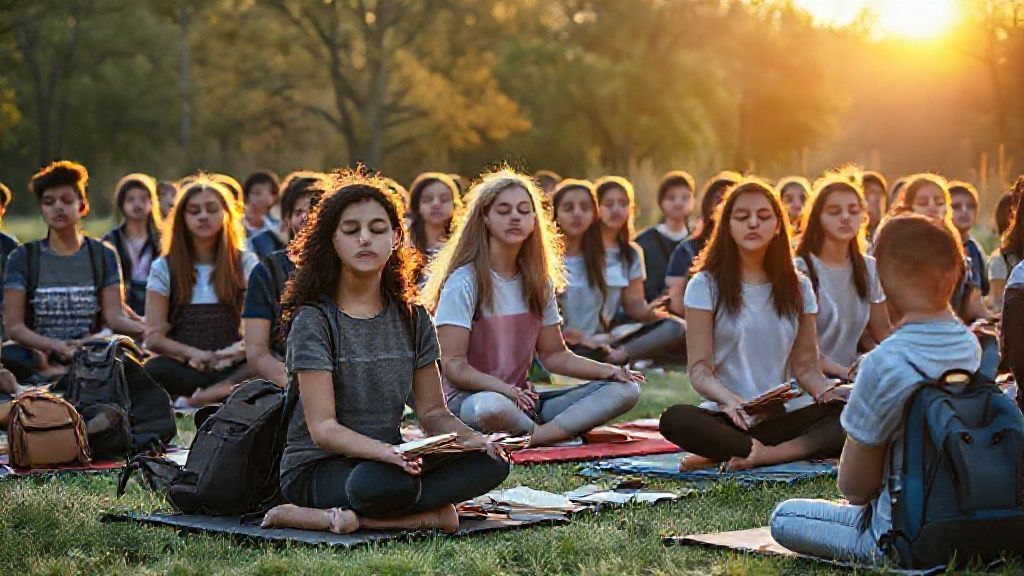
Guided Meditation for High School Students: A 5-Minute Path to Less Stress & Better Focus
Between exams, social pressures, college applications, and navigating complex relationships, high school can feel like a pressure cooker for today’s teenagers. The constant demands on their time and attention leave many students feeling overwhelmed, anxious, and disconnected. Guided meditation offers a simple, evidence-backed tool that can help students manage these intense pressures, improve concentration, and build the emotional resilience needed to not just survive but thrive during these formative years. This comprehensive guide is tailored specifically for the high school experience, offering quick, effective techniques that fit into even the busiest schedule, requiring just minutes per day to deliver transformative results.

Why High School Students Need Meditation Now More Than Ever
The adolescent brain is undergoing significant development, making it particularly vulnerable to stress while also being remarkably adaptable to positive practices like meditation. Understanding why meditation is especially crucial during these years can provide the motivation needed to begin and maintain a practice.
The Modern Student’s Brain: Overwhelmed and Overstimulated
Today’s high school students face a perfect storm of academic, social, and digital pressures that previous generations never encountered. The constant connectivity through smartphones means social life doesn’t end when the school bell rings—group chats, social media notifications, and the pressure to maintain an online presence create a 24/7 social environment. Academically, the competition for college admissions has intensified, with students feeling pressured to maintain perfect grades while accumulating impressive extracurriculars. This combination of digital overload, academic pressure, and the normal developmental challenges of adolescence creates unprecedented levels of stress and anxiety. The brain’s prefrontal cortex, responsible for decision-making and emotional regulation, is still developing throughout the teenage years, making it harder to manage these intense pressures without effective tools.
5 Proven Benefits of a Meditation Practice
The research on meditation for adolescents reveals significant benefits that directly address the challenges high school students face:
-
Improved focus and memory for studying: Regular meditation strengthens the brain’s ability to sustain attention and filter out distractions, leading to more efficient studying and better information retention during classes and exams.
-
Reduced test anxiety and performance pressure: By activating the parasympathetic nervous system (the body’s “rest and digest” response), meditation counteracts the physical symptoms of anxiety—racing heart, shallow breathing, and tense muscles—that interfere with test performance.
-
Better sleep and more consistent energy levels: Many high school students struggle with insufficient or poor-quality sleep. Meditation helps quiet the “monkey mind” that often keeps teenagers awake at night, leading to more restorative sleep and increased daytime energy.
-
Enhanced emotional regulation and self-awareness: The adolescent years are marked by intense emotions. Meditation creates space between stimulus and response, allowing students to recognize their emotions without being controlled by them, leading to better decision-making in emotionally charged situations.
-
Stronger resilience to social and academic setbacks: By developing a more observational relationship with their thoughts, students learn that negative thoughts and feelings are temporary, reducing the impact of social rejection, disappointing grades, or other common high school challenges.
Your First 5-Minute Guided Meditation (A Simple Script to Start)
Beginning a meditation practice doesn’t require special equipment, extensive training, or even much time. This simple 5-minute guided meditation can be done anywhere—in your bedroom before school, in a quiet corner of the library, or even sitting in your car before heading into school.
Find a comfortable seated position, either in a chair with your feet flat on the floor or cross-legged on the floor or bed. Gently close your eyes or maintain a soft gaze downward.
Minute 1: Arriving
Bring your awareness to your body. Notice the points of contact—your feet on the floor, your seat on the chair or floor. Take three deep breaths, inhaling through your nose and exhaling through your mouth. With each exhale, release any tension you’re holding.
Minute 2: Body Scan
Slowly bring your attention to the top of your head. Notice any sensations there—tingling, warmth, or perhaps nothing at all. Gradually move your awareness down through your body—your forehead, eyes, jaw, neck, shoulders, arms, hands, chest, abdomen, back, hips, legs, and feet. Don’t try to change anything; just observe.
Minute 3: Breath Awareness
Now bring your attention to your natural breath. Don’t force it to be deeper or slower—just notice the sensation of air entering and leaving your body. Feel your chest and abdomen expand and contract. When your mind wanders (which it will), gently guide it back to your breath without judgment.
Minute 4: Expanding Awareness
Widen your awareness to include sounds around you—both inside and outside the room. Notice these sounds without labeling them good or bad. Then expand to include your entire body breathing—the full experience of being present in this moment.
Minute 5: Returning
Gently bring your awareness back to your breath. Take three deeper breaths. Notice how your body feels now compared to when you began. Slowly begin to wiggle your fingers and toes. When you’re ready, gently open your eyes.
Take a moment to notice how you feel before moving on with your day. Remember, you can download a printable 5-minute meditation script PDF to keep with you for easy reference.

Finding the Right Meditation Style for Your Needs
Not all meditation serves the same purpose, and different techniques can address specific challenges high school students face. Experimenting with various styles can help you discover what works best for your unique needs and schedule.
For Instant Calm During the School Day
The school environment itself can be a significant source of stress, with crowded hallways, academic pressure, and social dynamics creating tension throughout the day. These short, grounding exercises can be done between classes, before challenging subjects, or during lunch breaks to reset your nervous system.
Breathing Space Technique: When you feel overwhelmed during the school day, find a relatively quiet space (a bathroom stall, an empty corner of the library, or even just sitting at your desk before class begins). Close your eyes and take three conscious breaths. On the first breath, simply acknowledge how you’re feeling without judgment. On the second breath, gather your attention fully on the physical sensation of breathing. On the third breath, expand your awareness to include your entire body and the space around you. This 30-second practice can create a noticeable shift in your mental state.
For an even quicker reset, you can try this quick 2-minute grounding meditation script that fits perfectly into passing periods.
For Pre-Test or Performance Anxiety
Performance situations like tests, presentations, athletic competitions, or auditions trigger the body’s fight-or-flight response, which can interfere with accessing the knowledge and skills you’ve worked hard to develop. Meditation techniques that focus on calming the nervous system are particularly effective in these situations.
Calming Breath Practice: Several minutes before a test or performance, find a quiet space. Place one hand on your chest and the other on your abdomen. Breathe in slowly through your nose for a count of four, feeling your abdomen expand. Hold your breath for a count of four, then exhale slowly through your mouth for a count of six. Repeat this pattern 5-10 times. This breathing pattern activates the parasympathetic nervous system, directly counteracting the physiological symptoms of anxiety.
For more comprehensive techniques specifically designed for anxiety-provoking situations, explore our guided meditation for anxiety 合集。.
For Winding Down and Improving Sleep
Many high school students struggle with falling asleep due to racing thoughts about the day’s events or tomorrow’s responsibilities. The adolescent sleep cycle naturally shifts later, conflicting with early school start times and creating chronic sleep deprivation. Meditation can help bridge this gap by quieting mental chatter and signaling to the body that it’s time to rest.
睡眠身体扫描: As you lie in bed, bring your attention to the tips of your toes. Notice any sensations there, then consciously release any tension. Imagine breathing into that area. Slowly move your attention up through your body—feet, ankles, calves, knees, thighs, hips, abdomen, chest, back, fingers, hands, arms, shoulders, neck, and face—releasing tension in each area before moving to the next. By the time you reach your head, your body and mind will be significantly more relaxed and prepared for sleep.
For a more structured approach to improving sleep through meditation, discover our bedtime sleep meditation resources designed specifically for teenagers.
Building a Sustainable Habit: Tips for Busy Students
The greatest challenge for high school students isn’t understanding meditation’s benefits but consistently practicing amid their packed schedules. Building a sustainable habit requires strategy and self-compassion rather than sheer willpower.
Anchor meditation to existing habits: The most effective way to build a new habit is to “stack” it onto an existing one. Consider meditating for just five minutes after brushing your teeth in the morning, before starting homework sessions, or immediately after getting into bed at night. The existing habit serves as a reliable trigger for the new one.
Start embarrassingly small: The biggest mistake beginners make is setting unrealistic goals. If five minutes feels daunting, start with one minute. The priority is consistency, not duration. Even 60 seconds of conscious breathing creates neurological benefits and strengthens the habit loop. Success with a tiny habit builds confidence to gradually increase duration.
创建专属空间: While meditation can be done anywhere, having a specific corner of your room with a comfortable cushion or chair creates environmental cues that support your practice. This doesn’t need to be elaborate—just a designated spot that your brain associates with meditation.
Use technology wisely: 虽然智能手机常常令人分心,但它们也能通过冥想应用、计时器和提醒功能来支持你的练习。为你选定的冥想时间设置每日通知,但请记住在练习期间开启“勿扰”模式。.
练习自我关怀: 有些日子你的思绪会特别繁忙,冥想可能会感觉“不成功”。这完全正常。练习的目的并非要达到完全清明的头脑,而是关于持续地将注意力带回。每当你注意到思绪游离并温和地将其引导回来时,你都在锻炼你的“注意力肌肉”。”
如需针对青少年体验的更多策略,, 请在此处查找为青少年量身定制的更多正念活动.

有用的入门工具和资源
拥有合适的资源,可以决定一项冥想练习是半途而废,还是成为一项受益终生的健康工具。这些工具特别适合高中生的需求、偏好和预算。.
最适合学生的冥想应用
冥想应用提供的结构、指导和多样性对初学者尤其有帮助。许多应用提供学生折扣或专为年轻用户设计的免费内容。.
Headspace: Headspace以其友好、平易近人的动画和结构化课程而闻名,它提供了一个强大的“学生”板块,包含针对专注力、考试焦虑和睡眠的冥想。其内容基于证据,对完全初学者尤其合适。.
Calm: Calm提供多种冥想风格、睡眠故事和音乐,吸引那些喜欢根据不断变化的需求选择不同内容的学生。其“每日静心”提供持续10分钟的练习,有助于习惯养成。.
Insight Timer: 这款免费应用提供来自全球教师的数千个引导冥想,以及一个用于非引导练习的简单计时器。内容的多样性意味着学生无需付费即可探索不同的风格和教师。.
对于那些正在比较选择的人,你可以 比较其他类似Headspace的应用 以找到最符合你偏好和预算的选择。.
快速有效的正念练习
正式的冥想并非培养正念的唯一方式。这些简单的练习可以融入你的一天,为日常活动带来当下的觉知。.
STOP练习: 每当白天感到不知所措时,停下来:
S —— 停下你正在做的事情
T —— 深呼吸一次
O —— 观察你的想法、感受和身体感觉
P —— 带着更多觉知继续
正念饮食: 每天选择一餐或一次零食,收起令人分心的东西,完全专注于进食的体验。注意食物的颜色、质地、气味和味道。这项练习不仅能培养正念,还能改善消化和对用餐的满足感。.
正念行走: 在课间走动时,将注意力带到行走的身体感觉上——双脚接触地面的感觉、双腿的运动、皮肤上的空气。当你的思绪游离到对过去或未来的担忧时,温和地回到行走的感觉上。.
如需在压力时刻获得即时缓解,, 请使用5感正念练习进行即时接地.
常见问题解答
一些益处——如即时放松和压力减轻——在一次练习后即可感受到。然而,持久改变您的基础平静水平通常需要数周持续练习。可将其类比为体育锻炼:虽然一次锻炼后可能感觉良好,但真正的转变来自规律训练。
这也许是初学者最常见的担忧,答案是一个响亮的“不”。冥想不是要停止想法或达到完全空白的大脑——那是不可能的,因为头脑的本质就是思考。练习是关于改变你与想法的关系。每当你注意到思绪游离并温和地将注意力带回你的锚点(通常是呼吸)时,你实际上正在锻炼你的“注意力肌肉”。注意并带回的过程本身就是练习,而不是偏离了练习。.
冥想多久能看到效果?
体验到益处的时间线因人而异,但许多人在仅仅一次练习后就能注意到细微的变化——或许感觉稍微平静或更集中。对于专注力、情绪调节和韧性方面更持久的变化,研究表明,持续练习至少4-8周会产生可测量的神经学变化。就像体育锻炼一样,益处会随着定期练习而随时间累积。最显著的变化往往出现在冥想成为你生活方式中持续的一部分,而不是只在压力大时才做的事情时。.
如果我没时间冥想怎么办?
考虑到高中生繁忙的日程,这种担忧是可以理解的。冥想的一个美妙真相是,即使非常短暂的练习也能带来益处。神经科学研究表明,仅仅几分钟的冥想就能对大脑活动产生积极改变。如果觉得找到10-20分钟似乎不可能,那就承诺只做一分钟。每天坚持练习一分钟,随着你开始体验到益处,练习时间很可能会自然延长。请记住, 从这个有效的1分钟呼吸练习开始 可以随时随地完成。.
正念与冥想有何区别?
虽然这些术语经常互换使用,但存在一个重要区别。冥想指的是留出专门时间训练注意力和觉知的正式练习。而正念,则是一种你可以带入任何时刻的觉知品质——无论你在吃饭、走路、学习还是与朋友交谈,都能全然处于当下的能力。冥想是锻炼你“正念肌肉”的练习,然后你将这种能力带入生活的方方面面。若要 进一步了解什么是引导式冥想 了解其与其他形式的区别,请探索我们的详细指南。.
总结与行动号召
将引导冥想融入你的高中生活,并不是要在你已满溢的待办事项清单上再添一项任务;而是关于创造心理空间并培养工具,以更有效地处理其他一切。你每天投入在冥想上的几分钟,可以在减轻压力、提高专注力、改善睡眠和增强情绪韧性方面产生指数级的回报。这些益处超越学业表现,丰富你在这段成长岁月中的人际关系、课外活动和整体生活质量。.
请记住,冥想是一种练习,而非追求完美。有些日子会感觉比其他日子更容易,这完全正常。最重要的是以好奇和自我关怀的态度持续投入。你有能力将你的高中体验从不堪重负转变为专注当下和目标明确,只需从每天几分钟开始。.
准备好寻找内心的平静了吗? 立即尝试我们受欢迎的10分钟静心冥想 体验一个完整的课程,旨在缓解压力、澄澈思绪,为你提供所需的头脑清晰度,让你能以更轻松和自信的姿态应对高中的挑战与机遇。.