Bouddhisme et Méditation de Pleine Conscience : Un chemin débutant vers la paix intérieure
In our fast-paced, constantly connected world, feelings of stress, anxiety, and overwhelm have become almost universal. As we scroll through endless notifications, juggle multiple responsibilities, and navigate complex relationships, many of us find ourselves searching for an anchor—a way to quiet the mental chatter and find a sense of calm amidst the chaos. This search often leads people to mindfulness meditation, a practice that has gained tremendous popularity in recent years. But what many don’t realize is that this powerful tool for mental well-being has deep roots in ancient Buddhist teachings that date back over 2,500 years.
Mindfulness meditation is a core practice derived from ancient Buddhist teachings, designed to cultivate present-moment awareness and reduce suffering. This guide will explore its origins, core principles, and how you can start practicing today.
Whether you’re completely new to meditation or have dabbled in mindfulness apps, understanding the Buddhist foundation of this practice can transform your approach and deepen your experience. In this comprehensive guide, we’ll journey from the ancient teachings of the Buddha to practical techniques you can incorporate into your modern life.
What Is the Buddhist Root of Modern Mindfulness?
The mindfulness revolution sweeping through corporations, schools, and healthcare settings didn’t emerge from a vacuum. Its origins can be traced directly to the Satipatthana Sutta, one of the most important discourses in the Pali Canon—the earliest collection of Buddhist teachings. In this foundational text, the Buddha laid out the “Four Foundations of Mindfulness,” a comprehensive system for developing awareness of body, feelings, mind, and mental objects.
The Pali word “Sati,” which we translate as “mindfulness,” carries a richer meaning than its English counterpart. Sati implies not just awareness but remembrance—remembering to pay attention to our present-moment experience with clarity and precision. This isn’t a passive state of zoning out but an active, engaged process of noticing what’s happening right here, right now.
There’s an important distinction between modern secular mindfulness and its traditional Buddhist context. Today, mindfulness is often presented as a tool for stress reduction, productivity enhancement, or emotional regulation. While these benefits are real and valuable, traditional Buddhist mindfulness serves a more profound purpose: it’s a path to enlightenment and the end of suffering (Dukkha). The ultimate goal isn’t just to feel better temporarily but to see reality clearly and free oneself from the root causes of mental distress.
For those completely new to meditation practices, understanding qu’est-ce que la méditation guidée can provide an accessible entry point to these ancient techniques. Guided sessions offer structure and direction, making it easier to establish a consistent practice that honors both the traditional roots and modern applications of mindfulness.

Core Buddhist Principles That Power Mindfulness
To truly understand mindfulness meditation beyond a surface level, it helps to explore the key Buddhist principles that give the practice its depth and transformative power. These concepts aren’t just philosophical ideas—they’re insights into the nature of reality that we can directly experience through mindful awareness.
Understanding Impermanence (Anicca)
The Buddha identified impermanence as one of the three fundamental characteristics of existence. Everything—from our thoughts and emotions to our physical bodies and the world around us—is in a constant state of flux. Nothing remains the same from one moment to the next.
When we practice mindfulness meditation, we’re not just watching our breath; we’re observing the continuous flow of sensations, thoughts, and feelings. We notice how a sound arises and passes away, how an itch appears and disappears, how a thought emerges and vanishes. This direct experience of impermanence helps us develop a more flexible relationship with our experiences. Instead of clinging to pleasant moments or resisting unpleasant ones, we learn to meet each experience with openness, knowing it will inevitably change.
The Concept of “No-Self” (Anatta)
Perhaps the most challenging Buddhist concept for Western minds is Anatta, often translated as “no-self” or “non-self.” This doesn’t mean that we don’t exist at all, but that what we typically consider our “self”—a solid, permanent, independent entity—is actually a collection of ever-changing physical and mental processes.
Through mindfulness practice, we begin to de-identify from our thoughts and emotions. Instead of thinking “I am angry,” we learn to notice “there is anger present.” This subtle shift in perspective creates space between our awareness and our experiences, reducing ego-driven reactions and providing greater freedom in how we respond to life’s challenges.
The End of Suffering (Dukkha)
The Buddha’s primary teaching was about the nature of suffering and the path to its end. Dukkha is often translated as “suffering,” but it encompasses a broader range of experiences including stress, dissatisfaction, and the inherent unsatisfactoriness of conditioned existence.
Mindfulness addresses suffering not by trying to eliminate unpleasant experiences, but by changing our relationship to them. When we observe our cravings and aversions without judgment—simply noting “wanting” or “resistance” as they arise—we stop feeding the patterns that create mental suffering. This approach is beautifully supported by practices like a letting go meditation script, which provides specific guidance for working skillfully with attachment and resistance.
The Profound Benefits of a Buddhist Mindfulness Practice
While the ultimate goal of traditional Buddhist practice extends beyond temporary relief, the benefits of mindfulness meditation are both immediate and cumulative. By committing to regular practice, you can experience positive changes in multiple dimensions of your life.
Reducing Anxiety and Quieting the Mind
Anxiety often thrives on our tendency to get caught in loops of negative thinking—rehashing past events or worrying about future possibilities. Mindfulness interrupts this pattern by anchoring our attention in the present moment, typically using the breath as a home base.
Research has shown that regular mindfulness practice can reduce activity in the amygdala (the brain’s fear center) while strengthening connections to the prefrontal cortex (responsible for rational thinking and emotional regulation). This neural rewiring translates to practical benefits: you may find yourself less reactive to stressors, better able to pause before responding, and more capable of navigating challenging situations with clarity.
For those moments when anxiety feels overwhelming, having specific tools can make all the difference. A 10-minute meditation for anxiety offers a manageable practice for stressful times, while a more comprehensive méditation guidée pour le stress et l'anxiété can provide deeper support when you need extended relief.
Cultivating Compassion for Yourself and Others
As mindfulness deepens, it naturally gives rise to greater compassion. When we see our own struggles clearly—our patterns, vulnerabilities, and shared humanity—we develop more kindness toward ourselves. This self-compassion then extends outward to others, as we recognize that everyone is navigating their own challenges.
This natural progression is formally cultivated in Buddhist practice through Metta (Loving-Kindness) meditation, which involves systematically directing well-wishes toward ourselves and others. Rather than being a separate practice, Metta is understood as a natural expression of mindful awareness—when we see clearly, we respond with compassion.
If you’re interested in exploring this dimension of practice, a guided Metta (loving-kindness) meditation script can help you develop this quality of open-hearted awareness.

How to Start Your Buddhist-Inspired Mindfulness Practice Today
The beauty of mindfulness is that it doesn’t require special equipment, extensive training, or perfect conditions. You can begin right where you are, with the resources you already have. Here’s a practical framework for establishing your practice.
Posture and Environment: Setting the Foundation
While you can practice mindfulness anywhere, creating a supportive environment can help strengthen your commitment, especially when starting out.
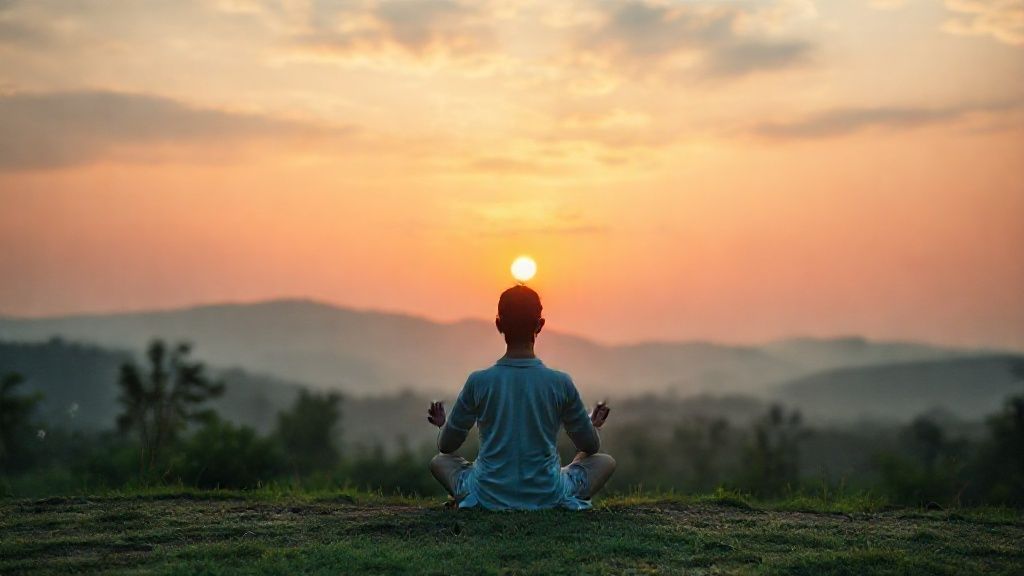
- Posture: The traditional meditation posture balances dignity and relaxation. If sitting on the floor, use a cushion to raise your hips slightly above your knees. If using a chair, sit forward rather than leaning back. Keep your spine upright but not rigid, shoulders relaxed, hands resting comfortably on your knees or lap. The goal isn’t to create tension but to cultivate alert relaxation.
- Environment: Choose a relatively quiet space where you’re unlikely to be interrupted. You might create a simple meditation corner with a cushion or chair. While complete silence isn’t necessary (and can be another form of attachment), minimizing major distractions supports early practice.
A Simple 5-Minute Breathing Mindfulness Meditation
This foundational practice follows the Buddha’s instructions for mindfulness of breathing. Start with just five minutes daily—consistency matters more than duration, especially when beginning.
- Set Your Intention: Begin by recognizing your motivation—perhaps to cultivate peace, clarity, or kindness.
- Establish Posture: Sit in your chosen posture, allowing your body to settle.
- Notice Natural Breath: Bring attention to the physical sensations of breathing—the movement of your abdomen, the air passing through your nostrils. There’s no need to control or change your breath.
- Anchor Attention: Use the breath as an anchor for your attention. When your mind wanders (which it will, repeatedly), gently note where it went and return to the breath without judgment.
- Expand Awareness: After focusing on the breath, briefly expand awareness to include sounds, bodily sensations, and thoughts—simply noticing whatever arises.
- Close with Kindness: Conclude by bringing a moment of appreciation for your effort, regardless of how “successful” the session felt.
For additional support, you might try a simple 5-minute guided meditation when starting out, or use a 10-minute breathing meditation script once you’re ready to extend your practice.
Intégrer la pleine conscience dans la vie quotidienne
La méditation formelle est comme aller à la salle de sport pour votre esprit, mais les véritables bienfaits émergent lorsque vous apportez une attention consciente à vos activités quotidiennes.
- Alimentation en pleine conscience : Pour un repas par jour, mangez sans distractions. Observez les couleurs, les textures, les odeurs et les saveurs de votre nourriture. Mâchez lentement, en posant vos couverts entre chaque bouchée.
- Marche en pleine conscience : Lorsque vous marchez, portez attention aux sensations physiques dans vos pieds et vos jambes – le soulèvement, le déplacement et la pose de chaque pied.
- Écoute en pleine conscience : Lors d’une conversation, entraînez-vous à accorder toute votre attention à l’autre personne sans préparer votre réponse pendant qu’elle parle.
Approfondir votre pratique : Prochaines étapes sur le chemin
Au fur et à mesure que votre pratique de la pleine conscience se développe, vous pourriez ressentir l’envie d’explorer différentes techniques et de trouver un soutien communautaire. Cette évolution naturelle reflète le chemin complet que le Bouddha a tracé pour le développement spirituel.
Explorer différentes techniques de méditation
Bien que la pleine conscience de la respiration offre une base solide, la tradition bouddhiste propose une riche variété de pratiques méditatives conçues pour développer différentes qualités de l’esprit.
- Méditation du Balayage Corporel (Body Scan) : Cette pratique consiste à déplacer systématiquement l’attention à travers différentes parties du corps, en cultivant une conscience détaillée des sensations physiques. Elle est particulièrement utile pour développer la concentration et travailler avec la douleur ou l’inconfort. Une méditation de balayage corporel pour le sommeil et la relaxation peut être particulièrement bénéfique pour ceux qui luttent contre l’insomnie ou les tensions physiques.
- Méditation marchée : Plutôt que d’être un moyen de se rendre quelque part, la méditation marchée devient la pratique elle-même – en portant une pleine attention à l’expérience de se déplacer dans l’espace.
- Méditation de la bienveillance aimante : Comme mentionné précédemment, cette pratique cultive spécifiquement une amitié inconditionnelle envers nous-mêmes et les autres.
Trouver une communauté et approfondir l'apprentissage
Bien que la pratique personnelle soit essentielle, la tradition bouddhiste a toujours souligné l’importance de la communauté spirituelle (Sangha). Se connecter avec d’autres sur le chemin peut fournir inspiration, soutien et conseils précieux.
Si vous êtes intéressé à explorer des opportunités en personne, vous pourriez trouver des centres de méditation près de chez vous qui proposent des cours ou des séances de groupe. Pour ceux dont les options locales sont limitées ou les emplois du temps chargés, explorez des cours de méditation en ligne qui offrent un apprentissage structuré avec des enseignants qualifiés.

Questions Fréquemment Posées (FAQ)
Q : Le bouddhisme et la méditation de pleine conscience sont-ils une religion ?
R : Bien que ses racines soient dans le bouddhisme, la pratique de la pleine conscience elle-même est une technique d’entraînement mental qui peut être utilisée par quiconque, indépendamment des croyances religieuses. Vous pouvez bénéficier de la méditation de pleine conscience que vous soyez bouddhiste, chrétien, juif, musulman, hindou, athée ou agnostique.
Q : Quelle est la différence entre la pleine conscience et simplement se détendre ?
R : La relaxation est souvent un sous-produit, mais la pleine conscience concerne une attention intentionnelle et non-jugeante. Il s’agit d’être présent à tout ce qui surgit, agréable ou désagréable. Pour une pratique axée uniquement sur le calme, essayez ceci méditation guidée pour un esprit calme.
Q : Combien de temps faut-il pour voir les bienfaits de la méditation de pleine conscience ?
R : Des bienfaits en termes de calme peuvent être ressentis immédiatement, mais des changements durables dans la structure cérébrale et les schémas de réponse sont soutenus par une pratique quotidienne et régulière. Commencez modestement avec une Méditation guidée courte et concentrez-vous sur l’établissement de l’habitude plutôt que sur l’obtention de résultats spécifiques.
Conclusion & Appel à l'Action (CTA)
Le voyage des enseignements bouddhistes anciens aux pratiques modernes de pleine conscience représente un pont remarquable entre les traditions de sagesse et la science contemporaine. Ce qui a commencé comme un chemin vers l’éveil dans l’Inde ancienne a évolué en une approche fondée sur des preuves pour le bien-être mental, accessible aux personnes de tous horizons et croyances.
L’essence de cette pratique reste simple, bien que pas toujours facile : être pleinement présent à notre vie telle qu’elle est, avec ouverture, curiosité et compassion. Que vous ayez cinq minutes ou cinquante, que vous soyez assis sur un coussin ou sur votre chaise de bureau, l’invitation est la même – faire une pause, respirer et se rappeler que ce moment présent est là où la vie se déroule réellement.
Le chemin de la pleine conscience ne consiste pas à atteindre un état de calme parfait ou à éliminer toutes les difficultés. Il s’agit de changer votre relation à vos expériences – trouver plus d’espace, plus de choix et plus de liberté au cœur même de cette vie humaine, désordonnée et magnifique.
Prêt à passer de la lecture à l’expérience ? Commencez votre voyage dès maintenant avec notre session la plus populaire pour les débutants. Commencez par notre meilleure méditation guidée pour débutants ici.
