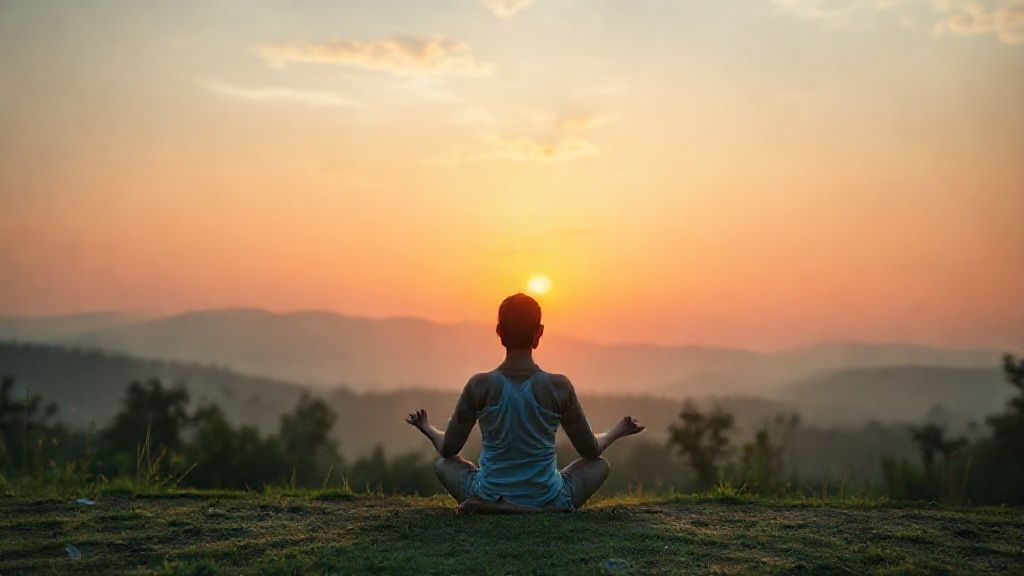
How to Do Insight Meditation: A Beginner’s Guide to Vipassana
Do you ever feel like your mind is a browser with too many tabs open? Thoughts about yesterday’s conversation, worries about tomorrow’s deadline, and random mental chatter all competing for your attention? While many meditation practices help calm this mental noise, insight meditation offers something more profound: a way to understand the very nature of your mind and experience.
Insight Meditation, or Vipassana, is the practice of observing the reality of your present-moment experience—your thoughts, feelings, and bodily sensations—without judgment to cultivate profound wisdom and inner peace. This ancient technique doesn’t just temporarily quiet your mind; it helps you develop a new relationship with your thoughts and emotions that can transform how you experience life.
This comprehensive guide will walk you through exactly how to do insight meditation, from its core principles to a practical step-by-step practice you can start today.

What is Insight Meditation (Vipassana)?
Vipassana is a Pali word meaning “clear seeing” or “insight.” It’s one of the oldest Buddhist meditation practices, designed to help practitioners see things as they truly are, beyond our conceptual filters and habitual reactions. Unlike approaches that focus solely on relaxation or stress reduction, insight meditation aims for fundamental understanding and liberation.
Many beginners confuse insight meditation with concentration meditation (Samatha). While both are valuable, they serve different purposes. Concentration meditation develops focused attention on a single object, like the breath or a mantra. Insight meditation uses this concentration as a foundation but then expands awareness to investigate the nature of all experience—sensations, thoughts, and emotions—as they arise and pass away.
The ultimate goal of Vipassana isn’t to achieve special states of consciousness but to develop wisdom through direct experience. By observing the constantly changing flow of phenomena without getting caught in them, we begin to understand the nature of reality itself, which naturally leads to greater freedom from suffering.
The Core Principles of Insight Practice
Before diving into the practical steps, it’s helpful to understand the foundational principles that guide insight meditation. These aren’t just philosophical concepts but practical lenses through which you’ll learn to view your experience.
Mindfulness (Sati)
Mindfulness is the cornerstone of insight meditation. It’s the quality of non-judgmental, present-moment awareness that allows you to observe your experience without getting lost in it. Think of mindfulness as a mirror that reflects whatever appears before it—thoughts, sensations, sounds—without adding commentary or interpretation.
In practice, this means noticing when your mind has wandered without criticizing yourself, observing physical discomfort without immediately reacting to change position, and watching emotional states arise without either suppressing them or being carried away by them.
Impermanence (Anicca)
The principle of impermanence is perhaps the most direct insight you’ll gain from consistent practice. As you observe your experience closely, you’ll notice that everything is in constant flux—sensations change, thoughts come and go, emotions transform. Nothing remains static.
This observation might sound simple, but its implications are profound. When we truly understand that all experiences are temporary, we naturally develop less clinging to pleasant experiences and less resistance to unpleasant ones. We begin to relate to our lives with more ease and flexibility.
Non-Attachment
Non-attachment is often misunderstood as detachment or indifference. In insight meditation, it means relating to experiences without clinging to them or pushing them away. It’s the middle way between indulgence and suppression.
When you practice non-attachment, you allow experiences to be exactly as they are. A pleasant sensation arises—you notice it without trying to make it stay longer. An unpleasant thought appears—you acknowledge it without fighting to make it disappear. This balanced relationship with your inner world creates tremendous psychological freedom.
How to Practice Insight Meditation: A Step-by-Step Guide
Now that you understand the core principles, let’s explore the actual practice. The following step-by-step guide will help you establish a solid insight meditation practice. Remember, consistency is more important than duration—even 10 minutes daily can yield significant benefits over time.
Step 1: Find Your Posture and Prepare
The foundation of a good meditation session begins with your posture and environment. Find a quiet space where you won’t be interrupted for the duration of your practice. You can sit on a cushion on the floor or in a chair—the important thing is to maintain a posture that is both alert and relaxed.
If sitting on a cushion, cross your legs comfortably in front of you. If using a chair, sit forward slightly so your back is self-supporting. Keep your spine erect but not rigid, as if you’re being gently lifted by a string from the crown of your head. Rest your hands on your thighs, and gently close your eyes or lower your gaze.
Set a timer for your desired duration. For beginners, 5-10 minutes is perfect. As you become more comfortable with the practice, you can gradually extend your sessions to 20, 30, or 45 minutes.
Step 2: Establish Anchored Awareness
Begin by bringing your attention to your breath. Don’t try to control or change your breathing—simply notice the natural rhythm of inhalation and exhalation. You might focus on the sensation of air moving through your nostrils, the rising and falling of your chest, or the expansion and contraction of your abdomen.
When your mind wanders (which it will, repeatedly), gently return your attention to the breath without judgment. This process of noticing distraction and returning to your anchor is the fundamental exercise that builds your “attention muscle.”
If you need help settling in, our meditación guiada de 5 minutos es un punto de partida perfecto.
Step 3: Expand to Body Sensations
Once your mind has settled somewhat (typically after 5-10 minutes of breath awareness), gradually expand your attention to include physical sensations throughout your body. Start from the top of your head and slowly move your awareness downward, or simply open your awareness to include the entire body at once.
Notice whatever sensations are present—tingling, warmth, pressure, vibration, or even areas with no distinct sensation. The key is to observe these sensations without labeling them as “good” or “bad.” Simply note their qualities and how they change from moment to moment.
A body scan is an excellent technique for this. Follow our detailed pdf del guion de escaneo corporal de 5 minutos.
Step 4: Observe Thoughts and Emotions
As you continue observing bodily sensations, you’ll notice thoughts and emotions arising. Instead of getting caught in their content, practice relating to them as you would to physical sensations—as passing phenomena in your field of awareness.
When you notice a thought, you might silently label it “thinking” and return to your primary object of meditation (the breath or body sensations). Alternatively, you might observe the thought itself—noticing its beginning, middle, and end, much like you would observe a cloud passing in the sky.
The same approach applies to emotions. When an emotion arises, notice where you feel it in your body (tightness in the chest, warmth in the face, etc.) and observe these physical manifestations without getting drawn into the story behind the emotion.
Step 5: Cultivate Loving-Kindness (Metta)
Conclude your meditation session by cultivating loving-kindness (metta). This practice helps balance the investigative quality of insight with an open, compassionate heart. Begin by directing kind wishes toward yourself, using traditional phrases or your own words:
“May I be happy. May I be healthy. May I be safe. May I live with ease.”
After a few minutes, extend these wishes to others—first to someone you care about, then to a neutral person, then to someone with whom you have difficulty, and finally to all beings everywhere.
For a dedicated practice, use our guión de meditación *metta* dedicado.

Common Challenges & How to Overcome Them
Every meditator encounters obstacles in their practice. Recognizing these common challenges and having strategies to work with them will help you maintain consistency and prevent discouragement.
“I Can’t Stop My Thoughts”
This is perhaps the most universal concern among meditation beginners. The important thing to understand is that the goal of insight meditation is not to stop your thoughts but to change your relationship with them.
When you find yourself thinking during meditation, you haven’t failed—you’ve been given an opportunity to practice. Each time you notice you’ve been lost in thought and gently return to your anchor, you’re strengthening your mindfulness muscle. Over time, you’ll find that thoughts naturally settle, and even when they don’t, you’re less identified with them.
Dealing with Physical Discomfort
Physical discomfort is inevitable in longer sitting periods. When discomfort arises, first check if your posture needs a minor adjustment. If the discomfort is due to tension or poor alignment, feel free to move mindfully.
If the discomfort persists despite good posture, you can make it the object of your meditation. Investigate the sensation with curiosity: Where is it located? What are its qualities? Does it change over time? This approach transforms discomfort from a distraction into valuable practice material.
Restlessness and Impatience
Restlessness often manifests as a strong urge to move, fidget, or end the meditation session early. When this arises, acknowledge it with a gentle mental note like “restlessness” or “impatience.” Notice how it feels in your body—perhaps as energy, vibration, or tension.
Bring your attention to the physical sensations of restlessness without trying to make them go away. Often, simply acknowledging and allowing these sensations causes them to gradually settle or transform.
For moments of high anxiety, a shorter, focused practice can help. Try this ejercicio de respiración de 1 minuto to reset.
Deepening Your Insight Meditation Practice
Once you’ve established a consistent daily practice, you might wonder how to take it to the next level. Here are several ways to deepen your understanding and integration of insight meditation.
Incorporate Mindfulness into Daily Life
Formal meditation is like going to the gym for your mind, but the real benefits emerge when you bring mindfulness into your daily activities. Try practicing mindfulness during routine activities like brushing your teeth, washing dishes, or walking.
La alimentación consciente es otra práctica poderosa. Antes de comer, tómate un momento para apreciar tu comida. Observa sus colores, texturas y aromas. Come lentamente, saboreando cada bocado y prestando atención a las sensaciones de masticar y tragar.
Únete a una Comunidad o Retiro
Practicar con otros puede proporcionar inspiración, apoyo y orientación valiosa. Muchas comunidades ofrecen sesiones de meditación en grupo, ya sea presenciales o en línea. La energía colectiva de un grupo a menudo puede ayudarte a superar períodos de resistencia que podrían descarrilar tu práctica en solitario.
Los retiros ofrecen una oportunidad para una práctica intensiva, que generalmente varía desde un fin de semana hasta varios meses. El entorno de apoyo, el silencio y la práctica continua pueden conducir a avances significativos en tu comprensión.
Para sumergirte por completo, considera asistir a un oportunidades de retiro silencioso gratuito..
También puedes encontrar apoyo local buscando centros de meditación cerca de mí.
Explora Meditaciones Guiadas y Recursos
Si bien la práctica silenciosa forma el núcleo de la meditación de introspección, las meditaciones guiadas pueden ser invaluables, especialmente cuando estás estancado o quieres explorar aspectos específicos de la práctica.
Para una orientación estructurada, explora nuestra biblioteca de guiones de meditación guiada.
Si prefieres audio, nuestra colección de videos de meditación puede apoyar tu viaje.

Preguntas Frecuentes sobre Meditación de Introspección (Para Búsqueda por Voz)
¿Cuál es la diferencia entre mindfulness y meditación de introspección?
Mindfulness es la cualidad de la conciencia del momento presente que sirve como base para la meditación de introspección. Si bien el mindfulness se puede practicar en muchos contextos, la meditación de introspección (Vipassana) es un marco específico que utiliza la atención plena para investigar la naturaleza de la realidad y obtener percepciones liberadoras.
¿Cuánto tiempo se tarda en ver los beneficios de la meditación de introspección?
Algunos beneficios, como una mayor calma y concentración, pueden aparecer en unas pocas semanas de práctica constante. Las percepciones más profundas y los cambios transformadores generalmente se desarrollan durante meses o años de práctica dedicada. Recuerda que la meditación de introspección es un camino gradual de comprensión, no una solución rápida.
¿Puedo practicar Vipassana si tengo ansiedad?
Sí, y puede ser muy beneficioso. Para obtener apoyo específico, consulta nuestra guía sobre prácticas de meditación para la ansiedad. Muchas personas descubren que la meditación de introspección les ayuda a desarrollar una relación diferente con los pensamientos y sensaciones de ansiedad, reduciendo su impacto con el tiempo. Sin embargo, si tienes ansiedad severa o trauma, es prudente trabajar con un maestro o terapeuta calificado.
¿Necesito un maestro para la meditación de introspección?
Aunque no es estrictamente necesario, se recomienda encarecidamente un maestro. Aprende cómo dirigir una meditación guiada para otros o encuentra un instructor de mindfulness certificado para ti. Un buen maestro puede proporcionar orientación personalizada, ayudarte a navegar los desafíos y prevenir malentendidos sobre la práctica.
Conclusión y Llamado a la Acción (CTA)
La meditación de introspección es un viaje profundo de autodescubrimiento que va más allá de la relajación temporal para ofrecer una transformación duradera. Al aprender a observar tu experiencia con claridad y ecuanimidad, gradualmente te liberas de los patrones habituales de pensamiento y reacción. La práctica requiere paciencia y constancia, pero las recompensas—mayor sabiduría, libertad y paz—son inconmensurables.
Recuerda que la meditación de introspección no se trata de lograr un estado mental perfecto, sino de desarrollar una relación honesta y compasiva con todo lo que surge en tu experiencia. Cada momento de conciencia, ya sea agradable o desafiante, es una oportunidad para el crecimiento y la comprensión.
¿Listo para comenzar? Inicia tu viaje hoy con nuestra sesión de mindfulness de 10 minutos sesión fundamental para desarrollar tu conciencia enfocada.