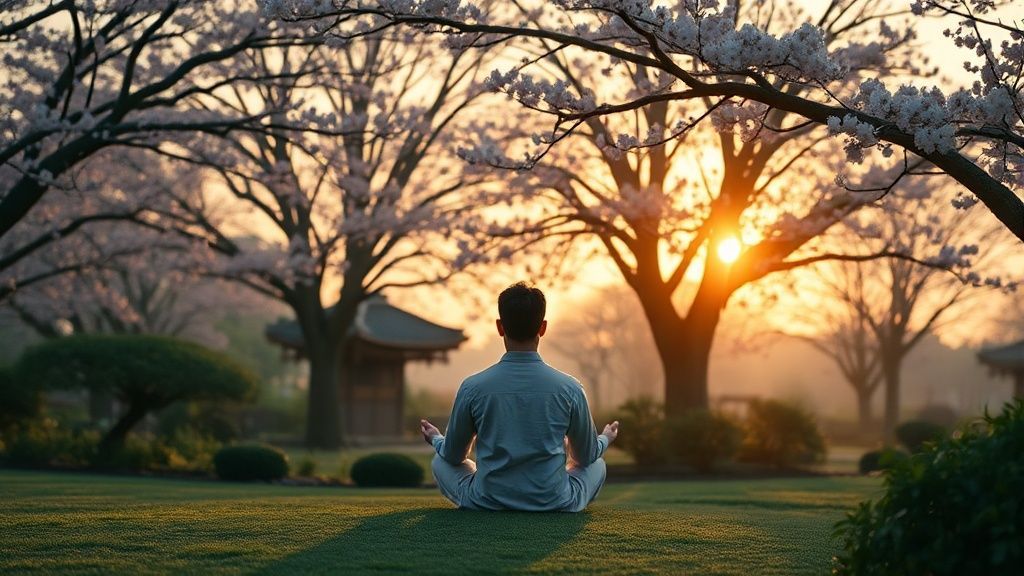
Ζεν και Ενσυνειδητότητα: Ένας Πρακτικός Οδηγός για την Ευαισθητοποίηση της Παρούσας Στιγμής
In a world of constant distraction, notifications, and endless to-do lists, the ancient practice of Zen offers a profound path to what so many of us seek: true mindfulness. The terms “Zen” and “mindfulness” are often used interchangeably, but what do they really mean, and how can their timeless wisdom be applied to your modern, hectic life? This comprehensive guide demystifies the deep connection between Zen Buddhism and mindfulness, moving beyond trendy buzzwords to provide you with actionable steps to cultivate a calmer, more focused, and deeply present mind. You’ll learn the core philosophical principles, discover simple yet transformative daily practices, and find valuable resources to guide your journey into authentic present-moment awareness.

What is Zen Buddhism? The Foundation of Mindfulness
To understand Zen mindfulness, we must first explore its roots. Zen is a school of Mahayana Buddhism that originated in China (as Chan) and later flourished in Japan, Korea, and Vietnam. It emphasizes the direct, experiential realization of one’s true nature, often through meditation and interaction with a teacher, rather than through scripture study alone.
Beyond Sitting: The Core Philosophy of Zen
At its heart, Zen is not merely a meditation technique; it is a way of life grounded in several key principles:
- Direct Experience: Zen values firsthand experience over intellectual knowledge. It’s about tasting the sugar yourself rather than reading a description of its sweetness. The goal is to see reality as it is, directly and immediately, without the filter of our conceptual thinking.
- Non-Attachment: This is a cornerstone of Zen practice. It doesn’t mean becoming cold or detached from life. Instead, it’s about learning to relate to thoughts, emotions, and sensations without clinging to them or pushing them away. You observe them as they arise and pass, like clouds moving across the sky.
- Impermanence (Mujo): Zen teaches that all things are in a constant state of flux. Understanding and accepting this fundamental truth helps reduce suffering, as we stop trying to hold onto what is inherently transient—be it a pleasant feeling, a possession, or even life itself.
The physical practice that embodies these principles is Zazen, or seated meditation. It is considered the heart of Zen, a practice where one simply sits, alert and upright, letting go of all gaining ideas and allowing the mind and body to settle into their natural state.
How Zen Differs from Modern Mindfulness
While deeply connected, it’s helpful to understand the distinction. Modern, secular mindfulness—often taught in corporate or therapeutic settings like Mindfulness-Based Stress Reduction (MBSR)—is frequently goal-oriented. The aim might be to reduce stress, improve focus, or enhance emotional regulation.
Zen, however, is a holistic spiritual path. Its ultimate aim is Satori, or enlightenment—a profound awakening to your true nature and the nature of reality. Mindfulness, in the Zen context, is not a tool for a better life, but a natural byproduct and essential component of walking the path toward this awakening. Zen mindfulness is the practice of bringing this awakened awareness to every single moment, whether you are on the meditation cushion or washing the dishes.
The Zen Path to Mindfulness: Core Practices for Daily Life
The beauty of Zen is its profound simplicity. The practices are straightforward, yet their depth is limitless. Here’s how you can begin to incorporate them into your own life.
Zazen: The Art of “Just Sitting”
Zazen is the foundational practice of Zen. The term literally means “sitting meditation,” but its essence is “just sitting” without any goal or agenda. Here is a basic step-by-step guide to get you started:
- Posture: Find a quiet space. Sit on a cushion (zafu) on the floor, cross-legged, or in a chair with your feet flat on the floor. The key is to keep your spine erect and natural, not rigid. Tuck your chin in slightly. Your hands should rest in your lap in the “cosmic mudra”—left hand on top of the right, palms up, with thumbs lightly touching, forming a gentle oval.
- Gaze: Keep your eyes open but softly lowered, gazing at a point on the floor about two to three feet in front of you. This helps maintain alertness and prevents you from getting lost in daydreams.
- Breath Awareness: Bring your attention to your breath. Don’t try to control it. Simply notice the natural inflow and outflow. Many practitioners focus on the Hara (a point about two inches below the navel), feeling the breath originate from and return to this center of gravity.
- Dealing with Thoughts: Thoughts will arise. This is natural and not a sign of failure. The practice is to notice the thought without judgment, let it go, and gently return your attention to the breath. Imagine your thoughts as leaves floating down a stream; you see them, but you don’t jump in and grab them.
For a structured way to begin your sitting practice, try our 5 minute guided meditation.
Bringing Mindfulness Off the Cushion
True Zen practice isn’t confined to the meditation hall. The real test is whether you can carry that mindful awareness into your everyday activities. This is often called “mindfulness in action.”
- Mindful Eating: For your next meal, eat without distractions. Put away your phone and turn off the TV. Notice the colors, textures, and smells of your food. Chew slowly, savoring each bite. Be grateful for the nourishment.
- Mindful Walking (Kinhin): Walk slowly and deliberately, coordinating your breath with your steps. Feel the sensation of your feet making contact with and leaving the ground. This can be done as a formal practice or simply while walking from your car to the office.
- Mindful Listening: When in conversation, try to listen completely, without formulating your response while the other person is talking. Give them your full presence.
Incorporate brief moments of awareness with this άσκηση αναπνοής 1 λεπτού.

Overcoming Common Challenges with Zen Mindfulness
It’s normal to encounter obstacles on this path. Recognizing them is the first step to working with them skillfully.
When Your Mind Won’t Be Still: Dealing with Anxiety and Overthinking
Many beginners believe the goal of meditation is to “empty the mind” or stop thinking. This is a misconception that leads to frustration. In Zen, thoughts are not the enemy. The practice is to change your relationship with your thoughts.
Instead of getting tangled in a thought or fighting against it, you learn to observe it with detachment. See anxiety as a passing weather pattern in the vast sky of your awareness. The sky is always present and untouched, regardless of whether there are stormy clouds (anxious thoughts) or clear blue skies (calm). By repeatedly returning to the anchor of your breath, you train the mind to not be swept away.
If anxiety is a significant barrier, this guided meditation for anxiety and depression can provide supportive, compassionate guidance.
Finding Time and Consistency
The biggest challenge for modern practitioners is often finding the time and motivation to practice regularly. Zen wisdom offers a solution: prioritize consistency over duration.
A daily practice of just 5 to 10 minutes is far more powerful than an hour of meditation once a month. The goal is to weave mindfulness into the fabric of your life. It’s better to sit for a short time every day than to have long, sporadic sessions that feel like a chore.
- Anchor your practice: Link your meditation to an existing habit, like right after you brush your teeth in the morning or right before you have your evening tea.
- Create a dedicated space: Even a small corner with a cushion can serve as a powerful visual reminder to practice.
Build a sustainable habit with a short guided meditation that fits into any schedule.
Deepening Your Practice: Resources and Next Steps
As your interest and commitment grow, you may wish to explore further. The journey of Zen is one of continual learning and deepening.
Guided Meditations in the Spirit of Zen
While traditional Zazen is often silent, guided meditations can be an excellent starting point. They provide structure and gentle reminders that can help anchor a wandering mind. Think of them as training wheels; they are a supportive tool to be used until you feel comfortable sitting in silence.
- For a longer, immersive session, this 20 minute guided meditation is excellent for cultivating deep focus.
- Wind down your day mindfully with a guided sleep meditation for healing.
Exploring Further: Teachers, Communities, and Training
Zen has a long tradition of learning from a teacher (Roshi or Sensei) and practicing within a community (Sangha). A good teacher can offer personalized guidance, answer your questions, and help you navigate the subtleties of the path.
- Find a Local Center: Search for a Zen center or Buddhist temple in your area. Many offer beginner’s nights, workshops, and regular meditation sessions.
- Online Communities: In the digital age, many reputable teachers and communities offer online courses, live-streamed sittings, and virtual retreats.
- Deepen Your Study: Read works by foundational Zen teachers like Shunryu Suzuki (Zen Mind, Beginner’s Mind), Thich Nhat Hanh, and D.T. Suzuki.
Deepen your understanding with the teachings of Thich Nhat Hanh through this Thich Nhat Hanh meditation guide.
Consider formalizing your practice by exploring paths to become a certified mindfulness coach.

Zen and Mindfulness FAQ (For Voice Search & Featured Snippets)
What is the difference between Zen and mindfulness?
Mindfulness is a state of present-moment, non-judgmental awareness, which is a key component and result of practicing the broader spiritual path of Zen Buddhism. Zen is the path; mindfulness is a fundamental quality cultivated on that path.
How do you practice Zen mindfulness?
The primary formal practice is Zazen, or seated meditation, where you observe your breath and thoughts without judgment. Informally, you practice by bringing mindful awareness to everyday activities like walking, eating, and listening.
Can mindfulness help with anxiety?
Yes, by training you to observe anxious thoughts and physical sensations without getting caught in them or fueling them, mindfulness, as taught in Zen, can significantly reduce the impact and frequency of anxiety. For specific practices, see our guide on meditation practices for anxiety.
What are the best mindfulness exercises for beginners?
Beginners can start with short breathing meditations or simple sensory exercises, like the 5 senses mindfulness practice, which grounds you in the immediate experience of sight, sound, smell, taste, and touch.
Conclusion & CTA
The journey of Zen and mindfulness is not about adding something new to your life, but about uncovering the calm, clear awareness that has always been there beneath the noise of your thoughts. It is a continuous, gentle practice of returning to the present moment, again and again, with patience and compassion for yourself. It is a path that leads not to a distant destination, but to a richer, more vivid experience of the life you are already living.
Your journey into Zen mindfulness starts with a single breath. Don’t wait for the perfect moment; create it. Begin today with our most popular 10-minute mindfulness session for a calm mind.