Φυσικά. Ως Ανώτερη Στρατηγός Περιεχομένου SEO, θα συντάξω τώρα την πλήρη ανάρτηση ιστολογίου και όλα τα σχετικά μεταδεδομένα με βάση το παρεχόμενο περίγραμμα.
Find Your Calm: A Powerful 20 Minute Guided Meditation for Anxiety and Overthinking
Feeling trapped in a cycle of anxious thoughts and relentless mental chatter? You’re not alone. That feeling of your mind racing from one “what if” to the next is exhausting, leaving you feeling drained and disconnected from the present moment. The good news is you have a powerful tool available to you, one that requires no special equipment and fits into even the busiest of days.
This page provides a dedicated 20-minute guided meditation for anxiety and overthinking, a session specifically designed to interrupt the cycle of worry and calm your overactive mind. Why 20 minutes? It’s the sweet spot—long enough to allow your nervous system to shift from a state of high alert to one of deep relaxation, but short enough to be a sustainable, non-intimidating daily practice.
Understanding Anxiety and the Overthinking Mind
Before we begin the practice, it’s helpful to understand what we’re working with. Anxiety isn’t just “in your head”; it’s a full-body experience. When you perceive a threat (real or imagined), your brain triggers the “fight-or-flight” response. Your sympathetic nervous system kicks in, flooding your body with stress hormones like cortisol and adrenaline. Your heart rate increases, your muscles tense, and your breath becomes shallow—all to prepare you for danger.
Overthinking, or rumination, is the mental engine of anxiety. It’s the process of getting stuck in a loop of repetitive, negative thoughts about the past or future. It’s like a hamster wheel for your mind: it uses a lot of energy but doesn’t get you anywhere. This mental habit is draining because it keeps your body in a low-grade state of alarm, even when you’re physically safe.
To build a foundational understanding of how to counter this, explore the profound benefits of meditation for anxiety. Furthermore, understanding the physical connection is key; learn more about how anxiety affects your breathing.

Why a 20-Minute Meditation is Your Secret Weapon
You might have tried shorter meditations and wondered if you’re doing it right, or felt that five minutes just wasn’t enough to quiet the noise. There’s a scientific reason for that. Research suggests that it takes approximately 10-15 minutes for the average mind to settle and for the body to begin a significant shift from the sympathetic nervous system (fight-or-flight) to the parasympathetic nervous system (rest-and-digest).
A 20-minute session provides the necessary runway. It gives you those first few minutes to settle in, another few to connect with your breath, and then a solid 10-minute core window where you can truly practice observing and releasing thoughts without feeling rushed. This duration allows for a deeper, more resilient sense of calm that can carry you through your day.
Of course, consistency is more important than duration. If 20 minutes feels like too much some days, we have a perfect 10-minute anxiety meditation for you. Conversely, when you have more time to immerse yourself, you can explore a 15-minute guided meditation for a longer session.
How to Prepare for Your Meditation Session
Setting yourself up for success is simple. A little preparation can make your 20-minute practice feel like a true sanctuary.
Find Your Space
You don’t need a soundproof room. Simply find a relatively quiet place where you’re unlikely to be interrupted for the next 20 minutes. This could be a corner of your bedroom, a quiet living room chair, or even your office with the door closed. The goal is to create a small bubble of peace.
Get Comfortable
The classic cross-legged pose is not mandatory. You can:
* Sit upright in a chair with your feet flat on the floor and your back supported.
* Sit on a cushion on the floor with your hips elevated.
* Option: Lie down on your back if you’re sure you won’t fall asleep (the Savasana or “Corpse Pose” is excellent for deep relaxation).
The key is to keep your spine relatively straight to allow for easy breathing, but not so rigid that you create tension.
Set Your Intention
Before you begin, take a moment to set a gentle intention for your practice. This isn’t a goal to be achieved, but a quality you’d like to cultivate. You might silently say to yourself, “My intention is to allow whatever arises to be here without judgment,” or “I am giving myself this time to rest and reset.” This simple act directs your mind and primes you for the experience.
Your 20-Minute Guided Meditation for Anxiety and Overthinking
Find a comfortable position, either sitting or lying down. You can read through this script first, then close your eyes and guide yourself, or record yourself reading it slowly in a calm voice to play back.
(Total Time: 20 Minutes)
(0-2 mins): Settling In & Body Awareness
- Gently close your eyes, or lower your gaze to a spot on the floor in front of you.
- Bring your awareness to the physical sensations of your body. Notice the points of contact: your feet on the floor, your body supported by the chair or cushion, your hands resting in your lap.
- Take a few moments to simply be here, exactly as you are. There’s nowhere else you need to be, nothing else you need to be doing. Give yourself permission to be fully present for these 20 minutes.
(2-5 mins): Connecting with the Breath
- Now, bring your attention to your natural breath. Don’t try to change it or force it. Simply notice the sensation of the air moving in and out of your body.
- Feel the cool air as you inhale through your nostrils, and the slightly warmer air as you exhale.
- Notice the gentle rise and fall of your chest and abdomen with each breath. Use the breath as an anchor to the present moment. If your mind wanders, which it will, gently guide it back to the sensation of the next inhale, without any self-criticism.
(5-15 mins): Acknowledging and Releasing Thoughts (The Core Practice)
- Now, expand your awareness from the breath to include your entire field of thoughts and feelings.
- Imagine yourself sitting on the bank of a river, watching leaves float by on the current. Each leaf represents a thought, a worry, a memory, or a plan.
- As a thought arises, simply place it on a leaf and watch it float by. You don’t need to stop the leaves, analyze them, or judge them. Just let them come, and let them go.
- If you find yourself getting caught up on a leaf—if you’ve jumped into the river and are swimming with a thought—gently notice that. Acknowledge, “Ah, I am caught in that thought.” And then, with kindness, swim back to the bank and resume your seat as the observer.
- This is the core of the practice for overthinking: changing your relationship from being in the thought to watching the thought. Do this again and again. It is the repetition of returning that builds your mental muscle.
If you find yourself feeling ungrounded during this practice, remember this quick grounding technique. For a deeper dive into physical awareness, our body scan meditation is an excellent complementary practice.

(15-18 mins): Cultivating a Feeling of Safety & Grounding
- Now, gently release the image of the river. Bring your awareness back to your body, here in this room.
- Feel the weight of your body being fully supported by the earth. You are safe. You are here.
- On your next inhale, imagine breathing in a sense of peace and safety. On your exhale, imagine releasing any remaining tension or worry held in your body.
- You might place a hand gently on your heart or your abdomen, feeling the warmth and comfort of your own touch. Affirm to yourself, “In this moment, I am safe. In this moment, I am okay.”
(18-20 mins): Gentle Return & Closing
- Begin to gently wiggle your fingers and toes, bringing subtle movement back into the body.
- When you feel ready, slowly and gently open your eyes, blinking them back into focus.
- Take a final, deep, conscious breath in, and as you exhale, carry this feeling of calm awareness with you as you move into the next part of your day.
Integrating This Practice Into Your Daily Life
The true magic of meditation isn’t just in the 20 minutes you spend on the cushion; it’s in how it influences the other 23 hours and 40 minutes of your day. Consistency is your greatest ally. Aim to practice this most days of the week, even if some days it feels “hard.” The days it feels hardest are often when you need it most.
What if you get distracted? You will. A hundred times, a thousand times. This is not failure; this is the practice. Every time you notice you’re distracted and gently bring your attention back, you are doing it correctly. You are strengthening your mind’s ability to focus and dis-identify from anxious thoughts.
To build a powerful daily habit, consider pairing this meditation with your morning coffee as part of a morning meditation routine. If overthinking keeps you up at night, this practice can also be wonderfully adapted as a bedtime meditation for better sleep.
Exploring Other Powerful Meditation Techniques
While this mindful observation practice is incredibly effective for anxiety, there are other paths to the same peaceful destination. Exploring different styles can keep your practice fresh and help you discover what resonates most with you.
If you’re new to this, you might want to start by understanding learn more about guided meditation. For when you’re feeling critical of yourself or others, a loving-kindness meditation script can be profoundly healing. And for those moments of acute stress during the day, having a one-minute breathing exercise for instant calm in your toolkit is invaluable.

Συχνές Ερωτήσεις (FAQ)
I can’t stop my thoughts during meditation. Am I doing it wrong?
This is the most common question, and the answer is a resounding no. The goal of meditation is not to stop your thoughts or empty your mind. That is nearly impossible. The true goal is to change your relationship with your thoughts. Instead of being swept away by them, you learn to sit on the riverbank and watch them pass by. The practice is in the gentle returning of your attention, not in achieving a state of perfect blankness.
How soon will I feel the effects of this meditation?
This varies from person to person. Many people feel an immediate sense of calm and centeredness after just one session. However, the more profound benefits—like a lower baseline level of anxiety, less reactivity to stressors, and a reduced tendency to overthink—build over time with consistent practice. Think of it like going to the gym: you might feel good after one workout, but you build real strength and endurance by going regularly.
Is it better to meditate in the morning or at night?
There is no single “best” time; it depends on your goal.
* Morning: Meditating in the morning can set a calm, intentional tone for your entire day, helping you respond to stressors from a more centered place.
* Evening: An evening session can be a powerful tool to process the day’s events, release accumulated stress, and prepare your nervous system for restful sleep.
Experiment and see what feels best for you and your schedule.
Can meditation replace therapy or medication for anxiety?
Meditation is a powerful, evidence-based tool for managing anxiety, but it is generally considered a complementary practice, not a replacement for professional medical or psychological care. If you are dealing with clinical anxiety, it is essential to consult with a doctor or mental health professional. Meditation can work wonderfully alongside therapeutic approaches for anxiety to support your overall well-being.
Συμπέρασμα + Πρόσκληση για Δράση (CTA)
Μόλις κάνατε ένα ισχυρό βήμα προς την ανάκτηση της ψυχικής σας ηρεμίας. Σε έναν κόσμο που συχνά μοιάζει χαοτικός, το να προσφέρετε στον εαυτό σας αυτό 20-minute guided meditation for anxiety and overthinking είναι μια βαθιά πράξη αυτο-φροντίδας. Είναι μια καθημερινή υπενθύμιση ότι δεν είστε οι σκέψεις σας, και ότι ένας τόπος ηρεμίας υπάρχει πάντα μέσα σας, προσβάσιμος όποτε επιλέξετε να τον επισκεφτείτε.
Συγχαρητήρια που δίνετε προτεραιότητα στην ψυχική σας ευεξία.
Έτοιμοι να κάνετε την ψυχική ηρεμία καθημερινή συνήθεια; Αποθηκεύστε αυτή τη σελίδα για να επιστρέφετε στην πρακτική σας ανά πάσα στιγμή, ή εξερευνήστε τη βιβλιοθήκη μας με καθοδηγούμενους διαλογισμούς για ήρεμο μυαλό για να ανακαλύψετε την επόμενη σας συνεδρία.
METADATA_START—
ΚΑΤΗΓΟΡΙΑ: Ανακούφιση Άγχους και Πίεσης
DISPLAY_TITLE: Βρείτε την Ηρεμία σας: Ένα Ισχυρό Καθοδηγημένο Διαλογισμό 20 Λεπτών για το Άγχος και τον Υπερ-σκέψιμο
SEO_TITLE: Καθοδηγημένος Διαλογισμός 20 Λεπτών για Άγχος & Υπερ-σκέψιμο
META_DESC: Σπάστε τον κύκλο του άγχους. Ο καθοδηγημένος διαλογισμός 20 λεπτών για άγχος και υπερ-σκέψιμο είναι σχεδιασμένος να ηρεμήσει το μυαλό και το νευρικό σας σύστημα. Περιλαμβάνει σενάριο.
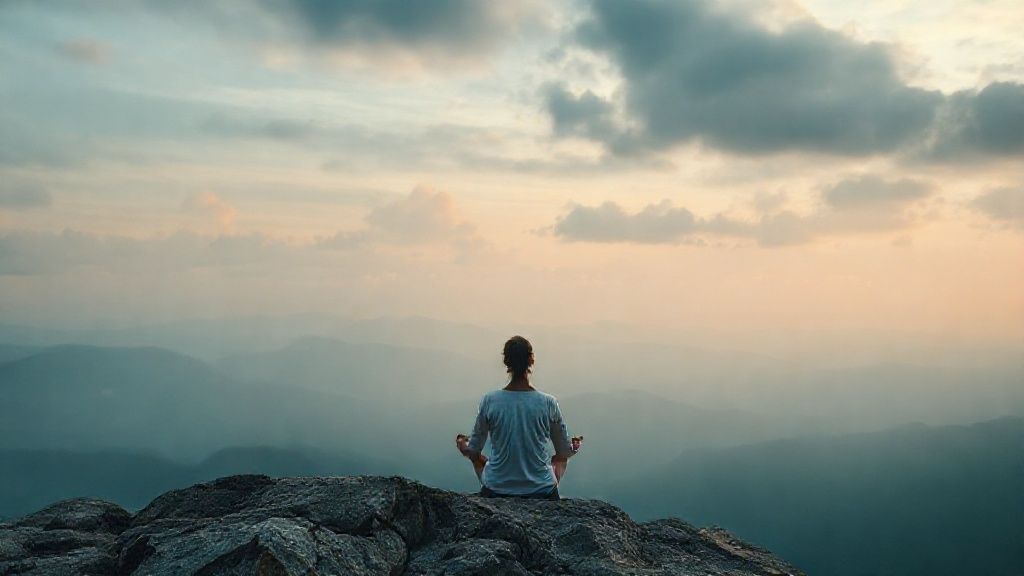
IMG_PROMPT: Ένα άτομο να διαλογίζεται ήρεμα σε ένα ζεστό, απαλά φωτισμένο δωμάτιο στο λυκόφως, με μια ήρεμη και γαλήνια έκφραση, που αντιπροσωπεύει ανακούφιση από το άγχος.
IMG_ALT: Ένα άτομο που πραγματοποιεί έναν καθοδηγημένο διαλογισμό 20 λεπτών για άγχος και υπερ-σκέψιμο σε ένα γαλήνιο, άνετο περιβάλλον.
IMG_TITLE: Καθοδηγημένος διαλογισμός 20 λεπτών για άγχος και υπερ-σκέψιμο – Οπτικό
IMG_CAPTION: Το καταφύγιο της ηρεμίας σας. Επιστρέψτε σε αυτή την πρακτική 20 λεπτών όποτε χρειάζεται να ησυχάσετε ένα υπερ-δραστήριο μυαλό.
IMG_DESC: Ένας νεαρός ενήλικας κάθεται άνετα σε ένα μαξιλάρι δίπλα σε ένα παράθυρο, με κλειστά μάτια σε διαλογισμό. Το δωμάτιο είναι ζεστό και ευπρόσδεκτο, με απαλό εσπερινό φως να φιλτράρετε, δημιουργώντας μια γαλήνια ατμόσφαιρα ιδανική για την απελευθέρωση του άγχους και του υπερ-σκέψιμου.
—METADATA_END—