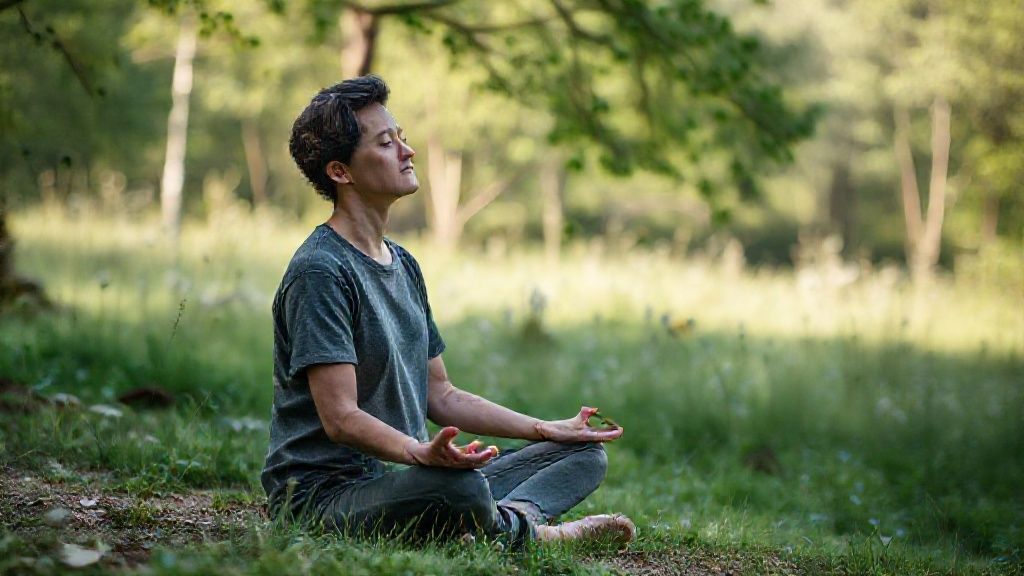
The 5 Senses Exercise: A Grounding Technique for Instant Calm
That moment when your heart races, your thoughts spiral, and the world feels like it’s closing in—we’ve all been there. Whether it’s work pressure, personal worries, or just the overwhelming pace of modern life, anxiety and stress can pull us out of the present moment and into a vortex of mental chaos.
What if you had a simple tool that could bring you back to calm in just minutes—no special equipment, training, or apps required? Enter the 5 Senses Exercise, an evidence-based grounding technique that uses your immediate environment to anchor you firmly in the here and now.
In this comprehensive guide, you’ll discover not just how to practice this powerful mindfulness technique, but why it’s so effective for managing anxiety, stopping racing thoughts, and reclaiming your mental peace. We’ll walk you through the step-by-step process, explore when and where to use it, and provide variations to keep your practice fresh and effective.

What Is the 5 Senses Exercise? (And Why It Works)
The 5 Senses Exercise—sometimes called the 5-4-3-2-1 grounding technique—is a simple yet powerful mindfulness practice that engages all five senses to connect you with your present-moment experience. By systematically noticing what you can see, touch, hear, smell, and taste, you effectively interrupt anxious thought patterns and return to the reality of your immediate surroundings.
But why is this technique so effective? The answer lies in how our brains process anxiety and sensory information. When we’re anxious, our nervous system activates what’s commonly known as the “fight-or-flight” response. Blood flows away from our prefrontal cortex (responsible for rational thinking) and toward more primitive brain regions geared toward survival. This physiological shift makes it difficult to think clearly and reinforces cyclical, catastrophic thoughts.
Grounding techniques like the 5 Senses Exercise work by deliberately redirecting your attention to neutral or positive sensory information. This process:
- Interrupts the anxiety cycle by giving your brain a different task to focus on
- Aktiviert das parasympathische Nervensystem, which promotes relaxation and recovery
- Brings awareness to the present moment, where most anxiety triggers don’t actually exist
- Provides a sense of control when emotions feel overwhelming
The technique has roots in both ancient mindfulness traditions and modern therapeutic approaches. It’s particularly prominent in Acceptance and Commitment Therapy (ACT) und Dialectical Behavior Therapy (DBT), where it’s used as a distress tolerance skill. If you’re interested in exploring other mindfulness exercises from Acceptance and Commitment Therapy (ACT), we have resources that can help you deepen your practice at https://mindfulnesspractices.life/act-mindfulness-scripts. Similarly, if you want to discover other grounding techniques used in Dialectical Behavior Therapy, visit https://mindfulnesspractices.life/dbt-group-exercises.
Step-by-Step Guide to the 5 Senses Mindfulness Technique
Ready to try the practice yourself? Find a comfortable position—sitting or standing both work—and follow this systematic approach. Remember, there’s no “right” or “wrong” way to experience your senses; the goal is simply to notice what’s already present.
Step 1: Sight – Acknowledge 5 Things You Can See
Begin by bringing gentle attention to your visual field. Instead of just glancing around, try to really see each item you identify. Notice details you might normally overlook—the way light falls on a surface, subtle color variations, or small movements in your environment.
Examples:
– The pattern of wood grain on your desk
– A slight shadow cast by your water bottle
– The specific green shade of a plant leaf
– Tiny letters on your keyboard
– The texture of the wall across from you
Don’t judge what you see as “interesting” or “boring”—simply acknowledge each item with neutral curiosity.
Step 2: Touch – Acknowledge 4 Things You Can Feel
Now shift your attention to physical sensations. Notice both obvious contacts (like your body against the chair) and more subtle textures. You might want to actively explore some surfaces with your fingers to discover new sensations.
Examples:
– The firm support of the chair beneath you
– The smooth, cool surface of your phone
– The texture of your clothing against your skin
– The air temperature on your face and hands

Step 3: Hearing – Acknowledge 3 Things You Can Hear
Listening can be particularly grounding because sounds are constantly changing and unfolding in the present moment. Try to notice both prominent sounds and more subtle background noises without labeling them as “good” or “bad.”
Examples:
– The hum of a computer or refrigerator
– Distant traffic sounds or birds chirping outside
– The sound of your own breathing
– A clock ticking or people talking in another room
Step 4: Smell – Acknowledge 2 Things You Can Smell
This step can sometimes be challenging, especially if you’re in a space with minimal odors. That’s perfectly fine—the effort to notice is what matters. You might detect subtle scents you normally filter out.
Examples:
– The faint scent of your laundry detergent on your clothes
– The aroma of coffee or food in the air
– The smell of books or paper
– The neutral scent of the air itself
Step 5: Taste – Acknowledge 1 Thing You Can Taste
Finally, bring awareness to your sense of taste. You don’t need to have food in your mouth—simply notice whatever taste is present, even if it’s neutral.
Examples:
– The aftertaste of your last meal or drink
– The neutral flavor of your own mouth
– A minty sensation from toothpaste
– The subtle taste of the air as you breathe
Pro Tip: Once you’ve completed the cycle, take a slow, deep breath and notice how you feel. Many people experience an immediate sense of being more present and less caught up in their thoughts.
When to Use This Powerful Grounding Tool
The beauty of the 5 Senses Exercise lies in its versatility. Unlike some practices that require specific conditions, this technique can be used virtually anywhere, anytime. Here are some particularly effective applications:
For Managing Acute Anxiety and Panic
When anxiety strikes or panic begins to build, the 5 Senses Exercise can serve as an emergency brake for your nervous system. By forcing your brain to focus on concrete sensory information, you interrupt the cycle of catastrophic thinking that fuels panic attacks.
The technique works especially well when combined with other anxiety-reduction strategies. If you’re looking for more techniques for managing anxiety, explore our comprehensive resource at https://mindfulnesspractices.life/anxiety-reducing-techniques. For immediate relief, you might also combine it with a quick breathing exercise from https://mindfulnesspractices.life/1-minute-breathing-exercise.
Before a Stressful Event (Meeting, Presentation)
Nervous before an important work presentation, difficult conversation, or performance? Spending just 2-3 minutes doing the 5 Senses Exercise can calm your nerves and improve your focus. The practice grounds you in your body and environment, reducing the tendency to get lost in worries about future outcomes.
To Combat Overthinking and Rumination
When you notice yourself stuck in repetitive, unproductive thought patterns, the 5 Senses Exercise provides a concrete way to shift gears. The technique demands just enough attention that it’s difficult to simultaneously engage in heavy rumination.
For those times when you need a more substantial intervention for persistent overthinking, consider pairing this exercise with a deeper session to quiet a busy mind available at https://mindfulnesspractices.life/20-minute-guided-meditation-for-anxiety-and-overthinking.

Beyond the Basics: Variations of the 5 Senses Exercise
While the standard 5-4-3-2-1 approach is highly effective, sometimes varying the practice can keep it fresh or adapt it to specific situations. Here are some creative variations to explore:
The 3-Minute Outdoor Version
Nature provides an incredibly rich sensory environment for grounding practice. Try this accelerated version when you have access to outdoor space:
- 5 sights: Notice five different natural elements (a specific leaf, cloud formation, insect, etc.)
- 4 textures: Feel four different natural surfaces (tree bark, grass, soil, stone)
- 3 sounds: Identify three distinct natural sounds (birds, wind, water)
- 2 smells: Notice two natural aromas (damp earth, flowers, pine)
- 1 taste: Pay attention to the clean taste of the air
The “Body Scan” Combo
For deeper relaxation, you can transition directly from the 5 Senses Exercise into a body awareness practice:
- Complete the standard 5-4-3-2-1 sequence
- Bring attention to the physical sensations in your feet
- Slowly move your awareness up through your body—ankles, calves, knees, etc.
- Notice sensations in each area without trying to change them
If you’d like guidance for this practice, you can download our free body scan meditation script at https://mindfulnesspractices.life/5-minute-body-scan-script-pdf.
For Kids and Students
The 5 Senses Exercise can be adapted for younger practitioners by turning it into a game:
- “Let’s play the noticing game! Can you find five blue things you can see?”
- “What are four things you can feel? Is your shirt soft or rough?”
- “Close your eyes—what three sounds can you hear?”
- “Take a big sniff—what two smells can you discover?”
- “What’s one taste in your mouth right now?”
For educators and parents looking to introduce mindfulness to younger people, we offer additional resources to discover more mindfulness activities suitable for students unter https://mindfulnesspractices.life/mindfulness-activities-for-high-school-students.
Deepen Your Practice: Complementary Mindfulness Resources
While the 5 Senses Exercise is powerful on its own, it exists within a broader ecosystem of mindfulness practices that can support your mental wellbeing. Consider exploring these complementary resources:
Short Guided Meditations for Grounding
Sometimes, having a voice guide you through a practice can be particularly helpful, especially when you’re new to mindfulness or experiencing significant distress. We offer several brief guided sessions:
- Try this 3-minute guided meditation for a quick reset during a busy day: https://mindfulnesspractices.life/three-minute-guided-meditation
- For a slightly longer session, explore a 5-minute guided meditation session: https://mindfulnesspractices.life/5-minute-meditation
- If you prefer reading to listening, you can follow a short grounding meditation script: https://mindfulnesspractices.life/2-minute-grounding-meditation-script
Mindfulness Exercises for Daily Life
The 5 Senses Exercise is just one of many tools available for cultivating present-moment awareness. If you’re interested in expanding your toolkit, you might want to:
- Explore other quick mindfulness exercises that fit into busy schedules: https://mindfulnesspractices.life/quick-mindfulness-exercises
- Improve your focus with these specific exercises designed to strengthen attention: https://mindfulnesspractices.life/attention-focus-exercises

Frequently Asked Questions About the 5 Senses Exercise
How long does the 5 Senses Exercise take?
Die Übung kann in nur 60 Sekunden abgeschlossen werden, wenn Sie es eilig haben. Wenn Sie sich jedoch 2–3 Minuten Zeit nehmen, ermöglicht dies eine gründlichere und erdendere Erfahrung. Es gibt keine Zeitbegrenzung – das Wichtige ist, jeden Sinn mit bewusster Aufmerksamkeit zu durchlaufen.
Was ist, wenn ich keine Gerüche oder Geschmäcker identifizieren kann?
Dies ist sehr verbreitet, insbesondere in Umgebungen mit minimalen Geruchsunterschieden oder wenn Sie kürzlich nichts gegessen oder getrunken haben. Das Ziel ist nicht, “interessante” Sinneserfahrungen zu haben, sondern einfach das wahrzunehmen, was vorhanden ist. Wenn Sie keinen bestimmten Geruch feststellen können, erfüllt die Feststellung “kein deutlicher Geruch” oder “neutrale Luft” immer noch den Zweck der Übung.
Kann diese Übung beim Schlaf helfen?
Absolut. Die 5-Sinne-Übung kann eine hervorragende Methode sein, um einen rasenden Geist zu beruhigen, wenn Sie Schwierigkeiten haben einzuschlafen. Indem sie Ihre Aufmerksamkeit von Sorgen weg und hin zur Sinneswahrnehmung lenkt, hilft sie Ihrem Nervensystem, in einen entspannteren Zustand überzugehen, der den Schlaf fördert. Für einen gezielteren Ansatz könnten Sie auch eine geführte Schlafmeditation unter https://mindfulnesspractices.life/sleep-meditation verfügbare Meditation ausprobieren.
Ist dies ein Ersatz für Therapie?
Während die 5-Sinne-Übung ein evidenzbasiertes Bewältigungswerkzeug ist, das Angstsymptome deutlich reduzieren kann, ist sie kein Ersatz für eine professionelle psychische Gesundheitsbehandlung bei Erkrankungen wie klinischer Angst oder Depression. Wenn Sie mit anhaltenden psychischen Herausforderungen kämpfen, ermutigen wir Sie, sich über therapeutische Ansätze bei Angst und Depression unter https://mindfulnesspractices.life/best-therapy-for-anxiety-and-depression zu informieren und in Erwägung zu ziehen, Unterstützung von einer qualifizierten Fachkraft zu suchen.
Fazit & Handlungsaufforderung (CTA)
Die 5-Sinne-Übung bietet etwas Bemerkenswertes: einen stets verfügbaren, sofort zugänglichen Weg zurück zur Ruhe mitten in den Stürmen des Lebens. Diese einfache und doch tiefgründige Praxis nutzt Ihre angeborenen Sinnesfähigkeiten, um Angst zu unterbrechen, Grübeln zu reduzieren und Sie fest im gegenwärtigen Moment zu verankern, in dem der Frieden wohnt.
Denken Sie daran, dass die Wirksamkeit dieser Technik, wie bei jeder Fertigkeit, mit regelmäßiger Übung wächst. Versuchen Sie, sie in Ihre tägliche Routine zu integrieren – vielleicht während Ihres Morgenkaffees, in der Mittagspause oder immer wenn Sie zwischen Aktivitäten wechseln. Durch Wiederholung wird es zur zweiten Natur, in Stressmomenten zu Ihren Sinnen zurückzukehren.
Bereit, Achtsamkeit zur täglichen Gewohnheit zu machen? Die 5-Sinne-Übung ist nur der Anfang Ihrer Reise zu größerer mentaler Klarheit und emotionalem Gleichgewicht.
Beginnen Sie mit einer 10-minütigen beruhigenden Meditation, um eine solide Grundlage für Ihre Praxis unter https://mindfulnesspractices.life/10-minute-mindfulness zu schaffen.
Oder wenn Angst Ihre Hauptsorge ist, probieren Sie eine geführte Meditation speziell bei Angst, verfügbar unter https://mindfulnesspractices.life/guided-meditation-for-anxiety.
Ihre Sinne sind immer bei Ihnen – was Ruhe überall und jederzeit zugänglich macht, wenn Sie sie brauchen.