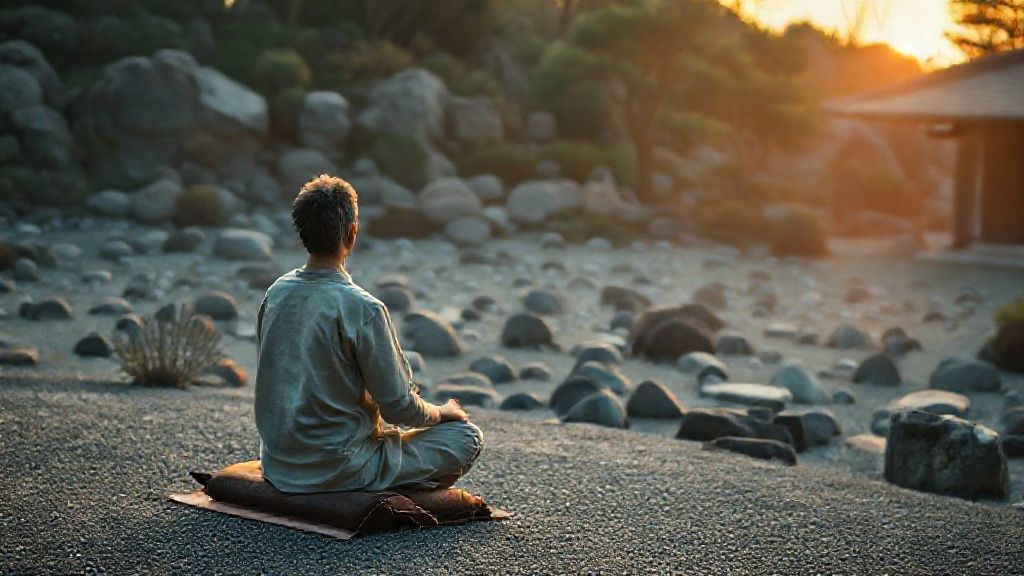
Japanese Meditation: A Complete Guide to Zen, Mindfulness, and Inner Peace
In a world of constant noise, notifications, and never-ending to-do lists, finding moments of true stillness can feel like an impossible quest. The serene and disciplined practices of Japanese meditation offer a profound path to this elusive quiet, not by adding another task to your day, but by teaching you a new way to be in it. If you’ve ever felt overwhelmed, disconnected, or mentally cluttered, the ancient wisdom of Japan provides a time-tested antidote.
So, what exactly is Japanese meditation? At its core, Japanese meditation is an umbrella term for contemplative practices, most notably Zazen (seated Zen meditation), that aim to cultivate mindfulness, insight, and a direct, unmediated experience of reality. It’s less about achieving a specific state and more about waking up to the one you’re already in. This comprehensive guide will demystify these ancient techniques, explore their unique benefits for the modern mind, and provide you with a practical, step-by-step approach to incorporating them into your daily life for greater calm, clarity, and purpose.
What is Japanese Meditation? Understanding the Core Philosophy
Before you can practice effectively, it helps to understand the “why” behind the practice. Japanese meditation is deeply intertwined with Zen Buddhism, which traveled from China to Japan and evolved into a distinct tradition emphasizing direct experience over scholarly knowledge. The goal isn’t to escape the world but to see it—and your place in it—with perfect clarity.
The Heart of Zen: Zazen (Just Sitting)
If you only learn one Japanese meditation technique, it should be Zazen. The term literally means “seated meditation,” and it is the cornerstone of Zen practice. Unlike some guided meditations that involve visualization or mantras, Zazen is strikingly simple in its instruction, yet profoundly deep in its execution.
The most advanced form of Zazen is often called Shikantaza, which translates to “nothing but precisely sitting.” This is the practice of non-striving. You aren’t trying to become enlightened, empty your mind, or achieve a state of bliss. You are simply sitting, fully alert and present, allowing thoughts, sounds, and sensations to arise and pass without chasing them or pushing them away. You are resting in the awareness itself.

Key Principles: Mindfulness, Impermanence, and Non-Attachment
The practice of Zazen is supported by several key philosophical concepts:
- Mindfulness (Ikinuki): This is the practice of being fully present and engaged in the current moment, without distraction or judgment. In Zazen, you are mindful of your posture, your breath, and the activity of your mind.
- Impermanence (Mujō): The understanding that all things are in a constant state of flux. By observing your thoughts come and go during meditation, you directly experience this truth, which can reduce your attachment to fleeting emotions and circumstances.
- Non-Attachment (Mushin – “No-Mind”): This doesn’t mean being cold or unfeeling. Mushin refers to a state of mind that is not fixed or preoccupied, a mind that is open to all things without being stuck on any one thing. It’s the mental fluidity that arises when you stop clinging to thoughts and opinions.
- Emptiness (Kū): Often misunderstood, emptiness doesn’t mean nothingness. It refers to the concept that all phenomena are empty of a separate, independent self. Everything exists in relation to everything else. This understanding fosters a deep sense of interconnection and compassion.
The Profound Benefits of a Japanese Meditation Practice
Why dedicate time to “just sitting”? The benefits, both scientifically documented and anecdotally reported for centuries, are transformative.
- Cultivating Mental Clarity and Focus: In our multitasking world, our attention is fractured. Zazen is a workout for your “attention muscle.” By repeatedly bringing your focus back to your breath or posture, you train your mind to be less distractible and more capable of sustained concentration in daily life.
- Reducing Stress, Anxiety, and Overthinking: The practice of observing your thoughts without judgment creates a crucial space between you and your mental chatter. You learn that you are not your thoughts. This can dramatically reduce the power of anxious loops and stressful narratives. For those seeking immediate support, a ‘guided meditation for anxiety’ can be a helpful starting point.
- Enhancing Emotional Balance and Inner Peace: By embracing impermanence, you become less reactive to emotional highs and lows. You begin to experience feelings as passing weather patterns, not permanent climate. This leads to a more stable, resilient, and peaceful inner landscape.
A Beginner’s Guide to Zazen: How to Practice Japanese Meditation
Ready to try? Here is a simple, step-by-step guide to beginning your Zazen practice.
Step 1: Preparing Your Posture and Space
You don’t need a fancy meditation hall, but a quiet, tidy corner can be helpful.
- Posture is Paramount: Sit on the forward third of a firm cushion (zafu) on top of a mat (zabuton). If you don’t have these, a folded blanket and a firm pillow work perfectly.
- Choose Your Position:
- Full Lotus: Each foot is placed on the opposite thigh.
- Half Lotus: One foot is placed on the opposite thigh.
- Burmese: Both legs are folded in front of you on the floor, with ankles crossed.
- Seiza: Kneeling, often with a bench or cushion between your legs.
- Chair: Sit upright, feet flat on the floor, away from the backrest.
- Align Your Spine: Imagine a string pulling the crown of your head toward the ceiling. Tuck your chin slightly. Your ears should be in line with your shoulders.
- Hands: Form a “cosmic mudra.” Place your dominant hand palm-up in your lap. Rest your other hand, also palm-up, on top of it. Let the tips of your thumbs touch gently, forming a soft oval.
Step 2: Focusing on the Breath (Kokyu)
- Gently close your eyes or lower your gaze, softening your focus on the floor a few feet in front of you.
- Bring your awareness to your breath. Don’t try to control it. Simply notice the natural inhalation and exhalation.
- Feel the breath as it enters and leaves your body. Many find it helpful to focus on the slight movement of the abdomen or the sensation of air at the tip of the nose.
- If you need more structure, try our ’10-minute breathing meditation script’ to guide you through this process.
Step 3: Working with the Mind (Observing Without Judgment)
This is the heart of the practice.
- Thoughts will arise. This is normal and not a sign of failure. When you notice you have been carried away by a thought, memory, or plan, simply acknowledge it without judgment—”thinking”—and gently return your awareness to your breath and posture.
- Be gentle with yourself. The “magic” isn’t in stopping thoughts, but in the millionth time you notice you’re distracted and choose to come back. This is the practice of cultivating awareness.
Exploring Different Japanese Meditation Techniques
While Zazen is central, other practices enrich the path.
Kinhin: The Art of Walking Meditation
After long periods of sitting, practitioners often engage in Kinhin. This is walking meditation, designed to bring the mindful awareness of Zazen into movement. It’s typically done very slowly, with attention on the soles of the feet and the flow of movement, coordinating each step with a full breath. It’s a beautiful practice for learning to carry meditation off the cushion.
Metta and Mindfulness in a Japanese Context
While Loving-Kindness meditation (Metta) has strong roots in Theravada Buddhism, the core intention—cultivating unconditional, inclusive love—is universal and is embraced in various Japanese traditions. It complements Zazen beautifully by actively nurturing the compassion that arises naturally from seeing our interconnectedness. You can explore this with a dedicated ‘loving-kindness meditation script’.

Integrating Japanese Meditation into Your Daily Life
The ultimate aim is to make your entire life your meditation. Here’s how to weave these principles into the fabric of your day.
Starting Your Day with Mindful Intention
Instead of reaching for your phone, dedicate the first few minutes of your day to sitting. Even a short session can set a tone of calm and intention for everything that follows. For a structured start, try a ‘5-minute morning guided meditation’.
A Midday Reset for Focus and Calm
When the afternoon slump hits or stress begins to build, a short meditation can be a powerful reset. Close your office door or find a quiet spot. A ‘short grounding meditation script’ lasting just two minutes can center you and restore your focus.
Unwinding with an Evening Meditation for Deep Sleep
Letting go of the day’s accumulated stress is essential for restorative sleep. A gentle evening Zazen session or a body-scan practice can signal to your nervous system that it’s time to rest. For deeper relaxation, a dedicated ‘bedtime meditation for sleep’ can guide you into a peaceful state.
Deepening Your Practice: Resources and Next Steps
As your interest grows, you may wish to explore further.
Finding a Teacher and Community
While you can start on your own, a good teacher (Roshi nebo Sensei) can provide invaluable guidance and help you navigate obstacles. A local ‘find meditation centers near you’ search can connect you with a sangha (community) for support.
Exploring Silent Retreats
For a deep immersion, consider a silent retreat (Sesshin). These intensive periods of meditation, often lasting several days, can profoundly accelerate and deepen your understanding. You can ‘learn about free silent retreats’ offered by many Zen centers.
Learning from the Masters: Thich Nhat Hanh’s Guidance
While from the Vietnamese Zen tradition, the late Thich Nhat Hanh’s teachings on mindfulness are incredibly accessible and deeply relevant to Japanese Zen principles. His work beautifully bridges ancient wisdom and modern life. Explore his approach in our ‘Thich Nhat Hanh’s meditation guide’.

Frequently Asked Questions About Japanese Meditation
What is the difference between Japanese Zen meditation and other types?
The primary difference lies in its minimalism and emphasis on direct experience. Japanese Zazen typically avoids guided visualizations, mantras, or complex philosophies during the sit itself. It’s about “just sitting” and directly realizing your own true nature, whereas other styles (like some Tibetan or Vipassana) may use more specific objects of focus or analytical techniques.
How long should I practice Zazen as a beginner?
Start small and be consistent. Five to ten minutes per day is an excellent starting point. It’s far better to sit for five minutes every day than for an hour once a month. As you build the habit, you can gradually extend the time. If five minutes feels daunting, ‘begin with a three-minute meditation’.
Can Japanese meditation help with anxiety and depression?
Yes, numerous studies have shown that mindfulness meditation, including Zazen, can be an effective component in managing anxiety and depression. By changing your relationship with your thoughts, it reduces rumination and emotional reactivity. However, it should be considered a complementary practice, not a replacement for professional therapy or medical treatment. You can ‘explore meditation for depression’ as a supportive tool.
Do I need special equipment to start?
Absolutely not. The most important thing is your intention to sit. While a zafu a zabuton can provide optimal support for posture, you can begin perfectly well with a firm cushion from your couch and a blanket on the floor, or by sitting upright in a chair.
Conclusion: Your Journey to Mindfulness Begins Now
Japanese meditation is not a quick fix, but a lifelong path of homecoming. It is an accessible, powerful tool for modern life that requires only your intention and a few minutes of your day. The profound calm, clarity, and resilience you seek are not somewhere else; they are discovered by learning to sit fully within the present moment, just as it is.
Ready to experience the calm focus of Zazen? Start your practice today with our library of resources. For a completely different approach to relaxation that uses the power of the imagination, you might also enjoy our guide on ‘guided visualisation’ to find the perfect meditation style for you.