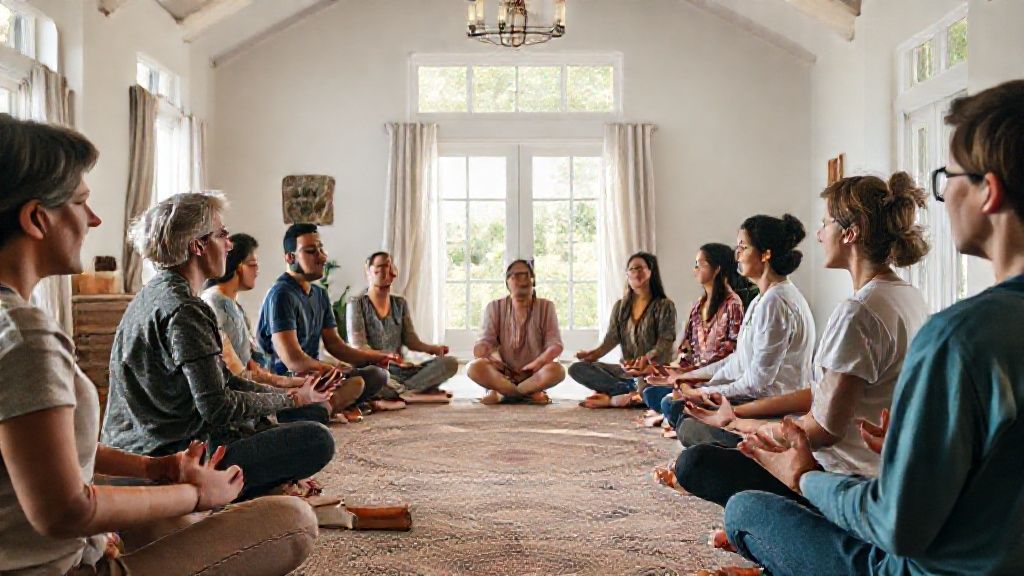
The Ultimate Guide to the Best Mindfulness Activities for Groups
Does this sound familiar? Your team at work feels disconnected and stressed before a big project. Your family dinner is filled with distracted glances at phones instead of meaningful conversation. Your classroom of students seems more chaotic and unfocused than ever. In our hyper-connected world, genuine connection often gets lost in the noise.
The best mindfulness activities for groups are those that are engaging, accessible, and foster a shared sense of calm and connection. This guide provides a curated list of fun, effective exercises designed to bring any team, family, or classroom closer together while reducing collective stress, improving communication, and strengthening bonds.
Why Group Mindfulness Is a Game-Changer
While solo mindfulness practice offers tremendous benefits, practicing mindfulness in a group setting amplifies these advantages exponentially. When people come together with a shared intention of presence and awareness, something remarkable happens—the collective energy shifts. The calm of one person begins to influence their neighbor, creating a ripple effect throughout the entire group.
Group mindfulness builds what psychologists call “shared experiential grounding”—a common reference point that strengthens relationships and creates lasting bonds. Unlike individual practice where you might question if you’re “doing it right,” group settings provide validation and normalization of the experience. You hear others describe similar sensations and challenges, which reduces self-judgment and increases self-compassion.
The social reinforcement of practicing with others also boosts motivation and consistency. When you know your team, family, or classmates are counting on your participation, you’re more likely to show up fully. This communal accountability transforms mindfulness from a personal chore to a shared commitment.
For those completely new to the concept, start by understanding the basics of guided meditation to build a solid foundation for group practice.

The Golden Rules for Leading Group Activities
Before diving into specific activities, establishing the right environment and approach is crucial for success. As a facilitator, your primary role isn’t to be a perfect expert but to create a container where exploration feels safe and inviting.
First, set clear expectations at the beginning. Explain that there’s no “right” way to experience mindfulness and that wandering thoughts are completely normal. Emphasize that this is a judgment-free zone—both toward others and oneself.
Second, model vulnerability and authenticity. If you’re nervous, say so. If your mind wanders during an activity, acknowledge it. Your willingness to be human gives others permission to do the same.
Third, start small and keep it light. For beginners, a 3-minute activity that feels enjoyable is far more valuable than a 30-minute session that feels like a chore. Use encouraging language and remind participants that they can modify any activity to suit their comfort level.
Fourth, create a physically comfortable environment. Ensure the space is relatively quiet, at a comfortable temperature, and free from major distractions. If possible, dim bright lights and make seating arrangements that feel inclusive rather than hierarchical.
If you want to deepen your skills in this area, our guide on tips for leading a guided session offers more detailed facilitation strategies.
5 Fun & Engaging Mindfulness Activities for Any Group
1. The Sound Scavenger Hunt
Description: This listening meditation transforms ordinary sounds into objects of curious exploration. Guide participants to sit comfortably and close their eyes if they wish. Explain that you’ll spend the next 3-5 minutes in silence, simply noticing sounds. The “scavenger hunt” aspect comes from mentally noting as many different sounds as possible—both obvious and subtle.
Why it Works: This activity brilliantly anchors attention in the present moment through the auditory sense. Unlike visual-focused activities, closing eyes to listen often feels less intimidating for beginners. Participants frequently discover sounds they hadn’t noticed before—the hum of electronics, distant traffic, their own breathing—which expands their awareness of the richness of ordinary moments.
Pro Tip: After the listening period, invite volunteers to share one surprising sound they noticed. This sharing reinforces the experience and often reveals how different people notice different aspects of the same environment.
This activity builds beautifully on core mindfulness skills. Consider having participants hone your senses with this foundational exercise beforehand to enhance their listening awareness.
2. The 5-Minute Group Body Scan
Description: A body scan involves systematically bringing attention to different parts of the body. For groups, a shortened 5-minute version works perfectly. Guide participants to sit or lie down comfortably. Using a calm voice, direct attention slowly from the soles of the feet up to the crown of the head, spending about 20-30 seconds on each major body area.
Sample Script Snippet: “Bring your awareness to your feet… noticing any sensations—tingling, warmth, the pressure against your shoes or the floor… without trying to change anything, simply observing… Now gently shift your attention to your ankles and lower legs…”
Why it Works: The body scan promotes interoception—awareness of internal bodily sensations—which is strongly linked to emotional regulation. When practiced in a group, this shared journey through the body creates a powerful collective calm. Participants often report feeling more grounded and physically relaxed afterward.
For those who want to continue this practice individually, you can download our free 5-minute body scan script to use anytime.
3. Pass the Pulse
Description: This non-verbal connection game requires the group to stand in a circle holding hands. One person starts by gently squeezing the hand of the person to their right. That person then passes the “pulse” to the next person, and so on, until it travels completely around the circle. For an added challenge, try sending multiple pulses at once or changing direction.
Why it Works: Pass the Pulse requires focused attention and non-verbal communication, making it excellent for building group cohesion. The physical contact (even just hand-squeezing) releases oxytocin, the “bonding hormone,” which enhances feelings of trust and connection. Teams often find that their coordination improves with practice, metaphorically demonstrating how attunement benefits collaborative work.

4. Mindful Doodling Together
Description: Provide paper and pens to each participant. Explain that this isn’t about creating “art” but about experiencing the physical sensation of drawing without attachment to the outcome. Guide them to place pen to paper and simply allow shapes, lines, and patterns to emerge without planning. Encourage focus on the feeling of the pen moving across the paper, the sound it makes, and the visual patterns developing.
Why it Works: Mindful doodling bypasses the performance anxiety that often accompanies drawing activities. Since there’s no “right” way to doodle, participants can fully immerse in the sensory experience. The activity is particularly effective for groups that include both self-identified “creative” and “non-creative” people, as it levels the playing field through its process-oriented nature.
This is one of many effective discover more calming activities for stressful moments that can help regulate the nervous system during tense periods.
5. The “I Notice…” Circle
Description: Gather participants in a circle. Explain that you’ll go around with each person completing the sentence “Right now, I notice…” with a simple, non-judgmental observation. Examples might include: “…the feeling of my feet on the floor,” “…the sound of the air conditioner,” “…a slight tension in my shoulders,” or “…the color of the wall across from me.”
Why it Works: This activity cultivates present-moment awareness while building emotional intimacy through shared vulnerability. Hearing others’ observations normalizes internal experiences and often reveals how differently people perceive the same environment. The structure provides equal speaking opportunity, ensuring all voices are heard—a particularly valuable dynamic for work teams where certain members typically dominate conversation.
Tailoring Activities for Specific Groups
Mindfulness for Team Building at Work
In workplace settings, mindfulness activities should align with organizational goals like improved focus, communication, and stress resilience. Before important meetings, try a 2-minute “Focus Breath” where everyone simply follows their breath together. This synchronizes the group’s energy toward the upcoming task.
After challenging deadlines or stressful periods, a “Shared Appreciation” practice works wonders. Go around the room with each person acknowledging one colleague’s contribution to the recent project. This reinforces positive connections and helps process completion before moving to the next task.
For ongoing workplace stress management, consider incorporating our guided meditation for work-related stress into regular team routines.
Mindfulness for Families & Kids
Family mindfulness should be playful, brief, and integrated into existing routines. Try “Mindful Bites” during meals—spending one minute silently noticing the colors, smells, textures, and tastes of food before eating. Or implement “Breathing Buddies” where young children lie down with a stuffed animal on their belly, watching it rise and fall with each breath.
For transitioning between activities, a “Mindful Bell” practice works well—ringing a bell and having everyone listen silently until they can no longer hear the sound. This creates instant calm during chaotic moments.
For younger children, try a quick mindful moment designed for kids that fits their attention span. You can also supplement with our free printable mindfulness worksheets for youth to extend the learning between sessions.
Mindfulness in the Classroom (High School & Middle School)
For educational settings, mindfulness activities should help students transition between subjects, calm pre-test nerves, and improve focus. Before exams, a “3-Minute Breathing Space” can significantly reduce anxiety. Between classes, a “Mindful Posture Check”—where students simply notice how they’re sitting or standing without changing it—helps reset attention.
For group projects, “Mindful Listening Pairs” build communication skills—students partner up with one speaking for one minute while the other listens completely without interruption, then switching roles.
Educators looking for explore more mindfulness techniques for teenagers will find age-appropriate strategies. For those facilitating these practices, our resources on mindfulness strategies for educators offer additional support.

Overcoming Common Group Mindfulness Challenges
Even with the best activities, facilitators often encounter predictable challenges. Knowing how to navigate these moments ensures they don’t derail the experience.
Giggling and Self-Consciousness: Especially with teens or new groups, nervous laughter is common. Rather than shushing it, acknowledge it with humor: “I know this might feel unusual at first—that’s completely normal. Let’s see if we can notice the giggles without getting carried away by them.” This acknowledgment often dissolves the tension.
Skepticism: Some participants may question the value of mindfulness. Validate their perspective while inviting experimentation: “You don’t have to believe this will work—just try it as an experiment and see what you notice.” This lowers resistance by removing the requirement to buy in completely.
Unequal Participation: In every group, some people will be more enthusiastic than others. Emphasize that all levels of participation are welcome, including just observing. Forcing engagement creates resistance, while invitation often eventually brings skeptics along.
Time Constraints: When time is limited, adapt rather than abandon. A 60-second breathing exercise still provides benefit. Consistency matters more than duration.
Frequently Asked Questions (FAQ)
What Is the Simplest Mindfulness Activity for a Large Group?
The “1-Minute Breathing Exercise” is arguably the simplest and most scalable activity. Have everyone sit comfortably and simply focus on their natural breath for 60 seconds. No special instructions beyond noticing the inhalation and exhalation. This works with groups of 5 or 500 and requires no materials. For guided support, you can follow our one-minute breathing exercise guide.
Can Mindfulness Activities Help With Group Anxiety?
Absolutely. Anxiety is contagious within groups, but so is calm. Collective breathing and grounding exercises activate the parasympathetic nervous system (the “rest and digest” response) across the group, creating a physiological shift away from anxiety. The shared experience also reduces feelings of isolation that often accompany anxiety. For more specialized approaches, learn more anxiety-reducing techniques here.
How Long Should a Group Mindfulness Session Last?
For beginners, 5-15 minutes is the sweet spot. The goal is to leave participants wanting more rather than feeling relieved it’s over. As the group builds mindfulness “muscle,” you can gradually extend sessions to 20-30 minutes. Remember that multiple brief practices throughout the week typically deliver more benefit than one long weekly session.
Do I Need Any Special Training to Lead These?
No special certification is required to facilitate the activities in this guide. Your genuine intention, a safe space, and willingness to learn alongside participants are the most important qualifications. That said, if you want to boost your confidence with our facilitation tips, additional resources can enhance your skills.
Conclusion & Call to Action
Incorporating fun, group-based mindfulness activities represents one of the most powerful yet accessible ways to enhance connection, focus, and collective well-being. Whether you’re looking to strengthen your work team, bring more presence to family life, or create a calmer classroom environment, these exercises provide a practical starting point that honors both the individual and group experience.
The true magic of group mindfulness emerges not from perfect execution but from shared intention. When people come together with open curiosity about their present-moment experience, transformation happens naturally—breath by breath, activity by activity.
Ready to bring mindfulness to your community? Bookmark this guide for your next group session, or explore our library of guided meditation scripts to deepen your practice and discover new ways to cultivate presence together.