Zen and Mindfulness: A Practical Guide to Present-Moment Awareness
In a world of constant distraction, notifications, and endless to-do lists, the ancient practice of Zen offers a profound path to what so many of us seek: true mindfulness. The terms “Zen” and “mindfulness” are often used interchangeably, but what do they really mean, and how can their timeless wisdom be applied to your modern, hectic life? This comprehensive guide demystifies the deep connection between Zen Buddhism and mindfulness, moving beyond trendy buzzwords to provide you with actionable steps to cultivate a calmer, more focused, and deeply present mind. You’ll learn the core philosophical principles, discover simple yet transformative daily practices, and find valuable resources to guide your journey into authentic present-moment awareness.

What is Zen Buddhism? The Foundation of Mindfulness
To understand Zen mindfulness, we must first explore its roots. Zen is a school of Mahayana Buddhism that originated in China (as Chan) and later flourished in Japan, Korea, and Vietnam. It emphasizes the direct, experiential realization of one’s true nature, often through meditation and interaction with a teacher, rather than through scripture study alone.
Beyond Sitting: The Core Philosophy of Zen
At its heart, Zen is not merely a meditation technique; it is a way of life grounded in several key principles:
- Direct Experience: Zen values firsthand experience over intellectual knowledge. It’s about tasting the sugar yourself rather than reading a description of its sweetness. The goal is to see reality as it is, directly and immediately, without the filter of our conceptual thinking.
- Non-Attachment: This is a cornerstone of Zen practice. It doesn’t mean becoming cold or detached from life. Instead, it’s about learning to relate to thoughts, emotions, and sensations without clinging to them or pushing them away. You observe them as they arise and pass, like clouds moving across the sky.
- Impermanence (Mujo): Zen teaches that all things are in a constant state of flux. Understanding and accepting this fundamental truth helps reduce suffering, as we stop trying to hold onto what is inherently transient—be it a pleasant feeling, a possession, or even life itself.
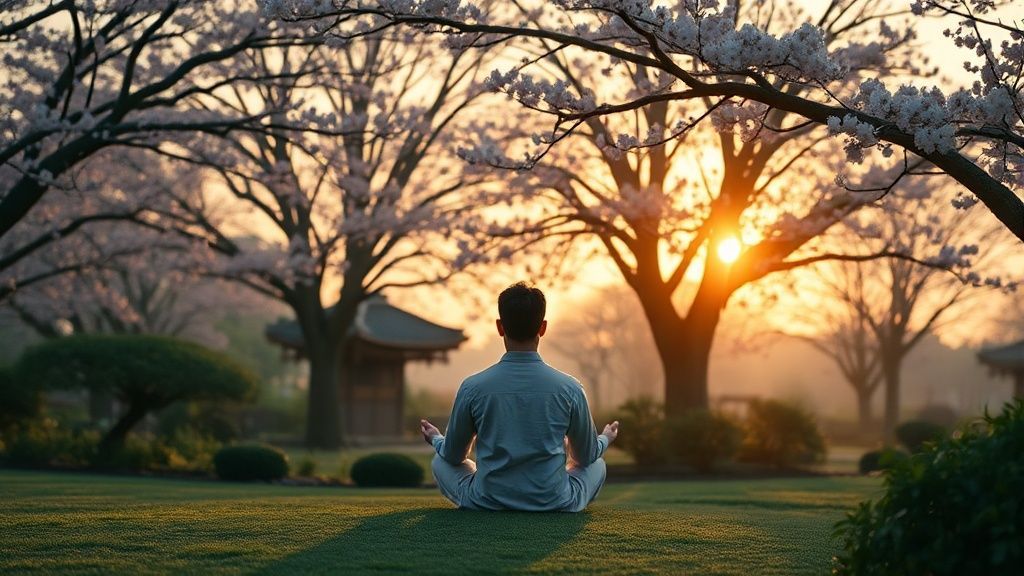
The physical practice that embodies these principles is Zazen, or seated meditation. It is considered the heart of Zen, a practice where one simply sits, alert and upright, letting go of all gaining ideas and allowing the mind and body to settle into their natural state.
How Zen Differs from Modern Mindfulness
While deeply connected, it’s helpful to understand the distinction. Modern, secular mindfulness—often taught in corporate or therapeutic settings like Mindfulness-Based Stress Reduction (MBSR)—is frequently goal-oriented. The aim might be to reduce stress, improve focus, or enhance emotional regulation.
Zen, however, is a holistic spiritual path. Its ultimate aim is Satori, or enlightenment—a profound awakening to your true nature and the nature of reality. Mindfulness, in the Zen context, is not a tool for a better life, but a natural byproduct and essential component of walking the path toward this awakening. Zen mindfulness is the practice of bringing this awakened awareness to every single moment, whether you are on the meditation cushion or washing the dishes.
The Zen Path to Mindfulness: Core Practices for Daily Life
The beauty of Zen is its profound simplicity. The practices are straightforward, yet their depth is limitless. Here’s how you can begin to incorporate them into your own life.
Zazen: The Art of “Just Sitting”
Zazen is the foundational practice of Zen. The term literally means “sitting meditation,” but its essence is “just sitting” without any goal or agenda. Here is a basic step-by-step guide to get you started:
- Posture: Find a quiet space. Sit on a cushion (zafu) on the floor, cross-legged, or in a chair with your feet flat on the floor. The key is to keep your spine erect and natural, not rigid. Tuck your chin in slightly. Your hands should rest in your lap in the “cosmic mudra”—left hand on top of the right, palms up, with thumbs lightly touching, forming a gentle oval.
- Gaze: Keep your eyes open but softly lowered, gazing at a point on the floor about two to three feet in front of you. This helps maintain alertness and prevents you from getting lost in daydreams.
- Breath Awareness: Bring your attention to your breath. Don’t try to control it. Simply notice the natural inflow and outflow. Many practitioners focus on the Hara (a point about two inches below the navel), feeling the breath originate from and return to this center of gravity.
- Dealing with Thoughts: Thoughts will arise. This is natural and not a sign of failure. The practice is to notice the thought without judgment, let it go, and gently return your attention to the breath. Imagine your thoughts as leaves floating down a stream; you see them, but you don’t jump in and grab them.
For a structured way to begin your sitting practice, try our تأملنا الموجه لمدة 5 دقائق.
Bringing Mindfulness Off the Cushion
True Zen practice isn’t confined to the meditation hall. The real test is whether you can carry that mindful awareness into your everyday activities. This is often called “mindfulness in action.”
- Mindful Eating: For your next meal, eat without distractions. Put away your phone and turn off the TV. Notice the colors, textures, and smells of your food. Chew slowly, savoring each bite. Be grateful for the nourishment.
- Mindful Walking (Kinhin): Walk slowly and deliberately, coordinating your breath with your steps. Feel the sensation of your feet making contact with and leaving the ground. This can be done as a formal practice or simply while walking from your car to the office.
- الاستماع الواعي: When in conversation, try to listen completely, without formulating your response while the other person is talking. Give them your full presence.
Incorporate brief moments of awareness with this تمرين التنفس لمدة دقيقة واحدة.

Overcoming Common Challenges with Zen Mindfulness
It’s normal to encounter obstacles on this path. Recognizing them is the first step to working with them skillfully.
When Your Mind Won’t Be Still: Dealing with Anxiety and Overthinking
Many beginners believe the goal of meditation is to “empty the mind” or stop thinking. This is a misconception that leads to frustration. In Zen, thoughts are not the enemy. The practice is to change your relationship with your thoughts.
Instead of getting tangled in a thought or fighting against it, you learn to observe it with detachment. See anxiety as a passing weather pattern in the vast sky of your awareness. The sky is always present and untouched, regardless of whether there are stormy clouds (anxious thoughts) or clear blue skies (calm). By repeatedly returning to the anchor of your breath, you train the mind to not be swept away.
If anxiety is a significant barrier, this تأمل موجه للقلق والاكتئاب can provide supportive, compassionate guidance.
Finding Time and Consistency
The biggest challenge for modern practitioners is often finding the time and motivation to practice regularly. Zen wisdom offers a solution: prioritize consistency over duration.
A daily practice of just 5 to 10 minutes is far more powerful than an hour of meditation once a month. The goal is to weave mindfulness into the fabric of your life. It’s better to sit for a short time every day than to have long, sporadic sessions that feel like a chore.
- Anchor your practice: Link your meditation to an existing habit, like right after you brush your teeth in the morning or right before you have your evening tea.
- Create a dedicated space: Even a small corner with a cushion can serve as a powerful visual reminder to practice.
Build a sustainable habit with a تأمل موجه قصير يتناسب مع أي جدول زمني.
تعميق ممارستك: الموارد والخطوات التالية
مع نمو اهتمامك والتزامك، قد ترغب في استكشاف المزيد. رحلة الزن هي رحلة تعلم مستمرة وتعميق.
تأملات موجهة بروح الزن
بينما يكون تأمل الزازن التقليدي صامتاً في الغالب، يمكن للتأملات الموجهة أن تكون نقطة بداية ممتازة. فهي توفر هيكلاً وتذكيرات لطيفة يمكن أن تساعد في تثبيت العقل الشارد. فكر فيها كعجلات التدريب؛ فهي أداة داعمة تُستخدم حتى تشعر بالراحة في الجلوس في صمت.
- لجلسة أطول وغامرة، هذا تأمل موجه لمدة 20 دقيقة ممتاز لتنمية التركيز العميق.
- أنهِ يومك بوعي مع تأمل نوم موجه للشفاء.
استكشاف أعمق: المعلمون والمجتمعات والتدريب
يتميز الزن بتقليد طويل في التعلم من معلم (روشي أو سينسي) والممارسة ضمن مجتمع (سانغا). يمكن للمعلم الجيد أن يقدم توجيهاً شخصياً، ويجيب على أسئلتك، ويساعدك على اجتياز دقائق الطريق.
- ابحث عن مركز محلي: ابحث عن مركز زن أو معبد بوذي في منطقتك. يقدم العديد منها أمسيات للمبتدئين وورش عمل وجلسات تأمل منتظمة.
- المجتمعات عبر الإنترنت: في العصر الرقمي، يقدم العديد من المعلمين والمجتمعات الموثوقة دورات عبر الإنترنت، وجلسات جلوس بث مباشر، وخلوات افتراضية.
- عمّق دراستك: اقرأ أعمال معلمي الزن الأساسيين مثل شونريو سوزوكي (عقل الزن، عقل المبتدئ)، وتيتش نات هانه، ودي.تي. سوزوكي.
عمّق فهمك بتعاليم تيتش نات هانه من خلال هذا دليل تأمل تيتش نات هانه.
فكر في إضفاء الطابع الرسمي على ممارستك من خلال استكشاف مسارات لتصبح مدرب وعي معتمد.

أسئلة وأجوبة عن الزن والوعي (للبحث الصوتي والمقتطفات المميزة)
ما الفرق بين الزن والوعي؟
الوعي هو حالة الانتباه اللاحكمي للحظة الحالية، وهو عنصر أساسي ونتيجة لممارسة المسار الروحي الأوسع لبوذية الزن. الزن هو المسار؛ والوعي هو سمة أساسية تُنمى على ذلك المسار.
كيف تمارس وعي الزن؟
الممارسة الرسمية الأساسية هي الزازن، أو التأمل الجالس، حيث تراقب أنفاسك وأفكارك دون حكم. بشكل غير رسمي، تمارس من خلال جلب الوعي اليقظ للأنشطة اليومية مثل المشي والأكل والاستماع.
هل يمكن أن يساعد الوعي في القلق؟
نعم، من خلال تدريبك على مراقبة الأفكار القلقة والأحاسيس الجسدية دون الوقوع فيها أو تغذيتها، يمكن للوعي، كما يُعلم في الزن، أن يقلل بشكل كبير من تأثير القلق وتكراره. لممارسات محددة، انظر دليلنا حول ممارسات التأمل المحددة للقلق.
ما هي أفضل تمارين الوعي للمبتدئين؟
يمكن للمبتدئين البدء بتأملات تنفس قصيرة أو تمارين حسية بسيطة، مثل تمرين الوعي بالحواس الخمس الذي يرسيك في التجربة المباشرة للبصر والصوت والرائحة والطعم واللمس.
الخاتمة والدعوة إلى الإجراء
رحلة الزن والوعي ليست عن إضافة شيء جديد إلى حياتك، بل عن الكشف عن الوعي الهادئ والواضح الذي كان موجوداً دائماً تحت ضجيج أفكارك. إنها ممارسة مستمرة ولطيفة للعودة إلى اللحظة الحالية، مرة تلو الأخرى، بالصبر والرحمة تجاه نفسك. إنه مسار لا يؤدي إلى وجهة بعيدة، بل إلى تجربة أغنى وأكثر حيوية للحياة التي تعيشها بالفعل.
رحلتك إلى وعي الزن تبدأ بنفس واحد. لا تنتظر اللحظة المثالية؛ بل اصنعها. ابدأ اليوم مع جلستنا الأكثر شيوعاً جلسة وعي مدتها 10 دقائق لعقل هادئ.