Buddha Meditation Technique: A Step-by-Step Guide to Inner Peace
In our fast-paced world, finding true mental stillness can feel impossible. The constant stream of notifications, responsibilities, and distractions leaves many of us feeling fragmented and disconnected from ourselves. Yet, for over 2,500 years, the Buddha meditation technique has offered a profound path to lasting peace and clarity that remains remarkably relevant today.
The Buddha meditation technique, often referred to as Vipassana or mindfulness meditation, is a practice of observing the present moment—your breath, bodily sensations, and thoughts—without judgment. Its core purpose is to cultivate profound self-awareness and liberate the mind from suffering.
This comprehensive guide will walk you through the history, core principles, and a practical step-by-step practice of this transformative technique, making this ancient wisdom accessible for modern practitioners.

What Is the Buddha Meditation Technique?
The Buddha meditation technique originates from the teachings of Siddhartha Gautama, the historical Buddha, who discovered a path to enlightenment through systematic observation of his own mind and body. Unlike some modern meditation approaches that primarily focus on relaxation or stress reduction, the Buddha’s method is fundamentally about developing insight into the true nature of reality.
This practice encompasses two complementary aspects: Samatha (calm abiding) and Vipassana (insight). Samatha develops concentration and mental stability through focused attention, typically on the breath. Vipassana builds upon this stability to investigate the nature of experience itself. Together, these “two wings” of meditation enable practitioners to see things as they truly are, beyond our habitual projections and assumptions.
While many contemporary meditation practices aim primarily for relaxation, the Buddha technique goes deeper—it’s a systematic investigation of consciousness that can fundamentally transform your relationship to experience. For those completely new to meditation, understanding the basics of guided meditation can provide helpful foundational context.
The Core Principles of Mindful Awareness
The foundation of Buddha’s meditation technique rests on what he called the Four Foundations of Mindfulness. These are not abstract concepts but practical frameworks for directing awareness:
Mindfulness of the Body – This involves bringing awareness to physical sensations, posture, and breathing. It begins with simple recognition: “There is a body here” or “This is a sensation.” By observing the body without trying to change it, we develop a non-reactive relationship with physical experience.
Mindfulness of Feelings – In Buddhist psychology, “feelings” refer to the initial tone of experience as pleasant, unpleasant, or neutral. Before we have stories about why something is pleasant or unpleasant, there is this basic feeling tone. Mindfulness practice involves recognizing these tones as they arise without immediately reacting to them.
Mindfulness of Mind – This foundation involves observing the state of mind itself—is it greedy, averse, confused, concentrated, or scattered? We learn to recognize mental states as temporary conditions rather than permanent identities.
Mindfulness of Mental Objects – This includes observing the specific content of thoughts, emotions, and patterns that arise in the mind. We notice them not to analyze or suppress them, but to understand their nature.
Central to all these foundations is the principle of Anicca (impermanence). Through sustained observation, we directly experience how all phenomena—sensations, feelings, thoughts—continuously arise and pass away. This insight gradually reduces suffering because we stop clinging to what is inherently fleeting.

A Step-by-Step Guide to Your First Buddha Meditation Session
Step 1: Find Your Posture and Space
Choose a quiet space where you won’t be interrupted for your chosen practice period. You don’t need special equipment—just a comfortable place to sit. The traditional posture is cross-legged on a cushion on the floor, but you can also sit upright in a chair with your feet flat on the ground.
The key principles for posture are:
– Keep your spine erect but not rigid – Imagine your head floating upward toward the ceiling
– Rest your hands comfortably on your knees or in your lap
– Relax your shoulders down and back
– Soften your face – including your jaw, forehead, and around the eyes
– Position your gaze – You can close your eyes completely or maintain a soft, downward gaze
The posture should be dignified yet relaxed—expressing both alertness and ease. This physical position supports the mental qualities you’re cultivating.
Step 2: Anchor Your Awareness With the Breath
Begin by bringing your attention to the natural flow of your breath. Don’t try to control or manipulate it—simply observe it as it is. You might focus on the sensation of air moving in and out at the nostrils, or the rising and falling of your abdomen.
When you notice your attention has wandered (which is completely normal and will happen repeatedly), gently acknowledge where it went (“thinking,” “planning,” “remembering”) and return to the breath. This simple act of noticing and returning is the core practice—each return is like doing a repetition in mental training.
Step 3: Observe Bodily Sensations (The Body Scan)
After establishing some stability of attention with the breath, expand your awareness to include the entire body. Systematically scan through different regions—from the top of your head down to your toes—noticing whatever sensations are present: warmth, coolness, pressure, tingling, or even the absence of distinct sensation.
The key is to observe without judgment—whether a sensation is pleasant, unpleasant, or neutral, meet it with the same quality of open, curious attention. For those who prefer more structure in this practice, using a short body scan meditation script can be particularly helpful.
Step 4: Acknowledge Thoughts and Feelings Without Engagement
As you continue practicing, you’ll notice thoughts, emotions, and mental images arising. The instruction here is not to empty the mind, but to change your relationship to its content. Imagine your awareness as the sky, and thoughts as clouds passing through—they arise, remain for a time, and naturally dissipate.
When strong emotions or persistent thought patterns emerge, simply note them (“anger,” “worry,” “memory”) and return to your primary anchor (the breath or body sensations). You’re learning to recognize mental activity without getting caught in its stories. For those dealing with particularly challenging mental patterns, a guided meditation for managing anxious thoughts can provide additional support.

Integrating Buddha’s Teachings Into a Modern Practice
Establishing a consistent meditation practice in contemporary life requires both intention and flexibility. Here’s how to make this ancient practice work within modern constraints:
Start small but be consistent – Five minutes of daily practice is more valuable than an hour once a week. The neural pathways of mindfulness strengthen through regular repetition, not occasional intensity.
Create a dedicated space – Even a small corner with a cushion can serve as a physical reminder of your intention to practice. This space becomes associated with meditation over time, making it easier to settle into practice.
Link practice to existing habits – Meditate after your morning coffee, before brushing your teeth, or after arriving home from work. Habit stacking makes consistency more achievable.
Work with common challenges:
– Restlessness – Acknowledge the energy without judgment. Sometimes slightly deepening or slowing the breath can help settle the system.
– Sleepiness – Ensure you’re well-rested, try meditating with eyes slightly open, or practice standing meditation.
– Doubt – Remember that all meditators experience doubt. Simply note “doubt” and return to the breath.
For those with demanding schedules, maintaining a habit with a 5-minute meditation can be a sustainable approach. Additionally, joining an online mindfulness group for support can provide accountability and community.
Deepening Your Practice: From Technique to Transformation
Exploring Different Mindfulness Exercises
As your practice matures, you might explore complementary practices that extend mindfulness into different aspects of life:
Walking Meditation – Instead of sitting, practice mindfulness while walking slowly back and forth in a quiet space. Pay close attention to the sensations of each foot as it lifts, moves, and touches the ground.
Mindful Eating – Choose one meal per day to eat silently and mindfully, noticing the colors, textures, smells, and flavors of your food. Observe the entire process from intention to eat through swallowing.
Loving-Kindness (Metta) – This practice cultivates unconditional friendliness toward yourself and others. You systematically extend wishes for safety, health, happiness, and ease to different categories of beings. For those interested in this approach, practicing loving-kindness with this Metta script offers a structured way to begin.
The Role of Retreats and Further Learning
While daily practice is essential, occasional intensive retreats can significantly deepen understanding. Even a single day of silent practice can reveal dimensions of experience that are harder to access in shorter sessions.
For those ready to explore immersive practice, exploring the possibility of a free silent retreat can be transformative. For practitioners interested in more structured guidance, deepening your practice with an online meditation teacher can provide personalized instruction and support.
Frequently Asked Questions (FAQ)
Q: What’s the difference between Buddha meditation technique and regular meditation?
A: While many meditation practices aim primarily for relaxation or stress reduction, the Buddha technique (Vipassana) specifically cultivates insight into the nature of reality and the self to uproot the causes of suffering. It’s a systematic investigation of experience rather than just a relaxation method.
Q: How long should I practice the Buddha meditation technique each day?
A: Consistency is more important than duration. Start with 5-10 minutes daily and gradually extend as it feels sustainable. For a structured short session, you can try this 10-minute mindfulness meditation.
Q: I keep falling asleep during meditation. What should I do?
A: This is common, especially if you’re meditating when tired or in a reclined position. Try meditating with your eyes slightly open, sitting more upright, or choosing a time of day when you’re naturally more alert. If sleep is a general issue, consider a dedicated guided sleep meditation practice for bedtime.
Q: Can this technique help with anxiety?
A: Yes, by teaching you to observe anxious thoughts and physical sensations without being controlled by them, Vipassana meditation is highly effective for anxiety. The practice creates space between you and your anxious patterns. For immediate relief, a focused session like this guided meditation for stress and anxiety can be very helpful.
Conclusion & Call to Action (CTA)
The Buddha meditation technique is not merely a relaxation method but a profound path of self-discovery that reveals the peace and clarity already present within you. This 2,500-year-old practice remains remarkably relevant today because it addresses fundamental aspects of human experience that transcend time and culture.
Remember that this is a journey of exploration, not a destination to reach. Every minute of practice—whether it feels “successful” or not—nourishes the seeds of awareness. The moments when you notice distraction and gently return to the breath are where the real transformation occurs.
Ready to move from reading to experiencing? Find a quiet space, set a timer for 5 minutes, and begin your first session today. For a voice to guide you through the foundational steps, start with our best guided meditation for beginners.
METADATA_START—
CATEGORY: Mindfulness for Beginners
DISPLAY_TITLE: Buddha Meditation Technique: A Step-by-Step Guide to Inner Peace
SEO_TITLE: Buddha Meditation Technique | Step-by-Step Guide to Inner Peace
META_DESC: Discover the authentic Buddha meditation technique. Our step-by-step guide teaches Vipassana mindfulness for lasting inner peace and mental clarity. Perfect for beginners.
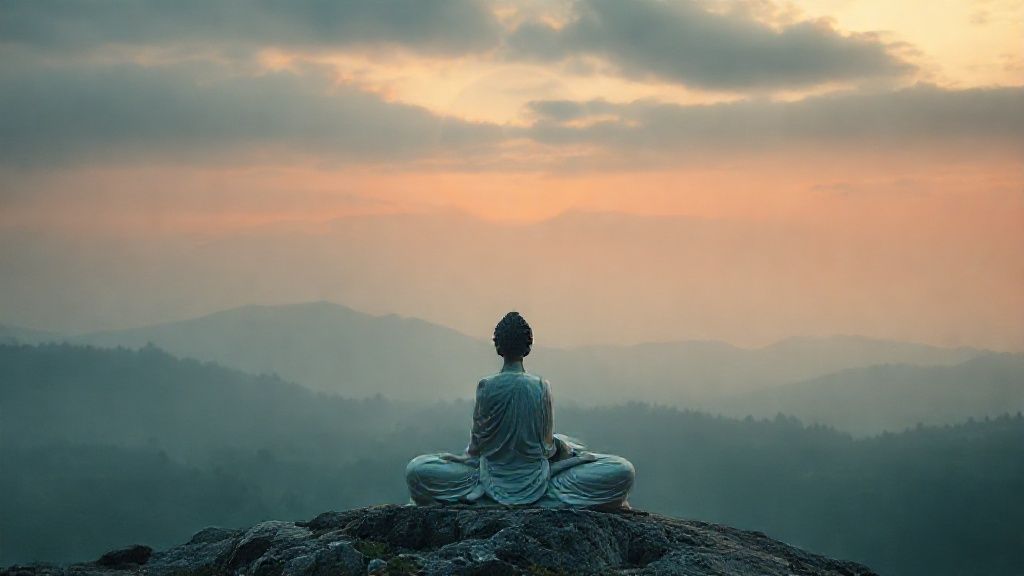
IMG_PROMPT: A person meditating peacefully in lotus position with soft natural lighting in a serene environment, embodying calm and mindfulness
IMG_ALT: Practicing Buddha meditation technique in proper posture with calm expression
IMG_TITLE: Buddha Meditation Technique – Visual Guide
IMG_CAPTION: The path to inner peace begins with proper meditation posture and mindful awareness
IMG_DESC: A practitioner demonstrating correct posture and mindful presence while engaged in traditional Buddha meditation technique
—METADATA_END—