5-Minute Guided Meditation: Find Your Calm in a Busy World
You’re scrolling through your never-ending to-do list, your heart is racing, and your mind is buzzing with a dozen different thoughts at once. You know you need a break, but who has time for self-care when your schedule is packed from morning to night? What if you could reset your entire nervous system, reduce stress, and improve your focus in less time than it takes to brew a cup of coffee?
A 5-minute guided meditation is a powerful, science-backed tool that can do exactly that. This brief but potent practice is perfect for even the busiest schedules, offering immediate benefits including instant calm, reduced anxiety, and better sleep quality. In just five minutes, you can transform your mental state and approach your day with renewed clarity and purpose.

Why a 5-Minute Meditation Is All You Need
Many people dismiss meditation because they believe it requires hours of silent sitting or years of practice to see benefits. This couldn’t be further from the truth. Research shows that even brief, consistent meditation practices can produce significant changes in brain function and stress levels.
The “dosing” effect of short meditation sessions is what makes them so effective. Just as taking medication regularly at smaller doses can be more effective than occasional large doses, meditating for five minutes daily creates more sustainable benefits than occasional longer sessions. These brief practices help lower cortisol (the stress hormone), center your thoughts, and create a manageable habit that sticks.
When you commit to just five minutes, you remove the mental barrier of “not having enough time” that often prevents people from starting a meditation practice. This approachable timeframe makes consistency possible, and consistency is where the true transformation happens. Learn more about what guided meditation is and how it can support your wellbeing journey.
How to Get the Most Out of Your 5-Minute Session
Find Your Quiet Space
You don’t need a soundproof room or a dedicated meditation chamber to practice effectively. Simply find a relatively quiet space where you’re unlikely to be interrupted for five minutes. This could be your office with the door closed, a park bench during your lunch break, or even your car before heading into work or home.
If complete silence isn’t possible, don’t worry. The goal isn’t to eliminate all sound but to minimize major distractions. If ambient noise persists, you can use it as part of your practice—noticing sounds without judgment and returning to your breath.
Get Comfortable
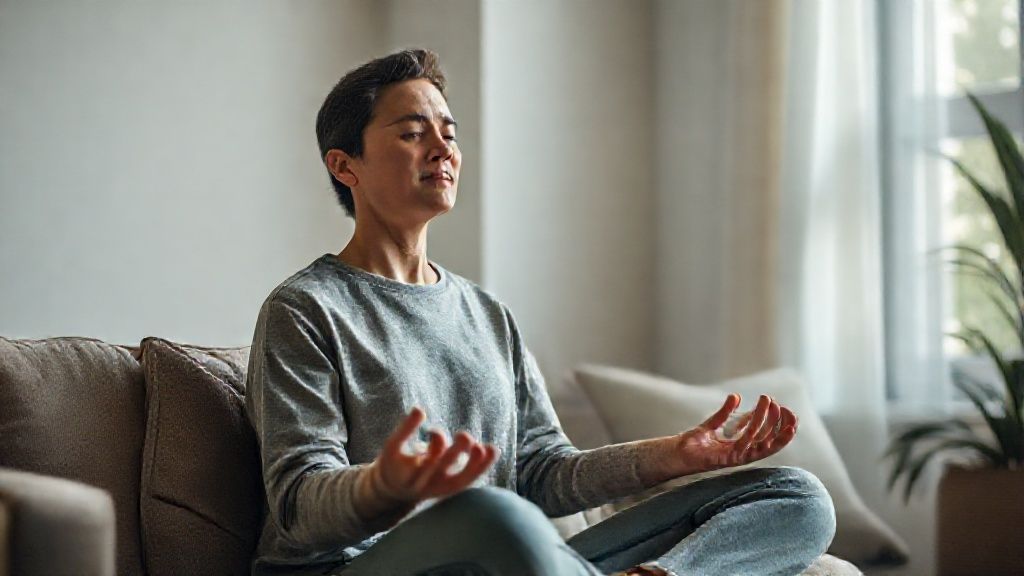
Comfort is key to maintaining your focus during meditation. You don’t need to sit in a perfect lotus position—in fact, most people find this uncomfortable. Instead, sit in a chair with your feet flat on the floor and your back straight but not rigid. You can also sit cross-legged on the floor with a cushion to support your hips, or even lie down if you’re practicing before bed.
The important thing is to position yourself so you’re alert yet comfortable. If you’re too relaxed, you might fall asleep; if you’re too tense, you’ll be distracted by physical discomfort. Find the middle ground that works for your body.
Set a Simple Intention
Before you begin your meditation, take a moment to set a simple intention. This could be a single word like “calm,” “present,” or “clarity.” Your intention acts as an anchor for your practice, giving your mind a gentle focus point when it wanders.
Setting an intention isn’t about achieving a specific outcome but rather about orienting yourself toward a particular quality or state of being. It’s a subtle but powerful shift that prepares your mind for the practice ahead. Try these focus exercises to further sharpen your mental clarity and concentration.
A Simple 5-Minute Guided Meditation Script (To Follow Along)
Ready to practice? Here’s a simple guided meditation you can follow along with. Read through it once to familiarize yourself, then set a timer for five minutes and guide yourself through the steps.
Minute 1-2: Arriving and Breathing
Begin by settling into your position. Feel the points of contact between your body and the chair or floor. Notice the weight of your body being supported. Gently close your eyes or soften your gaze.
Bring your attention to your natural breath. Don’t try to change it—just observe the sensation of air moving in and out of your body. Notice where you feel the breath most distinctly: perhaps at your nostrils, in the rise and fall of your chest, or in the expansion and contraction of your belly.
If your mind wanders, gently guide it back to the breath without judgment. Each time you notice your attention has drifted and bring it back, you’re strengthening your mindfulness muscle. Master the basic one-minute breathing exercise first if you’d like to build your foundational skills.
Minute 3-4: Body Awareness
Now, expand your awareness from your breath to include your entire body. Starting at the top of your head, slowly scan down through your body, noticing any sensations without trying to change them.
Become aware of your forehead, eyes, and jaw. Notice any tension here and allow these areas to soften. Move down to your neck, shoulders, and arms. Consciously release any holding or tightness. Continue down through your torso, back, hips, legs, and all the way to your feet.
As you scan, simply acknowledge what you feel—warmth, coolness, tension, relaxation, pressure, or lightness—without labeling sensations as “good” or “bad.” Your only job is to notice. Download our 5-minute body scan PDF script for a more detailed version of this practice.
Minute 5: Gentle Return
As we approach the final minute, gently return your primary focus to your breath. Notice how your body feels after this brief period of attentive awareness. Acknowledge yourself for taking this time for your wellbeing.
Begin to gradually expand your awareness to include the space around you. Notice any sounds in the environment. Feel the air on your skin. Gently begin to move your fingers and toes, bringing gentle movement back into your body.
When you’re ready, slowly open your eyes if they were closed. Take a moment to notice how you feel before moving on with your day.
When to Use Your 5-Minute Meditation
For a Morning Energy Boost
Instead of reaching for your phone as soon as you wake up, try a 5-minute meditation to set a positive tone for your day. This practice can help you start with intention rather than reactivity, creating mental space before the day’s demands begin.
A morning meditation establishes a foundation of calm that can help you navigate challenges more effectively throughout the day. It’s like creating a buffer between you and potential stressors, giving you more choice in how you respond to difficult situations. Explore our specific 5-minute morning meditation designed to energize and focus your mind for the day ahead.
For Midday Stress and Anxiety
When you feel overwhelmed at work or notice tension building in your body, a 5-minute meditation can serve as a reset button. Stepping away for just five minutes can interrupt the stress cycle, lower your cortisol levels, and return you to your tasks with renewed focus and perspective.
This midday practice is especially helpful during the afternoon slump when energy and concentration typically dip. Rather than reaching for another coffee, meditation can provide a more sustainable energy boost by calming your nervous system and reducing mental fatigue. If anxiety is high, try this focused 5-minute meditation for anxiety that specifically addresses anxious thoughts and physical tension.
For a Peaceful Transition to Sleep
A brief meditation before bed can help calm a racing mind and signal to your body that it’s time to rest. Unlike scrolling through your phone, which exposes you to stimulating blue light, meditation encourages the relaxation response needed for quality sleep.
This practice can become part of your wind-down routine, creating a buffer between the busyness of your day and the rest your body needs. By consciously releasing the day’s tensions and thoughts, you create space for more restorative sleep. Extend your practice with a 10-minute sleep meditation when you have more time to dedicate to your bedtime routine.

Exploring Different Meditation Styles
Loving-Kindness (Metta) Meditation
Loving-kindness meditation focuses on developing feelings of goodwill, kindness, and warmth toward yourself and others. This practice typically involves silently repeating specific phrases that express friendly intentions, such as “May I be happy, may I be healthy, may I be safe, may I live with ease.”
This style is particularly beneficial when you’re feeling critical toward yourself or others, or when you’re experiencing interpersonal conflict. Regular practice can enhance self-compassion and improve your relationships. Follow our 5-minute loving-kindness meditation script to cultivate more compassion in your life.
Guided Visualization
Guided visualization uses the power of your imagination to create sensory-rich mental experiences. This might involve picturing yourself in a peaceful natural setting, imagining light filling your body, or visualizing yourself successfully navigating a challenging situation.
This style is excellent for reducing anxiety, boosting creativity, and mentally rehearsing for upcoming events. Because it engages multiple senses, many people find it more accessible than breath-focused meditations, especially when they’re new to the practice. Dive into a guided visualization meditation for a different approach to relaxation and mental clarity.
Tools to Support Your Practice
Top Meditation Apps for Short Sessions
Several excellent meditation apps offer sessions specifically designed for busy schedules. These apps provide guided meditations of various lengths, including 5-minute options, making it easy to maintain a consistent practice even on your busiest days.
Most apps allow you to filter meditations by length, focus area (sleep, anxiety, focus, etc.), and teacher, so you can find practices that resonate with your specific needs and preferences. Many offer free content, so you can explore before committing to a subscription. Compare the best meditation apps like Headspace to find the right digital support for your practice.
Using Meditation Music
Ambient sounds or meditation music can enhance your practice by providing a consistent auditory anchor for your attention. This can be especially helpful if you find silence distracting or if external noises frequently pull your focus during meditation.
You might experiment with different types of meditation music—such as nature sounds, binaural beats, or instrumental music—to discover what best supports your practice. The right soundscape can help create a container for your meditation, signaling to your brain that it’s time to settle into a more reflective state. Use our 10-minute meditation music track to enhance your practice sessions.

Frequently Asked Questions (FAQ)
Can a 5-minute meditation really help with anxiety?
Yes, absolutely. A 5-minute meditation can significantly help with anxiety by activating the parasympathetic nervous system, which is responsible for the “rest and digest” response. This directly counteracts the “fight or flight” response that characterizes anxiety.
Even this brief practice can interrupt the cycle of anxious thoughts by bringing your attention to the present moment and away from worried thinking about the future. Regular short meditations can also build your resilience to stress over time, making you less reactive to anxiety triggers. Discover more anxiety-reducing techniques here to supplement your meditation practice.
I can’t clear my mind. What should I do?
This is one of the most common concerns about meditation, and the good news is that clearing your mind isn’t the goal. The intention is not to stop thoughts but to change your relationship with them.
When you notice your mind has wandered, simply acknowledge it without judgment and gently return your attention to your anchor (breath, body sensations, or sound). Each time you do this, you’re practicing the core skill of mindfulness—noticing where your attention is and gently guiding it back. This process of noticing and returning is actually more valuable than maintaining perfect focus.
What’s the difference between a 5-minute and a 20-minute meditation?
The main differences are the depth of relaxation and the opportunity to work through mental resistance. A 5-minute meditation is excellent for consistency, quick resets, and building the habit of meditation. It’s accessible enough to practice daily, even on busy days.
A 20-minute meditation allows more time for your mind and body to settle into deeper states of relaxation. It also provides more opportunity to observe the patterns of your mind and work through periods of restlessness or resistance that often arise around the 10-15 minute mark. Both have value, and many practitioners benefit from incorporating both short and longer sessions into their routine. When you have more time, try this 20-minute mindfulness meditation to experience deeper states of awareness.
How do I become a meditation teacher?
If you develop a strong personal practice and feel called to share meditation with others, you might consider becoming a meditation teacher. The path typically involves establishing a consistent personal practice, completing a teacher training program with a reputable organization, and gaining experience through practice teaching.
Quality teacher training programs provide comprehensive education in meditation techniques, teaching methodology, the science behind meditation, and ethics. Many offer certification upon completion. Learn about accredited meditation certification online if you’re interested in exploring this path further.
Conclusion & Call to Action (CTA)
A 5-minute guided meditation is an accessible, powerful practice that truly anyone can incorporate into their life, regardless of how busy their schedule may be. This brief daily commitment can yield significant benefits for your mental clarity, emotional balance, and overall wellbeing.
Remember, you don’t need perfect conditions or extensive experience to benefit from meditation. You already have everything you need within you—you just need to create the space to connect with it.
Start your journey today. Close your eyes, take a deep breath, and give yourself these five minutes. For more guided practices, from quick stress relief to deep sleep, explore our full library of free guided meditations.